Key Highlights
-
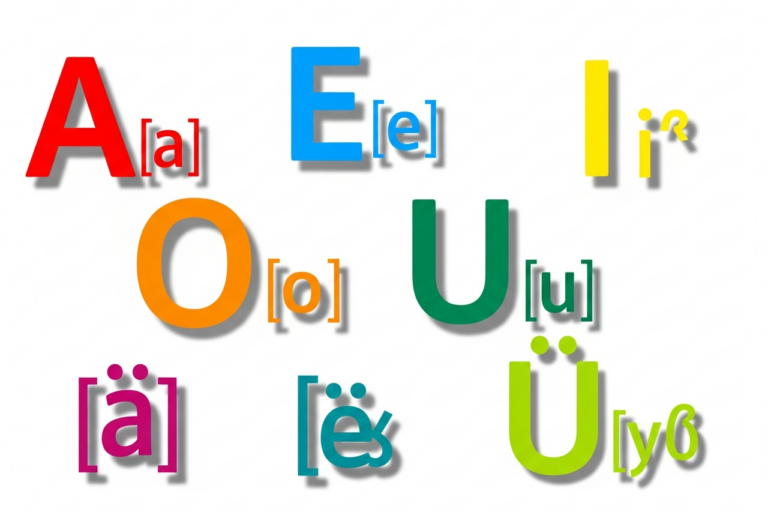
This guide shows you every German vowel sound. You will learn about the main vowels (a, e, i, o, u) and the special umlaut vowels (ä, ö, ü).
-
You will find out the big difference between long vowels and short vowels. This is very important for good German pronunciation.
-
See how German diphthongs like “au,” “ei,” and “eu” make their own sounds.
-
There are useful tips and easy exercises here to help you speak more like a native. You will also learn how to stay away from common mistakes.
-
Learn how to use the International Phonetic Alphabet (IPA) so you can get each vowel sound right.
-
You will get help from tools and resources to support your practice, like apps and ways to add more German into your daily life.
Introduction
Welcome to your full guide on German vowels! Do you want to speak German with more confidence and make your words clear? Learning the German vowel sounds is one of the most important things you can do. It helps you be understood by native speakers. It also helps you get better at the German language. This blog will go through each vowel, from the simple ones to the tricky umlauts. It will help you get better at your German pronunciation, one sound at a time.
Understanding German Vowels and Their Importance
In the german alphabet, vowels are at the heart of words and sounds. They are key to the german language, and how you say them can change what a german word means. Getting these right helps you talk clearly.
Many german learners who speak english first find these sounds hard. But, if you spend time learning and practicing, you will feel much better about talking with a native german. It will help you get more comfortable saying a german word and using the german language with confidence.
Why Pronunciation of German Vowel Sounds Matters
Saying German vowel sounds the right way is not just to sound good. It helps you be clear and easy to understand. If you change a small part of a vowel sound, you could say another word by mistake. For example, the word “Miete” means rent, and “Mitte” means middle. There is only one small vowel sound that is not the same in the two words. Getting these german vowel sounds right stops mix-ups and helps your talks go well.
If you work on your pronunciation, you also train your ear. You get better at hearing what native speakers say. Soon, you will notice small differences in how people say german vowel sounds. You may not have picked up on these before. With this skill, talking with others in the german language feels less scary and more fun.
When you say words clearly, it shows you respect the german language and the people you speak with. Most german speakers will not be hard on you if you make mistakes. However, trying to pronounce each word right shows you work hard to get better. It helps make the move from just learning to speaking with confidence along with others in german.
How German Vowels Differ From English Vowels
One of the biggest challenges for a native English speaker is that German vowels stay the same most of the time. In English, vowel sounds can shift a lot because of the letters that come before or after them. But, in German, sounds are fixed. They are clear and crisp. You will not find the sliding sounds found in English.
The german alphabet has vowel combinations and special symbols that you do not see in English, like the umlauts (ä, ö, ü). These dots are not just for looks. Each one shows a whole new sound. You need to use your mouth and tongue in a new way. For example, the “ö” sound does not match anything in English. You have to learn it from the beginning.
Long and short vowels are much more important in German. English does have long or short sounds, but in German, this rule can change the meaning of a word every time. If you want to speak well, you should learn the difference. This will help you sound right and not too much like an English speaker.
The Role of Vowels in Clear German Communication
Vowels are the key part of every German word. Saying them right helps your speech to be clear and easy for others to get. If you mess up a vowel sound, you could say a different word by mistake. That can cause people not to understand you. So, for German learners, paying close attention to vowels is the best way to have good communication.
You can think of vowels as the tune of the German language. Consonants are the rhythm, but vowels bring the flow and mood. When you get the different vowel sounds right, your German pronunciation sounds more natural. It doesn’t seem like you are just saying an english word in a german way.
Being careful with these sounds makes a difference. When you speak clearly, native speakers don’t have to try hard to understand you. That makes talking with them more easy and nice. It makes you feel sure about yourself and helps you to want to speak more, which is good for your learning of the german language.
Overview of the Main German Vowels
The German alphabet has five main basic vowels. These are a, e, i, o, and u. These German vowel letters are the base for many words and german speech sounds. They may look like vowels in English, but they sound different in German. German vowels often have a cleaner and more clear sound.
Learning about these five letters is the first thing to do. Each german vowel has its own features. It comes in both long and short forms. Knowing these features is key for saying words right. We will look at them closely so you can have a good base in the german alphabet.
The German Vowel Alphabet: A, E, I, O, U
The German alphabet has five main vowels: a, e, i, o, and u. In standard German, each basic vowel has a regular way to be said. That’s not the same in English, where one vowel can sound many different ways.
Every time you see one of these vowels in a German word, you can trust the sound will follow certain rules. For example, the ‘a’ in a German word might have a long sound, like in “Bahn” (train), or a short sound, like in “hallo” (hello). You can use the International Phonetic Alphabet to find the right sound. Its symbols such as [aː] show the long ‘a’ sound and [a] marks the short sound.
Getting these five basic vowels right is very important. These are the most common vowels you will meet when you learn German. If you can say them well, moving on to harder sounds like umlauts and diphthongs will be a lot easier.
Unique Features of Each German Vowel
Each German vowel has its own clear sound. It is not like English, where most vowel sounds move or glide. With German, you have to make sure the vowel sound is “pure” when you speak. For example, with the German ‘o’, you just say the sound once. You do not slide into another letter like many people do with the English “oh.”
A german word can have its vowel sound change, depending on where it sits in the word. The sound might be long or short, and this change can make the meaning of the word completely different. Say the words “Ofen” (oven) and “offen” (open). “Ofen” has a long ‘o’, and “offen” has a short one. It is really important to notice these differences. You need to hear and say them in the right way.
Here are some example words to show how the vowel sound works in German:
-
A: You say the ‘a’ in “Bahn” like “ah.”
-
E: You say the ‘e’ in “sehr” kind of like “ay.”
-
I: You say the ‘i’ in “Liebe” like “ee” in “feet.”
-
O: You say the ‘o’ in “Ton” with one clear “oh” sound.
-
U: You say the ‘u’ in “Zug” like “oo.”
So, the way you use a german
Common Mistakes When Pronouncing German Vowels
Many german learners often make the mistake of using English ways to say a german vowel. This leads to a noticeable accent. It can also confuse people. One common slip is not keeping the vowels flat enough. German does not add a second little sound to the end of a vowel, but English does. Adding that glide is easy to do but it makes a foreign pronunciation.
Another common issue comes up with long and short vowels. Native german speakers can hear the difference right away. Vowel length matters for a word’s meaning. If you forget this rule, your accent will sound more foreign.
To stay away from these problems, remember these tips:
-
Don’t say the quiet ‘e’ sound at the end of some German words too hard. It should sound soft, like “uh”.
-
Be careful with the german ‘i’. It should be close to the English “ee”, not like the “ih” in “sit”.
-
The german ‘u’ should have your lips round, like the ‘oo’ in ‘moon’.
-
Do not turn a single vowel sound into two (a diphthong).
Keep these things in mind as you use a german vowel. Native german people will notice the difference. This will help you avoid a noticeable accent and learn faster.
Short vs. Long German Vowel Sounds
One of the most important parts of german pronunciation is knowing vowel length. Every german vowel can be long or short. This is not a minor thing. It can change the meaning of a german word.
Learning to spot and say these vowel lengths helps you speak clearly. For example, the german word “Bett” means bed. The german word “Beet” means garden bed. The only difference is the vowel length.
We will look at the rules for long and short vowels. This will help you understand this key part about german vowels.
Explaining Vowel Length in German
So, what is it that sets the length of a vowel in German? It really comes down to the consonants that come right after the vowel. A long vowel in German is held for more time. It sounds more open and stressed. A short vowel is much quicker. It feels sharper and often sounds more closed.
You can think of long vowels as calm and stretched out. You will often see a long vowel when it comes before a single consonant, like in the word “Weg” (way). The short variants of a vowel seem more sudden and fast. They usually show up when there are two or more consonants right after, like in “Wetter” (weather).
The length of a vowel does not change by chance; it happens in a set way. Noticing these patterns can really help your pronunciation. After you practice, you will see how easy it is to tell if the vowel should be long or short just by looking at how the word is set up. It is all about knowing the vowel length, the long vowels, the short variants of a vowel, and what comes after—a single consonant or more.
Examples of Words With Short and Long Vowels
Seeing example words is one of the best ways for German learners to grasp the concept of vowel length. The difference in sound between a short and long vowel is often subtle to the untrained ear, but the contrast becomes clear when you compare words side-by-side.
A long vowel sound is often drawn out, while a short vowel sound is clipped and quick. This change is not just about pronunciation; it creates entirely different words with distinct meanings. This is a fundamental aspect of spoken German that you need to master.
Let’s look at some examples in a table to make the distinction clear. Notice how the number of consonants after the German vowel often gives you a clue about the vowel sound.
|
Vowel |
Short Vowel Word |
Meaning |
Long Vowel Word |
Meaning |
|---|---|---|---|---|
|
a |
Bann |
ban |
Bahn |
train |
|
e |
Bett |
bed |
Beet |
garden bed |
|
i |
ich |
I |
Liebe |
love |
|
o |
Gott |
God |
Boot |
boat |
|
u |
bunt |
colorful |
Zug |
train |
Simple Rules for Identifying Vowel Length
When you learn German, you will find a few basic rules to help you know if a vowel is long or short. You can use these tips to figure out how to say a new German word. If you keep working with these rules, you will start to use them without thinking much.
One of the best ways to tell is by checking how many consonants come after the vowel in the same part of the word. This will often tell you if a vowel sound is long or short.
Here are some basic rules to guide you:
-
Long Vowel: The vowel sound is long if there is just a single consonant after it in the word (for example, “Rat”).
-
Long Vowel: It is long if the vowel is written two times in a row (for example, “Beere”) or a consonant ‘h’ comes right after the vowel (for example, “Kohl”).
-
Short Vowel: If two or more consonants come after the vowel, the vowel is short (for example, “schrecklich”).
-
Short Vowel: At the end of a word, if there is an unstressed ‘e’, it is always short (for example, “bitte”).
German Umlauts: ä, ö, ü
Get ready to learn about a special part of the German alphabet. These are called umlauts. The letters are ä, ö, and ü. You make them by putting two dots over the vowels a, o, and u. These dots do not just change how the word looks. They make new sounds that are important for good German pronunciation.
If you can use umlauts well, you will sound much better when you speak standard German. They may look hard at first, but they always follow rules you can learn. In the next parts, we will show you how to say each sound. We will also talk about why these sounds matter in the German alphabet and how you use them with German pronunciation.
How to Pronounce Umlauted Vowels
The key to saying German vowel sounds with umlauts is knowing that these are different sounds, not just changes of the usual German vowel. Each German vowel with an umlaut needs you to move your mouth and tongue in a special way. Let’s start with “ä.” The good news is that its long and short sound both work kind of like the “eh” you hear in the English words “late” and “bed.”
The “ö” sound is harder. There is no sound just like it in English. To say it, start by making the “a” sound. Then, round your lips just like you would do with an “o” sound. Try to let the sound come out from the front of your mouth, not the back. This is the German back vowel with a round shape to it. You may need to try this a few times to get it right.
To make the “ü,” start by making the long “ee” sound, like in the word “see.” While you make that, round your lips tight, like you are going to whistle or say “ooh.” The sound you get is the German “ü.” Umlaut forms of a word can seem hard at first and need good mouth work, but they get easy when you have more practice.
Umlaut Changes in Meaning and Pronunciation
The umlaut vowel is not just something you use for style. It is a real grammatical tool. In a german word, it can change how you say it and what it means too. The umlaut is often used to make the plural form of a noun or to show a new word that comes from the root form. The original purpose of a germanic umlaut was to show a shift in the vowel sound in the next part of the word.
For example, the word “Apfel” means “apple,” but when you make it plural, it becomes “Äpfel,” which means “apples.” The umlaut shows that there is a change from the “ah” vowel sound to an “eh” vowel sound. This kind of change is common in many german words.
Here are a few examples that show how an umlaut changes a word from its root form:
-
Buch (book) -> Bücher (books): Here, the vowel sound ‘u’ becomes ‘ü’ for the plural.
-
Hand (hand) -> Hände (hands): When you go to plural, ‘a’ turns into ‘ä’.
-
kochen (to cook) -> Köchin (female cook): The root form has ‘o’, but when you make the word for a female cook, it turns into ‘ö’.
Tips for English Speakers Learning Umlauts
For many people who speak English, getting the German umlauts right can be hard. The reason is, these german sounds are not found in English. Your mouth and tongue have to do something new. The main thing you need to do is pick out the sound and practice it again and again.
A very helpful tip is to use a mirror. Watch the way your lips and mouth move when you try the “ö” and “ü” sounds. Are your lips rounded enough? Is your tongue in the same spot every time? It is good to see what you are doing so you can fix small mistakes.
Here are some other tips to help you learn german umlauts:
-
For ö: Say the english word “her” but make your lips round and tight when you finish the sound.
-
For ü: Say “ee” and then, without moving your tongue, make your lips round and small, as if you are going to say “o.”
-
Listen and Repeat: Find audio or videos with native speakers saying words with umlauts, then try to say it just like them.
-
Record Yourself: Use your phone to make a recording of you saying these german sounds, then play it back and match it to a native speaker.
-
Start with Similar Sounds: Try first with english word sounds that are a little like the german umlauts. This way, your mouth will have time to get used to moving in a new way.
IPA Symbols for German Vowel Sounds
Have you ever come across odd marks like [ɛ:] or [yː] and not been sure what they are? This is the International Phonetic Alphabet (IPA). The IPA works like a special code that helps you get perfect pronunciation. It has a clear sign for each German vowel sound, so there is no confusion about how to say things.
When you learn the IPA for standard German, it can really help your German pronunciation and make your accent better. This is a great way for people who want to be as true to the language as they can. We will show you how you can read these symbols and use them to your good.
Understanding IPA for Precise Pronunciation
The International Phonetic Alphabet, or IPA, is a system where each symbol stands for just one sound. Unlike the regular alphabet, the letter ‘a’ can sound different in different words, but in IPA each symbol always has the same sound. This helps you learn the right way to say German vowels.
If you know how to read IPA, you do not have to guess how a word should sound. You will often see IPA written next to a word in dictionaries and language guides. This lets you see the exact german speech sound that you need to make. You will not be confused by how a word is written in English.
The IPA is like a world-wide guide for saying words the right way. People who study language, teach, or act use it to make sure they say words the correct way. Anyone who wants to learn a new language can trust the IPA. It helps you spot and fix your own mistakes when you speak.
Mapping Each German Vowel to Its IPA Symbol
To use the IPA effectively, you need to know which symbol corresponds to which German vowel. Each of the standard German vowels, including the umlauts, has a unique IPA symbol for its long and short versions. Learning these will help you read phonetic transcriptions in dictionaries and learning materials.
This one-to-one mapping removes all the guesswork. For example, the German alphabet letter ‘a’ has two main sounds, and the IPA gives them distinct symbols: [aː] for the long sound and [a] for the short one. The colon (:) is a common marker for a long vowel in the IPA system.
Let’s map out the main German vowels and their corresponding IPA symbols. This table will be your reference for decoding and perfecting your pronunciation.
|
Vowel |
IPA (Long) |
Example (Long) |
IPA (Short) |
Example (Short) |
|---|---|---|---|---|
|
a |
[aː] |
Bahn |
[a] |
hallo |
|
e |
[eː] |
sehr |
[ɛ] |
besser |
|
i |
[iː] |
Liebe |
[ɪ] |
ich |
|
o |
[oː] |
Ton |
[ɔ] |
Gott |
|
u |
[uː] |
Zug |
[ʊ] |
bunt |
|
ä |
[ɛː] |
länger |
[ɛ] |
hängen |
|
ö |
[øː] |
blöd |
[œ] |
Hölle |
|
ü |
[yː] |
über |
[ʏ] |
füttern |
Using IPA To Improve Your German Accent
Once you know the IPA symbols for German vowels, you can use them to help improve your German accent. The IPA shows exactly how each sound should be made. It helps you move away from the way you might guess using English and gets you closer to real German pronunciation.
When you find a new German word, look it up in a dictionary that gives you IPA forms. Before you listen to anyone say the word, try to pronounce it by looking at the IPA symbols. After you try, listen to an audio clip of that word to hear how close you are. Doing this helps train your mouth and your ear to work together.
Here is how the IPA can help german learners with german pronunciation:
-
Identify Problem Sounds: When you check your sounds using the IPA, you can find out which ones give you trouble.
-
Consistent Practice: You can use IPA flashcards to connect symbols and sounds. Think about example words each time to make it stick in your mind.
-
Self-Correction: Record what you say and check it against the right IPA form. You become the coach and can keep adjusting yourself to sound better.
German Vowel Diphthongs
The German alphabet does not just have single vowels. It also has vowel combinations called diphthongs. A diphthong happens when two vowels come together in one part of a word. The sound starts with one vowel and moves to another. In German, these vowel combinations be used a lot. They make special german speech sounds that you need to know.
If you want to speak German well, it is important to learn about german diphthongs like “ei,” “au,” and “eu.” Each one has its own way to sound that you need to get right. Now, let us look at what these vowel combinations are and how you say them.
What are Diphthongs and Why Are They Important?
A diphthong is like a “gliding vowel.” You start by putting your mouth in the spot for one vowel. Then your mouth moves smoothly to the place for another vowel, all in one syllable. These vowel combinations make a single, special German speech sound. A simple vowel stays the same the whole time you say it. A diphthong, on the other hand, changes as you say it.
These sounds are very important in German. You find them in many common words. For example, the german word for “no” is “nein.” It has the “ei” diphthong in it. If you say this wrong, your speech may sound odd and people might not know what you mean.
Getting good at noticing and pronouncing german diphthongs is a big step towards talking in German well. They help give the language its rich sound and are key to saying many words the right way. If you master these vowel combinations, your accent can sound much more like a local speaker.
List of Common German Diphthongs
There are a few main German diphthongs that you will see a lot. German does not have many vowel combinations like other languages. This makes it simple to learn. If you put your time into the important ones, you will get good results.
Each German diphthong has the same sound every time. When you learn how to say “ei,” you can use that same sound in any word with those letters. For example, you can use it in “mein” (my) or “frei” (free).
Here are the most common German diphthongs. This list has the sounds and some example words in English and German:
-
ei / ai: Say it like the long “i” in the english word “ice.” Example words: “nein” (no), “Mai” (May).
-
au: Say it like “ow” in “cow.” Example word: “grau” (gray).
-
eu / äu: Both are said like “oy” in “toy.” Example words: “neu” (new), “Häuser” (houses).
-
ie: This one can be a little tricky. It is not really a diphthong, but used to show a long “i” sound, kind of like “ee” in “see.” Example word: “viel” (much).
How to Pronounce Diphthongs vs. Simple Vowels
The biggest difference when you say diphthongs and simple vowels is in how your mouth moves. A simple vowel sound is steady. Your mouth stays in the same shape the whole time. With a diphthong, though, your mouth starts in one spot and moves to another during the same breath.
Think about the simple vowel ‘o’ in the german word “Boot” (boat). Your lips are round the whole time and do not change. Now, look at the diphthong ‘au’ in “grau” (gray). Your mouth starts wide open for the ‘a’ sound and then moves in, getting rounder, for the ‘u’ sound. This smooth shift is what a diphthong is.
This is how you can work on them:
-
One fluid sound: Do not say the two vowel sounds by themselves. Blend them together, making just one movement.
-
Start and end points: Know how your mouth starts with the first vowel sound, and be sure where it should end.
-
Avoid English habits: The German “ei” has the sound of the English “eye.” The German “ie” sounds like the English “ee.” German learners often get these mixed up.
-
Practice the glide: Pick out the diphthong and try to do the gliding mouth movement, slow at first. Get quicker as you get used to it and let it feel just right.
Practice these tips to nail that german
Practicing German Vowel Pronunciation
Now that you know the rules, it’s time to use them in real life. Learning about German pronunciation is important, but you also need to train your mouth to make these sounds. To get better at this, you have to practice all the time. Regular practice is the only way to speak German with less of an accent and with more confidence.
There are many ways for German learners to work on their German pronunciation. You can try special exercises or fun ways to really use the language. We will show you some good methods, tools, and apps. These will help you sound more like a native speaker.
Exercises to Sound More Native-Like
To sound more like native speakers, you have to do special exercises with your mouth muscles. One good way is to use minimal pairs. These are two words with just one sound that is not the same, like “Bett” and “Beet.” By saying these word pairs many times, you can learn the small differences.
You can also try shadowing. Listen to a short audio clip of a native German speaker. Repeat what they say at the same time. Try to copy their rise and fall, how they say the words, and their vowel length. It’s like tracing a picture to learn how it works.
If you want to know the best way to get better, try these exercises often:
-
Read Aloud: Pick a German text. Read it out loud every day.
-
Tongue Twisters: Practice German tongue twisters (Zungenbrecher). This will make your mouth get faster and better.
-
Listen and Repeat: Use language apps or videos to listen to a word or sentence. Then say them back out loud.
-
Record and Compare: Record yourself saying German. Listen to it and see how close you are to native speakers.
-
Sing German Songs: Singing is fun and helps you with German sounds, vowel length, and rhythm since songs stick in your head.
Doing these steps will take you closer to speaking like native German speakers. Try to use them every day for the best results.
Tools and Apps for Practicing Vowel Sounds
In the world we live in now, it has never been easier for German learners to find tools and apps to help with german pronunciation. Many language-learning apps use speech recognition. This lets you get feedback right away on how you say different words.
You do not have to use only special apps to learn german sounds. You can listen to german media, such as podcasts, audiobooks, and music. This gives you a chance to hear native speakers. You get to pick up the way they speak, their flow, and how they sound in real life. If you keep listening, your ear gets used to german sounds. This is a great way to get better at it, even if you are not speaking all the time.
Here are some tools and apps to use when you want to work on your german pronunciation:
-
Language Apps: Try apps like Lingvist, Duolingo, and Babbel. They have practice parts that use speech recognition. It will tell you if you said something right or not.
-
Forvo: Visit this site when you want to hear native speakers. Forvo has lots of words, and people from many parts of the world say them so you can hear the differences.
-
YouTube and Podcasts: Search for german media on ideas or topics you care about. There is news, comedy, and much more to listen to. You will have as much content as you want.
Tips for Continuous Improvement in Pronunciation
Learning to say German words the right way takes time. It is not something you do all at once. You need to practice a little bit every day, and you should try to make it fun. Do not feel bad if you make mistakes or do not sound just right yet. Most people get better one step at a time, not all in one day.
One thing that helps a lot is to work with a language partner or a tutor. Getting help from german speakers as you practice is really important. When you talk to someone who grew up speaking German, they hear small things you might miss. They can tell you about any mistakes you make and help you know what to change. This back-and-forth talking is a big part of making your accent sound right.
Here are some tips for getting better at your german pronunciation over time:
-
Be patient with yourself: Know that when you learn, you will get things wrong sometimes, and that’s okay.
-
Focus on one sound at a time: If there is one sound, like ‘ö’, that is hard for you, spend a whole week just working on that.
-
Immerse yourself: Listen to as much German as you can, because the more you hear it, the more normal it will sound to you.
-
Seek feedback: Ask german speakers to let you know when you need to change how you say things.
-
Review regularly: Go back over hard words and sounds often so you do not forget them
Conclusion
To sum up, getting better at German vowels is key if you want to talk well in the German language. When you know what makes each vowel sound different, you will have a much easier time with how you talk. It helps if you notice the vowel length. This is important because it can change what a word means. You should also get to know the umlauts and diphthongs, as they give you a better idea of how German sounds work.
If you keep practicing little by little, the way you speak will start to sound more like native speakers. Make use of the tips and tools you have to help with this. If you want to keep growing in your German language skills, try to use more learning resources and talk with people who already speak German. This will help you get your pronunciation right. Good luck and enjoy learning!
Frequently Asked Questions
How can I easily tell when to use long or short vowels in German words?
As a general rule, a vowel is long when it comes before a single consonant, like in the german word “Weg”. The vowel is also long if it is doubled, like in “Boot”. A vowel is usually short if there are two or more consonants right after it, as in “kurz”. If you follow these basic rules for vowel length, you will be able to say a new german word right most of the time.
What are some effective ways to practice German vowel pronunciation at home?
You can use language apps at home that have speech recognition. Try listening to german media, like podcasts or songs, and then copy how they speak. Also, record yourself and listen to check how your pronunciation matches native speakers. Reading out loud every day can help a lot with your german practice.
Are there exceptions or tricky vowel sounds that English speakers struggle with?
Yes, for many English speakers, the umlaut sounds “ö” and “ü” can be hard. There are no English equivalents for these sounds. Many also find it tough to tell the short “i” [ɪ] from the long “i” (spelled “ie”) [iː]. This can make their speech have a foreign pronunciation.