Key Highlights
-
A diphthong is a vowel sound that starts with one vowel and moves to another in the same syllable.
-
The word “diphthong” comes from a Greek word that means “two sounds,” showing that it is a gliding vowel.
-
If you want to sound more fluent in English, you need to get good at saying diphthongs.
-
You can hear diphthongs in some common English words. For example, the words “town,” “light,” and “toy” all use diphthongs.
-
Knowing how a diphthong is not the same as a pure vowel sound can help you with your English pronunciation.
Introduction
Have you ever heard how some vowel sounds in English change while you say them? That is called a diphthong. You will find these gliding vowel sounds in a lot of words we use every day. They might be hard for people who are learning English. When you know what a diphthong is and how to say it the right way, you will sound more clear and natural. This guide will show you all you need to know about gliding vowel sounds and help you use them better in English.
Understanding Diphthongs in English
Diphthongs are made when you say a vowel and your tongue moves from one spot to another in the same syllable. This makes a unique sound that starts one way and ends another. For example, listen to the sound in the word “loud”—it is not just one steady vowel.
Getting good with these sounds is important if you want to make your English pronunciation better. In the next part, we will look at what a diphthong is and how it is different from pure vowels and digraphs.
Simple Definition and Origin of the Term ‘Diphthong’
A diphthong is a single vowel sound, but it has two vowel sounds mixed together. When you make a diphthong, your mouth starts in one spot for one vowel, then moves to a new spot for another vowel. All of this happens in one syllable. That is why people also call them “gliding vowels.”
The origin of the word diphthong helps you know what it means. It comes from a Greek word, and that means “two sounds.” That gives you a good idea of this kind of vowel.
This way of blending two sounds into one smooth vowel is just what the word diphthong is all about. With simple vowels, your tongue does not move much. But with a diphthong, your mouth and tongue move, and that movement makes a richer sound. Diphthongs show up a lot in English words.
How Diphthongs Differ from Digraphs and Pure Vowels
It’s easy to mix up a diphthong with other things that sound alike. One thing you need to know is the difference between a diphthong and a pure vowel. A pure vowel is also called a monophthong or simple vowel. With pure vowels, your tongue stays in one place as you say the sound, like the ‘e’ in “get.” For a diphthong, your tongue has to move as you say the vowel sound.
A diphthong is also not the same as a digraph. A diphthong is a type of vowel sound. Your mouth moves from one place to another when you make it. A digraph is about spelling. It’s when two letters work together to make one sound. “Sh” in the word “shoe” is a good example of a digraph.
So, the big thing to remember is this: a diphthong has to do with how you make a sound and move your mouth, and a digraph has to do with spelling and how those sounds look on paper. This helps make things more clear when you talk about vowel, pronunciation, or the way a vowel sound is written.
Types of English Diphthongs and Their Pronunciation
Now that you know what a diphthong is, let’s look at the different types you may see in English. There are a few diphthongs in the language, and each one has its own unique sound. The way you say them will change. Learning about these can make your pronunciation a lot better.
The International Phonetic Alphabet, or IPA, is useful when we need to find these sounds exactly. We will go through some of the most common diphthongs heard in english words. You will also get tips on how to say them with ease.
Common Diphthongs in Everyday English Words
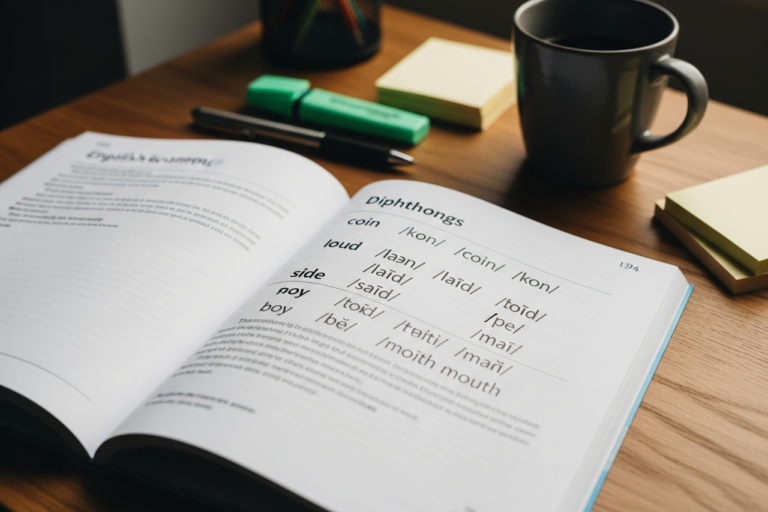
You might be surprised by how often you use diphthongs without even realizing it. Many common English words rely on these gliding sounds. For example, the /ɔɪ/ sound, often spelled with “oi” or “oy,” is found in words like “coin” and “toy.” Similarly, the /aʊ/ sound appears in words like “town” and “clown.”
Identifying diphthongs in written words can be tricky since spelling isn’t always consistent. However, looking for common letter combinations like “ow,” “ou,” “ai,” “ay,” “oy,” and “oi” can be a good starting point. The best way to confirm is to say the word aloud and feel for the glide in the vowel sound.
Here are some of the most frequent diphthongs with examples and their IPA symbols:
|
Diphthong (IPA) |
Common Spelling |
Example Words |
|---|---|---|
|
/aɪ/ |
i, y, igh, ie |
light, sky, tie |
|
/aʊ/ |
ow, ou |
town, loud, brown |
|
/ɔɪ/ |
oi, oy |
coin, toy, boil |
|
/eɪ/ |
ay, ai, e…e |
play, rain, they |
|
/oʊ/ |
o, ow, oa |
slow, snow, road |
Tips for Correctly Identifying and Pronouncing Diphthongs
Getting the right pronunciation for any new sound takes time and practice. To say English diphthongs well, you need to watch the movement of your mouth. Start with the first vowel sound. Then, ease into the second one. Do this without stopping in the middle. For example, when saying /aɪ/ like in “light,” begin with an open “ah” and glide to a soft “ee.”
Some diphthongs in English are harder for learners, especially when these sounds are not in their own language. The /oʊ/ sound in “slow” and the /eɪ/ sound in “play” may need more practice. Using example sentences can help you work on these sounds in a real way.
Here are a few tips to help you get better:
-
Listen and Imitate: Notice how native speakers use diphthongs in movies or songs. Try to copy these vowel sounds as closely as you can.
-
Use Technology: You can try language learning apps or websites. They have audio examples and are good for practice. Many tools will help you with pronunciation.
-
Break It Down: Say the diphthong by itself. Start with the first vowel. Then say the last vowel. After that, try gliding between them until it feels smooth.
These ways will help you know your English vowel sounds and improve your pronunciation. Keep listening, keep saying the words, and practice a lot with these example sentences from
Diphthongs in Language Learning and Teaching
Diphthongs are more than just single sounds. They play a big role for both learners and teachers. For linguists, diphthongs are very interesting because they show a lot about how sounds work in language. For people learning a language, diphthongs can be hard. They often stop people from getting that smooth, natural accent.
Even native speakers say diphthongs in different ways, depending on where they come from. Knowing why diphthongs matter and how to teach them well can really help in the classroom.
Why Diphthongs Matter in English Pronunciation and Classroom Strategies
Diphthongs play a big role when you learn English pronunciation. They show up a lot in the language and can change the meaning of words. If you do not say a diphthong the right way, it can cause people not to understand you. It can also make your speaking sound less natural. Getting good at diphthongs can help you speak more clearly and sound more fluent. Many languages use diphthongs, but not all, so for some people, these vowel sounds can be tough to learn in English.
When you talk about diphthongs with young students or anyone who is new, try using easy ideas. You can use hand signs to show how your mouth moves. You can also use pictures that make learning more fun. Connecting new sounds to words that students know will help these new parts of English vocabulary stay in their heads.
Here are some ways you can teach diphthongs in class:
-
Minimal Pairs: Use words that are almost the same, but one uses a vowel and one uses a diphthong, like “met” and “mate,” to point out the sound.
-
Visual Aids: Draw the shape of the mouth or let students look in a mirror. This helps them see what to do when making the sounds.
-
Repetitive Drills: Use fun chants, songs, and games that repeat diphthongs. This helps people hear and say these sounds over and over
Conclusion
To sum up, it’s important to understand diphthongs if you want to get better at English pronunciation. Diphthongs are special gliding vowel sounds. When you learn how to use these sounds, you can speak more clearly and understand people better. This is helpful for students, teachers, and anyone who loves to learn language. If you add diphthong and gliding vowel practice to your study time, you will soon see a big difference. You will notice more about how English sounds work. Make this a part of your work to get better with English. Try to have some fun as you learn about diphthongs, too. If you want help made just for you, you can ask for a free talk about it today.