Key Highlights
-
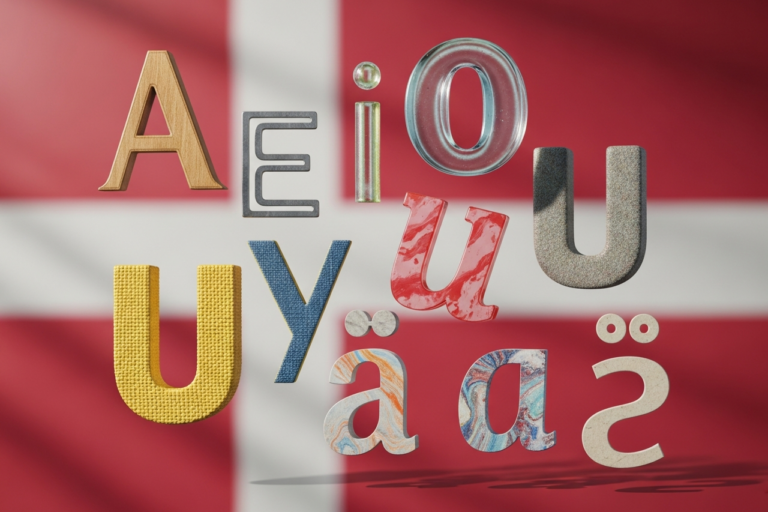
The Danish language has nine vowels in writing, and it uses the extra vowels Æ, Ø, and Å. These are not in English.
-
It is important to learn Danish vowel sounds for good clear pronunciation, since there are about 20 different vowel sounds.
-
English speakers often find it hard to tell the difference between long and short vowel sounds. This can change what a word means.
-
Danish pronunciation can be tough because of things like vowel reduction and the glottal stop.
-
Getting to know these unique vowel sounds will help you speak the Danish language with confidence.
Introduction
Are you ready to learn about the world of the Danish language? One thing that stands out for many people is the complex vowel system. This is what makes danish pronunciation harder than you may think at first. In Danish, the way you say a vowel can change what the word means. This does not happen as much in English. There are many small changes in sound, and these can be tough to get right.
If you want to sound more like someone from Denmark, you need to know how to use their vowels well. This will be your first big step on your way to speaking better. This guide will show you what you need to know about the danish vowel system. It will help make your journey with the danish language easier and give you the basics you need to speak well.
Overview of Danish Vowels
Danish is a North Germanic language. It has a lot of different vowel sounds. The alphabet has nine vowels, but when people speak, there are about 20 different vowel sounds. This happens because the way you say a vowel can change. It can also get longer or shorter.
Knowing these small changes is important for Danish pronunciation. There are many ways to say each written vowel. It can change based on where the vowel is in the word or what letter comes after it. So, to get better at Danish pronunciation, people need to listen a lot and practice. Next, we will talk more about why vowel sounds are so important in Danish and how vowel quality matters.
The Role of Vowels in the Danish Language
Vowels are at the center of Danish pronunciation. Small changes in vowel sounds can make a word mean something very different. For example, hun means “she” and hund means “dog.” The only difference is a small sound called a stød, but this changes the meaning a lot. So, getting vowel sounds right is key if you want to speak and understand Danish well.
When you put sentences together, even easy main clauses, you need to use the right vowel sounds. This helps others know what you want to say. If you get a vowel sound wrong, people might not understand you, and this can be hard for anyone new to the danish language. It’s not just about learning the words, but also hearing and using the flow and beat that vowel sounds have in Danish.
If you want to learn the danish language, you should pay attention to vowel sounds from the start. This helps you build a strong base for talking and for understanding others when they speak. The more you work on your danish pronunciation and the more you listen, the more your speech can sound like a native speaker.
Number of Vowel Sounds vs. Written Vowels
The Danish alphabet uses the Latin alphabet. It has 29 letters. Out of these, nine are written vowels: A, E, I, O, U, Y, Æ, Ø, and Å. This looks easy at first, but the number of vowel sounds in the Danish language is much bigger.
In spoken Danish, the number of vowel sounds is about 20. This large gap between written vowels and spoken vowel sounds is what makes Danish pronunciation hard for many people. One vowel in writing can sound different in different words.
Because of this, you cannot always tell how a word will sound by its spelling. For instance, the letter ‘a’ is said one way in farfar (grandfather) and another way in dansk (Danish). If you understand this, you will find it easier to learn the Danish language.
Keywords: vowel sounds, danish pronunciation, danish language, danish alphabet, number of vowel sounds, latin alphabet
Basic Classification of Danish Vowel Types
The Danish vowel system has some easy parts that help you understand it better. One big thing to know is the idea of vowel length. In Danish, there are long and short vowels. The length of a vowel is often decided by the consonants that come after it.
A long vowel is usually found before a single consonant. A short vowel is often heard before two or more consonants. This is a key rule in Danish. For example, the ‘o’ in kone (wife) is long. The ‘o’ in sommer (summer) is short. Vowel length can change a word’s meaning, so it’s important to learn.
Vowels are put into groups based on where in the mouth they are made:
-
Front vowels: The tongue is forward in the mouth.
-
Central vowels: The tongue sits in the middle of the mouth.
-
Back vowels: The tongue is toward the back of the mouth.
The Danish Vowel Alphabet
The Danish alphabet uses all the 26 letters that you get in the English alphabet. Besides those, there are three extra vowels: Æ, Ø, and Å. These letters do not just have marks on them. They are completely different and be found at the end of the alphabet.
These extra vowels are needed to write many Danish words. They also have their own sounds. For example, ‘æ’ is found in the word æble (apple) and ‘ø’ shows up in øl (beer). You will need to get to know these nine Danish vowel letters. That is how you start reading and writing Danish words the right way. Now, we can look at these unique sounds and danish alphabet vowels in more detail.
Introduction to the Standard Vowel Letters
The main vowels in the Danish alphabet are A, E, I, O, U, and Y. These letters may seem the same to english speakers, but the way you say them in the danish language can be different. Every one of these vowels can make more than one vowel sound. The way you say them often depends on where the letter is in a word. Sometimes the vowel sounds are called long or short.
For example, the letter ‘A’ can sound different too. In the danish language word stang (poll), it sounds like the ‘a’ in “car.” But in a word like nat (night), it can sound more like the ‘e’ in “bed.” The letters ‘E’, ‘I’, ‘O’, and ‘U’ also change their vowel sounds a lot. There is not always one perfect way to match them to English.
Learning these changes is key if you want to have clear vowel sounds in standard danish. You have to get used to how the language sounds, not just what the letters look like. This is something that can be hard for english speakers when learning the danish alphabet. But it can also be fun and feels good when you get it right.
Overview of Extra Danish Vowel Letters (Æ, Ø, Å, Y)
Beyond the usual vowels, the Danish alphabet has extra ones: Æ, Ø, and Å. Y is also used as a vowel. These letters make sounds that english speakers may not know. These are important for danish pronunciation. They are different letters, not just forms of other ones.
The vowel quality of these letters is special. The letter Å came in to take the place of “aa” and sounds a lot like the ‘o’ in “open.” The letters Æ and Ø make sounds that are not found in english. You need to pay close attention to how you move your mouth and tongue.
Here’s a quick look at these extra vowels:
-
Æ (æ): Sounds a bit like the ‘e’ in “end,” but you need to open your mouth wider. It shows up in words like bær (berry).
-
Ø (ø): Makes a sound similar to the ‘u’ in “hurt,” but you round your lips when you say it. It is used in købe (to buy).
-
Å (å): Sounds like the ‘o’ in “open” when the sound is long, as in båd (boat).
Visual Chart of Danish Vowel Characters
To help you visualize the core components of the Danish vowel system, it’s useful to see all nine written vowels together. These letters form the foundation for the 20+ vowel sounds you’ll encounter in the spoken Danish language. The Danish alphabet extends the familiar Latin script with three additional characters that are essential for proper spelling and pronunciation.
Remember, while there are only nine written characters, their pronunciation is highly variable. This chart represents the building blocks you’ll use to read and write, but the true challenge lies in learning the many sounds each letter can make.
|
Vowel Letter (Uppercase) |
Vowel Letter (Lowercase) |
|---|---|
|
A |
a |
|
E |
e |
|
I |
i |
|
O |
o |
|
U |
u |
|
Y |
y |
|
Æ |
æ |
|
Ø |
ø |
|
Å |
å |
Understanding Danish Vowel Sounds
Now we have looked at the written vowels. It is time to listen to how they sound. Danish pronunciation is not always easy. The letter and the sound do not always match up. In Danish, the same vowel can sound in more than one way. This is an important part of the Danish language.
Danish speakers hear these small changes in vowel sounds as normal. These sounds help show the meaning of words. For people learning, you need to train your ear so you hear these vowel sounds. Let’s talk about the main vowel sounds and how people say them in Danish.
Main Danish Vowel Sounds and Their Pronunciation
The core of Danish pronunciation is found in its wide range of vowel sounds. Each written vowel has at least a long sound and a short sound, and sometimes there be more. The vowel quality can change based on the letters around it and the stress.
A long vowel, like the ‘i’ in bil (car), will be clear and drawn out. A short vowel, like the ‘i’ in ikke (not), is quick and clipped. It is a basic difference in Danish pronunciation. For example, the long ‘o’ in kone (wife) sounds like the “o” in “most.” The short ‘o’ in blomst (flower) sounds like the “o” in “odd.”
To get good at these vowel sounds, you need to practice. The long ‘u’ in hus (house) sounds like “oo” in “rude.” The short ‘u’ in tyggegummi (chewing gum) is close to the ‘o’ in “rob.” The best way to learn about these types of vowel quality is to listen to native speakers often. It will help you understand long vowels and all Danish pronunciation tricks.
Long vs. Short Danish Vowels
One key part of danish pronunciation is vowel length. The difference between a long vowel and a short vowel in danish words can change the meaning completely. Learners need to get this right to make sure people understand them.
A vowel is long when it comes before one consonant or at the end of a word. It is short when it comes before two or more consonants. The ‘a’ in male (to paint) is long. The ‘a’ in mand (man) is short. Just one letter change makes the sound and the meaning very different.
Here are some examples:
-
Hyle (to howl) has a long vowel. Hylde (shelf) has a short one.
-
Svin (pig) has a long vowel. Svinde (to shrink) has a short one.
-
The pattern is easy to spot. But it is still very important to keep listening and practice to learn the fine differences in how long you say the vowels.
Tense and Lax Vowel Distinction
The Danish vowel system does not just depend on how long the sound is. It also uses a difference between tense and lax vowels. Here, tense means you use more muscle in your tongue and mouth when you say the vowel. Tense vowels come out clearer and sharper. Lax vowels use less muscle and sound more relaxed.
Most of the time, this tense and lax difference matches how long the vowel lasts. Tense vowels are often long. Lax vowels are usually short. For example, the long ‘i’ in bil (car) is tense. You use more muscle to say it. The short ‘i’ in fisk (fish) is lax. You do not need to use much muscle to say this sound.
Learning about danish pronunciation and the way vowels work will help you get closer to speaking like a native. You have to think about both the vowel length and the feeling in your mouth. Notice if the sound feels tight and clear or easy and loose. This step will help you get an even better accent.
Challenging Aspects of Danish Vowel Pronunciation
So, why do a lot of people have trouble with danish pronunciation? It’s because the language has a very complex vowel system. There are a lot of vowel sounds, and many unique sounds in danish that do not appear in english or other languages.
Danish speakers learn these vowel sounds as kids. But for someone who learns danish later in life, it can be really hard to hear the difference at first. There are many kinds of vowel sounds, and they change in terms of length and how tense they are. Other things, like vowel reduction, make danish even harder to pick up. Now, let’s look at what makes the vowel system and danish pronunciation so hard for most people new to the language.
Why Danish Vowels Are Considered Difficult
Danish vowels are known to be hard, especially for english speakers. This is because the danish language has about 20 vowel sounds. That is much more than in english. Many of these vowel sounds are very close to each other. This makes it tough for people to hear or say them right.
There are also unique sounds in danish that you do not find in english. The vowel sounds for “ø” and “y” need you to make new shapes with your mouth and move your tongue in ways you may not be used to. This can feel strange at first. The way words are spelled and said in danish also does not match well. This means you can’t always guess how to say a word just by looking at it.
Here are some of the main things that make danish vowels tough:
-
The Stød: This is a glottal stop. It is like the sound in “uh-oh.” It can change what a word means (for example, mor vs. mord).
-
Silent Consonants: Letters like ‘d’ and ‘g’ are often not said or are very soft. This can change the vowel sound right before them.
-
Vowel Length: The difference between long and short vowel sounds is important. It can change the meaning of a word.
If you learn all these vowel sounds, glottal stop, and their rules, you will be able to say words in
Vowel Reduction and Merging in Spoken Danish
One thing that makes spoken Danish different from how it is written is vowel reduction. In parts of a word where the stress is not strong, vowels get weak and often sound like ‘uh’ in English. This means it can be hard for people learning Danish to hear each word when people speak fast.
This change in vowel sound is called a vowel shift. It happens naturally when people talk. For example, the ending ‘-er’ on many words gets very soft or hard to notice. This is very common in spoken Danish, and it helps explain why some people think the language sounds mumbly compared to other Scandinavian languages.
Because of this, if you know how to say a word by itself, it may sound very different in a full sentence. The rhythm and stress in Danish pronunciation mean that some vowels run together or get reduced. That is why it is so important to listen to native speakers and try to copy their way of speaking. If you want a real-sounding danish pronunciation, watching and repeating can help you use vowel shift the right way.
Unique Danish Vowel Sounds Not Found in English
A big problem that many English speakers face when they want to learn the Danish language is the vowel sounds. Some vowel sounds in Danish are so unique that English does not have anything close. That means you have to pick up these sounds from the start, and for the first time.
For example, the letters ‘ø’ and ‘y’ show vowel sounds that are main examples of this problem. The sound from ‘ø’ comes when you shape your lips like you want to say “o,” but at the same time, you try to say “ee.” When you say ‘y,’ you must round your lips and move your tongue in a way that does not feel common. The vowel ‘æ’ has its own sound too, and it is not really like any vowel found in English.
These unique sounds can be hard for many. That is because your mouth has to move in ways it is not used to. To get better at these, you can try the following tips:
-
Ø: Try to say the ‘u’ in “hurt” and round your lips at the same time.
-
Y: Say the “ee” in “see” while rounding your lips like you are getting ready to whistle.
-
Æ: Start with the ‘e’ sound in “end” and just open your jaw a bit more.
These tips can help you make those Danish vowel sounds sound more natural, even if they do not feel that way at first.
Pronunciation Guide with Word Examples
Theory can give you the basics, but the real way to build good pronunciation skills is by hearing and practicing sounds with real words. This section gives you examples with different Danish vowel sounds we talked about.
When you see these vowel sounds in Danish words, you can spot patterns and start to get a better feel for the words. You will also begin to build your vocabulary. The main idea is to turn the rules you know into sounds you hear and use. Now, let’s look at some sample words. They can help train both your mouth and your ears.
Sample Words for Common Danish Vowel Sounds
The best way to get better at your pronunciation skills is to use what you learn in real life. There are some common Danish words you can use to hear the basic vowel sounds. Pay attention to the fact that the same letter can have different sounds. This is a great way for you to start training your ear for vowel sounds in Danish words.
For the vowel ‘A’, hear the different sounds in farfar (grandfather) and dansk (Danish). In farfar, the ‘a’ is like the sound in “car.” In dansk, it sounds more like the ‘e’ in “bed.” In Danish, the way you say a vowel sound often depends on the word.
Here are some more Danish words you can use to practice your pronunciation skills:
-
Long E: te (tea) – This is a sound that you will not find in English. It is somewhere between “ay” and “ee.”
-
Short I: ikke (not) – It is like the ‘e’ you hear in “egg.”
-
Long Å: båd (boat) – This is like the ‘o’ you hear in “open.”
-
Short Ø: svømme (to swim) – This sounds a bit like the ‘i’ in “bird.”
Common Mistakes and How to Avoid Them
When you start to learn Danish vowels, it’s easy to make some mistakes, especially if you speak English. One big problem is when you try to match Danish sounds to English sounds. The Danish “ø” and “y” do not have sounds in English, so if you use English for them, you will say them wrong.
People also often get the length of vowels wrong. Saying a short vowel as a long one, or the other way around, can change the word. For example, students might mix up ven (friend) and vin (wine) because they do not use the right vowel length.
To help with Danish pronunciation and avoid these problems, remember:
-
Don’t substitute: The Danish vowels are new sounds that do not match English. Learn them as their own sounds.
-
Mind the length: Make sure you notice if a vowel is long or short. Try minimal pairs like male (to paint) and mæle (to speak).
-
Listen for the stød: The glottal stop is important. It helps tell Danish words apart.
If you pay attention to vowel length, use minimal pairs, and listen for the glottal stop, you will get better at Danish pronunciation and make fewer mistakes than most English speakers.
Tips for Improving Danish Vowel Pronunciation
Improving your Danish vowel pronunciation will take some time and regular practice. The main thing is to use both your ears and your mouth when you work on it. Listen to native speaker. You can find Danish music, podcasts, or TV shows that you like. This will help you get used to the rhythm and sound of the language.
One of the best pronunciation tips is to record yourself as you speak. Then compare your voice to a native speaker. This gives you instant feedback. You will hear the difference and can fix your pronunciation. It might feel odd at first, but it works really well to help you get better.
For more guided learning, you can try these strategies:
-
Take Danish lessons: A tutor will spot your challenges and give you exercises to help.
-
Use minimal pairs: Practice saying word pairs with only one different vowel sound (like synge vs. senge).
-
Practice daily: Even 10-15 minutes each day is better than one long session per week.
Phonetic Representation of Danish Vowels
To show how the sounds of Danish vowels work, people use phonetic symbols from the International Phonetic Alphabet (IPA). The IPA gives a clear symbol for each sound. This removes any confusion that happens with normal spelling.
This really helps with Danish pronunciation, because one letter in Danish can stand for different sounds. If you learn Danish and know these phonetic symbols, it can be very useful. It helps you get the sounds right when you speak. Let’s see how these symbols look and why they work well.
Danish Vowels and the International Phonetic Alphabet (IPA)
The International Phonetic Alphabet (IPA) is a way to show every sound in a language with its own symbol. This is very helpful for Danish vowels. Sometimes the spelling hides small differences in how words are said. The IPA lets us show danish pronunciation clearly. People who study language use the IPA to understand pronunciation. It works for everyone, everywhere.
The IPA uses phonetic symbols to show how sounds should be made. Take the letter ‘a’ in Danish. The IPA might use [a] or [æ] as symbols. This helps show there is not just one “a” sound. There are many different “a” sounds, and the IPA tells which one it is.
Learning a few main phonetic symbols can help you get danish pronunciation right. With these symbols, you know the sound to make, and you don’t have to guess. You don’t need to rely on English sounds. These symbols act like a map for Danish sounds.
Visual IPA Chart for Danish Vowel Sounds
To make the connection between Danish vowels and their precise sounds clearer, an IPA chart is an excellent tool. This chart pairs the written vowel with its corresponding phonetic symbols and provides an example word. This visual representation can help you understand the specific vowel sounds you need to produce.
This is not an exhaustive list, as some vowels have even more variations, but it covers the most common sounds. Use this IPA chart as a reference to guide your practice and train your ear to recognize these distinct phonetic sounds.
|
Written Vowel |
IPA Symbol |
Example Word (Danish) |
English Sound Approximation |
|---|---|---|---|
|
i (long) |
[i:] |
bil (car) |
“ee” in “see” |
|
i (short) |
[e] |
fisk (fish) |
“e” in “egg” |
|
e (long) |
[e:] |
te (tea) |
“a” in “male” (smiling) |
|
e (short) |
[ɛ] |
seng (bed) |
“e” in “end” |
|
æ (long) |
[ɛ:] |
læse (to read) |
“e” in “end” (more open) |
|
a (long) |
[ɑ:] |
far (father) |
“a” in “car” |
|
a (short) |
[a] |
nat (night) |
“a” in “cat” (but shorter) |
|
y (long) |
[y:] |
ny (new) |
“ee” in “see” (with rounded lips) |
|
ø (long) |
[ø:] |
købe (to buy) |
“u” in “hurt” (with rounded lips) |
|
u (long) |
[u:] |
hus (house) |
“oo” in “rude” |
|
o (long) |
[o:] |
kone (wife) |
“o” in “most” |
|
å (long) |
[ɔ:] |
båd (boat) |
“o” in “open” |
Conclusion
Mastering vowel sounds in the Danish language is a must if you want to get better at speaking and understanding it. You need to know the unique sounds, how to say them, and what part they play in the language. This will help you talk and listen more well. At first, Danish vowels can feel tough, but with the right practice and methods, you will get them. Use these tips to get used to vowel sounds in Danish and stay away from common slip-ups. Be patient and keep going, because this is how you learn. Dive in and enjoy all the little details that make the Danish language special. Happy learning!
Frequently Asked Questions
How do Danish vowel sounds influence language learning?
The Danish language has a lot of vowel sounds. This number of vowel sounds makes learning Danish pronunciation harder, because small changes in how you say a vowel can change the meaning of a word. You have to pay close attention to these sounds when you learn. Listening and repeating the words is very important when you start to learn Danish.
Are there Danish vowels that English speakers struggle with most?
Yes, english speakers find it hard to say some danish vowel sounds like ‘ø’, ‘y’, and ‘æ’. These sounds are not in english. The danish pronunciation of these vowels use different mouth and tongue positions. This makes them feel odd at first. The sounds need lots of practice to get right.
What strategies help beginners master Danish vowel pronunciation?
You can learn Danish vowels if you keep trying and use helpful pronunciation tips. Taking Danish lessons will give you expert help and support. Recording yourself helps you get instant feedback on how you sound. It is good to listen to and practice minimal pairs. You should also hear native speakers as much as possible each day. This will help you get the sounds right over time and build muscle memory for better pronunciation.