Key Highlights
Here’s a quick look at what you will learn about the Cyrillic alphabet:
-
The russian language uses ten russian vowels. These vowels fall into two main groups.
-
The groups are called hard vowels and soft vowels.
-
Hard vowels show that the letter in front has a hard sound.
-
Soft vowels make the letter in front sound soft.
-
Some russian vowels in the cyrillic alphabet have sounds you will not find in english.
-
Vowel sounds can change when they are stressed or unstressed in a word.
Introduction
Are you starting to learn the Russian language? One of the first things you need to do is understand the cyrillic alphabet. You will see there are vowels in the russian alphabet you need to know. Some letters may look like what you have seen before, but their sounds are not the same. Learning the ten russian vowels is very important. They help you get good pronunciation and speak more like a native.
In this guide, you will learn all about cyrillic vowels. You will find out how they began, their sounds, and how they are used in words. This will help you as you learn more about russian and get better at it. Let’s get started!
Overview of Cyrillic Vowels
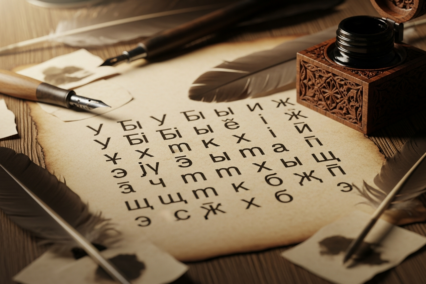
The Russian Cyrillic alphabet has 33 letters, and there are ten russian vowels in it. These ten vowel letters are split into two main groups. There are five hard vowels (А, О, У, Ы, Э) and five soft vowels (Я, Ё, Ю, И, Е). This idea is important for russian pronunciation.
In the latin alphabet used in english, one vowel can make many different sounds. The cyrillic alphabet is not the same. In the cyrillic system, russian vowel letters match up more directly with the sounds, and the sound can also change the consonants next to them. When you know how these different sounds work, it will help you speak clear and good russian. We will talk about where these alphabet letters came from and how they are not the same as english or latin vowels.
History and Evolution of Cyrillic Vowel Letters
The cyrillic script goes back to the 9th century. It came from the work of two brothers, Saints Cyril and Methodius, who were from the Byzantine Empire. They were missionaries. They made the first slavic writing and alphabet, called Glagolitic, so they could translate books for people who spoke slavic languages.
Later, the cyrillic script started. It used many letters from the greek alphabet. The script also used some parts from Glagolitic to fit slavic sounds that greek did not have. People named the new alphabet after Cyril.
With time, the russian alphabet changed. There were reforms to make it simpler and for use in different slavic languages. Today, the vowels in the russian alphabet use these ten main letters: А, Е, Ё, И, О, У, Ы, Э, Ю, Я. This shows a long way of change and work over many years to get to the modern russian alphabet.
Key Differences between Cyrillic and Latin Vowels
When you look at Cyrillic vs. Latin vowels, you can see some clear differences. The Russian alphabet has some letters that look like English letters, but they are said in a different way. For example, the Cyrillic letter ‘У’ makes a sound like the ‘oo’ in “boot.” It does not sound like the English ‘u.’
The russian language also has some special vowel sounds that do not show up in the english language. One example is the vowel ‘Ы.’ This sound is hard for people who speak English. You need to use your tongue in a way that feels odd to an english speaker.
There is also a rule in the Russian alphabet about hard and soft vowels. This rule does not exist in the Latin alphabet. Here is a short list of the differences between Cyrillic and Latin vowels:
-
Different forms and sounds: Some russian vowels and letters look the same as the english ones, but they sound different (for example, В [v], Н [n], Р [r]).
-
Unique sounds: Russian has vowels like ‘Ы.’ These do not exist in the english language.
-
Hard/Soft Distinction: Cyrillic vowels show if the letter before them, or what is called the preceding consonant, should be said as hard or soft. The latin alphabet does not do this.
The way sounds and vowels are written and used in russian is not the same as English, so make sure to keep those key points in mind
The Core Vowel Sounds in Russian Cyrillic
If you look at the russian language, you will see there are six main vowel sounds. These sounds are written with the ten vowel letters in the russian alphabet. So, some vowel sounds are shown by more than one letter. The way you say these russian vowels can change if the vowel is part of a stressed or unstressed syllable. This is very important when you want to speak russian vowel words the right way.
To show the sounds in the russian language, people use something called the International Phonetic Alphabet (IPA). The IPA can help you know the exact way to say these russian vowel sounds. Next, let’s go over the main russian vowel letters and see their IPA values. Then we will see simple real-life pronunciation examples using russian vowels.
List of Main Russian Vowel Letters and Their IPA Values
To master Russian pronunciation, it’s helpful to know the specific sounds of each vowel. The International Phonetic Alphabet (IPA) provides a standardized way to represent these sounds, removing the ambiguity that can come from comparing them to English words.
Each of the ten Russian vowels corresponds to one of six basic vowel sounds. The soft vowels (Я, Ё, Ю, Е, И) often include a “y” sound or affect the consonant before them. The hard vowels (А, О, У, Ы, Э) produce a clearer, more open sound.
Here is a table showing the main vowel letters from the Russian alphabet and their typical IPA representation. This will help you understand their distinct sounds.
|
Russian Vowel |
IPA Value |
English Sound Example |
|---|---|---|
|
А/Я |
[a] |
‘a’ in ‘far’ |
|
О/Ё |
[o] |
‘o’ in ‘more’ |
|
У/Ю |
[u] |
‘oo’ in ‘boot’ |
|
Э/Е |
[e] |
‘e’ in ‘met’ |
|
Ы/И |
[ɨ]/[i] |
(no direct equivalent for Ы) / ‘ee’ in ‘meet’ |
How to Pronounce Each Russian Vowel with Common Examples
To get a perfect Russian accent, you need to practice each vowel sound. Listen to each one and try to say it just like that. The way you say a vowel can change with word stress. If the vowel is stressed, it sounds clear and strong. If it is not stressed, the sound is softer or can change.
For example, the letter ‘О’ will sound like “oh” if you say it with stress on it. When the ‘О’ is not stressed, it will sound more like “uh” or “ah.” This is something that happens a lot in russian pronunciation. It can be hard for people just starting out. It’s a good idea to watch for stress marks in dictionaries, because they can really help you with word stress, getting vowel sounds right, and working toward a perfect Russian accent.
Here are some examples that show how these vowel sounds work in russian words:
-
A as in Катя (KAH-tya): Here, the ‘A’ gets the stress. It sounds like the ‘ah’ in “father.” Look at the difference that stress makes.
-
O as in Конь (KOHn’): In this word, the ‘O’ is stressed. It is just like the ‘o’ in “morning.” The stress is what makes the vowel sound clear.
-
У as in Курица (KOO-ri-tsa): The ‘У’ sound will always be the same. It
Hard Vowels vs. Soft Vowels
One of the most basic ideas in the Russian alphabet is how it splits vowels into hard vowels and soft vowels. This is very important for good pronunciation because these vowels change the sound of the consonant before them. The five hard vowels are А, О, У, Ы, and Э.
The five soft vowels are Я, Ё, Ю, И, and Е. Soft vowels add a small “y” sound or make the consonant before them softer. This means the sound changes a bit. You can tell the difference by looking at the letters and seeing how they change words when you speak. Let’s take a closer look at how to spot each kind of vowel in the russian alphabet.
Identifying Hard Vowel Letters in Cyrillic
You can tell the hard vowels in the Cyrillic alphabet by looking for five special letters. These russian vowels are А, О, У, Ы, and Э. If a consonant comes before one of these vowels, you will say that consonant in a hard way.
What does a hard consonant sound like? A hard consonant in russian is the main sound you hear, without making it soft or adding a “y” feeling. For example, in the russian word “да” (which means “yes”), the ‘д’ is hard because it comes before the hard vowel ‘а’.
To find them in the alphabet, just remember these five. These are the hard vowels you should know for learning the cyrillic alphabet:
-
А (sounds like ‘a’ in ‘father’)
-
О (sounds like ‘o’ in ‘more’)
-
У (sounds like ‘oo’ in ‘boot’)
-
Ы (this one is a sound that we do not have in English)
-
Э (sounds like ‘e’ in ‘met’)
What Makes a Vowel Soft and Its Pronunciation Effects
In the Russian language, a vowel can be “soft.” This happens either because of the vowel itself or because a soft vowel follows a consonant in a word. The five soft vowels in Russian are Я, Ё, Ю, И, and Е. These vowels show that the letter before them, the consonant, should be soft. This is called palatalization.
Palatalization means you lift the middle part of your tongue up toward the roof of your mouth when you say the consonant. This gives the consonant a softer sound. For example, the ‘т’ sound in the word “тот” (which means “that”) is hard. But in “тётя” (which means “aunt”), the ‘т’ is soft because of the vowel ‘ё’ that comes next. The ‘ё’ vowel changes how you say the ‘т’.
Soft vowels do two things. They give you a vowel sound, and they also change the way the consonant before them sounds. A good trick to create a soft vowel sound is to add a “y” before a hard vowel sound. For example, Я sounds like “ya” (Y plus А), and Ю is like “yu” (Y plus У). This double job is very important for good Russian pronunciation. Soft vowels play a big part in how Russian words are read and spoken.
Cyrillic Vowels in Other Languages
The Cyrillic alphabet is used for more than just the Russian language. People in many places in Eastern Europe and Asia use the cyrillic alphabet, too. Most of these languages use the same core letters as the russian alphabet. But languages like Ukrainian, Belarusian, and Bulgarian have their own unique sounds. They also have vowel letters that are different from russian.
For instance, Ukrainian and Belarusian have vowel letters that you will not find in the russian alphabet. In Bulgarian, the way people say vowels can be quite different from russian. Sometimes, these vowel letters look the same, but they sound different. Now, let’s look at some of these big differences with cyrillic vowel letters and unique sounds.
Unique Vowel Letters in Ukrainian and Belarusian
If you look past Russian, you will see interesting changes in the Cyrillic alphabet. Ukrainian and Belarusian are both close to Russian, but use their own vowel letters to show the sounds in their languages.
In the Ukrainian alphabet, there is the letter ‘І.’ It sounds like the Russian ‘И’ (ee). But there is also ‘И’ in Ukrainian, and it is like a mix between ‘ee’ and the Russian ‘Ы.’ Ukrainian also has ‘Ї,’ which you always say like “yi,” and ‘Є,’ which is said as “ye.” These extra vowel letters help show the special sounds you find in Ukrainian.
Belarusian has something too. The Cyrillic alphabet for Belarusian uses ‘Ў.’ People call it “short u,” and it sounds close to the English ‘w.’ It is not a full vowel in a word. These vowel letters are very important for showing how to write and speak these Slavic languages well.
The cyrillic alphabet is not just used for Russian, and every language can have its own special way to use vowel letters. This helps make the alphabet fit each way people talk. It is why learning Cyrillic in English, Russian, or any language gets more fun when you see these vowel letters and how people use them.
Bulgarian Vowel Pronunciation vs. Russian Vowels
Bulgarian uses the cyrillic script like Russian, but the way it pronounces vowels is not the same. One main way it is different is that Bulgarian does not change how vowels sound if they are unstressed. In Russian, you will hear that vowels like ‘о’ and ‘а’ lose their full sound when they do not have stress. In Bulgarian, these vowels keep their main sound, no matter if they are stressed or not.
For instance, the Bulgarian word for “water,” ‘вода’ (vo-DA), has the ‘o’ sound in the first part of the word. It does not matter that it is unstressed. In Russian, the same word sounds more like “va-DA.” This shows that Bulgarian pronunciation with vowels can be more simple for people who are learning it.
Another main way the cyrillic script is used in these languages is with the letter ‘ъ.’ In Russian, ‘ъ’ is called a hard sign, and it does not have any sound. In Bulgarian, ‘ъ’ is a vowel. It sounds close to the ‘u’ in “but.” The sound of this vowel is an important part of how the Bulgarian language sounds.
Conclusion
In short, learning Cyrillic vowels is very important if you want to get good at using languages that use this script. These vowels have a long history and some special ways of saying them. This can be tough, but it also gives you many chances to learn. When you look at hard and soft vowels and how they show up in other Slavic languages, you will understand the sound system better. Practice is one of the best ways to get the pronunciation right and to help you remember it. Try out the different vowels, listen to the sounds, and soon you will feel at ease with Cyrillic vowels. If you want to know more or get help, feel free to ask.
Frequently Asked Questions
What are some tips for remembering Cyrillic vowel letters?
To help you remember the russian vowels, practice linking them with their sounds every day. You can use flashcards for both print letters and cursive forms. Try to group the vowels into hard ones (А, О, У, Ы, Э) and soft ones (Я, Ё, Ю, И, Е). This will help you understand the russian alphabet better. It will also make it easier for you to learn and use russian vowels.
How do vowel letters affect word pronunciation in Cyrillic languages?
Vowel letters are important for Russian pronunciation. They help decide if the consonant before them will be hard or soft. This can change the meaning of a word. Word stress also matters a lot. If a vowel is not stressed, it can sound different. This affects how syllables sound and changes their rhythm and clarity.
Are Cyrillic vowels represented differently in IPA notation?
Yes, Cyrillic vowels use certain IPA symbols. This helps show their unique sounds in the Cyrillic alphabet. For example, the Russian vowel ‘Ы’ is shown as [ɨ] in IPA. Using IPA makes it easier for people to see the different sounds of each Cyrillic vowel. It helps us get good pronunciation in Russian.