Key Highlights
Learning about Arabic phonology helps you see a whole new side of how this language sounds. Here’s a simple guide to Arabic pronunciation and what you will get out of it.
-
Arabic phonology has special consonants and vowels. These can seem new or different for English speakers.
-
This guide looks at Modern Standard Arabic (MSA). It’s the literary version of the language.
-
You will find out how the way people speak can change between standard Arabic and other dialects.
-
We will talk about emphatic consonants. These help give Arabic its special sound.
-
You’ll see how the arabic script is closely linked to how it is spoken.
-
There’s more about how short vowels and long vowels are used in the arabic sound system.
This guide will help you get to know the basics of arabic, its pronunciation, and how vowels or consonants in standard arabic and msa make it sound.
Introduction
Welcome to the world of Arabic! If you want to know more about the sounds in this language, you are in the right place. This guide is here to help you learn the basics of Arabic phonology. Phonology is about how sounds work in a language. We will look at the sounds in Arabic and how they fit together when you speak. You will also learn about the rhythm and flow in Arabic pronunciation. Knowing these things is the first step to talking and understanding Arabic better. Let’s start this journey and learn more about Arabic, its pronunciation, and phonology.
Key Features of the Arabic Sound System
The arabic sound system stands out, especially when you compare it to the way people speak in Indo-European languages. In arabic, the phonology is full of consonants. You get many sounds that come from the throat, and most people are not used to these.
These special consonants help give the arabic language its unique feel. On the other hand, the vowels in arabic are simpler. They mostly come from three main sounds and a few longer kinds of each. Now, let’s look at the different sounds you will hear in arabic.
Overview of Arabic Phonemic Inventory and Main Sounds
The Arabic phonemic inventory is a list of all the different sounds, or phonemes, you find in the Arabic language. In this guide, we will talk about Modern Standard Arabic (MSA). This form is the kind you see in books, formal news, and media. The Arabic alphabet is made up of 28 letters. These letters stand for the main sounds in Arabic, like consonants and long vowels.
Consonants are a big part of this sound group. Standard Arabic has certain sounds you do not often hear in other languages. Some of these are uvular, pharyngeal, and pharyngealized consonants. You need to use parts of your throat to make these sounds, and that may not be easy if you have not used them before. For example, sounds like /q/ (qāf), /ħ/ (ḥā’), and /ʕ/ (‘ayn) are some of the special phonemes in Arabic.
It is also interesting that sounds like /p/ and /v/, which are common in other languages, do not show up in Standard Arabic. The whole sound system is built around very different vowels and consonants, so it gives Arabic a way of speaking that feels fresh and different.
Emphatic Consonants, Vowels, and the Role of Stress
One thing that stands out in the Arabic sound system is the use of emphatic consonants. These consonants are said in a way that sounds heavier. You make them deeper in your throat, so they change how the nearby vowels sound. This is a big part of the pronunciation that makes Arabic different from other languages.
The vowel system is pretty simple. In Arabic, there are three main short vowels: /æ/, /i/, and /u/. Each of them also has a long form. The vowels are easy to tell apart from one another, which helps with listening and pronunciation.
Stress matters in Arabic spoken rhythm, too. It usually falls on the penultimate syllable, which means the next-to-last syllable in a word. Even if the information here does not go into too much detail about stress, knowing where to put it helps you speak in the right way.
Here are a few main points:
-
Emphatic consonants like /sˤ/ (ṣād) and /tˤ/ (ṭā’) change how the vowels beside them sound.
-
Arabic uses three simple short vowels, and each has a long version.
-
Word stress on the penultimate syllable gives spoken Arabic its flow and rhythm.
Distinct Pronunciation Patterns in Standard and Spoken Arabic
Modern Standard Arabic gives people one main literary language. But how people say words in daily life can be very different. This happens because spoken Arabic has many dialects. Each one has its own way to say things. Even someone new to the language can see the differences.
One word can sound different in Egypt, the Levant, and the Gulf. This is normal in Arabic. It shows the big gap between standard Arabic and how people really speak. Next, we will look at some clear ways the sound of words changes between Modern Standard Arabic and these dialects.
Phonological Differences Between Modern Standard Arabic and Dialects
The primary difference between Modern Standard Arabic (MSA) and spoken dialects lies in their use. MSA is the formal, literary language used in writing and formal speech, while dialects are for everyday conversation. This separation leads to significant phonological variations. For example, some sounds that are distinct in MSA may merge or change in a dialect.
A classic example of this difference can be found in Egyptian Arabic. The sound /g/ is common in this dialect, often as a replacement for the /dʒ/ sound (jīm) found in MSA. Similarly, certain emphatic or classical consonants may be pronounced differently or simplified in various regional dialects.
These changes make each dialect sound unique. The table below shows a common sound shift between MSA and Egyptian Arabic.
|
Sound in Modern Standard Arabic (MSA) |
Corresponding Sound in Egyptian Arabic |
|---|---|
|
/dʒ/ (as in jīm, ج) |
/g/ (as in the English word ‘go’) |
Unique Sounds and Common Pronunciation Challenges for English Speakers
For people who speak English, learning how to say words in Arabic can be tough. The hardest part is trying to say Arabic consonants that are not part of English. To make these new sounds, you have to move parts of your throat and mouth in ways you are not used to. It takes time and work to get your voice to make the right sound, but you can do it with practice.
A big difference in Arabic is the many consonants made in the back of your throat (uvular and pharyngeal consonants). Books and resources like cambridge university press talk a lot about this. Still, the main problem is learning how to make these sounds with your mouth and throat. Even sounds that seem simple at first can be difficult. For example, it is not easy to say the normal /h/ sound and the pharyngeal /ħ/ (ḥā’) the right way.
These are some Arabic sounds that are hard for people learning the language:
-
The ‘ayn (ع), which is a voiced pharyngeal fricative /ʕ/ and does not sound like anything in English.
-
The qāf (ق), a voiceless uvular stop /q/. You say this sound farther back in your throat than the English ‘k’.
-
Emphatic consonants, such as /dˤ/ (ḍād), require your tongue to have a special shape.
Learning these parts of arabic pronunciation
Writing and Speech: The Connection Between Arabic Script and Pronunciation
The Arabic script is made in a way that connects what you see with how you say it. This link is very important for anyone learning Arabic. The alphabet shows the main sounds, like the consonants and long vowels, so people can read it the way it sounds. Because of this, the Arabic script is phonetic in many ways.
But, there is a difference between what is written and what you hear when spoken. Sometimes, the script does not show every part of the pronunciation. Because of this, how sounds are used or changed can be a little different from what is written. Next, we will look at how the Arabic script works with phonology and how the written and spoken forms can change.
Phonological Representation in the Arabic Alphabet
The Arabic alphabet gives a strong and clear way to show how the language sounds, but it does this in its own way. The script uses 28 letters. These letters are used for the consonants and the long vowels. This means the most important parts of the words are easy to see in the writing.
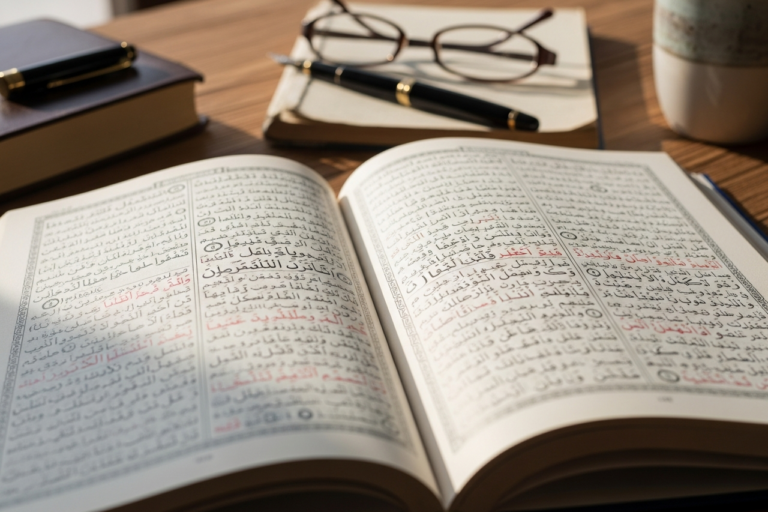
The part that makes the Arabic script different is how it deals with short vowels. In most usual writing, people don’t write the short vowels. So, you have to know the vocabulary and how the language works to figure out the right vowels and the right pronunciation. But in some texts for people learning Arabic, or in important books like the Quran, you will see extra marks on the letters, called ḥarakāt. These marks tell you what the short vowels are. They show if you should use short vowels above or below the letters.
This way of writing makes the Arabic script good for people who know the language well. But it can be hard for beginners. It shows the main link between the written letters—the consonants and long vowels—and how the language sounds. But it does not always show the small vowel sounds. People have to use what they know about the language to fill those in.
Case Endings, Gemination, and Sound Changes in Written Versus Spoken Arabic
The Arabic writing system does more than just show you the alphabet. It also shows special sounds, like consonant doubling (called gemination) and case endings. Gemination is when you say a consonant sound twice. This is shown in writing by a mark called a shadda. The shadda is very important in Arabic. If you use or skip this mark, you can change a word’s meaning.
When you look at Arabic, you can find sound changes between written Arabic and when people speak it. One big change is the use of case endings in Modern Standard Arabic (MSA). Case endings are like a suffix that shows how a word works in a sentence. People write them in MSA, but they usually do not say them during normal talk. This is one of the main things that makes written Arabic different from what you hear when people speak.
There is also a rule where a vowel gets put in the middle of a hard group of consonants at the start of a word. This makes the word easier to say. For example, you might change ktub to uktub (“write!”).
These things help make Arabic easier for people to say and use.
-
You often see case endings in written MSA, but people do not use them a lot in dialects.
-
Gemination (saying a consonant double) is clear in the script with a special sign.
-
Vowels may be added to words to help
Conclusion
To sum up, knowing Arabic phonology is key if you want to get better at the language and learn more about its culture. When you look at how Arabic sounds, talk about pronunciation, and see how writing and speech connect, you make a strong base for the language. This understanding helps you speak clearly and also makes you see how beautiful and interesting Arabic is. As you keep working on learning Arabic, remember, practice is important. If you run into problems, feel free to look for help or new ways to learn. Take on the learning process, and have fun exploring the world of Arabic sounds!
Frequently Asked Questions
What makes Arabic consonants different from those in English?
Arabic consonants stand out because a lot of them are made deeper in the throat. They come from the pharynx and the uvula. Some sounds, like ‘ayn (ع) and qāf (ق), do not be found in English. Standard Arabic does not have some of the English consonants like /p/ and /v/. This gives the pronunciation in Arabic its own clear sound and style.
How is the Arabic ‘R’ sound pronounced?
The Arabic ‘R’ sound, written as the letter rā’ (ر), is made with a trill or a quick tap of the tongue. It is like the ‘r’ you hear in Spanish or Italian. To make this sound, tap the tip of your tongue on the ridge that is just behind your upper front teeth. This is not like the ‘r’ in American English, which sounds smoother and more rounded. When you talk about arabic pronunciation, this difference is important.
Why do pronunciation rules vary between Arabic dialects?
Pronunciation rules change across dialects because people have changed the way they speak over time in different places. In each area, spoken arabic has grown and changed in a different way from standard arabic or modern standard arabic. That is why you hear differences in which consonants and vowels people use, and how they say them, as you go from one region to another.