Hong Kong currency in one minute: what HKD is and how you’ll use it
Hong Kong’s currency is the Hong Kong dollar (HKD), issued in banknotes and coins and written as HK$ to distinguish it from the US dollar. Visitors typically pay with cash, cards, and the Octopus card, while expats and residents often rely on bank transfers and the Faster Payment System (FPS) to pay bills.
This guide is for US travelers, expats, and money senders. Here’s what you’ll learn:
- What HKD is and who issues it
- The banknotes and coins you’ll carry
- How people pay — cash, cards, Octopus, and FPS
- What matters when sending money from the US
- Answers to common HKD questions

What is the Hong Kong Dollar (HKD)? (official currency, symbol, and who issues it)
The Hong Kong dollar is Hong Kong’s official currency and the medium of exchange used everywhere, from public marketplaces to hotels. Its ISO code is HKD and its symbol is HK$.
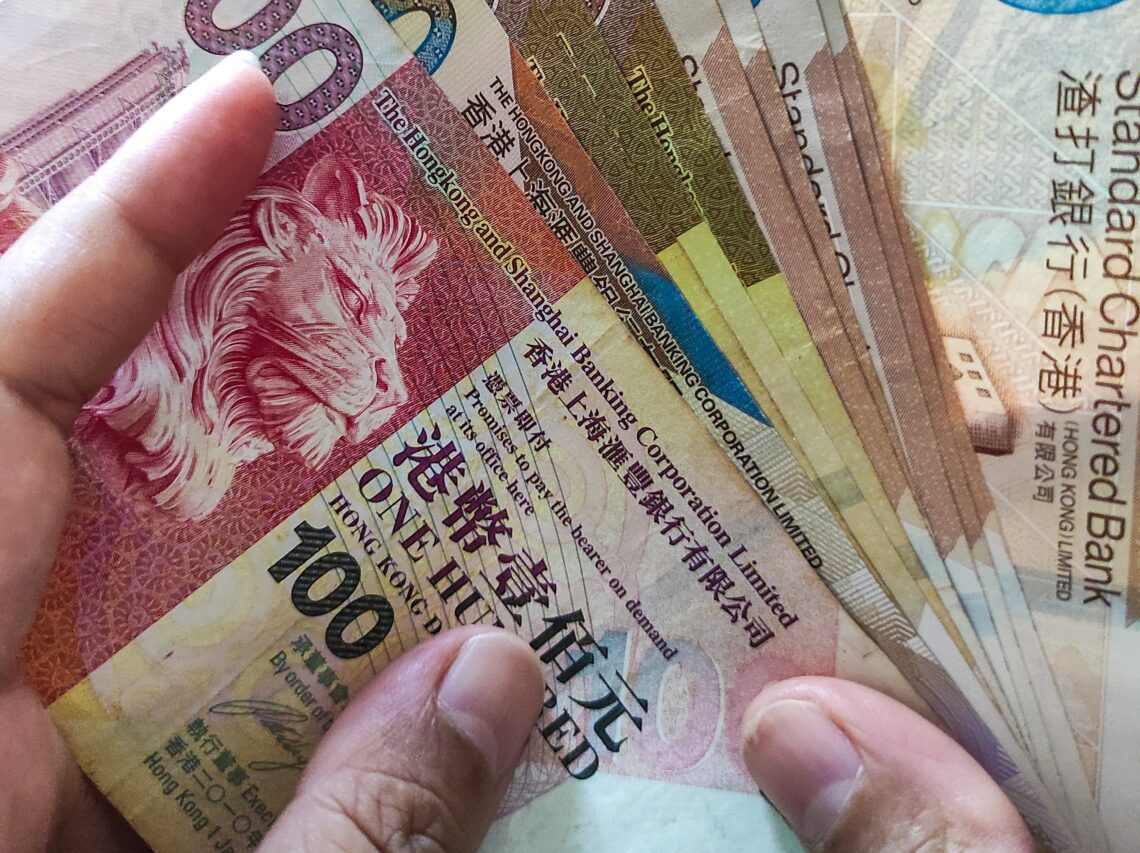
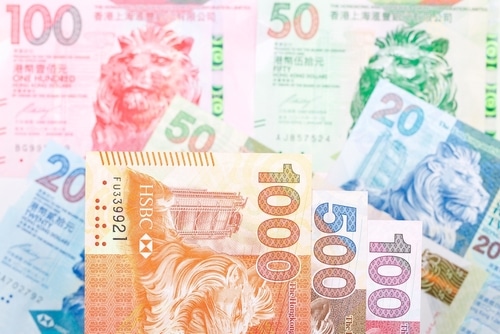
Hong Kong’s banknotes aren’t printed by a single central bank. Three banks, HSBC, Standard Chartered (Hong Kong), and Bank of China (Hong Kong), are authorized by the HKMA to issue notes, alongside a government-issued HK$10 note. All are equally valid.
Is Hong Kong’s currency the same as mainland China’s? No, it is not. Hong Kong uses the HKD whereas mainland China uses the renminbi (RMB), making them separate currencies. Unlike the United States Dollar, the HKD isn’t widely used outside of Hong Kong.
| Detail | Value |
| ISO code | HKD |
| Symbol | HK$ |
| Subdivisions | 100 cents |
| Issuing banks | HSBC, Standard Chartered (HK), Bank of China (HK), plus a government HK$10 note |
| Regulator | Hong Kong Monetary Authority (HKMA) |
Hong Kong banknotes and coins: denominations and what you’ll actually carry
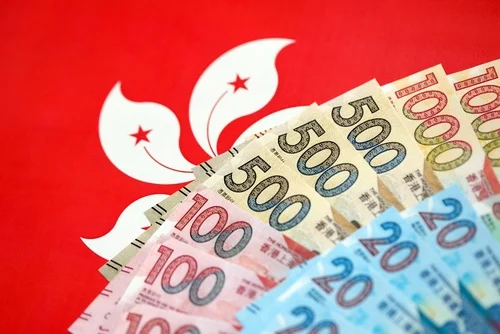
Hong Kong dollar banknotes come in six denominations: HK$10, HK$20, HK$50, HK$100, HK$500, and HK$1,000. The HK$10 note is government-issued, and the others come from HSBC, Standard Chartered, and Bank of China. Therefore, designs vary by issuer.
Coins come in seven denominations: 10 cents, 20 cents, 50 cents, HK$1, HK$2, HK$5, and HK$10. The HK$10 coin has a two-tone design that’s easy to spot even if you have a handful of change.
| Type | Values |
| Banknotes | HK$10, HK$20, HK$50, HK$100, HK$500, HK$1,000 |
| Coins | 10¢, 20¢, 50¢, HK$1, HK$2, HK$5, HK$10 |

How to read Hong Kong prices
When printed, menus and receipts often shorten HK$ to just $. This can be confusing if you’re used to the $ symbol referring to US dollars. Here’s a tip: if a small item shows an unusually high price, like $68 for a cup of coffee, it’s almost certainly in Hong Kong dollars. It is also a good idea to keep small notes and coins on hand for minor purchases and tips, as well as for vendors who might not carry change.
How people pay in Hong Kong: cash, cards, Octopus, and bank transfers
Cards
Credit and debit cards are widely accepted at hotels, malls, and larger restaurants in Hong Kong. Smaller shops, markets, and minibuses often prefer cash or Octopus, so it’s worth carrying both.
Octopus
Octopus is a contactless card used for Hong Kong’s MTR (Mass Transit Railway), buses, ferries, and retail purchases. Visitors can pick up a tourist Octopus card on arrival and add value at machines, MTR stations, or convenience stores.
FPS
The Faster Payment System (FPS) is Hong Kong’s instant transfer network, run under HKMA oversight. It moves money between banks and e-wallets using a phone number, email, or FPS ID instead of a full account number. It’s most useful once you have a local account, not as a first-transfer tool.
First-day setup checklist for US arrivals
- Bring a card that works internationally, plus some cash for smaller purchases.
- Pick up a tourist Octopus card at the airport for transit and everyday buys.
- Ask your bank about foreign transaction fees before relying on your card for purchasing goods in Hong Kong.
| Method | Best for | What you need | Common gotchas |
|---|---|---|---|
| Cash | Markets, minibuses | HK$ notes and coins | Keep small notes for change |
| Card | Hotels, malls | A card that works internationally | Not accepted everywhere |
| Octopus | Transit, convenience stores | A tourist Octopus card | Needs occasional reloading |
| FPS | Local transfers once set up | A Hong Kong bank account or e-wallet | Not for first transfers from abroad |
Sending money to Hong Kong from the United States: what matters
When you’re sending money to Hong Kong, what matters most is delivery speed, how your recipient gets the funds, and having the right details ready — not just the rate quoted that day. Bank deposits typically take longer than cash pickup and have their own cutoff times.
What info you need before you start
- The recipient’s full legal name, exactly as on their ID
- Their bank name and account number, for bank transfers
- Any extra identifiers the receiving bank requires
- Your own ID, since transfers are security-checked
Before sending, confirm the transfer is trackable and that you know who to contact should you have any questions or concerns. If Hong Kong isn’t the only corridor you send to, our Indian Rupee guide covers similar basics.
Stay alert to common scams. Be cautious of urgent money requests, gift-card payments, or anyone claiming to be a relative in trouble. When in doubt, verify directly with the person you’re sending to.
FAQ about Hong Kong currency (HKD)
What is Hong Kong’s currency called?
Hong Kong’s currency is the Hong Kong dollar, abbreviated HKD and written HK$. It’s overseen by the HKMA and used for everyday transactions, from transit fares to restaurant bills.
Is Hong Kong’s currency the same as mainland China’s?
No. Hong Kong uses the Hong Kong dollar (HKD), while mainland China uses the renminbi (RMB). These are separate currencies with different values.
What does HK$ mean?
HK$ is the symbol for the Hong Kong dollar. It’s often shortened to just $ on local menus, so it’s worth verifying a price is in Hong Kong dollars, not US dollars, before you’re surprised by the total.
What denominations are in circulation?
Banknotes come in HK$10, HK$20, HK$50, HK$100, HK$500, and HK$1,000. Coins come in 10 cents, 20 cents, 50 cents, HK$1, HK$2, HK$5, and HK$10. Designs vary by issuing bank, but all are valid.
Should I use cash or card in Hong Kong?
Both work well. Cards suit hotels, malls, and larger restaurants, while cash and Octopus work better for markets, minibuses, and smaller shops. Carrying a mix of both helps, whether you’re navigating HKD or currencies like the Vietnamese Dong.
What is Octopus?
Octopus is Hong Kong’s contactless payment card, used for the MTR, buses, ferries, and retail purchases across the city. Visitors can pick up a tourist Octopus card on arrival and add value at machines, MTR stations, or convenience stores, making it one of the easiest ways to pay for everyday transit and small purchases without carrying loose change.
What is FPS?
FPS (Faster Payment System) is Hong Kong’s instant transfer network, overseen by the HKMA. It moves money between local banks and e-wallets using just a phone number, email, or FPS ID, instead of a full account number. It’s designed for people who already have a Hong Kong bank account or e-wallet.
Key takeaways
- Hong Kong’s currency is the Hong Kong dollar, written HK$ to set it apart from the US dollar.
- Day-to-day, people pay with cash, cards, Octopus, and FPS (once set up locally).
- Banknotes look different depending on the issuing bank, but every design is equally valid.
- US travelers most often mix up HK$ prices with US$, or arrive without small notes for incidentals.
- When sending money to Hong Kong, focus on delivery speed and accurate recipient details rather than chasing a rate. This is good practice no matter where you’re traveling or sending money in the world. Our Mexican peso guide is a handy reference.
Final tips for handling HKD confidently
Getting comfortable with HKD mostly takes familiarity. Make sure you recognize the HK$ symbol, have a general sense of the denominations, and know the best payment methods, such as cash for markets, card for hotels, Octopus for transit.
If you’re sending money to Hong Kong, take a moment to compare delivery options and confirm your recipient’s details before you send. We’d be happy to help you achieve an easier and smoother transaction. Getting to know other currencies too? Our Romanian Leu guide covers a different corridor.
Last reviewed: September 2026, against Hong Kong Monetary Authority and Octopus Cards Limited information on denominations, Octopus, and FPS.