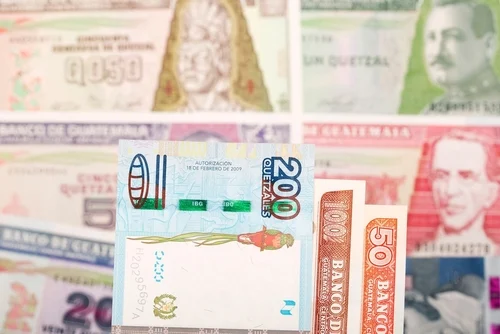
The official Guatemala currency is the Guatemalan quetzal (GTQ). If you’re traveling from the US or sending money to family in Guatemala, understanding how people carry, spend, and receive money can help you plan ahead. This guide covers the essentials for US-based travelers and senders, including what to consider when comparing money transfer services such as Remitly.
Guatemala’s official currency is the Guatemalan quetzal (GTQ). Most everyday purchases (particularly at markets, on buses, and at small shops) are paid in quetzales, often in cash. Some tourist-facing businesses accept US dollars, but carrying small quetzal bills, using bank-affiliated ATMs, and choosing a regulated transfer service can help you avoid extra fees and scams.
TL;DR
- The quetzal (GTQ) is Guatemala’s currency; its symbol is Q, and one quetzal is divided into 100 centavos.
- US dollars work in some tourist spots, but you can’t count on them everywhere.
- Bank-affiliated ATMs are generally the safest way to get quetzales. Avoid street money changers.
- Regulated transfer services help you send money securely, with recipient ID and name-matching in mind.
Quick tips: carry small quetzal bills for everyday purchases, use ATMs located inside banks, and steer clear of street currency changers.

What is Guatemala’s currency? Guatemalan quetzal (GTQ) basics
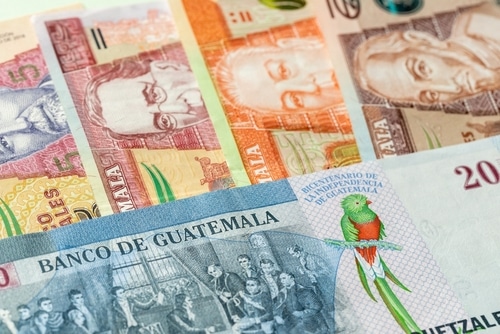
Guatemala adopted the quetzal as its official currency in 1924, with the currency entering circulation in 1925, replacing the Guatemalan peso. The currency is named for the resplendent quetzal, a brightly colored bird that’s a national symbol and a longstanding emblem of freedom in Guatemalan culture. The Bank of Guatemala (Banco de Guatemala), the country’s central bank, issues and manages the currency, and it’s the best source for the most current coins and banknotes in circulation.
Current quetzal coins and banknotes
Coins range from small centavo denominations up to 1 quetzal, and banknotes span from small bills (50 centavos and 1, 5, 10 and 20 quetzales) up to larger notes (50, 100, and 200 quetzales). Smaller notes and coins are easiest to spend day to day, since many vendors and bus fares can’t always break a large bill. Banco de Guatemala’s current-circulation materials list the following denominations:
- Coins: 1, 5, 10, 25, and 50 centavos, and Q1.
- Banknotes: 50 centavos, Q1, Q5, Q10, Q20, Q50, Q100, and Q200.
How to recognize a genuine quetzal banknote
Banco de Guatemala recommends comparing a suspicious note with one you know is genuine. Check these three basic features:
- Watermark: Hold the note up to the light and look for the embedded watermark.
- Security thread: Look for the thread running through the banknote rather than sitting on its surface.
- Raised print: Run your fingers over the printed areas and check for texture or relief.
Security features can vary by denomination and series, so consult the Banco de Guatemala’s banknote security guide if a bill appears unusual. Remitly’s guide on how to recognize fake currency also covers similar techniques you can use that apply beyond Guatemala.

Cash vs. cards in Guatemala: where quetzales are required (and where cards usually work)
The best approach to Guatemala cash vs card use is to carry both. According to the US Department of State, credit cards are widely accepted in Guatemala City, Antigua, and other tourist destinations, but cash remains important in smaller businesses and areas outside the main tourist centers. The table below is a general guide and actual acceptance varies by business.
| Place / scenario | Cash recommended? | Cards commonly accepted? | Notes |
| Markets | Yes | No | Vendors usually expect small quetzal bills and coins |
| Street food stalls | Yes | No | Cash is standard for most street vendors |
| Local buses | Yes | No | Fares are paid in cash, often exact change |
| Pharmacies | As a backup | Yes | Larger pharmacy chains in cities may take cards |
| Restaurants (city) | As a backup | Yes | Established restaurants in Guatemala City and Antigua often accept cards |
| Supermarkets | Optional | Yes | Major supermarket chains generally accept cards |
| Hotels | As a backup | Yes | Mid-range and larger hotels typically accept cards |
| Guided tours | Yes | Sometimes | Online agencies and established operators may accept cards, otherwise confirm the accepted payment method with the operator in advance |
Tip: Carry enough quetzales for at least a day of small purchases before visiting rural areas or moving between Lake Atitlan communities. Keep Q5, Q10, Q20, and Q50 notes available so you do not have to rely on small merchants having change for Q100 or Q200.
Card and ATM fees US travelers should check
A US-issued card can involve more than one fee:
- Foreign transaction fee: Your bank or card issuer may add a fee when you make a purchase outside the US. Check your card agreement before traveling and consider using a card without foreign transaction fees if you already have one.
- ATM operator fee: The Guatemalan ATM operator may charge its own withdrawal fee. Your US bank may separately charge an international or out-of-network ATM fee. Review the disclosed fee before confirming the withdrawal.
- Dynamic currency conversion: A merchant terminal or ATM may offer to process the transaction in US dollars instead of quetzales. Always choose quetzales (GTQ) and decline the conversion to avoid the markup built into dynamic currency conversion (DCC).
Card safety checklist
- Use ATMs in controlled locations, such as inside a bank or hotel, and avoid isolated or public street machines.
- Inspect the card slot and keypad for loose or unusual parts and shield your PIN while entering it.
- Keep your card in sight or ask for the payment terminal to be brought to you.
- Enable transaction alerts and review purchases and withdrawals promptly.
- Carry a backup card separately from your primary card, along with a modest amount of emergency cash.
- Save your issuer’s international contact number so you can quickly freeze or report a lost card.

Getting quetzales safely (without talking exchange rates): ATMs, banks, and what to avoid
The most practical ways to obtain quetzales are by withdrawing them from a securely located ATM (inside a bank branch or shopping mall) or visiting an established bank branch. Airport currency kiosks can also provide a small amount of cash on arrival, but check their service fees before completing the transaction.
How to use ATMs in Guatemala safely
The US Department of State notes that ATMs in Guatemala generally accept most US-issued bank cards but may charge high fees and can be difficult to find outside tourist areas. An ATM inside an open bank is generally preferrable because staff may be available to help if the machine malfunctions. In a shopping mall, choose a machine in a well-lit, staffed area rather than one near an isolated entrance or outside wall.
- Inspect the machine. Avoid it if the card slot, keypad or panel looks loose, damaged or unusual.
- Decline help from strangers. Do not let anyone handle your card or guide the transaction.
- Protect your PIN. Cover the keypad and never share your PIN, even with someone claiming to be bank staff.
- Review the charges. Check both ATM and US bank fees, and cancel if the cost is too high.
- Choose quetzales. Select GTQ and decline conversion to US dollars.
- Secure your money. Put away your cash, card, and receipt, then check the transaction in your banking app.
Note: If an ATM keeps your card, avoid forcing the machine. Contact the bank that owns it as soon as you can. If it’s during business hours, go inside and ask a teller for help, and call your US bank to report the issue and confirm whether you need a replacement.

Getting quetzales at a bank branch
Banco Industrial, Banrural, and BAC branches are widely available in cities and larger towns, with weekday hours and limited weekend availability. These banks operate between 9 am and 4 pm on weekdays and 9 am and 1 pm on Saturdays. Bring a passport for any in-branch transaction, with Banco Industrial requiring to see an entry stamp before any transaction can be completed.
Getting quetzales at an airport currency kiosk
Airport currency kiosks a reasonable option for getting a small amount of cash to get you started, but they typically charge more than a bank-affiliated ATM. Remitly’s blog on why so many travelers exchange money at the airport explains why that convenience comes at a cost.
What to avoid:
- Street money changers or anyone offering to exchange cash away from an established counter
- Unsolicited “help” at an ATM from a stranger
- ATMs that look damaged, have a loose card slot, or sit in a poorly lit area
- Counting or displaying cash in public after a withdrawal

Sending money to Guatemala from the US: delivery options and recipient requirements
How you send money to Guatemala often comes down to what your recipient has access to. Someone with a Banco Industrial or Banrural account might prefer a direct deposit, while a family member in a rural area may find cash pickup easier. Mobile wallets and home delivery are also worth considering, depending on what your recipient is comfortable using.
Bank deposit sends funds directly into a recipient’s account, which works well if they already bank with an institution like Banco Industrial or Banrural. Cash pickup lets a recipient collect funds in person, which can suit someone without a bank account. A mobile wallet transfer deposits funds into a digital wallet accessible from a phone, and home delivery brings cash to a recipient’s address in areas where getting to a pickup point isn’t practical.
Recipient requirements checklist
- Their full legal name entered exactly as it appears on their ID
- A valid, unexpired government-issued ID accepted by the selected payout provider
- The transfer reference number and a PIN (if one is provided) for cash pickup
- The pickup location address, or their bank account details for a deposit
- A phone number, in case the location needs to reach them
For cash pickup, our cash pickup guide suggests bringing an accepted photo ID and the transfer reference number. A spelling difference between the transfer and the ID may delay or prevent payment, so verify every detail before sending.

Common reasons a payout is delayed or fails
A payout can be delayed or rejected for a few common reasons:
- The recipient’s name doesn’t exactly match their ID
- The ID has expired
- The pickup location asks for different documentation than expected
- The recipient visits the wrong payout location and doesn’t have the reference number
Double-checking these details with your recipient before you send can save both of you a frustrating trip.
US-based transfer providers verify your identity before processing a transfer, and provider-specific limits can apply depending on the amount and method you choose. It’s worth comparing money transfer fees before you send money, and keeping a record of your confirmation is a good habit in case you need it later.
How to send money to Guatemala:
1. Choose a delivery method based on what your recipient can access
2. Confirm your recipient’s full legal name and ID details match exactly
3. Enter the amount and select your payment method
4. Review the delivery time and any fees before you confirm
5. Pay, send, and track the transfer
6. Share the reference number and pickup details with your recipient
7. Follow up with your recipient to confirm the funds arrived as expected and retain the records

Frequently Asked Questions (FAQs)
Is the quetzal the only currency used in Guatemala?
Yes. The Guatemalan quetzal (GTQ) is the country’s official currency. Some tourist-facing businesses accept US dollars as a convenience, but pricing, receipts, and most payments are handled in quetzales, so it’s worth having some cash on hand.
Can I use US dollars in Guatemala?
Some hotels, tour operators, and tourist-area shops accept US dollars, though it’s not guaranteed, and change often comes back in quetzales. Markets, local buses, and small businesses typically expect quetzales only, so it’s best not to rely on US dollars day to day.
What’s the best way to get cash in Guatemala?
Bank-affiliated ATMs inside a branch, mall, or other secure locations are generally the most convenient, lower-fee options. Bank branches are a reliable backup if you need a larger amount or have card questions. Street currency changers are best avoided altogether.
Do I need cash if I have a credit card?
It’s a good idea to carry some cash even where cards are widely accepted. Markets, buses, small shops, and rural areas typically don’t take cards, so quetzales on hand cover situations where a card isn’t an option.
How much should I tip in Guatemala?
Tipping isn’t required, and some restaurants already add a service charge (worth checking before adding more). Where a charge isn’t included, around 10% is common. For hotel staff and tour guides, a modest cash tip is a thoughtful gesture, though the amount is up to you.
What does a recipient need to pick up a money transfer?
Requirements vary by provider and location, but recipients typically need a valid, unexpired ID that matches the sender’s name on the transfer, plus the transaction’s reference number. Steps can differ by destination. Sending to a Banrural account, for example, has its own requirements that are worth reviewing in advance.
Are there limits on bringing money into or out of Guatemala?
Yes. Under Guatemalan law, travelers carrying more than US$10,000 in cash or monetary instruments are required to declare it, both when entering and leaving the country. Declaring is free and doesn’t carry a penalty, so it’s a good habit if you’re near that threshold.

Key takeaways
- The quetzal (GTQ) is Guatemala’s official currency, and most day-to-day spending happens in cash.
- Small quetzal bills are the easiest to spend and bank-affiliated ATMs are generally the safest way to get them.
- Cards work well in cities and at hotels, restaurants, and larger stores, but rural areas and markets are still largely cash-based.
- Regulated money transfer services, careful name-matching, and valid ID all help a payout to Guatemala go smoothly.
- Cash amounts over US$10,000 are required to be declared when entering or leaving Guatemala.
Final checklist for using money in Guatemala
- Carry a mix of small quetzal bills and coins for daily spending
- Set up a card with low or no foreign transaction fees before you travel
- Use ATMs inside banks or malls, and choose quetzales over US dollars when prompted
- Don’t rely on US dollars outside major tourist areas
- Double-check your recipient’s name, ID, and reference number before sending a transfer
- Confirm current denominations and any rule changes with Banco de Guatemala before you travel
- Keep cash and cards split between separate places when you’re out and about
Sources:
- https://banguat.gob.gt/page/historic-review-guatemala-currency
- https://banguat.gob.gt/page/monedas-y-billetes-de-actual-circulacion
- https://banguat.gob.gt/page/catalogos-de-billetes-de-actual-circulacion
- https://banguat.gob.gt/page/la-legislacion-sobre-billetes-y-monedas-1
- https://travel.state.gov/en/international-travel/travel-advisories/guatemala.html
This article is based on current guidance from Banco de Guatemala and other official sources on Guatemalan banknotes, coins, payments, and currency use.
Last updated: September 2026