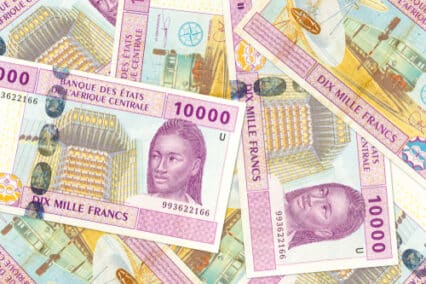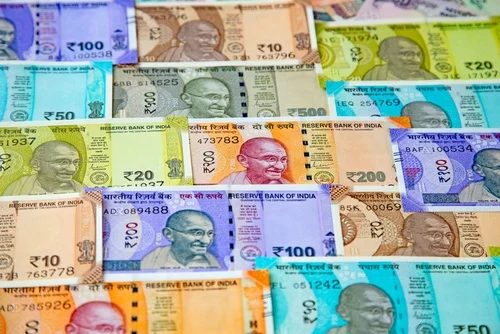
Indian currency is the Indian rupee (INR), issued and managed by the Reserve Bank of India (RBI). It uses the symbol ₹ and is divided into 100 paise. India uses both banknotes and coins, with modern notes featuring Mahatma Gandhi in distinct colors and sizes.
This Remitly guide is for US travelers, diaspora senders, and anyone curious about how INR works day-to-day: its denominations, who issues it, and how payments work.

What Is the Indian Rupee (INR)? Symbol, Code, and Who Issues It
- Currency: Indian rupee
- Currency code: INR
- Symbol: ₹
- Subdivision: One rupee equals 100 paise, the same way one US dollar equals 100 cents. Paisa is singular, while paise is plural.
- Who issues it: The RBI has the sole right to issue banknotes in India. Coins are issued by the Government of India and put into circulation through the RBI.
- Who manages it: The RBI manages the supply and circulation of banknotes. The Central Government approves banknote design, form, and material after considering recommendations from RBI’s Central Board.
You’ll sometimes see “rupee,” “Rs,” and “INR” used to refer to the same currency, although INR is the standardized international currency code.

Indian Banknotes and Coins: Common Denominations and How to Recognize Them
| Denomination | Form | Common or less common | What to look for |
| ₹10 | Banknote | Common | Chocolate-brown color, featuring the Sun Temple at Konark |
| ₹20 | Banknote | Common | Greenish-yellow color, featuring Ellora Caves |
| ₹50 | Banknote | Common | Fluorescent blue color, featuring Hampi with Chariot |
| ₹100 | Banknote | Common | Lavender color, featuring Rani ki Vav (Queen’s Stepwell) |
| ₹200 | Banknote | Common | Bright yellow color, featuring the Sanchi Stupa |
| ₹500 | Banknote | Common | Stone-grey color, featuring the Red Fort |
| ₹1, ₹2, ₹5, ₹10, ₹20 | Coins | Common | Minted at SPMCIL mints in Mumbai, Hyderabad, Kolkata, and Noida |
| 50 paise | Coin | Less common | India’s smallest denomination that remains legal tender |
Mahatma Gandhi (new) Series banknotes share several recognizable features, including Gandhi’s portrait, an Ashoka Pillar emblem, denomination watermarks, security features, and a language panel.
India’s circulating coins are produced at Security Printing and Minting Corporation of India Limited (SPMCIL) mints in Mumbai, Hyderabad, Kolkata, and Noida. The RBI withdrew the ₹2,000 note from circulation in 2023, although existing notes remain legal tender.
Tip: For small purchases, it can be helpful to keep ₹10, ₹20, ₹50, and ₹100 notes rather than relying only on ₹500 notes. Smaller denominations make it easier to pay close to the exact amount if a shop, market stall, taxi, or other merchant has limited change.

How Indian Currency Is Used Day to Day: Cash, UPI, Cards, and What US Visitors Notice
Cash remains part of everyday payments in India, while cards and digital payments are also widely available. One of the most important systems to understand is the Unified Payments Interface (UPI), an instant payment system developed by the National Payments Corporation of India (NPCI). It allows participating users to transfer money between bank accounts through mobile apps, including through UPI IDs and QR-code payments.

Common Indian currency terms that confuse US visitors
- INR vs Rs vs. ₹: INR is the international currency code, while Rs and ₹ are ways you may see rupee amounts written locally.
- QR scanning: A UPI QR code is a payment address, not a price tag. Compatible users scan it through a UPI-enabled app to initiate payment.
- Exact change: Keeping smaller banknotes can make purchases easier when a merchant doesn’t have change for a larger note.
- Lakh and crore: Indian numbering commonly uses lakh for 100,000 and crore for 10,000,000. So, ₹1,00,000 means one lakh rupees, not ten thousand.
For a different type of digital-money explainer, see our guide to what a stablecoin is.
Tip: If you’re sending money to family in India, recipients can typically receive funds directly into a bank account or UPI-linked wallet, alongside traditional cash pickup options.

Indian Rupee History (Quick Timeline): From Rupya to Modern Notes
- 1540-1545: Sher Shah Suri issued a standardized silver coin known as Rupiya, which the RBI describes as the precursor to the modern rupee.
- Late 1700s: Paper money in the modern sense began appearing in India through private and semi-government banks, including early Bengal banking institutions.
- 1861: The Paper Currency Act gave the British colonial government of India a monopoly over note issuance.
- 1935-1938: The RBI was established in 1935. Its first banknote, a ₹5 note carrying King George VI’s portrait, was issued in January 1938.
- 1949-1950: After independence, currency began adopting symbols of the new republic. A new ₹1 Government of India note appeared in 1949, while Republic India notes and a distinctive new coin series followed in 1950.
- 1957: India decimalized its coinage. The rupee was divided into 100 paisa instead of the previous 16-annas system; the new units were initially called Naya Paisa.
- 1996: The RBI introduced the Mahatma Gandhi Series, adding updated security features such as a changed watermark, windowed security thread, latent images, and accessibility features.
- 2010: The Government of India approved the ₹ symbol.
- 2016 onward: The RBI introduced the Mahatma Gandhi (new) Series, using new sizes, distinct colors, and cultural or heritage motifs for different denominations.
Why it matters today: This history helps explain why currency management is split between institutions. The RBI manages banknote issuance and circulation, while the Government of India retains responsibility for coins and the ₹1 note.

FAQ: Indian Currency (INR) Questions US Readers Ask
What is Indian currency called?
Indian currency is called the Indian rupee (INR). People also refer to it informally as “Rs” or simply “rupees.” One rupee divides into 100 paise, though paise coins are rarely used in everyday transactions today. You’ll see amounts described simply as “rupees” or written using “Rs,” although INR is the standardized currency code used internationally.
What does INR stand for?
INR is the ISO 4217 currency code for the Indian rupee. You’ll see “INR” used in banking, international finance, and currency converters, while ₹ is the everyday symbol you’ll more likely see on Indian prices, receipts, menus, and other everyday amounts.
What is the rupee symbol?
The rupee symbol is ₹, adopted by the Government of India in 2010 after a public design competition. It combines the Devanagari letter “Ra” with the Roman capital “R” and appears on all current banknotes and coins.
What are the denominations of Indian currency?
Current banknotes, the Mahatma Gandhi (new) Series, are issued in ₹10, ₹20, ₹50, ₹100, ₹200, and ₹500. Legal tender coins include 50 paise, ₹1, ₹2, ₹5, ₹10, and ₹20. The ₹2,000 note was withdrawn from circulation in 2023 but remains legal tender.
Who controls and prints Indian currency?
The Reserve Bank of India (RBI) has the sole right to issue banknotes. Banknotes are printed at four currency presses, while the Government is responsible for minting coins. Coins enter circulation through the RBI.
Is INR used outside India?
INR is mainly used within India. Nepal and Bhutan informally accept Indian rupees alongside their own currencies, but most other countries require local currency or a major international currency.
Are paise still used?
Yes. Paise are still India’s official subunit of the rupee, but coins under ₹1 have largely disappeared from circulation. Most everyday cash transactions in India are now rounded to the nearest whole rupee.

Key Takeaways
- The Indian rupee (INR) is India’s official currency, issued and regulated by the Reserve Bank of India (RBI) and marked with the symbol ₹.
- One rupee divides into 100 paise, although 50 paise is the smallest coin denomination that remains legal tender.
- Current banknotes run from ₹10 to ₹500; the ₹2,000 note was withdrawn from circulation in 2023.
- Cash, cards, and UPI (India’s instant mobile payment system) all coexist in everyday Indian commerce.
- Understanding denominations and terms like lakh and crore helps US travelers and families avoid confusion when handling INR.

Conclusion: Understanding INR Makes Travel and Family Money Conversations Easier
Indian currency, the rupee (INR), is managed by the Reserve Bank of India, with banknotes and coins serving different everyday needs. Knowing the main denominations, the ₹ symbol, the role of paise, and payment methods such as cash, cards, and UPI can make handling money in India easier to understand.
Before traveling or sending money to family, check current RBI guidance for bank notes and coins and MPCI information for digital-payment forms rather than relying on an old denomination list or assumptions about how payments work.
See also our guides to the Hong Kong dollar, Vietnamese dong, and South African rand.
About this article
This guide explains general facts about Indian currency (INR): its denominations, issuing authority, and everyday use. It is not financial or investment advice, and currency rules can change, so always confirm current details before traveling or sending money.
- Reserve Bank of India (RBI): RBI Currency Management, covering banknote issuance, denominations, and the ₹2,000 note withdrawal
- National Payments Corporation of India (NPCI): UPI product overview, covering how UPI payments work
- Security Printing and Minting Corporation of India Limited (SPMCIL): Circulation coins, covering where India’s coins are minted
Last reviewed: September 2026.