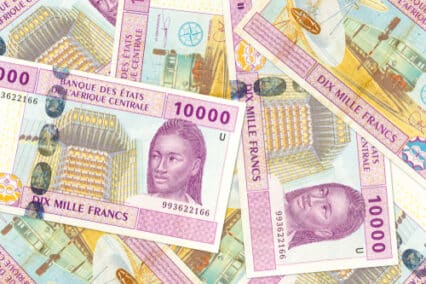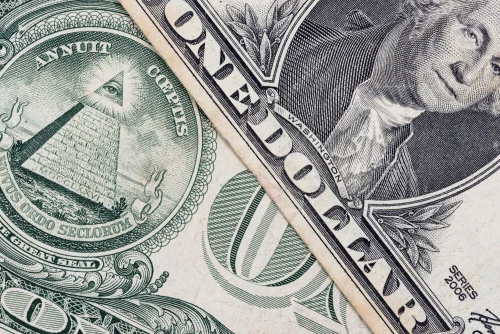
The United States dollar (USD) is one of the most recognized and widely used currencies in the world, playing a central role in global trade, finance, and everyday transactions. Because of its stability and trustworthiness, many countries use or accept the dollar alongside their local currencies.
This Remitly guide contains everything you need to know about the United States dollar, including who issues it, the denominations, and the countries that use it.
Quick Answers
- The US dollar is one of the most widely used international currencies in the world and is used by US territories, official dollarized economies like El Salvador and Ecuador, and is informally accepted in many other parts of the world.
- US currency is printed by the BEP and the Mint under the oversight of the US Treasury. The Federal Reserve then issues it into circulation.
- US banknotes are printed with security features to help you tell them apart from counterfeits. It’s important to familiarize yourself with these to avoid scams.
- Bills are issued in denominations ranging from $1 to $100 and coins from 1 cent to $1, but some denominations are more commonly used in daily life than others.
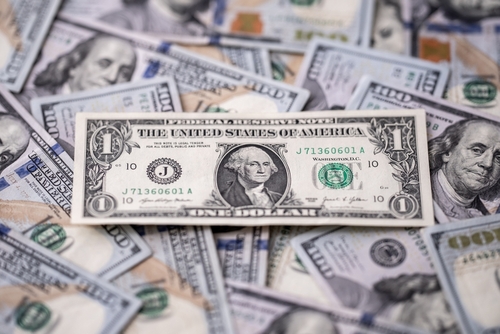
What is United States currency? (Quick definition of the US dollar)
The United States dollar, recognized by the currency code “USD” and the symbol “$,” is the official currency of the United States and its territories, serving as the foundation of the country’s financial system. US currency makes use of both notes and coins, with banknotes known as dollar bills. Dollars are each divided into 100 cents, which are represented by coins.
This matters for international users because the US dollar is the one of the most widely used international currencies in the world. Whether for trade, savings, or travel, the dollar plays a key role in everyday economic life, both in the US and internationally. Its consistent design and value make it trusted and used by millions of people for business, savings, and remittances. Central banks often hold large reserves of USD to safeguard their economies, and global markets rely on it as a measure of value and security.
Who prints US money? The roles of the Treasury, Federal Reserve, US Mint, and BEP
There are four distinct institutions that play roles in producing and issuing US currency: the BEP, the Mint, the Federal Reserve, and the Treasury. The BEP and the Mint are both agencies within the Treasury, while the Federal Reserve is independent of the Treasury.
- US Department of the Treasury: Responsible for overseeing the production of coins and paper currency, including approving the designs of notes and coins. The BEP and the US Mint are both agencies of the Treasury with their own functions.
- Bureau of Engraving and Printing (BEP): Designs and produces all US banknotes. It designs the bills with anti-counterfeiting measures and security details and then prints all denominations of notes. Design-wise, each bill features prominent figures from American history and symbols of national heritage.
- US Mint: Designs and produces all metal coins.
- Federal Reserve: Serves as the country’s national bank and controls the distribution of currency by deciding how much is issued into circulation.
In short, the Treasury oversees the design and production of currency by the BEP and the Mint, while the Federal Reserve issues what’s produced into circulation for use.
US currency denominations: bills and coins you’ll actually use
Dollar bills, sometimes informally known as “bucks”, come in six main denominations: $1, $2, $5, $10, $20, $50, and $100. Coins are issued in 1 cent, 5 cent, 10 cent, 25 cent, 50 cent, and $1 values, and they’re commonly referred to as the penny, nickel, dime, quarter, half dollar, and dollar coin. Let’s break down each one:
| Dollar bill denominations | ||
| Value | Common nicknames | Frequency of use |
| $1 | Single, a buck | Frequent |
| $2 | Tom, deuce, Jefferson (after Thomas Jefferson) | Rare |
| $5 | Fiver, Abe (after Abraham Lincoln) | Frequent |
| $10 | Sawbuck, ten-spot | Frequent |
| $20 | Double sawbuck, Jackson (after Andrew Jackson) | Frequent |
| $50 | No common nicknames | Less frequent |
| $100 | C-note, Century note, Benji (after Benjamin Franklin) | Much less frequent |
| Coin denominations | ||
| Value | Common nicknames | Frequency of use |
| 1 cent | Penny, copper | Frequent |
| 5 cents | Nickel | Frequent |
| 10 cents | Dime | Frequent |
| 25 cents | Quarter | Frequent |
| 50 cents | 50-cent piece, half-dollar | Rare |
| $1 | 1-dollar coin, Golden Dollar | Rare |
While larger coins are less common in daily use, all remain legal tender, or official forms of money that the government recognizes as valid. Just because physical currency is all labeled as legal tender, though, doesn’t mean that businesses have to accept all forms of it. Private businesses, like stores and restaurants, can legally choose to refuse or accept certain forms of payment; for example, a business could choose to only accept card payments, or they could choose not to accept larger denominations of banknotes.
Cash is most commonly used for tips for service workers, smaller retail purchases, or in the context of paying back friends and family for a small loan.

How to recognize authentic US currency (and avoid common scams)
US currency is designed with specific anti-counterfeiting measures and security features to differentiate them from potential fakes, including watermarks, security threads, and color-shifting ink. Each denomination has different features to look for according to uscurrency.gov.
| Security features of dollar bill denominations | |
| Value | Security features |
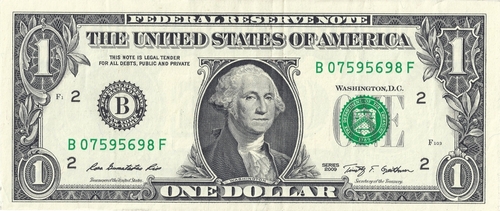
| $1 | Black Federal Reserve Bank seal (left of Washington’s portrait) Green Treasury seal (right of the portrait) Raised printing Specific paper Portrait of George Washington on the front and Great Seal of the US on the back A serial number appearing twice on the front |
| $2 | Black Federal Reserve Bank seal (left of Washington’s portrait) Green Treasury seal (right of the portrait) Raised printing Specific paper Portrait of Thomas Jefferson on the front and a vignette showing the signing of the Declaration of Independence on the back A serial number appearing twice on the front |
| $5 | Watermarks to the left and right of the portrait Security thread running to the right of the portrait imprinted with “USA” and “5” MicroprintingSeries year |
| $10 | Security thread imprinted with “USA TEN” Watermark to the right of the portrait Color-shifting ink on the number 10 at the lower right corner |
| $20 | Security thread to the left of the portrait imprinted with “USA TWENTY” Watermark to the right of the portrait Color-shifting ink on the number 20 at the lower right corner |
| $50 | Security thread to the right of the portrait imprinted with “USA 50” Watermark to the right of the portrait Color-shifting ink on the number 50 at the lower right corner |
| $100 | Security thread to the left of the portrait imprinted with “USA 100” 3D security ribbon woven into the paper Color-shifting bell in the copper inkwell Watermark to the right of the portrait Color-shifting ink on the number 100 at the lower right corner |

Common scams
Of course, there are a few scams to watch out for even with all these security features. It’s important for immigrants and remittance recipients to keep an eye out for counterfeit bills, especially if you’re given higher denominations like the $20, $50, and $100 notes. Some scammers may also alter bills by bleaching lower denominations and printing higher denominations on the same paper. This is why it’s important to know how to quickly check a bill for authenticity.
How to check a bill in 30 seconds:
- Feel the bill for raised printing, which gives it a somewhat rough texture.
- Hold the $5 bills and higher denominations up to the light to check for a watermark to the left or right of the portrait. The watermark should be visible from both sides of the note and should depict the same portrait that appears on the front of the bill.
- For bills $10 and higher, tilt the bill in the light to check for color-shifting ink on the numbers at the bottom right corner. The ink should shift from copper to green.
- For current $100 bills, check for the interwoven security ribbon and the color-shifting bell in the inkwell.
How to report a counterfeit
Individuals must contact their specific US Secret Service (USSS) Field Office to report counterfeit currency. Usually, the counterfeit currency will need to be submitted for inspection. Your Field Office will give you further instructions.

Where the US dollar is used outside the United States (official vs. widely accepted)
The United States dollar is not only used within the US but also serves as the official currency in several other countries and territories around the world.
US territories
Countries that are US territories naturally use the USD because of their direct economic and political ties to the United States. These include the following:
- Puerto Rico
- Guam
- The US Virgin Islands
- American Samoa
- Northern Mariana Islands
Dollarization and dollarized economies
Dollarization has also occurred in some places. Dollarization occurs when a country replaces its local currency with the US dollar, usually to stabilize its economy, reduce inflation, and build investor confidence.
Places like El Salvador that have faced economic crises or volatile exchange rates have switched to the dollar as a way to restore trust and simplify international trade. Dollarization can also make cross-border transactions smoother and more predictable, particularly in regions that depend on remittances or tourism. Countries that have dollarized for these reasons can always make the decision to change their currency, though. Dollarized economies include the following countries:
- Ecuador
- El Salvador
- Panama
- Marshall Islands
- Zimbabwe
- East Timor
- Palau

Countries that accept the dollar informally
Beyond officially dollarized economies, the US dollar is widely accepted for tourist and business transactions in many parts of the world. Many hotels, restaurants, and major retailers often list prices in USD alongside the local currency. This informal use reflects the dollar’s global dominance, because its value and familiarity make it convenient for travelers and businesses everywhere. Some countries that accept the dollar informally include the following:
- Mexico
- Cambodia
- Vietnam
- The Bahamas
- Belize
- Costa Rica
- The Dominican Republic
- Barbados
- Nicaragua
- Guatemala
- Honduras
- Lebanon
- Liberia
How to send and receive US dollars (USD) safely
Sending and receiving United States dollars (USD) is a simple and secure process, especially when you use a trusted service like Remitly.
Whether you’re sending money to loved ones in the US or transferring funds abroad, Remitly makes it easy to move your money safely and with confidence. The platform is designed for convenience and peace of mind, offering transparent fees, delivery options, tracking, and verification. You can even send money to someone who doesn’t have a bank account.
Here’s how it works:
- Create an account. Sign up on the Remitly website or app and complete a quick identity verification process to ensure your transactions are safe.
- Enter the transfer amount and recipient details. Specify how much you want to send and provide accurate information for the person receiving the money.
- Choose a delivery method. Depending on the destination, you can select from options like bank deposit, cash pickup, mobile money, or home delivery.
- Confirm and send. Double-check the details, send the transfer securely, and track its progress in real time.
Each step in the process is designed to keep your money secure and ensure it arrives as expected. Remitly uses strict safety standards and encryption to protect your personal information, and transfers can be tracked from start to finish. With these safeguards in place, you can send USD confidently, knowing your funds are handled reliably and with care.

Receiving money with Remitly
Recipients have several options for how they can get their money:
- Bank deposit is the best and fastest option.
- Cash pickup can be used for recipients without a bank account. Just find a pickup location near you and be sure to bring a photo ID and your reference number.
- Mobile money allows money to be sent to a mobile app on your phone that you use to pay for the things you need.
- Home delivery is available for recipients in Vietnam, the Dominican Republic, and the Philippines. The cash will be delivered to you by a courier.
FAQs
What is the symbol for the United States dollar?
The US dollar is represented by the “$” symbol, and its international currency code is “USD.” These identifiers are used in banks, online transfers, and exchange markets around the world.
What is legal tender?
Legal tender is the official form of money recognized as valid by a government for paying debts and settling financial matters. Legal tender includes both banknotes and coins. However, private businesses can choose whether to refuse or accept certain forms of legal tender.
Can I send money to the US from another country?
Yes. Services like Remitly make it easy to send money (even large transfers) to the US with transparent fees, real-time tracking, and guaranteed delivery.
Who prints and issues US currency?
The BEP (Bureau of Engraving and Printing) prints dollar bills and the Mint produces metal coins under the oversight of the Department of the Treasury. The Federal Reserve then controls the circulation of the currency independently.
How can I authenticate bills?
Authentic banknotes have security features you can look for, including color-shifting ink, watermarks visible from both sides of the note, security threads, official seals, raised printing, and serial numbers.
What countries use the USD?
Aside from the US, US territories like Puerto Rico, Guam, and the US Virgin Islands also use the USD. Other official dollarized economies include:
- Ecuador
- El Salvador
- Panama
- Marshall Islands
- Zimbabwe
- East Timor
- Palau
Countries informally accepting USD include but are not limited to:
- Mexico
- Cambodia
- Vietnam
- The Bahamas

Key takeaways
- US currency is produced by the Bureau of Engraving and Printing and the Mint under the oversight of the Department of the Treasury, while the Federal Reserve is independently responsible for issuing it into circulation.
- Notes are in circulation from $1 to $100, but the most commonly used notes are $5, $10, and $20. Coins are also issued from 1 cent up to $1, but the most commonly used coins are 25 cents and below.
- To avoid scams, it’s important to check higher denominations of banknotes for security features like color-shifting ink, watermarks, raised printing, and security ribbons.
United States currency: what to remember when using, receiving, or sending USD
The United States dollar is a major global currency with a long and influential history. Today, the USD remains trusted and widely used, not only in the United States but also in many other countries where it serves as an official or preferred currency. Its stability and reach make it a cornerstone of the modern financial world.
Fortunately, when you use a trusted international transfer service, sending and receiving USD becomes a simple and reliable process. With secure transactions and on-time delivery, Remitly helps you transfer US dollars with confidence.
Last updated: August 2026