

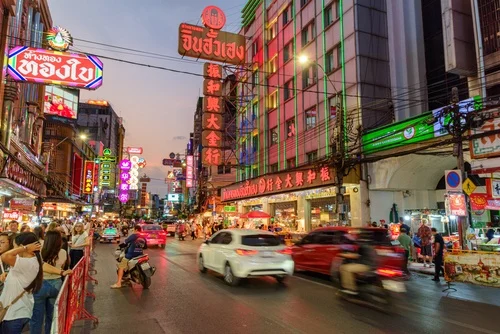
In 2026, the cost of living in Thailand depends most on where you live and your lifestyle. Many solo expats budget roughly 20,000 to 45,000 THB a month excluding rent, while a central one-bedroom in Bangkok often runs close to 23,000 THB. Chiang Mai tends to cost noticeably less, and Phuket or Koh Samui often more. Use the city and lifestyle breakdowns below to build a realistic monthly budget.

Quick Answers
- Bangkok is the priciest of the three cities compared here; Chiang Mai is usually the most affordable, and Phuket and Koh Samui sit in between with pricier housing.
- Rent is typically the single biggest swing factor in your total monthly budget.
- Your healthcare choice, SSO coverage versus private insurance, can shift monthly costs by tens of thousands of baht.
About this data: figures below combine Numbeo’s crowd-sourced August 2026 averages with typical SSO and private-insurance market ranges. It’s best to view these figures as estimates, not an exact quote.

Monthly Cost of Living in Thailand by City (Bangkok vs. Chiang Mai vs. Phuket/Samui)
Here’s how the three cities compare on a typical month, before adjusting for lifestyle tier:
| City | Solo, excl. rent | Family of four, excl. rent | Typical 1BR rent (center) |
| Bangkok | ~24,000 THB | ~87,000 THB | ~23,000 THB |
| Chiang Mai | ~18,500 THB | ~68,000 THB | ~15,500 THB |
| Phuket / Koh Samui | ~22,000 THB | ~79,000 THB | ~24,000 THB |
These figures represent the middle of a wide range of cost-of-living expenses. For example, adopting a local-tier lifestyle, eating mostly Thai food, using public transit, and shopping at local markets, often runs 15 to 25 percent below these numbers. Opting for a Western-leaning lifestyle, with imported groceries, private healthcare, and frequent delivery or ride-hailing, can increase your cost of living by 30 to 50 percent. For US readers, the two biggest surprises are usually hot-season air conditioning bills and the gap between Thailand’s public healthcare system and the private insurance many Americans choose instead. If you’re weighing other expat destinations, our guide to moving to Japan covers a similarly popular option.

Housing and Utilities in Thailand: Rent Ranges, Deposits, and What “Included” Really Means
Expect to put down a deposit of three months’ rent, plus a month’s notice before moving out, in most Thai rental agreements. Common expat neighborhoods include Sukhumvit and Thonglor in Bangkok, Nimman in Chiang Mai, and Rawai or Kata in Phuket.
| City | Typical deposit for 1BR, city center | Typical deposit for 1BR, outside center |
| Bangkok | 60,000 THB | 35,400 THB |
| Chiang Mai | 46,500 THB | 28,000 THB |
| Phuket | 72,000 THB | 49,000 THB |
Basic utilities for a typical one-bedroom, electricity, water, and garbage, commonly range from about 2,000 THB in a mild month to 6,000 THB or more once air conditioning runs constantly during the hot season from March to May. Bangkok residents fall under the Metropolitan Electricity Authority (MEA), while Chiang Mai and Phuket are billed by the Provincial Electricity Authority (PEA); both follow the same national rate structure, so your bill depends on usage, not which one serves you.
Mobile and home internet service from providers like AIS 3BB Fibre3, TrueOnline, and National Telecom typically add another 500 to 1,000 THB combined. If you’re keeping a US bank account funded while budgeting for deposits abroad, our roundup of top online-only banks in the US covers options built for that.

Food, Groceries, and Dining: Street Food vs. Western Groceries (Realistic Ranges)
A street food meal typically costs 50 to 150 THB, and a casual sit-down meal runs roughly 100 to 250 THB per person in Bangkok or Chiang Mai, with island destinations like Phuket often 30 to 50 percent higher. A mid-range restaurant dinner for two, three courses, generally falls between 700 and 1,200 THB.
| Item | Typical price |
| Milk (1 liter) | 65–75 THB |
| Bread (loaf) | 45–60 THB |
| Rice (1 lb) | 22-45 THB |
| Eggs (dozen) | 70–90 THB |
| Chicken (1 lb) | 55-90 THB |
Imported and Western-brand groceries cost noticeably more than local staples; a Western-leaning grocery basket can run two to three times the cost of shopping at local markets. Many expats cover everyday staples at Tops, Big C, or Lotus’s, and turn to Villa Market or Makro for imported and specialty items.

Transportation and Healthcare: What Expats Actually Pay
Getting Around
In Bangkok, a single BTS or MRT ride costs about 25 to 60 THB, and a monthly pass runs roughly 1,000 to 2,000 THB depending on zones. Grab and metered taxis add flexibility for shorter trips. Outside Bangkok, many expats save money with a motorbike: expect roughly 30,000 to 60,000 THB to buy a decent used bike, plus modest ongoing costs for a helmet, basic maintenance, and compulsory insurance, often just a few thousand THB a year.
Healthcare: What’s Actually Covered
Thailand’s free Universal Coverage Scheme is built primarily for Thai citizens, not for most foreign residents. If you’re employed under a Thai work permit, you and your employer typically contribute to the Social Security Office, or SSO, fund, which gives you access to care at registered hospitals, though coverage depends on your employment and enrollment status. Many expats, especially retirees, freelancers, and remote workers, choose private health insurance instead. Private plans commonly range from roughly 20,000 to 80,000 THB a year for inpatient-only coverage and can rise to up to 85,000 to 200,000 THB for more comprehensive plans. These are estimated ranges, which can vary based on your age, coverage range, and provider. Common providers include Allianz Ayudhya, Cigna, AXA Thailand, and Pacific Cross Health. Private facilities offer multilingual doctors, interpreters, shorter wait times, and modern equipment. Paying cash per visit can work for occasional care but leaves you exposed if something serious happens.
| Option | Best for | Trade-off |
| Employer SSO | Employed expats with a work permit | Coverage tied to registered hospitals and enrollment status |
| Private insurance | Retirees, freelancers, remote workers | Higher upfront cost, broader hospital choice, English-speaking staff |
| Pay-as-you-go | Very short stays, light healthcare needs | No protection against a major medical event |

Frequently Asked Questions
How much money do you need per month to live comfortably in Thailand?
“Comfortable” varies by city and lifestyle, but many solo expats budget 25,000 to 45,000 THB, roughly 760 to 1,375 dollars, a month excluding rent, with Bangkok toward the higher end and Chiang Mai toward the lower end. Add typical rent from the tables above, and adjust upward if you lean toward Western groceries, private healthcare, or a more central neighborhood.
Is Bangkok more expensive than Chiang Mai?
Generally, yes. According to Expatistan’s city comparison, Bangkok is about 24% more expensive than Chiang Mai overall, driven mainly by higher rent and dining costs in premium neighborhoods. Chiang Mai offers a lower overall cost of living, while Bangkok trades higher costs for job opportunities, international schools, and big-city amenities.
What Are the Biggest “Hidden” Costs for Expats in Thailand?
A few costs catch newcomers off guard:
- Rental deposits (three months up front)
- Hot-season air conditioning bills
- Private health insurance premiums
- Imported or Western-brand groceries
- Ride-hailing and motorbike upkeep
- International school tuition, a major cost for families with children
Building these into your budget early, alongside general habits like our tips on how to save money fast, helps avoid surprises later.
How Much Is Rent in Thailand for a One-Bedroom Apartment?
It depends heavily on the city and neighborhood. Based on Numbeo’s 2026 data, expect roughly 24,000 THB a month for a central one-bedroom in Bangkok or Phuket, and closer to 16,000 THB in Chiang Mai. See the housing table above for outside-center and deposit ranges.
Do Expats Get Public Healthcare in Thailand?
Not automatically. Thailand’s free Universal Coverage Scheme mainly serves Thai citizens. If you’re employed under a Thai work permit, SSO enrollment typically gives you access to registered public hospitals, though eligibility depends on your employment and enrollment status. Many expats without SSO coverage, including retirees and remote workers, choose private insurance instead. Managing US paperwork from abroad often still requires your Social Security number.
Is Phuket More Expensive Than Bangkok?
It depends on what you’re comparing. Phuket’s tourist-driven housing and dining can rival or exceed Bangkok’s priciest neighborhoods. Rent in Phuket averages 24,000 THB, while a meal for two at an average restaurant costs around 1,200.00 THB. Bangkok generally carries higher transit and service costs citywide. Opting to live outside Phuket’s tourist zones can mean day-to-day costs noticeably lower than central Bangkok.
What’s a Realistic Budget for a Couple Living in Thailand?
Two people generally spend more than double a solo budget. A couple in Bangkok might budget roughly 45,000 to 70,000 THB a month excluding rent, while a couple in Chiang Mai often lands closer to 35,000 to 55,000 THB. Add rent from the city table above for a broader picture.
Key Takeaways
- Bangkok is consistently the priciest of the three cities compared here; Chiang Mai is typically the most affordable.
- Housing and air conditioning are the two biggest swing factors in almost any Thailand budget.
- Local Thai-style eating costs a fraction of a Western-leaning grocery store, often two to three times less.
- Health care costs vary enormously by coverage type, from near-free SSO access to six-figure-THB private plans.
- Building your budget category by category, rent, food, transportation, and healthcare, gives a more realistic number than one national average.
Plan Your Thailand Budget with a Category-First Approach
Cost of living in Thailand in 2026 comes down to where you settle and how you want to live. Start with the city and lifestyle-tier ranges above, then build your own budget category by category rather than leaning on one average figure. If you’re also comparing costs against home, our guide to calculating cost of living by state can help you weigh the difference before you decide. And once you’ve settled in, Remitly can help you send money to family back in the US, so managing finances across two countries feels a little easier.
Last updated: September 2026



