The cost of living in the Philippines ranges from approximately CAD $850 to CAD $2,100 a month for expats, depending on the city and your lifestyle. Major cities like Manila cost more than smaller cities like Davao. For Canadians, moving to the Philippines usually means your income stretches significantly further than it does at home.
For this guide, “cost of living” means the everyday essentials: housing, food, healthcare, and transportation. We’ve covered education costs separately, so school fees aren’t included in these budgets. All figures are shown in Canadian dollars (CAD), with approximate Philippine peso (₱) equivalents where they’re useful, since that’s the currency you’ll actually be spending in.
The Philippine peso fluctuates against the Canadian dollar, so treat these conversions as a snapshot, not a fixed number. As of September 2026, one Canadian dollar buys roughly ₱44.50. Check a current rate through Remitly‘s rate tool, Wise, or the Bank of Canada before setting a firm budget.

Philippines vs. Canada: How Far Does Your Money Go?
This comparison matters most if you’re weighing a move: how far does a Canadian dollar go once it’s converted to pesos? A lot further, though the size of the gap depends on where in Canada you’re from and where in the Philippines you’d settle.
| Monthly expense | Toronto | Manila | Davao |
| Rent, 1-bedroom apartment (outside city centre) | CAD $2,030 | CAD $397 | CAD $242 |
| Meal at an inexpensive restaurant | CAD $25 | CAD $7.90 | CAD $6.75 |
| Monthly groceries for one person | CAD $518 | CAD $341 | CAD $298 |
| Monthly public transport budget | CAD $156 | CAD $18 | CAD $19 |
Source: Numbeo, accessed September 2026; converted to CAD at approximately ₱44.50 per CAD $1. Prices vary by neighbourhood and lifestyle.
Your CPP and OAS payments continue if you move abroad. As of 2026, the average CPP retirement pension is about CAD $877 a month. OAS adds up to roughly CAD $752 a month for someone aged 65 to 74, a combined CAD $1,600 to $2,000+ a month, depending on your contribution history.
A retired Canadian bringing in around CAD $1,700 a month in combined CPP and OAS could realistically cover rent, food, and day-to-day costs in Davao and still have money left for healthcare and savings. A scenario that’s hard to pull off in most Canadian cities, where average rent alone can exceed that amount. It’s a big part of why Canadian income, whether salary, pension, or savings, tends to go further here than at home.

Cost of Living by City in the Philippines
City choice is the single biggest variable in your monthly expenses. The four cities below range from high-cost urban to affordable and regional. The right fit depends on lifestyle as much as budget.
Manila

Manila is the priciest of the four. A one-bedroom apartment outside the city centre runs around CAD $397 a month, per Numbeo’s September 2026 data, versus about CAD $761 in the city centre. An inexpensive meal costs around CAD $8, and the monthly public transport estimate is about CAD $18. A gym membership adds approximately CAD $60 a month.
Manila suits Canadians who want urban amenities, international food options, and easy flight access home. Air Canada and Philippine Airlines both offer nonstop Vancouver to Manila flights, with connections available from other Canadian cities. That convenience comes at a premium, and popular expat areas include Bonifacio Global City (BGC) or Makati, where costs be higher.
Cebu City

Cebu is a strong middle ground: a one-bedroom apartment outside the centre averages about CAD $428 a month, an inexpensive meal runs around CAD $4.25, and a monthly public transport estimate is about CAD $17.50, per Numbeo’s September 2026 figures. English is widely spoken, a beach lifestyle is within easy reach, costs sit below Manila’s, and a growing expat community with several international schools makes it a solid option for families.
Baguio

Baguio sits at roughly 1,500 metres of elevation, giving it a cooler climate than the rest of the Philippines. It’s appealing if you find tropical heat difficult. A one-bedroom apartment outside the centre averages about CAD $277 a month, and an inexpensive meal costs around CAD $5.60, based on Numbeo’s June 2026 data.
Baguio’s costs can look counterintuitively high for its size. That’s largely down to the price of imported goods and its popularity with Filipino students and domestic tourists. Transportation options are also more limited here than in Manila or Cebu.
Davao

Davao is the most affordable of the four major cities. A one-bedroom apartment outside the centre averages around CAD $242 a month, an inexpensive meal costs about CAD $6.75, and a transport pass runs roughly CAD $19, according to Numbeo’s June 2026 data.
Davao is near Mt. Apo, a dormant volcano and the country’s tallest mountain. It’s a good fit for active retirees who want easy access to the outdoors. It also has a reputation as one of the safest cities in the Philippines, a meaningful factor for many retirees.
Tip: Among major Philippine cities, Davao consistently has the lowest cost of living for expats, with monthly expenses often below CAD $1,300.
Key Monthly Expenses: What You’ll Actually Pay
Here’s a closer look at what each category actually costs.
Housing in the Philippines

Foreign nationals can’t buy land in the Philippines, but they can own condominium units, up to a 40% foreign-ownership cap per building under the Condominium Act. That’s worth knowing if you eventually plan to buy rather than rent.
A one-bedroom apartment outside the city centre typically runs from about CAD $242 in Davao to around CAD $428 in Cebu, based on Numbeo’s 2026 data. Furnished, expat-oriented units in areas like Bonifacio Global City or Cebu IT Park cost noticeably more (often CAD $700 or higher a month) since they cater to short-term renters with amenities like pools, gyms, and 24-hour security.
A 6-to-12-month lease usually costs less per month than month-to-month, though short-term rentals often carry a premium until you’ve built local references.
Utilities are often billed separately and add up fast. Basic electricity, water, and garbage collection for a mid-sized Manila apartment average about ₱7,700 a month (roughly CAD $173, per Numbeo’s September 2026 data) with electricity the biggest driver if you run air conditioning regularly. Internet adds approximately CAD $34 monthly.
Food and Groceries

The Philippines offers abundant seafood and a world-famous street food culture. Sticking to local spots is the easiest way to eat well without spending much.
- Street food or a turo-turo (cafeteria-style) meal: about CAD $1–3
- Sit-down meal at a local Filipino restaurant: about CAD $4–8, per Numbeo’s September 2026 data
- Meal at a Western-style or international restaurant: CAD $12–20 or more
- A week of groceries at a local wet market: noticeably less than a supermarket chain like SM or Robinsons, where imported items cost more
Tim Hortons now has locations in the Philippines too, a small touch of home, though imported brands generally cost more than local ones.
Healthcare

Canadians living in the Philippines should arrange suitable health insurance: eligible foreign residents and retirees can enrol in PhilHelath, but Canadian provincial coverage may end when they move abroad.
In Ontario, OHIP coverage is generally suspended after about seven months outside the province, and BC’s MSP works on a similar timeline. Budget for that coverage gap and arrange private insurance before you leave.
Premiums for a private expat health plan vary widely by age, provider, and coverage level, so compare quotes from a few international insurers directly rather than relying on one published rate. Healthcare quality varies between private and public facilities, and most expats, particularly in Manila and Cebu, use private hospitals for anything beyond routine care.
PhilHealth allows qualifying foreign retirees and other foreign residents to enrol. Its published handbook lists annual premiums of approximately CAD $337 for PRA-registered foreign retirees and CAD $382 for other foreign citizens. Confirm your eligibility and current contribution before enrolling; PhilHelath does not necessarily cover your full medical bill.
The Philippines’ own Social Security System (SSS) is a separate social insurance system for eligible workers, not a replacement for health insurance. Moving to the Philippines does not automatically entitle Canadian retirees to an SSS pension.
Transportation

Getting around looks different by city. Manila has the most options: MRT and LRT trains, buses, Jeepneys, e-Jeepneys, tricycles, and Grab. Cebu and Davao lean more on motorcycles, tricycles, buses, and Grab, while Baguio relies mostly on taxis, Grab, and local buses.
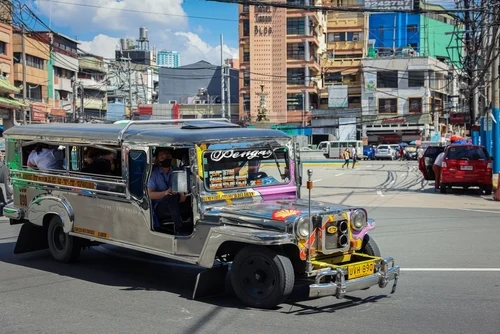
Jeepneys, converted Jeeps that can fit up to 20 passengers at a time, remain one of the most affordable ways to get around. A regular Manila commuter using the MRT and Jeepneys can expect to spend around CAD $18–25 a month; an expat using Grab occasionally will spend more, though still a fraction of typical Canadian transit or car costs. Jeepney fares have been revised in recent years, so confirm current rates with the LTFRB (Land Transportation Franchising and Regulatory Board) before budgeting.
The Philippines doesn’t have a large railroad network, so buses, ferries, and domestic flights handle most intercity travel. Flights are frequent and affordable enough to make island-hopping realistic.
Foreigners can own a vehicle, and motorcycles offer more affordable personal transport than a car, but traffic in Manila makes driving in the Philippines a hassle most short-term residents skip.
What Canadians Need to Know Before Moving to the Philippines

The Special Resident Retiree’s Visa (SRRV), administered by the Philippine Retirement Authority (PRA), is the most common long-term residency route for Canadian retirees. Requirements vary by category, but generally include:
- A minimum age of 40
- A visa deposit held in a PRA-accredited Philippine bank, in US dollars, with the amount set by your category. For SRRV Classic, applicants aged 50 or older need USD $15,000 with a qualifying pension or USD $30,000 without one. For ages 40-49, the amounts are USD $25,000 and USD $50,000 respectively.
- A clean police and medical clearance
- An application filed through the PRA, with supporting documents and applicable fees.
The pensioner category requires proof of a lifetime pension of at least USD $800 monthly for a single applicant or USD $1,000 for an applicant with dependents. Because categories and deposit amounts change, check current requirements on the Philippine Retirement Authority’s website before making plans — or see our guide to visas in the Philippines for Canadians for a broader look at visa categories.
Canada has a tax treaty with the Philippines that affects how your CPP and OAS income is taxed abroad, so speak with a cross-border tax professional before you relocate rather than guessing at the details.
You’ll likely need to move money between Canada and the Philippines regularly, whether that’s covering your own expenses or supporting family. International wire transfers often carry high fees and weaker exchange rates; services like Remitly typically cost less and offer bank deposit, mobile wallet, or cash pickup options. Our guide to the best ways to send money from Canada covers this in more detail.
Internet speed and reliability in the Philippines have improved considerably in recent years, making remote work and video calls with family back in Canada far more practical than before.
FAQ: Cost of Living in the Philippines for Canadians
How much does it cost to live in the Philippines per month as a Canadian?
As a Canadian expat, expect to spend roughly CAD $850 to CAD $2,100 a month in the Philippines. Manila sits at the higher end, while Davao tends to be the most affordable. Your actual total depends heavily on whether you eat and rent like a local or lean toward a Western lifestyle.
Can Canadians retire in the Philippines?
Yes. Many Canadians retire in the Philippines using the Special Resident Retiree’s Visa (SRRV), the main long-term residency route for retirees. Your CPP and OAS payments continue while you live abroad, and a Canada-Philippines tax treaty affects how that income is taxed, so it’s worth consulting a cross-border tax professional first.
Is healthcare affordable in the Philippines for Canadian expats?
Private healthcare in the Philippines generally costs much less than in Canada. Qualifying foreign residents and retirees can enrol in PhilHealth, although it may not cover their full medical costs. Budget for a private expat health plan and compare quotes from a few international insurers, since premiums vary by age, provider, and coverage level.
Which city in the Philippines is the most affordable for expats?
Davao is generally the most affordable major city for Philippine expats, with monthly costs often below CAD $1,300 for a modest lifestyle. It also has a strong reputation for safety and easy access to outdoor spaces like Mt. Apo, which makes it appealing to retirees looking for a quieter pace of life.
How does the cost of living in the Philippines compare to Canada?
Day-to-day costs like rent, groceries, and transportation typically run well below what you’d pay in a major Canadian city, often by more than half. That gap matters most for retirees on a fixed income, since CPP and OAS can cover considerably more of a monthly budget here than in Canada.
Can Canadians buy property in the Philippines?
No. Foreign nationals, including Canadians, can’t own land in the Philippines. You can, however, legally own a condominium unit under the Condominium Act, as long as foreign ownership in that building doesn’t exceed 40% of the total units. This makes condos the realistic property option for most Canadian expats and retirees.
What is the best way for Canadians to send money to the Philippines?
International bank transfers work but often come with high fees and poor exchange rates. Services like Remitly typically offer lower fees and competitive CAD-to-PHP exchange rates, with options to send money by bank deposit, mobile wallet, or cash pickup; useful whether you’re supporting family or covering your own expenses abroad.
Conclusion: Is the Philippines Affordable for Canadians?
So, is the Philippines affordable for Canadians? For most people weighing the move, yes — costs run well below what you’d pay in Canada, and that gap can make a real difference on CPP and OAS or Canadian-level savings. City choice, lifestyle, and healthcare planning are the three things worth researching most before you commit.
If you do make the move, you’ll need a reliable way to send money between Canada and the Philippines — Remitly offers CAD-to-PHP transfers with low fees and real-time exchange rates, whether you’re supporting family back home or managing your own finances abroad. For more context, see our guide to the cost of living in Canada.
Key Takeaways
- The cost of living in the Philippines ranges from approximately CAD $850 to CAD $2,100 a month for expats, depending on city and lifestyle.
- Davao is the most affordable major city for Canadian expats, while Manila is the most expensive.
- Eligible Canadian residents and retirees can enrol in PhilHealth, but may need private insurance for additional coverage.
- Foreign nationals, including Canadians, can own condominium units in the Philippines but can’t own land.
- The Special Resident Retiree’s Visa (SRRV) is the main long-term residency route for Canadian retirees, and CPP and OAS payments continue while living abroad.
This guide draws on dated 2026 cost-of-living data and published Government of Canada pension figures. Costs, visa rules, and tax treaties change over time, so treat these figures as a current starting point, not a substitute for checking the latest numbers yourself.
Last reviewed: September 2026