
Annual income is the total money you earn in one year. On most U.S. forms, it means gross annual income — earnings before taxes and deductions — including wages, tips, bonuses, and self-employment income. Estimate it by multiplying regular pay by the number of pay periods in a year and adding expected extras.
If you’re filling out a job, rental, credit, benefits, or financial-aid form for the first time, this Remitly guide explains what counts, how to calculate annual income, and which number to use.
This article provides general information, not individualized tax, financial, or legal advice. Always follow the form’s instructions.

What Counts as Annual Income in the US (and What Usually Doesn’t)
For everyday employment and private applications, annual income commonly includes:
- Wages, salary, and hourly pay
- Tips and overtime
- Bonuses and commissions
- Self-employment or 1099 income
- Unemployment benefits
- Interest and dividends
- Rental income
A salaried employee usually starts with their stated salary. An hourly worker can estimate annual earnings by multiplying their hourly rate by average weekly hours and then by 52. For example, $20 per hour for 40 hours a week equals $41,600 before deductions. For those with a monthly salary, calculating your annual income is straightforward: you simply multiply your monthly gross pay by 12.
Your annual income also includes things like bonuses and overtime pay. These are often tied to performance or extra hours worked and are added to your base pay to determine your total gross income for the year. Since this money is part of your earnings, it is also subject to income tax.
Items that commonly do not count as earned annual income include:
- Qualifying expense reimbursements
- Personal gifts
- Loan proceeds that must be repaid
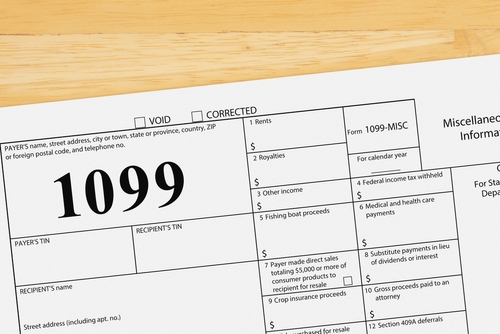
1099 income (self-employment or gig work) is also counted, but the paperwork differs. Freelance and contract payments are usually reported on Form 1099-NEC, while gig and marketplace platforms may issue Form 1099-K for payment-card and third-party network transactions. Unless a form specifies otherwise, report the gross amount before business expenses. If you’re new to US payroll paperwork, our guide to what a Social Security number is covers another document you’ll need before an employer can issue you a W-2.

Gross, net, and AGI at a glance
- Gross income: Everything you earn before taxes and deductions.
- Net income: Take-home pay after taxes and other deductions.
- Adjusted gross income (AGI): Total taxable income minus certain IRS adjustments, reported on Form 1040, line 11.
US Payroll terms to know
If you’re comparing paystub gross pay vs net pay, these terms help:
- Gross pay: Total pay before deductions.
- Pre-tax deductions: Amounts taken out before taxes are calculated, such as 401(k) or health insurance contributions.
- Taxable wages: Wages subject to federal income-tax reporting. This is what’s left after pre-tax deductions and what’s reported in Box 1 of your W-2.
- Net pay: The amount left after taxes and other deductions.
- YTD (year-to-date): Earnings accumulated since the start of the year.
Note: Some forms also ask for household income rather than individual income. ACA Marketplace applications, for example, ask for your household’s total income rather than just your own. Always check and follow the form’s instructions.

Gross vs. Net vs. Taxable Income — Which One Is “Annual Income”?
When people ask “what is annual income,” they’re often mixing up three different numbers. Here’s how they differ:
| Term | Meaning | Where to find it | When forms ask for it |
| Gross annual income | Total earnings before any taxes or deductions | Offer letter, employment contract, or your own pay calculation | Job applications, most rental applications, many loan and credit card applications |
| Net income | Take-home income after taxes, insurance, and retirement deductions | Net-pay line on pay stubs | Personal budgeting; rarely requested on official forms |
| Taxable wages (Box 1) | Gross pay minus pre-tax deductions like 401(k) and pre-tax health insurance | W-2 Box 1 | Federal tax filing |
| Adjusted gross income (AGI) | Taxable income minus IRS-allowed adjustments (e.g., student loan interest, certain retirement contributions) | Form 1040, line 11 | FAFSA, some income-based tax credits, and loan underwriting that references your tax return |
Your gross annual income is the total amount of money you earn in a year from all sources of income before a single penny is taken out for deductions. This figure includes your base salary or wages plus any additional income like bonuses, overtime, commissions, and investment returns. For example, if your salary is $50,000 and you receive a $5,000 bonus, your gross annual income is $55,000, assuming you have no other income.
Net annual income is the amount of money you’re left with after all deductions have been taken from your gross income. This is often called your “take-home pay” because it’s the actual amount that lands in your bank account. These deductions include mandatory payroll taxes like federal and state income tax, Social Security, and Medicare, and voluntary deductions you might choose, such as 401(k) retirement contributions or health insurance premiums.
Imagine your annual gross income is $55,000. After all deductions, such as federal and state taxes, Social Security, and health insurance premiums totaling $12,000, are taken out, your annual net income would be $43,000. Our guide on what overdraft protection is is a useful next read if you’re budgeting around your net, take-home number rather than the gross figure a form is asking for.
Note: If a form doesn’t specify which figure it wants, use gross annual income — it’s the default most US applications expect.

How to Calculate Annual Income (Hourly, Salary, and Variable Pay)
Use the formula that matches how you are paid:
- Hourly: Hourly wage x hours worked per week x 52 = annual income
- Weekly: Weekly pay x 52 = annual income
- Monthly: Monthly salary x 12 = annual income
- Biweekly (26 paychecks a year): Paycheck amount × 26
- Semimonthly (24 paychecks a year): Paycheck amount × 24
Note: Biweekly and semimonthly pay schedules are easy to mix up. Biweekly means every two weeks (26 pay periods a year), while semimonthly means twice a month (24 pay periods a year).
Example 1: Hourly pay plus overtime
At $20 per hour for 40 hours per week:
$20 x 40 x 52 = $41,600
If you regularly earn another $150 per week in overtime:
$150 x 52 = $7,800
Estimated gross annual earnings: $49,400
Example 2: Salary plus bonus
A $62,000 salary plus a reasonably expected $3,500 bonus gives an estimated annual income of $65,500.
If the bonus is uncertain, check whether the application asks for guaranteed, current, or reasonably expected income before including it.
Example 3: Variable or gig income
- Gather several representative weeks or months of pay stubs, invoices, or payment records.
- Add the income for that period.
- Divide by the number of weeks or months covered.
- Multiply a weekly average by 52 or a monthly average by 12.
- Adjust for predictable seasonal changes.
For example, if you earned $3,600 over the last 10 weeks, that’s $360/week × 52 = $18,720 a year.
If you just started a job, annualize your pay from your offer letter or a full pay period rather than guessing. For example, a new $25/hour job at 35 hours a week comes to roughly $45,500 a year.

Which Annual Income Number Should You Put on US Applications? (Decision Guide)
The most important rule for annual income applications is to read the label before choosing a number. Different applications ask for different income figures, and the proof documents they’ll accept vary too.
| Application type | Income definition usually requested | Best number to use | Common proof documents |
| Job application | Gross annual income (current or expected) | Salary or hourly rate, annualized | Offer letter, recent paystubs |
| Apartment rental | Gross annual income | Gross pay from paystubs or offer letter | Paystubs, W-2, offer letter, bank statements |
| Credit card or personal loan | Gross annual income | Gross pay, including secondary income sources | Pay stubs, tax return, 1099s |
| Mortgage | Gross annual income, verified against tax returns | Gross pay plus documented additional income | W-2s, tax returns, pay stubs |
| ACA/Marketplace health coverage | Modified adjusted gross income (MAGI) — close to AGI for most people | Expected income for the coverage year, not last year’s | Paystubs; prior tax return as a starting estimate |
| FAFSA (federal student aid) | Adjusted gross income (AGI), Form 1040 Line 11 | AGI as filed, generally from two years prior | Federal tax return, often imported directly from the IRS |
A few things to keep in mind:
- Expected vs. last year’s income: Job and rental applications usually want your current or expected income, while FAFSA uses a prior tax year’s AGI and ACA Marketplace applications want your estimate for the coverage year ahead, not last year’s return.
- Mortgage lenders and credit checks: Underwriters generally weigh gross income against documented debt, loosely aligned with CFPB ability-to-repay guidance. If you’re building credit, how to build good credit is a useful companion read.
- Converting between annual and monthly figures: Divide annual gross income by 12 for a monthly gross figure, or annual net income by 12 for a monthly net figure. Don’t mix the two.
- If a form doesn’t specify, gross annual income is the safer default.
FAQ: Annual Income Questions US Applicants Ask
Does “annual income” mean gross or net?
On most US forms, “annual income” means gross annual income, your total earnings before taxes and deductions, unless the form specifically asks for net or take-home pay. When a form doesn’t specify, use the gross figure as your default answer.
How do I calculate annual income if I’m paid hourly?
Multiply your hourly wage by the number of hours you typically work each week, then multiply that by 52 weeks. For example, $20/hour at 40 hours a week comes to $41,600 a year. Add any regular overtime or bonuses for a more accurate total.
What if my income varies, like from tips or gig work?
Average your earnings from the last 8–12 weeks of pay stubs or payment records, then multiply that weekly average by 52. This smooths out irregular weeks and gives forms a reasonable annual estimate for variable income.
Do bonuses and overtime count as annual income?
Yes, your annual income includes all forms of compensation. Things like bonuses, overtime pay, and commissions are considered additional compensation and are added to your base salary to calculate your total gross income for the year. This gives a complete picture of your total earnings.
Where do I find my annual income on a paystub or tax form?
Your paystub shows gross pay and year-to-date (YTD) earnings. On your W-2, taxable wages appear in Box 1. Your adjusted gross income (AGI) appears on Form 1040, Line 11, after you file your federal tax return.
What’s the difference between annual income and annual salary?
Annual salary usually refers only to your fixed base pay, while annual income includes your salary plus bonuses, overtime, tips, and any other earnings. Someone with a $50,000 salary and a $5,000 bonus has a $55,000 annual income.
How do I report income from two jobs?
Add your annualized income from each job together for your total annual income. If pay varies between jobs, calculate each one separately — using the appropriate hourly, salary, or averaging method — then combine the totals before reporting on a form.
Key Takeaways — Annual Income in the US
- Gross annual income is the default number most U.S. forms want unless they specify otherwise.
- Gross, net, and AGI are three different figures: gross is before deductions, net is take-home pay, and AGI is a tax-specific number from Form 1040, Line 11.
- To annualize pay, multiply by the right number of pay periods: 52 weekly, 26 biweekly, 24 semimonthly, or 12 monthly.
- For irregular income, average recent weeks or months and multiply by 52 or 12.
- Paystubs, W-2s, 1099s, and Form 1040 are the main documents that verify your annual income.
Conclusion: Next Steps — Confirm the Right Number Before You Submit a Form
Annual income usually means gross annual income on US forms, but the exact definition can shift depending on the form. Job applications, rentals, loans, ACA Marketplace coverage, and FAFSA each have their own conventions. Before you submit anything, re-read the form’s exact wording (gross, net, AGI, or household income) and follow its instructions rather than assuming. When in doubt, your pay stub, W-2, or most recent tax return will have the number you need. If you’re mapping your income against everyday costs, how to save money fast and cost of living by state are useful next reads.
About this article
This guide explains general rules for how annual income is defined and calculated on common US forms. It is not individualized tax, financial, or legal advice, and every application should be checked against its own instructions.
- IRS: General Instructions for Forms W-2 and W-3 and the IRS definition of adjusted gross income
- Social Security Administration (SSA): What are FICA and SECA taxes?
- HealthCare.gov: What’s included as income
- Federal Student Aid (StudentAid.gov): What you need for the FAFSA form
- Consumer Financial Protection Bureau (CFPB): Ability-to-Repay/Qualified Mortgage Rule
Tax brackets, income thresholds, and form line numbers change yearly. Always confirm current details on the relevant agency’s website before submitting a form.
Last reviewed: August 2026.