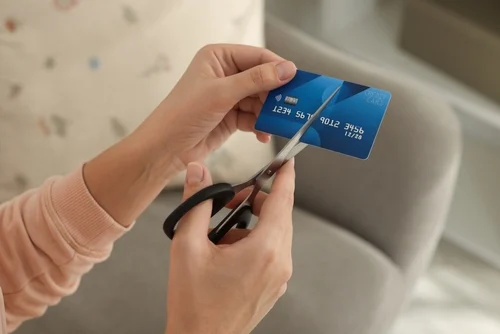
Quick answer: how to cancel a credit card in 5 steps
If you want to cancel a credit card, first pay the balance to $0 if possible, redeem or transfer rewards, and move your subscriptions and autopay to another method. Then contact the issuer to close the account, request written confirmation, and check your credit reports after one to two billing cycles. Because closing a card can raise credit utilization, consider a downgrade if keeping the credit line would help your credit profile.
- Pay your balance down to $0.
- Redeem any rewards or points before you close the account.
- Move subscriptions and autopay to a card you’re keeping.
- Call your issuer, request the closure, and get written confirmation.
- Check your credit reports afterward to confirm the account shows as closed.
Canceling means closing the account with the issuer, not simply cutting up the card or stopping purchases. No strategy can guarantee that your score will not change, so the decision tree below can help you compare canceling, downgrading, and keeping the account open.

Will canceling a credit card hurt your credit?
It can. The most immediate effect is often a change in credit utilization because closing a card removes that card’s limit from your available revolving credit. Credit history length and credit mix can also matter, although a closed account in good standing does not disappear from your credit report immediately.
Credit utilization after you close a card
Credit utilization is the percentage of your available revolving credit that you’re using. If balances on your other cards stay the same but your total available limit falls, your utilization rises. For example:
- Card A: $2,000 credit limit with a $0 balance.
- Card B: $3,000 credit limit with a $1,000 balance.
With both cards open, you’re using $1,000 of $5,000, or 20%. Close Card A and your available limit falls to $3,000, pushing utilization to about 33%.
Before canceling, calculate your utilization with the card’s limit and again without it to see how much closing the account could change your credit profile.
You may see 30% described as a target, but it is a rule of thumb rather than a hard cutoff. FICO says there is no single optimal utilization percentage and, generally, lower utilization is better.

Length of credit history and credit mix
According to myFICO, the length of your credit history makes up about 15% of your FICO® Score and credit mix about 10%. However, closing an old card does not erase its age immediately. Experian says a closed account in good standing can remain on a credit report for up to 10 years and continue affecting credit scores while it appears.
So, the immediate concern is usually utilization rather than an instant loss of the card’s history. Closing your only revolving account can also affect the variety of credit shown in your file, although the exact impact depends on the scoring model and your overall profile.
Common misconception: closing a card does not erase years of on-time payments overnight. A closed account in good standing can remain on your report for years.

| Factor | Share of your FICO® Score |
| Payment history | 35% |
| Amounts owed (including utilization) | 30% |
| Length of credit history | 15% |
| New credit | 10% |
| Credit mix | 10% |
Source: FICO, “How are FICO Scores Calculated?”
Before you cancel: a pre-closure checklist
Before you call your issuer, work through this checklist:
- Pay your balance to $0.
- Turn off or redirect autopay linked to the card.
- Move recurring subscriptions to a card you’re keeping or another payment method.
- Redeem your rewards or points.
- Save PDF copies of your last few statements.
It is always best to pay off your balance in full before you close your credit card. Issuers will still let you close an account with a balance, but you remain responsible for it — payments and interest continue until it reaches $0, and an unpaid balance can eventually lead to a charge-off or collections.
If you’re still building a credit history in the US, a common situation for newcomers, take extra care if this is your first, oldest, or only card. A product change/downgrade credit card option may solve an annual-fee problem without closing the credit line.
If you’re redirecting autopay to a different checking account, you may be asked for that account’s routing number, sometimes called an ABA number, along with the account number itself.

How to cancel a credit card: what to say and what to ask for
Contact your credit card issuer’s customer service to request the closure and ask for written confirmation.
Here’s a simple script you can use for the call:
- Confirm your balance is $0 and ask the representative to read it back to you.
- Say clearly: “I’d like to close this credit card account today.”
- Ask for written confirmation of the closure and the $0 balance, by mail or through your online account.
- Ask whether a credit balance remains. Under Regulation Z, a credit balance over $1 can be refunded in writing, and the issuer must send it within seven business days.
- Note the representative’s name, the date, and any confirmation number.
Many credit card companies would rather keep you as a customer and may present you with a retention offer — a waived annual fee, a statement credit, or bonus rewards points — to convince you to stay.
- Explain that you’re considering closing the account because of the annual fee.
- Ask if there are any available retention offers.
- Inquire about a product change to a card that better fits your needs.
If you’ve added an authorized user, mention that on the call — some issuers remove them automatically when the primary account closes, while others need a separate request, so it’s worth confirming either way before you hang up.
If the representative can’t close the account, ask to speak with a supervisor or follow up in writing through your account’s message center. The Consumer Financial Protection Bureau recommends following up a phone request with written notice. Keeping overdraft protection active on the account you’re redirecting payments to can also cushion against a subscription that slips through before the switch is complete.
Cancel, downgrade, or keep the card: a decision tree
There’s no single right answer here — it depends on your fees, how many other accounts you have open, and how you actually use the card:
- High fee, not your oldest account: downgrading or canceling both work.
- Your oldest account: keep it open to protect your average account age.
- Balances on other cards: canceling could push utilization higher; downgrading keeps the credit line intact.
- Unused and a fraud concern: closing removes that exposure, though some issuers deactivate long-inactive cards on their own.
If a high annual fee is your main reason for wanting to cancel, downgrading your card can be a solid alternative. This process, often called a product change, involves switching to a different card from the same issuer, typically one with no annual fee. This can be a useful alternative to outright cancellation.
The biggest benefit is that you get to keep your account open. Your account number may change, but the original open date remains, preserving the length of your credit history — you avoid a shorter history and a higher utilization ratio.
If a downgrade isn’t available, it’s also worth comparing what else is out there — some online-only banks skip annual fees altogether, worth factoring in if you’re rethinking your broader banking setup, not just one card.

| Option | Pros | Cons | Best fit |
| Cancel | Ends access and future use | Can raise utilization; the account eventually ages off your report | You’re managing debt or the fee is unjustifiable. |
| Downgrade | May remove an annual fee while keeping the relationship open | Products and account treatment vary by issuer | The fee is your only complaint. |
| Keep open, unused | Preserves available credit | Requires monitoring; issuer may still close it | It’s your oldest card or has no fee. |
Frequently Asked Questions (FAQs)
How can I cancel a credit card without hurting my credit?
Pay your balance to $0, redeem rewards, and move autopay before you call. Ask your issuer for written confirmation of closure. The dip after canceling a credit card is usually temporary if you keep paying your other accounts on time and your utilization stays manageable.
Should I cancel a card or downgrade it for an annual fee?
A downgrade, or product change, often solves the fee problem without closing the account. Your original open date typically carries over, so your credit history stays intact. Ask your issuer whether your card is eligible before deciding to cancel outright.
Can I close a credit card if it still has a balance?
Yes, but the balance doesn’t disappear — you’ll keep making payments, and interest keeps accruing until it’s paid off. The Consumer Financial Protection Bureau recommends paying down the balance on schedule and confirming the closure in writing.
How long until a canceled card updates on my credit report?
Issuers typically report account changes within one to two billing cycles, though exact timing varies by issuer. Check your reports from all three major bureaus — Experian, Equifax, and TransUnion — a month or two later to confirm the account shows as closed at your request rather than by the issuer.
Do I lose my rewards if I cancel a credit card?
In most cases, yes — unused points, miles, or cash back are typically forfeited once the account closes, though some programs let you transfer them first. Check your balance and transfer options before you call to cancel.
Is it better to cancel a card or just stop using it?
If the card has no annual fee, keeping it open and not using it is often simpler — an account in good standing supports your history and utilization. Some issuers close inactive accounts on their own, so an occasional small purchase can help keep it active.
What should I do after I cancel a credit card?
Confirm you received written proof of the closure and a $0 balance. Watch your statements for a cycle or two to make sure no old subscriptions slip through, check that your direct deposit and other payments hit the account you moved them to, then review your credit reports to confirm the account is marked closed.
Key takeaways
- Pay your balance to $0 before you close the account — interest and fees keep accruing until then.
- Closing a card can raise your utilization and lower your average account age, so a score dip is usually temporary.
- Ask for written confirmation of the closure and a $0 balance, and note who you spoke with.
- A downgrade to a no-annual-fee card can solve the fee problem while preserving your account’s open date.
- Afterward, check your credit reports from all three bureaus (Experian, Equifax, and TransUnion) to confirm it’s reported as closed at your request.
Bottom line: close the account cleanly, then verify the paperwork and reporting
Closing a credit card safely comes down to a simple order: pay it to zero, redeem what’s yours, call and get it in writing, then verify how it lands on your credit reports. If a fee is your only objection, a downgrade or keeping the account open with occasional use often protects your credit history better than closing it outright, especially if the card is one of your older accounts.
None of this replaces individualized advice. If you’re dealing with credit card debt you can’t pay down, or you suspect a card was opened fraudulently in your name, a nonprofit credit counselor or the issuer’s fraud department can help more directly than a general checklist. And if part of the decision is simply wanting more breathing room in your budget, these ways to save money fast and Remitly finance guides may also help.
Last reviewed: September 2026.