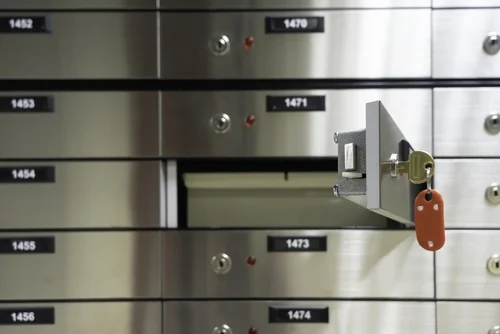
We all have things we want to keep safe. Documents, jewelry, and other valuables you can’t easily replace are typically safer if kept outside of your house. Storing your priceless items in a safety deposit box is one option. However, knowing what it actually costs can be confusing, since prices vary by size, location, and provider.
If you’re comparing your options, Remitly can help you sort through the details, from typical price ranges to hidden fees that can surprise you.
Safety deposit box cost in 2026: the quick answer
In the US, a safety deposit box typically costs about $15–$300 per year, depending on box size, location, and whether it’s at a bank or a private vault. Small boxes are usually the least expensive, while large boxes in major cities cost more and can be harder to find.
Most providers bill annually rather than month-to-month, so you’re likely paying for a full year upfront.
This guide is written for anyone renting a safety deposit box in the US, including immigrants who may be safeguarding crucial documents like a passport, visa paperwork, or an Individual Taxpayer Identification Number tied to their immigration status.
- Typical costs run about $15–$300 a year, depending on size, location, and provider type.
- Bank boxes usually cost less, but private vaults tend to offer extended access and, in some cases, insurance coverage for stored items.
- Watch for hidden fees, such as lost-key charges, drilling fees, and requirements like keeping a bank account open.

Typical safety deposit box prices by size (US, 2026)
| Size | Typical dimensions | Typical annual range | Best for |
| Small | 3″ x 5″ | $15–$65 | Jewelry, birth certificates, Social Security cards, flash drives |
| Medium | 5″ x 5″ to 3″ x 10″ | $20–$150 | Larger document folders, multiple jewelry pieces, small heirlooms |
| Large | 5″ x 10″ to 10″ x 10″ | $115–$300 | Large collections, estate documents, oversized valuables |
First National Bank charges $22 USD annually for its 2″ x 5″ safety box.
You’ll find similar prices for both small and medium-size boxes at credit unions and other regional banks. Because rates and availability shift often as banks like Key Bank scale back their safe deposit programs, it is wise to call ahead.
Private vault operators such as My Safe USA and Miles Franklin also rent boxes in these size ranges, generally at a premium over bank pricing, in exchange for extended access and added security.
How to choose a size: list what you actually want to store, then match it to the smallest size that fits everything with a little room to spare. Someone protecting a few documents and small jewelry pieces usually does fine with a small box. A box that will hold the paperwork of numerous family members, including organized tax records, usually needs medium. Anyone storing large collections or big estate binders should look at a large box or a private vault instead.

Why prices vary: location, availability, and provider type
Location premium
Despite banks phasing out safety deposit boxes, many still offer them alongside private vaults, and location remains one of the biggest factors in pricing. A major city like New York City or Chicago typically has limited storage space, which pushes prices up.
A box that rents for $30 in a more rural area, for example, may cost anywhere between $50 and $300 in a major city, depending on size.
Limited supply and bank discontinuation
Fewer boxes available in major cities are driving prices up, especially where customers don’t have many nearby alternatives. Banks are moving away from safety deposit boxes for two key reasons:
- Profitability: Banks don’t generate significant profit from safety deposit boxes.
- Customer surveys: According to JP Morgan, most customers come to the bank to ask a question or apply for a loan. The majority aren’t looking for safety deposit boxes.
It may be worth comparing private vaults, too, since availability keeps shifting. Although vaults located farther away from major cities often have lower annual fees, it can mean slower access in an emergency.
Bank vs. private vault pricing models
Traditional banks generally offer the lowest prices, even as many phase out safe deposit boxes. Private vaults may charge higher flat fees, plus appointment fees and other service charges. This can make them costlier overall; however, the added security and access can be worthwhile for some.
Private vaults often provide:
- Extended or 24/7 access
- Higher-end security
- Insurance coverage
Banks typically offer:
- Lower annual costs
- Limited access (banking hours only)
- No automatic insurance coverage
Before you commit, it can help to call ahead and pair a rate comparison with everyday banking safety habits, especially if you’ll be carrying valuables to and from the branch. Ask:
1. What sizes are currently available, and what are the annual rates for each?
2. Is pricing billed annually, or is there a monthly option?
3. What are the fees for a lost key or a drilled box?
4. Does renting a box require an active checking or savings account?
5. What identification do you need to bring, and are joint renters or authorized signers allowed?
6. Are the contents insured, or would you need your own insurance rider?

Hidden fees and risks: keys, drilling, insurance gaps, and access limits
The Federal Deposit Insurance Corporation (FDIC) doesn’t cover safety deposit box contents. There’s a misconception that when renting a safe deposit box at a bank, your box will be secure and its contents insured no matter the circumstances.
When setting up your safety deposit box, read the contract in full to understand exactly what is covered if something were to happen to your box. According to the FDIC, banks only make limited payments if the box or contents are damaged or destroyed.
Some renters insurance and homeowners policies offer a rider that extends limited coverage to items in a safety deposit box. It’s worth asking your insurer whether this is available to you and what it would cost, since coverage details vary by provider.
Safety deposit boxes usually require two keys, and banks rarely keep copies. At Key Bank, a key replacement fee is $40 USD, and the drilling fee is $200 USD.
When rental payments aren’t made, the bank has the right to drill open your box and charge you for the drilling (think of it as a fine). So it’s important to store your keys in a safe place and keep on top of your annual payments, along with any other fees the bank or private vault charges.
If a box goes unpaid for long enough, most states allow the bank to treat it as abandoned, and contents can eventually be turned over to the state’s unclaimed property office through a process called escheatment. Staying current on payments and keeping your contact information updated with your bank is the simplest way to avoid this.
- Drilling fee — the charge a bank applies when it has to physically drill open a safety deposit box. This usually happens when there is a lapse in payments or when both keys are lost. At Key Bank, for example, this fee is $200. Other banks and vaults set their own rates.
- FDIC coverage — federal deposit insurance that protects eligible bank deposits, like checking and savings balances, up to legal limits if a bank fails. It does not extend to the physical contents of a safety deposit box, which is why some renters add a separate insurance rider.
- Box access authorization — the list of people a bank has on file as approved to open a specific safety deposit box: the renter, plus anyone added as a joint renter or authorized signer.

How to rent a safety deposit box in the US (step-by-step)
- Call a few local banks or private vault providers to compare availability, box sizes, and annual rates—availability shifts often as banks discontinue the service.
- Bring valid, government-issued photo identification, such as a driver’s license, state ID, or passport.
- Open or maintain the checking or savings account the bank requires—many banks only rent boxes to existing customers.
- Review the rental contract, including what happens if payments lapse, what the bank covers if something goes wrong, and whether joint access is included.
- Add any joint renters or authorized signers you want to have access, and confirm what identification they’ll need to bring.
- Pay the annual fee and keep both keys somewhere secure. Most banks charge a fee to replace a lost key or to drill an unopened box.
For immigrants: identification and documents
If you’re new to the US or still building a banking history, a safety deposit box can be a secure place for immigration paperwork such as a green card, visa documents, or passport. Acceptable identification varies by bank, so it’s worth asking what a specific branch will take before you go in. If you’ve had trouble opening a bank account without a Social Security number, some banks and credit unions do work with alternative forms of ID. Calling ahead saves a wasted trip, since policies vary from branch to branch.

FAQs about safety deposit box costs
How much does a safety deposit box cost per year?
Most safety deposit boxes cost between $15 and $300 a year in the US, depending on size, location, and whether you rent from a bank or a private vault. Small boxes for documents and jewelry sit at the low end; large boxes in major cities cost more and can be harder to find.
Are bank or private vault boxes cheaper?
Banks generally offer lower annual rates, but private vaults often provide extended or 24/7 access and sometimes include insurance on the contents. Vaults may also charge appointment or service fees, so it’s worth comparing the full cost.
What affects the price of a safety deposit box the most?
Size is the biggest factor, followed by location. Boxes in major cities with limited space typically cost more. Whether you rent from a bank or a private vault also matters, since vaults often charge more for added security and access.
Is a safety deposit box covered by FDIC insurance?
No. The FDIC insures eligible bank deposits like checking and savings accounts, but it doesn’t cover the physical contents of a safety deposit box. Some renters insurance or homeowners policies offer a rider for this, so it’s worth asking your insurer.
What happens if I lose my key?
You’ll typically need to pay a replacement fee, and if both keys are lost, the bank may drill the box open, which comes with its own charge. At Key Bank, a key replacement fee is $40 USD, and the drilling fee is $200 USD, though fees vary by bank.
What shouldn’t I keep in a safety deposit box?
Cash isn’t a good idea, since it isn’t covered by insurance under any circumstance. Keeping your passport and any original will out of your box also helps, since you or your executor may need quick access to them. Firearms and any illegal items aren’t allowed.
How do I find a safety deposit box near me?
Start by calling banks and credit unions where you already have an account, since many prioritize existing customers. If none are available locally, search for private vault providers such as My Safe USA or Miles Franklin, which operate independently of the banking system and rent boxes directly to the public.
Key takeaways
- A safety deposit box typically runs $15–$300 a year in the US, depending on size, location, and whether it’s at a bank or a private vault.
- Banks are usually cheaper, but private vaults often provide longer access hours and, in some cases, insurance on the contents.
- Add up the full cost before renting: the base rental fee, any required bank account, and potential lost-key or drilling charges.
- Keep cash, passports you may need urgently, wills, and any illegal items out of your box.
- Availability is tightening as banks like Chase and Santander scale back safe deposit programs, so it’s worth confirming a branch still offers boxes before making other plans.
Bottom line: what you should do next
- Call two or three banks and one private vault to compare current rates and availability in your area.
- Ask each one for a full fee schedule, not just the annual rate—lost-key, drilling, and appointment fees add up.
- Pick a size based on what you actually need to store, not the largest box available.
- If you’ll need someone else to have access, add them as a joint renter or authorized signer when you set up the box.
- Consider whether a renters insurance rider makes sense for you, since a safety deposit box itself isn’t insured against loss.
Remember that “secure” doesn’t mean “insured.” The two are different things, and it’s worth understanding what protection you actually have before you rely on a box for your most important items.
Last updated: September 2026