Flight time from Singapore to London: the quick answer for 2026
The flight time from Singapore to London is usually about 13 to 14 hours on a direct SIN – LHR service. If you’re connecting through Singapore on a one-stop ticket, the more common option for New Zealanders flying via Singapore, total journey time typically runs 17 to 26 hours or more, depending on the layover city and how long you spend there. We’ve put this guide together to help you plan this leg of your trip with realistic numbers.
For many New Zealanders, Singapore is a typical stopover on the long haul to the UK, for visiting family, work, or breaking up the journey. On the Remitly blog, we look at long-haul planning like this often, and this piece focuses on how direct and connecting options compare and how to pick a London airport that won’t add hours to your trip.

TL;DR
- A direct Singapore–London flight usually takes 13 – 14 hours, while one-stop journeys commonly take 17 – 26 hours or more, depending mainly on the layover. Two-stop itineraries can take 24 hours or longer.
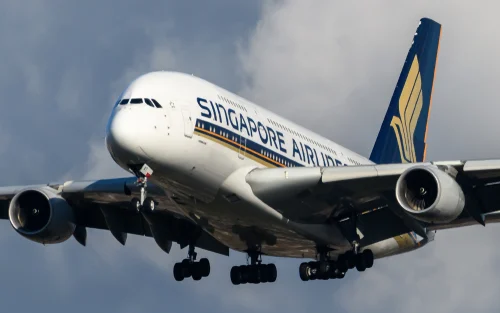
- Singapore Airlines and British Airways operate non-stop flights between Singapore Changi and London Heathrow. Flight times can vary with aircraft, routing, and seasonal jet streams, so check the airline’s schedule for your travel date.
- For New Zealand travellers, the total journey includes the flight to Singapore, so it’s important to consider the complete itinerary rather than just the Singapore – London leg. Separate tickets also require extra connection time in Singapore.
- Layover length is the biggest variable on connecting journeys. A 3 – 5-hour layover provides more buffer for delays and gate changes, while shorter connections leave less room for disruption. Transit visa rules and baggage arrangements should also be checked before booking.
- London is 7 – 8 hours behind Singapore, depending on whether the UK is observing British Summer Time. This can make your local arrival time look earlier than you’d expect from the flight duration.
- Heathrow is the main non-stop arrival airport and has direct transport links into central London, while Gatwick, Stansted, and Luton can add more time to the journey once you’ve landed.
- The best itinerary depends on your priorities, but you should compare total journey time, layover length, arrival airport, and your onward travel from New Zealand before booking.
| Trip type | Typical total time | Notes |
| Direct | 13 – 14 hours | Non-stop SIN – LHR duration |
| One stop | 17 – 26+ hours | Varies by layover city and length |
| Two stops | 24+ hours | Longer, but sometimes cheaper |
Direct (non-stop) Singapore to London flight time: what to expect
Singapore Changi Airport (SIN) and London Heathrow Airport (LHR) are the two main hubs for this route, and they’re where the non-stop service operates.
Typical direct flight time and what affects it
A direct flight between Singapore and London typically takes between 13 and 14 hours. The exact time depends on the routing air traffic control assigns, seasonal jet stream patterns, and aircraft type, a westbound flight like this one can pick up a helpful tailwind at some times of year.

Airlines flying non-stop between Singapore and London
Singapore Airlines and British Airways both operate non-stop service on this route. It’s worth checking each airline’s current timetable directly, since schedules are reviewed regularly. Non-stop is the fastest way to cover the distance.
If you’re departing from a New Zealand airport on the first leg, our guide on how early you should get to the airport covers general timing.
Flight time vs. airborne time vs. total journey time
- Flight time: the scheduled duration an airline publishes for a specific route.
- Airborne time: the actual time spent in the air, which can differ slightly because of weather, routing, or air traffic delays.
- Total journey time: airborne time plus everything on the ground, like check-in, security, boarding, and, for connecting itineraries, your layover.
| Route | Typical duration | Approx. flight distance | What affects it |
|---|---|---|---|
| SIN (Changi) → LHR (Heathrow), direct | 13–14 hours | ~10,850–10,900 km (~6,750 mi) | Jet stream, routing, aircraft type |
Connecting flights: typical total travel times and the most common layover cities
Most New Zealanders flying this route don’t book Singapore to London on its own, since they’re usually connecting from Auckland, Wellington, or Christchurch through Singapore, and the flight time from Auckland to Singapore. Looking at just the Singapore – London portion, a one-stop ticket commonly adds 4 to 12 hours to the non-stop flight time once you include the layover.
| Layover region | Example cities | Typical total time | Notes |
| Middle East | Dubai, Doha, Abu Dhabi | 18 – 22 hours | Frequent connections, modern transit facilities |
| South-East Asia | Kuala Lumpur, Bangkok, Hong Kong | 20 – 26+ hours | Longer routing, broadly the same direction as Singapore |
| Europe | Frankfurt, Paris, Amsterdam | 17 – 21 hours | Shorter final leg once you’re already in Europe |

Picking a layover: minimum connection vs. a stress-free one
The shortest connection isn’t always the most comfortable one. A one-stop duration of around 1.5 to 2.5 hours generally covers the minimum at most airports on this route, while 3 to 5 hours gives you a buffer for gate changes or a delayed first flight. Layovers beyond about 6 hours suit travellers who are keen to see the layover city itself.
A few practical things to check before you book
- Whether your layover needs a transit visa, since rules vary by nationality, city, and stay length, so check before booking.
- Whether your bags are checked through to London or need re-checking at the layover airport.
- Whether both flights are on a single ticket, which usually protects you if the first one runs late.
If you’re booking your Singapore – London leg separately from travelling to Singapore from New Zealand, build in extra buffer time between flights, because a tight connection on paper can unravel quickly if your first flight into Singapore runs late.
Time zones and arrival timing: why you can land “earlier” on the clock
Singapore is at UTC+8 year-round and doesn’t observe daylight savin, while London is on GMT (UTC+0) through the northern winter and switches to British Summer Time, or BST (UTC+1), from late March to late October, which means the time difference is 8 hours for most of the year and 7 hours during the UK’s summer months.
Because you’re flying west, the destination clock runs behind the one you left, so your local arrival time will be earlier than adding the flight duration to your departure time.
Northern winter (GMT): depart Singapore at 11:35pm. After a flight of around 13 hours 35 minutes, you land in London at roughly 5:10am local time, still early morning despite the long flight.
Northern summer (BST): depart Singapore at 9:15am. On the same flight duration, you land in London at roughly 3:50pm local time the same day.

Quick questions
Do you need to adjust your watch mid-flight? Most travellers switch to the destination time zone once they board, so their body clock starts adjusting early.
Will you feel jet-lagged? A 7 to 8 hour difference is enough that many people notice some jet lag; daylight exposure and staying hydrated can help.
Choosing your London airport (LHR vs LGW vs STN vs LTN): what changes for journey time
Not every Singapore – London itinerary lands at Heathrow. Depending on your airline and routing, you could arrive at Gatwick, Stansted, or Luton instead, and the airport you land at changes how long it takes to finish your journey once you’re on the ground.
| Airport | Distance from central London | Getting into town | Best for |
| Heathrow (LHR) | ~24 km | Heathrow Express (~15 min) or the Piccadilly line (45 – 60 min) | Most non-stop Singapore – London flights |
| Gatwick (LGW) | ~45 km | Gatwick Express (~30 min) | Some connecting itineraries via Europe |
| Stansted (STN) | ~55 km | Stansted Express (~45 – 50 min) | Budget or charter connections |
| Luton (LTN) | ~50 km | National Rail via Luton Airport Parkway (~30–40 min) plus a shuttle | Budget or charter connections |
For most travellers connecting from New Zealand, Heathrow is generally the simplest option, with the most direct transport links into the city. If your itinerary routes you into Gatwick, Stansted, or Luton instead, build extra time into your plans, whether that’s travelling to the UK from New Zealand or heading straight to your accommodation.

FAQs
What is the average flight time from Singapore to London?
A direct flight from Singapore to London typically takes 13 to 14 hours. The exact time can vary slightly depending on the aircraft, routing, and seasonal jet stream conditions, so it’s worth checking your airline’s current schedule closer to your travel date.
How long does a one-stop flight from Singapore to London take?
A one-stop flight commonly takes 17 to 26 or more hours in total, depending on where you connect and how long your layover is. Middle Eastern and European layovers tend to add less total time than connections further into South-East Asia.
Which airlines fly direct from Singapore to London?
Singapore Airlines and British Airways both operate non-stop flights between Singapore Changi and London Heathrow. Schedules and frequencies change from time to time, so it’s worth checking current timetables directly with the airline before booking.
How far is Singapore from London?
The great-circle distance between Singapore and London is roughly 10,850 to 10,900 kilometres, or about 6,750 miles, which is the main reason direct flights take as long as they do.
Which London airport is best to fly into from Singapore?
Heathrow (LHR) is generally the best choice, since most non-stop flights land there and it has the fastest transport links into central London. If your itinerary connects through Gatwick, Stansted, or Luton instead, allow extra time to reach the city centre.
What is the time difference between Singapore and London?
London is 8 hours behind Singapore during the UK winter (GMT) and 7 hours behind during British Summer Time (BST), which runs from late March to late October. Singapore doesn’t observe daylight saving.
How long should a layover be when flying Singapore to London?
A layover of 3 to 5 hours generally gives you a comfortable buffer without adding too much to your total journey time. Shorter connections work but leave little room for delays, while layovers beyond about 6 hours suit travellers who want time to explore the stopover city.
Key takeaways
- A direct Singapore – London flight typically takes 13 to 14 hours.
- Your layover is usually the biggest driver of total journey time on a one-stop ticket.
- London sits 7 to 8 hours behind Singapore, depending on the time of year.
- If you’re booking separate tickets through Auckland, Wellington, or Christchurch, build in buffer time between flights.
- Heathrow is generally the easiest London airport to arrive into on a long-haul itinerary from Singapore.
Picking the best Singapore – London itinerary for your priorities
If arrival time and simplicity matter most, a direct flight into Heathrow is hard to beat. If cost matters more, a one-stop itinerary through the Middle East, South-East Asia, or Europe might be better, provided you pick a layover length you’re comfortable with. Either way, it’s worth confirming your total journey time before you book, especially if you’re connecting from within New Zealand or settling into life in London once you land.