Dual citizenship in New Zealand: the 2026 quick answer
New Zealand allows dual (and multiple) citizenship, so you can usually keep your New Zealand citizenship if you become a citizen of another country — and you don’t normally have to give up another citizenship to become a New Zealand citizen. That said, your other country’s laws may restrict dual nationality, so it’s worth checking its official rules before you apply.
This guide is for anyone weighing up a second citizenship alongside their New Zealand one: newcomers applying to become Kiwi citizens, New Zealanders who’ve taken up another nationality, and families juggling more than one passport.
At Remitly, we know that moving between countries often means untangling more than one set of rules, so we’ve pulled together what the Department of Internal Affairs (DIA) and other official sources currently say about eligibility, applying, and travelling as a dual citizen in 2026.
Quick answer
- New Zealand allows dual citizenship — no need to renounce anything on the New Zealand side.
- The Department of Internal Affairs (DIA) runs three citizenship pathways: birth, descent, and grant.
- Your other country of citizenship sets its own rules, so check both sides before you apply.
- Which passport you travel on matters more than ever in 2026, especially for the UK and Europe.

Is dual citizenship allowed in New Zealand?
New Zealand’s own rules are straightforward: the country permits dual and multiple citizenship, and it doesn’t ask you to renounce an existing citizenship to become a New Zealand citizen. This is confirmed by the Department of Internal Affairs (DIA) and on Govt.nz.
Individuals may unknowingly hold dual citizenship through birth outside NZ, having a parent with foreign citizenship, or marriage to a foreign national.
Verifying the rules in every country you’re connected to helps you avoid surprises later, particularly around consular support and legal recognition.
What having dual citizenship means in practice
- You can hold a valid passport from each country and use the rights that come with it, such as the right to live and work there.
- You also keep the obligations each country attaches to its citizens, such as tax residency rules or, in some countries, compulsory service.
- New Zealand won’t ask you to choose between citizenships, but your other country might have its own restrictions.
What New Zealand does not do: it doesn’t track, register, or cap how many other citizenships you hold, and it won’t cancel your New Zealand citizenship simply because you take up another one.
If your other country doesn’t allow dual citizenship
Some countries require you to give up your original citizenship when you naturalise elsewhere, or treat dual nationals as citizens of that country alone. If you’re unsure how your other country treats dual nationality, check directly with that government or a licensed immigration adviser before applying for citizenship on either side.
A simple verification workflow
- Check the New Zealand requirements for the pathway you’re using on govt.nz.
- Check your other country’s citizenship law for its stance on dual nationality — most governments publish this on their own citizenship or foreign affairs websites.
- If anything is unclear, get advice from that country’s embassy or consulate, or a licensed immigration adviser, before you apply.
- Before you travel, check SafeTravel for country-specific advice on dual citizenship and what New Zealand consular assistance can and can’t provide.

How you can become a New Zealand citizen (birth, descent, or grant)
New Zealand citizenship comes through one of three routes: birth, descent, or grant. Each has its own eligibility rules, summarised below for 2026.
| Pathway | Who it’s for | Key eligibility factors | Common documents | DIA Link |
| By birth | Babies born in New Zealand | Born before 1 January 2006: automatic. Born on or after 1 January 2006: at least one parent must have been a New Zealand citizen, or entitled to be in New Zealand indefinitely (for example, a resident visa holder), at the time of the birth. | New Zealand birth registration | NZ citizenship by birth |
| By descent | Children born outside New Zealand to a New Zealand-citizen parent | At least one parent must be a New Zealand citizen “otherwise than by descent” (a citizen by birth or by grant, not by descent). This generally limits citizenship by descent to one generation born overseas. | Overseas birth certificate, parent’s proof of citizenship, application for citizenship by descent | Citizenship by descent |
| By grant | Adults living in New Zealand on a resident-class visa | At least 1,350 days physically present in New Zealand during the 5 years before applying, with a minimum of 240 days each year, plus good character, basic English, and an intention to keep living in New Zealand. | Proof of resident-class visa, evidence of time spent in New Zealand, character references | Citizenship by grant requirements |
Full eligibility details sit on the New Zealand Government’s citizenship requirements page. DIA has also confirmed a new citizenship test for grant applicants starting from late 2027, which won’t affect anyone applying before then.
If you or your child were born in New Zealand on or after 1 January 2006, don’t assume citizenship by birth applies automatically — check your parent’s status at the time of the birth against current DIA guidance. For a fuller walkthrough of each pathway, see our guide to becoming a New Zealand citizen.

Applying for NZ citizenship while keeping another passport: what to prepare
The Department of Internal Affairs (not Immigration New Zealand) processes citizenship applications. Holding another passport doesn’t change how you apply — you follow the same process as any other applicant on your pathway.
Applying by descent
- Full overseas birth certificate
- Your New Zealand-citizen parent’s proof of citizenship (passport or citizenship certificate)
- Certified translations of any documents not in English
- A completed application for citizenship by descent
Applying by grant
- Evidence of your resident-class visa
- Travel history or other evidence covering your last 5 years in New Zealand
- Proof of identity, such as your current passport(s)
- Character references or police certificates, including from any other country you’ve lived in
- Certified translations of any documents not in English
Some people reach the resident-class visa needed for citizenship by grant through New Zealand’s partner visa, though there are several other routes to residence too.
A typical application flow
- Confirm which pathway applies to you, and check that you meet the current eligibility criteria on govt.nz.
- Gather your supporting documents, including certified translations for anything not in English.
- Submit your application to the Department of Internal Affairs online or by post.
- Respond promptly to any requests for more information or an interview.
- Once your citizenship is confirmed, you can apply for your first New Zealand passport.
Common reasons for delays
Applications most often stall over incomplete documents, missing certified translations, or character checks that need police certificates from more than one country. Building in extra time for these steps and checking the current processing guidance on govt.nz before you apply can help you avoid surprises.

Travel and border rules for dual citizens (New Zealand, UK, and Europe in 2026)
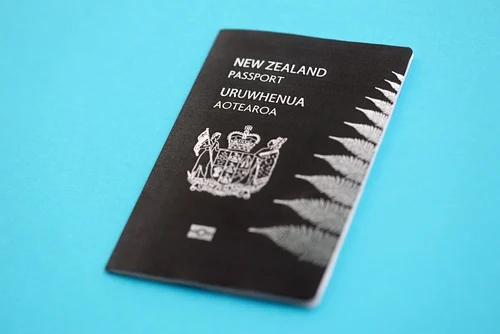
New Zealand citizens are expected to travel into and out of New Zealand on a New Zealand passport. If you travel on a foreign passport instead, Immigration New Zealand requires you to carry a New Zealand Citizen Endorsement confirming your citizenship, so border staff can process your entry correctly.
As a general rule, travel on the passport of the country you’re entering or leaving — it usually means fewer questions at the border.
Which passport should you use?
| Scenario | Passport to use |
| Entering or leaving New Zealand | Your New Zealand passport, or a foreign passport carrying a New Zealand Citizen Endorsement |
| Entering the UK as a British- or Irish-New Zealand dual citizen | Your UK or Irish passport, or another valid passport with a certificate of entitlement — not a UK ETA |
| Entering an EU/Schengen country once ETIAS applies | Check whether ETIAS applies to the passport you’re travelling on before you book |
| Entering any other country where you hold citizenship | That country’s own passport, where its rules require it |
Since May 2026, New Zealanders who also hold British or Irish citizenship can’t use a UK Electronic Travel Authorisation (ETA) to enter the United Kingdom. SafeTravel and the UK government’s own guidance for dual citizens confirm you’ll need a valid UK or Irish passport, or another valid passport with a certificate of entitlement to the right of abode, instead. Our guide to travelling to the UK from New Zealand covers the wider entry requirements if you’re travelling on your New Zealand passport.
The EU’s new entry system for visa-exempt travellers, ETIAS, was expected to start in the last quarter of 2026. As of September 2026, EU officials say the launch may slip further, with no firm date confirmed — check the official ETIAS website closer to your travel dates, since it will apply to New Zealand passport holders once it’s live.
If you’re in the country of your other citizenship, New Zealand’s ability to help is limited. SafeTravel notes that the local government may restrict the consular services New Zealand can offer, and in some situations you’re treated as a citizen of that country only. It’s also worth checking whether that country expects compulsory service from its citizens, since New Zealand can’t intervene there either, and confirming your travel insurance covers you fully while you’re there.
If your dual citizenship affects your New Zealand residence status — for example, if you’ll be travelling on your other passport and are unsure how that interacts with a resident visa’s travel conditions — Immigration New Zealand (INZ) is the right place to check before you go, separately from the citizenship questions covered above.
Whichever passport you travel on, it’s worth knowing what each one unlocks — see which countries you can visit visa-free on a New Zealand passport for the fuller picture, and if your New Zealand passport is close to expiring, sort out renewing your New Zealand passport before you book anything.

Dual citizenship New Zealand: FAQs
Does New Zealand allow dual citizenship?
Yes. New Zealand permits dual and multiple citizenship, and you don’t have to give up another citizenship to become a New Zealand citizen. Some other countries restrict dual nationality, though, so check that country’s own rules before you apply for New Zealand citizenship or for citizenship elsewhere.
Can you lose your New Zealand citizenship?
Taking up another country’s citizenship doesn’t automatically cancel your New Zealand citizenship. You can give it up only by formally renouncing it, or, in rare cases, have it revoked by the government — for example, if it was obtained through fraud. Check govt.nz for current detail on your situation.
Can I enter New Zealand on a foreign passport?
Yes, but Immigration New Zealand requires your foreign passport to carry a New Zealand Citizen Endorsement showing your citizenship, so border staff can confirm your status. Without it, entering on a foreign passport can cause delays, so arrange the endorsement before you travel.
Which passport should I use as a dual citizen?
Generally, use the passport of the country you’re entering or leaving, since it’s usually processed with fewer questions and avoids visa rules that don’t apply to you. Travel into and out of New Zealand on a New Zealand passport, or a foreign one carrying the right endorsement.
Do dual British- or Irish-New Zealand citizens need a UK ETA?
No. Dual British or Irish citizens can’t use a UK Electronic Travel Authorisation. SafeTravel and the UK government instead say you’ll need a valid UK or Irish passport, or another valid passport with a certificate of entitlement to the right of abode.
When does ETIAS start for New Zealand travellers to Europe?
ETIAS, the EU’s new travel authorisation for visa-exempt visitors, was expected in the last quarter of 2026, but as of September 2026 that date hasn’t been confirmed and further delays have been reported. Check the official ETIAS website before booking Schengen-area travel.
Where can I get official help with dual citizenship questions?
For New Zealand citizenship questions, start with the Department of Internal Affairs via govt.nz. For travel and consular questions, SafeTravel is the New Zealand government’s main resource, and your other country’s embassy or consulate can advise on its own citizenship rules.
Key takeaways (dual citizenship New Zealand)
- New Zealand allows dual and multiple citizenship, but your other country of citizenship sets its own rules — check both sides before you apply.
- The Department of Internal Affairs administers citizenship through three pathways: birth, descent, and grant, each with its own eligibility rules.
- Travel into and out of New Zealand on a New Zealand passport, or a foreign one carrying a New Zealand Citizen Endorsement.
- Since May 2026, dual British- or Irish-New Zealand citizens need a UK or Irish passport, or a certificate of entitlement, for the UK — not a UK ETA — and ETIAS timing for Europe is still unconfirmed.
- Always confirm the current rules on official government sites, since citizenship and travel requirements can change.
Next steps before you apply or book travel
- Confirm which New Zealand citizenship pathway applies to you.
- Check your other country’s stance on dual nationality.
- Gather your documents, including certified translations if you need them.
- Check the current UK and EU travel authorisation requirements before you book.
New Zealand’s own rules make dual citizenship straightforward; most of the complexity comes from the other country’s side, and from travel requirements that are still shifting through 2026. Confirming both on official government sites before you apply or fly is the simplest way to avoid delays.
Last reviewed: September 2026.