Key Highlights
-
Vietnamese wedding traditions have a lot of customs that respect family and ancestors.
-
The engagement ceremony, known as Dam Hoi, has a formal procession and an exchange of wedding gifts between the two families.
-
A big moment of the wedding ceremony is the tea ceremony. The couple in it shows thanks and respect to their elders.
-
Couples often wear the Ao Dai. The bride usually wears red and the groom blue. These colours stand for luck and happiness.
-
The wedding date is picked with great care by a monk or by a fortune teller so that it will bring good fortune.
-
On this day, people also give symbolic wedding gifts. Items like betel leaves are given to show the coming together of the two families.
Introduction
Are you going to a Vietnamese wedding, or are you planning one yourself? You might want to use some beautiful traditions in the big day. In Vietnamese culture, a wedding is much more than just a day for the bride and groom. It is seen as a sacred bond between two families. This idea shapes the special and meaningful things that happen at a traditional Vietnamese wedding ceremony. From picking the best date to showing respect for the ancestors, these wedding traditions are a wonderful way to honour love and family. This guide will show you the most important Vietnamese wedding traditions for your wedding ceremony.
Wedding Traditions in Vietnam That Canadians Should Know
A traditional Vietnamese wedding is made up of many beautiful events that all connect to one another. The biggest part of these celebrations is family. In Vietnamese culture, people do not only see the wedding as something between two people. It is a time to join two families as one. Important family members are there for every step, like choosing the wedding date all the way to the last party.
This strong family support helps the new family start out with blessings from their elders. Each part of the wedding shows respect, lets people express gratitude, and brings everyone together. Let’s look at ten key traditions that show why a traditional Vietnamese wedding is so special in Vietnamese culture.
1. Choosing an Auspicious Wedding Date
In Vietnamese culture, choosing the wedding date is not just about picking a favourite time of year or an important anniversary. The couple’s parents often take them to visit a temple. There, they speak with a monk or even a fortune teller. This person helps them find an auspicious date for the start of their new life together.
The fortune teller looks at the couple’s birth dates and their zodiac signs. The goal is to pick a day that can bring happiness, prosperity, and good fortune to the newlyweds. People believe that having the wedding on a lucky date helps the couple to start out right.
This careful process is the first step on the wedding journey in Vietnamese culture. It shows just how tied together tradition, spiritual beliefs, and the idea of good fortune are in the celebration. This helps the couple feel good and supported as they enter their new life as a married couple.
2. Family Introductions and Pre-Wedding Meetings (Dam Ngo)
Before any official wedding ceremony, there is the Dam Ngo. This is a pre-wedding meeting where both sides of the family get together. It lets the family members meet and get to know each other. This step is so important because it helps start a good connection between everyone.
At the Dam Ngo, the groom’s family goes to the bride’s house. They ask for the couple to be together. This shows respect and says they want to have the wedding ceremony. Both families also talk about the engagement ceremony and future plans during this visit. They work to make sure everybody agrees on what will happen.
The meeting does not have big or fancy rituals. Instead, it is a time to grow trust and friendship among the family members. This meeting shows that marriage is about more than just two people. It brings two sides of the family together. The Dam Ngo starts things off well and helps set up for the next step, which is the formal engagement ceremony.
3. Traditional Engagement Ceremony (Le An Hoi)
The Le An Hoi is the traditional engagement ceremony. It is almost like a small wedding. At this event, the groom’s family walks to the bride’s family home. They bring gifts. The groom’s family gives these gifts to the bride’s family to ask if the groom can marry her. This step is very important. It is when both families show they agree with the marriage.
At the engagement ceremony, the gifts must be in an even number of bright red tin baskets. Using odd numbers is not allowed because people say odd numbers can bring bad luck. The groom’s family first shows all the gifts to the bride’s family at the door before going inside. The gifts often have things like:
-
Betel leaves and areca nuts, to show unity in marriage.
-
A roasted pig, for the couple’s wealth and good life.
-
Wine, sticky rice, and some cakes.
After the gifts are shared and taken by the bride’s family, the bride’s mother brings her out to meet everyone. This is called the Dam Hoi or engagement party. It is the first big meeting for the couple with their extended families. This is also when family members gather to confirm the couple’s choice to stay together.
4. The Importance of the Tea Ceremony (Le Vu Quy)
The tea ceremony, called Le Vu Quy, is one of the most important ceremonies in a Vietnamese wedding. It is held at the bride’s home. The ceremony happens on the wedding day and is a special and close moment for the couple. They get a chance to express gratitude to their parents and ancestors.
At this event, the bride and groom serve green or chrysanthemum tea to their elders. The most senior family members get the tea first, which shows respect. This act lets the couple say thanks for all the love and work their parents have given to them. Families then give their blessings, advice, and sometimes gifts like money or jewelry to the new couple.
The tea ceremony is also a time for ancestor worship. The couple lights incense and bows before the ancestral altar. They ask for blessings for their new life together. This part helps bring both families together. It Honours the family lineage and is a big part of Vietnamese culture.
5. Symbolic Gift Exchanges Between Families
Gift-giving plays a big part in Vietnamese wedding traditions. Each gift has a strong meaning in the couple’s new life. At both the engagement and wedding ceremonies, the groom’s family gives the bride’s family many wedding gifts. They do this to show their respect and feel close to the bride’s family. These gifts are not just for show. They are meant to bring good luck and a happy future for the couple.
The gifts are given in red tin baskets. These baskets are always covered with red cloth. There must be an even number of baskets. This is important because odd numbers are seen as unlucky in vietnamese wedding traditions. Here are some popular gifts:
-
Betel leaves and areca nuts. These are thought of as a strong sign of good marriage.
-
A roasted pig and sticky rice. These give wishes for wealth and enough food.
-
Fruits, cakes, and wine. These ask for a sweet and full life for the couple.
After this, the bride’s family sometimes shares the wedding gifts with their relatives. At the tea ceremony, the couple gets more gifts. They get things like jewelry and red envelopes filled with money from their parents and elders, which helps them get started on their new life. The couple also puts on wedding rings during this time.
6. Rituals for Receiving the Bride (Le Ruoc Dau)
The Le Ruoc Dau is when the groom and his family go to the bride’s house. They do this in a formal walk together. It is a very special part of the wedding day. This is the time when the bride will leave her own family to join her new family.
The groom’s parents are the first in the group. Right after them comes the groom. He holds a bouquet of flowers for his bride. Then, the rest of his family and the groomsmen come next. They usually carry gift trays. When they get to the bride’s house, someone from the groom’s family will ask if the bride can join their family.
If the bride’s family agrees, her parents invite the groom and his family inside. The groom then gives the bouquet of flowers to his bride. The couple then go to the altar in the house to pray with their families before the bride leaves. This part of the wedding day shows everyone how the bride becomes part of her new family.
7. Prayers and Blessings at the Ancestral Altar
Ancestor worship is a key part of Vietnamese culture, especially during the wedding day. The new couple has to visit the ancestral altar at both the bride’s and groom’s homes. They do this to show respect and to ask their ancestors for blessings. They hope for a happy and good marriage.
The couple is usually joined by their parents. They light incense and bow in front of the altar. This is how they bring the new son- or daughter-in-law into the family. It is also a way to ask for approval and help from their ancestors. This moment connects the past, now, and what is still to come.
These prayers are important for the start of any marriage. By honouring their ancestors this way, the couple shows deep respect for family roots. They also help make sure their marriage gets blessings from all the family—both those here and those who have passed away. This tradition shows how much family matters in Vietnamese culture and keeps the family line strong.
[Learn more about Vietnamese culture, wedding day, ancestor worship, and new couple.]
8. Honouring Elders and Parental Approval
In Vietnamese wedding traditions, showing respect and getting approval from both sets of parents is very important. The whole wedding is planned to honour the elders and to make sure the couple’s parents feel happy about the marriage. In this culture, a marriage is not just about two people. It is the joining of two families. This is why parents must give their blessing for the couple to have a good future.
A key part of Vietnamese wedding traditions is the tea ceremony. During this event, the couple serves tea to their parents and their in-laws to say thank you. There is a well-known Vietnamese song called “Àn Nghĩa Sinh Thành,” which means “Gratitude for the Grace of Parents.” The song reminds young people to never forget what their parents have done for them. In Vietnamese culture, there is no special word for “in-laws”—a couple simply calls each other’s parents “Mom” and “Dad.”
People in Vietnam show respect for family members in a few main ways:
-
Bowing to parents and grandparents during the ceremony.
-
Serving tea to the oldest people in the family first.
-
Asking older family members for advice and blessings.
By showing respect for every family member, the couple starts their married life with love, support, and wisdom from everyone. This is what makes vietnamese culture special during a tea ceremony and in family life. It is also a good way to express gratitude.
9. Traditional Vietnamese Wedding Attire: Ao Dai and Khan Dong
The wedding attire in a traditional Vietnamese wedding is beautiful and holds a lot of meaning. The Ao Dai is the main wedding dress for both the bride and the groom. This tunic is worn with long loose pants. It is famous for its nice shape and bright colours.
Modern couples might pick other colours, but the traditional Ao Dai for the bride is usually red. The red stands for luck and happiness. The groom will often wear a blue Ao Dai. Their clothes are made with rich fabrics like jacquard or silk. They may also have thread work of phoenixes and dragons on them.
Key parts of the wedding attire include:
-
The Ao Dai: This is a long-sleeved tunic with a high collar, split at the sides.
-
The Khan Dong: This is a round headdress worn by both the bride and groom, pairing well with the Ao Dai.
Many couples get their Ao Dai custom-fit for their wedding day. They honour their roots by wearing this traditional attire, making their wedding feel special and true to Vietnamese tradition.
10. Significance of Colour and Decorations in Vietnamese Weddings
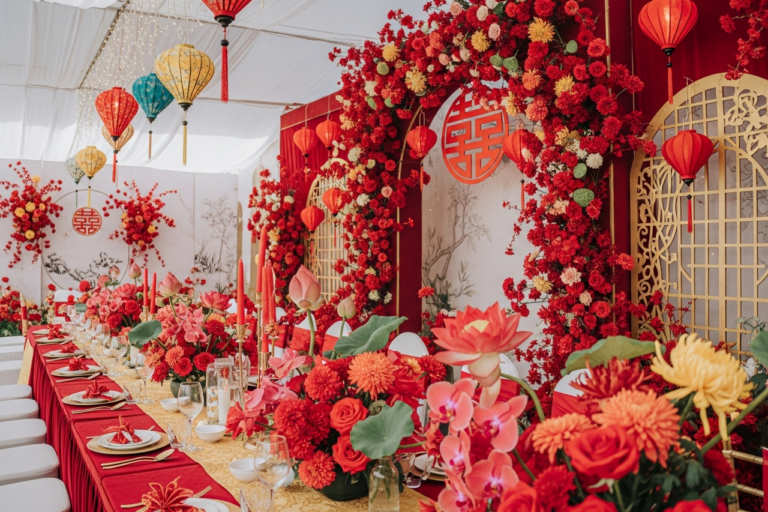
Colour and decorations play a vital symbolic role in a traditional Vietnamese wedding ceremony. The entire venue is often adorned with specific colours and motifs that are believed to bring luck, happiness, and prosperity to the new couple. Red and gold are the most prominent colours, as they are considered the most auspicious.
The combination of red and gold represents “double happiness,” a powerful wish for a joyful marriage. You will see these colours everywhere, from the couple’s attire to the gift baskets and the decorations at the ancestral altar. A sign with the words “Le Vu Quy” is often hung outside the bride’s home, announcing the wedding celebration.
In addition to colour, other decorative elements are used to enhance the celebratory atmosphere and carry symbolic meaning.
|
Decoration Element |
Significance |
|---|---|
|
Red and Gold Colours |
Represent luck, happiness, and prosperity (“double happiness”). |
|
Phoenix and Dragon Imagery |
Symbolize the perfect union of the bride (phoenix) and groom (dragon). |
|
Red Cloth |
Used to cover gift baskets, protecting the good fortune within. |
|
Incense and Candles |
Lit at the ancestral altar to honour ancestors and receive blessings. |
These decorations create a visually rich and culturally meaningful setting for the wedding festivities.
Comparing Vietnamese and Canadian Wedding Customs
When you look at Vietnamese wedding culture and compare it to western weddings in Canada, you can see they are quite different. In Canada, weddings usually focus on the couple and their love story. But in a traditional Vietnamese wedding, the day centres on family, old customs, and showing respect to those who came before.
The day also runs in a different way. A traditional Vietnamese wedding has special rituals. These include the tea ceremony and prayers for family members who have passed away. These steps are not seen in most western weddings.
In the next part, we will talk more about how a traditional Vietnamese wedding, the tea ceremony, and other wedding parts are not the same as western weddings.
Key Differences in Wedding Ceremonies
In Vietnamese weddings, you can see both old and new customs come together. This mix shows the lively culture. One big thing is the tea ceremony. The couple gives tea and betel leaves to their parents and ancestors. This is to show how important family is in Vietnamese weddings. Traditional attire matters, too. The bride often wears a red ao dai. The colour red stands for good fortune. In western weddings, the focus is more on the couple showing their love and togetherness. This is a clear difference in how Vietnamese weddings and western weddings celebrate joining two families.
Contrasts in Family Involvement and Roles
Family involvement is very strong in Vietnamese weddings. It is different from what you see in Western weddings. The bride’s family has a big part. They get the home ready with traditional attire and carry out special rituals, like the tea ceremony. The groom’s family also has things to do. They bring gifts, such as betel leaves and red envelopes. These gifts stand for good fortune. The extended family members play a big role too. They help with all the planning and make sure the customs are followed. All of this brings family members closer and keeps Vietnamese culture alive.
Unique Aspects of Vietnamese Banquets and Celebrations
A wedding in Vietnam is often all about big meals that show off the heart of vietnamese culture. The event is full of life, with tables filled with many local foods. Bright red decorations stand out and bring good fortune. One special part is when the roasted pig is served, because it means there will be plenty for the new couple. Family members are a big part of these parties. They help keep old customs alive, showing thanks for their support and respect for ancestors. All of this makes memories that last a long time for everyone.
Vietnamese Wedding Banquet: Food, Festivities, and Entertainment
The Vietnamese wedding banquet is a big celebration with lots of good food, happy moments, and fun music. This event is an important part of weddings in Vietnam. It brings people together to enjoy the day and share the couple’s happiness. The vibe is very different from the morning. Here, everyone is ready to have a good time.
There is a lot of food. Each dish means something special, and people hope this brings the couple a lucky and good life. The bride and groom often change clothes. They may start off in their ao dai and later wear more Western-style wedding attire, but they still keep many Vietnamese traditions at the party. Here’s what you can expect at this big meal.
Popular Dishes Served at a Vietnamese Wedding
Enjoying a meal is a big part of Vietnamese weddings. The food shows off the rich tastes and bright dishes that come from the culture’s history. A roasted pig is often served. It stands for good fortune and wealth. Guests also eat phở and bánh chưng. These have deep cultural significance for many people. Family members sit together and eat, so there is a happy feeling of unity.
There are also colourful desserts like pandan rice cakes and sweet red bean soup. Guests love these treats. Every meal at Vietnamese weddings is about family, beautiful traditions, and the best parts of food and culture.
Cultural Significance of Wedding Feasts
Celebrating a wedding in Vietnam is about more than just two people joining together. It is a way to show how important family members and community are. The wedding feast is a big part of the ceremony. It is when the couple shows love, respect, and that they are ready for their new life with family. Traditional dishes like roasted pig and betel leaves are served. These foods stand for good fortune and happiness for the couple in their new life. Everyone comes together at this event. It helps family members and friends stay close and share in the couple’s special joy.
Traditional Music, Dance, and Reception Customs
Music and dancing are a big part of traditional Vietnamese weddings. The lively tunes often come from instruments like the đàn tranh and flute. Dancers show off bright moves that stand for joy and starting something new.
At the party, family and friends are mostly in focus. People join in many customs that bring everyone closer together.
From the couple’s first dance to the stories and laughter that fill the room, these events show what Vietnamese weddings are all about. All of this helps make the day something people will always remember.
Conclusion
To sum up, learning about Vietnamese wedding traditions is important if you want to join in or understand these lovely customs in Canada. Starting from picking an auspicious date to taking part in the tea ceremony, all parts of these events hold special meaning and show respect for family. As you go through these Vietnamese wedding traditions, remember they are about more than just love. They honor the couple’s background and the close ties between people. You will see the bright outfits, taste the unique food, and notice that family has a big role at the event. All of this helps make the day feel special. If you want to know more about any wedding tradition or have questions about the tea ceremony or other parts that have cultural significance, you can contact us for a consultation. We want to help make your wedding experience great!
Frequently Asked Questions
What do brides and grooms typically wear at a Vietnamese wedding?
At a traditional Vietnamese wedding, the bride and groom both wear an ao dai. An ao dai is a long tunic that goes over pants. The bride usually has a red ao dai because this brings good luck. The groom often gets a blue ao dai. They both add a matching headdress called the Khan Dong to finish their traditional attire.
How important is the tea ceremony in Vietnamese wedding traditions?
The tea ceremony is a key part of a Vietnamese wedding. This ceremony lets the couple express gratitude to their parents and older family members. The tea ceremony also honours ancestors and asks for their blessings on the marriage. It has deep cultural significance for the family and everyone at the event.
Are there specific gifts that guests should bring to a Vietnamese wedding in Canada?
The most well-liked wedding gift is money. People give this to the couple in a red envelope, called Li Xi. This gift is to bring good fortune for their new life together. At traditional ceremonies, people sometimes give betel nuts. But if you are a guest at the wedding party, you should use a red envelope with new bills inside.