Key Highlights
-
Tanzanian weddings are all about the bride’s family and the groom’s family coming together. It is not just about the couple getting married.
-
There are lots of steps in a Tanzanian wedding. It starts with a formal proposal. Next, the families talk about the dowry. After that, there are happy pre-wedding gatherings with the community.
-
Traditional attire is a big part of the event. People wear special outfits for both the wedding ceremonies and the reception.
-
These wedding ceremonies are special and full of meaning. They often use things like hand washing in the rituals. After the ceremonies end, there are lively celebrations with music and lots of dancing.
-
At Tanzanian weddings, reception food is usually served at the end of the festivities. This is different from many Western weddings.
-
Modern Tanzanian weddings mix the country’s heritage with new ideas. It helps make each wedding a unique and personal day.
Introduction
Have you ever thought about what a wedding would look like in a different country? If you look at it from a Canadian view, weddings in Tanzania really stand out. The customs here show how important community and celebration are in tanzanian culture. These weddings mean more than just two people getting married. They are full of energy and happiness, and their cultural significance is strong. Families, friends, and many people from the community come together to take part in these special events. There are traditions, rituals, and festivities that everyone enjoys. This is what makes weddings in tanzania different and truly unforgettable.
The Typical Tanzanian Wedding Journey: From Proposal to Celebration
The way to get married in Tanzania has many steps, and these steps are full of tradition. It is not just saying “yes” to a proposal. Instead, it is about bringing two families together in a careful way. Tanzanian weddings do not just start on the wedding day. There are formal meetings and talks between families that happen before the big day. This helps lay the base for the wedding.
There are many stages, from the first proposal to engagement traditions and the big wedding ceremonies. All of these steps come with their own customs. The whole community is often part of the process. This shows how much family and community bonds mean in Tanzanian culture. Here is a look at the main steps that happen before and during Tanzanian weddings. The first step is the proposal.
The Marriage Proposal and Engagement Traditions in Tanzania
The engagement process in Tanzania is a formal event. It shows that the groom’s family has a serious plan. In a traditional proposal, it is not just the couple involved. The groom’s family sends people to visit the bride’s family. They come to ask for her hand in marriage in an official way. This is the first big step for the joining of families.
Each group in Tanzania may have different customs. The way things are done changes among ethnic groups. But showing respect to the bride’s family is something they all do. In this first meeting, the two sides talk about dowry, called ‘mahari.’ This is a way for the groom to show thanks to the bride’s family. It helps bring the two families closer together.
The traditional proposal is for more than just permission. It shows the value of the bride. It is a way for the groom’s family to say they will take care of her. This marks the beginning of the journey for both the groom’s family and the bride’s family to come together.
Family Involvement and Community Gatherings Before the Wedding
In Tanzania, a wedding is a big event for the whole community. People see family values as something much bigger than just close relatives. There are often big gatherings before the wedding day. Friends and family from both sides come together and make a wedding committee. This group helps with all the planning, budgeting, and organizing to get everything ready for the day.
Before the wedding, you might get an ‘mchango.’ This is when you are asked to help out by giving money for the wedding costs. This shows that the community feels it is their job to support the couple. People feel proud to help with the joining of families. Everyone can be part of the wedding and show love from the start.
These meet-ups are not only for finding money. They are happy events where people get to know each other better. The groom’s family and the bride’s family use these times to grow close. They talk, laugh, and work together. By the time the wedding day comes, both families feel like one big family already.
Key Pre-Wedding Rituals Observed in Tanzanian Culture
In Tanzanian culture, there are some main pre-wedding rituals that are seen as just as important as the wedding day. These rituals help to make the union official, show respect for the families, and ask for blessings for the couple’s life ahead. They are a good way to show respect and love even before the couple says their vows.
Two of the most important rituals in Tanzania before the wedding are dowry talks and ceremonies that bless the couple. Here, we will talk about the ‘mahari’ process and how people from different religions in Tanzania each have their own way of adding special customs to the lead-up to the wedding.
Negotiations, Dowry (Mahari), and Blessing Ceremonies
The idea of ‘mahari,’ or dowry, is a big part of weddings in Tanzania. It is not money paid for the bride. Instead, it is a gift from the groom and his family to the bride’s family. This gift shows that the groom respects and cares about his new wife and her family. It also shows that he is ready to take care of her. Elders from both sides talk about the dowry in a careful and proper way.
The dowry amount or what is given can be different for each couple. It stands for many things, like respect, history, and a wish for good things to come. For many, it is about keeping a promise to tradition and asking for a good life, or prosperity, for the pair. Here are some things the dowry or mahari can include:
-
Livestock, such as cattle, which can show wealth in Tanzania.
-
Money, which brings a new touch to the old custom.
-
Other goods that the families feel are important.
After both families agree on the dowry, they usually get together for blessing events. At these meetings, families pray and hope for a good marriage. It gives both families the chance to show their support and good wishes for the couple before the wedding day.
Special Customs Unique to Tanzanian Muslim and Christian Communities
Tanzania is home to many religions, and this shows in its wedding traditions. While different ethnic groups share many customs, Muslim and Christian weddings each have special ways to celebrate. For example, muslim weddings can have separate ceremonies for men and women. At the heart of the day is the Nikah. This is the main marriage contract, and the groom signs it with the help of his male family or friends.
Christian weddings work in a different way. The couple often gets married in a church service. They say their vows to each other in front of the minister and the church community. Still, you will find Tanzania’s culture in these ceremonies too. For instance, the bride may come in to happy songs, with women ululating to welcome her.
Some people like to honour all their roots. If one person is Muslim and the other is Christian, they can even have two ceremonies. One example is having a church service after a muslim wedding, so both families and their customs are respected and celebrated. In Tanzania, it is common for different ethnic groups to find a way to enjoy together.
Distinctive Attire Worn at Traditional Tanzanian Weddings
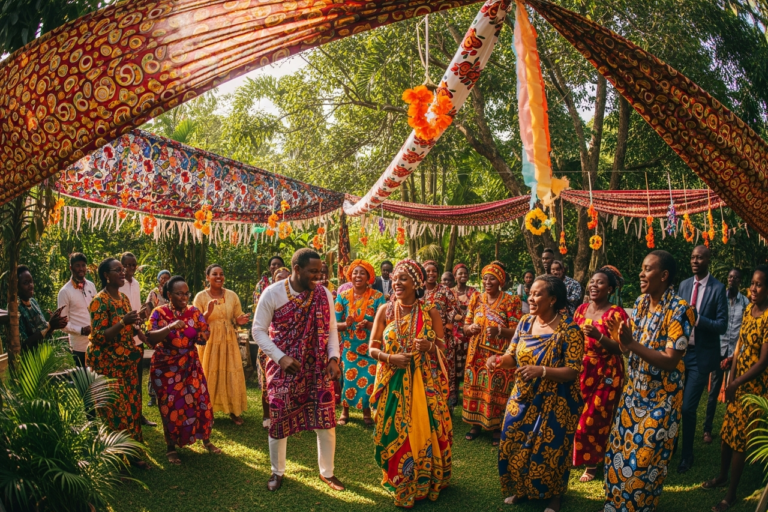
The fashion you see at Tanzanian weddings is full of colour, culture, and style. The traditional attire means a lot to people. It is more than clothes. It shows who you are and that you are here to enjoy the day. On the wedding day, you will notice guests and the wedding party in bright fabrics. Their outfits have strong designs, and these are an important part of Tanzanian wedding fashion.
At many of these weddings, women often wear two outfits. They start with a traditional attire for the ceremony. Later, they wear a fancy party dress for the reception. Next, let’s talk about what the bride and groom wear. We’ll also see how new styles are showing up along with their old ones.
Wedding Dresses, Groom’s Outfits, and Symbolic Accessories
What do tanzanian brides and grooms wear when they get married? The groom will usually wear a suit. He looks sharp and stays formal at the ceremony and party. Sometimes, he takes off his jacket when they start to dance.
The bride wears different clothes for different parts of the day. For the ceremony, she may wear a ‘kitenge’ or ‘kanga’. These outfits are full of bright colours with bold designs. When it’s time for the reception, the bride changes into a white wedding dress or a nice evening dress. Tanzanian brides often stand quietly and look down. They do not smile during the ceremony. They wait until the marriage is announced before they show more emotion.
There is a lot of care in matching the wedding party’s clothes. The outfits are picked so everyone looks good together. There are also special touches for meaning. Every group has their traditions. Some of the main points are:
-
Vibrant ‘kitenge’ fabric for the bridal party.
-
Coordinated suits for the groomsmen.
-
Special jewellery or headwear based on their group.
These outfits help make the day special for tanzanian brides, the groom, and the groomsmen.
Regional Differences and Modern Twists on Traditional Wedding Wear
While certain fashion elements are common across Tanzania, there are distinct regional differences in wedding wear, often influenced by the traditions of different ethnic groups. For instance, the Maasai are known for their bright red shukas and intricate beadwork, which feature prominently in their celebrations. Coastal regions might incorporate flowing, lighter fabrics inspired by Swahili culture.
Modern twists are also becoming increasingly popular in Tanzanian wedding fashion. Couples are finding creative ways to blend contemporary styles with heritage. A bride might incorporate traditional kitenge fabric into a modern wedding gown design, or a groom might wear a suit tailored from African-print material.
This fusion creates a look that is both personal and culturally resonant, celebrating the past while embracing the future. Here’s a look at how tradition and modernity might mix:
|
Traditional Element |
Modern Twist |
|---|---|
|
Kitenge Fabric |
Used to create a modern-style gown or a tailored suit. |
|
Traditional Beadwork |
Incorporated into contemporary jewellery or as an accent on a dress. |
|
Kanga Wrap |
Styled as a fashionable headwrap or accessory with a party dress. |
The Structure and Symbolism of the Tanzanian Wedding Ceremony
The Tanzanian wedding ceremony is a very special event. It is filled with meaning and symbolism. The couple shows their commitment during this time. Their families also come together in a big way. The exchange of vows and rings is a main part of these wedding ceremonies, but there is so much more going on too. Many rituals are unique to the culture. The event is not stiff or carefully rehearsed. Instead, it feels open and full of heart.
Each moment counts. The way the groom and bride walk in means a lot. The blessings they get from family matter too. Now, we will look at some of the important things the couple and families do during these ceremonies. These rituals are what help make the day stand out for everyone.
Meaningful Rituals for Brides, Grooms, and Their Families
During a Tanzanian wedding, it’s not just about the bride and groom. The day is important for the bride’s family and the groom’s family, too. There is a strong moment when both families come up together and promise to accept, love, and support their new son- or daughter-in-law. This shows that marriage links both families and is more than just about two people.
The wedding day includes many special customs for the groom and his bride. For example, the bride’s entrance is full of joy, with many women dancing and singing around her. After this, the groom and his best man often walk down the aisle to meet her. Then, the couple walks to the front together, showing that they will go through life as a team. During the ceremony, the bride usually looks quiet and thoughtful.
There are other rituals, too, which be full of meaning for the groom’s family, bride’s family, and all who watch. These may include:
-
Hand-washing: The couple washes each other’s hands. Water stands for life, while oil is put on for a blessing from the Holy Spirit.
-
Ring exchange: The bride and groom hold the rings up high so everyone can see, making this exchange clear and special for all.
-
Stumbling over vows: There is often no practice before the vows. This can cause the bride and groom to trip over their words, but it also makes the moment feel real and open. The minister
Celebrating Tanzanian Wedding Receptions
After the ceremony is done, the wedding reception in Tanzania is when the lively celebrations start. These festivities are full of music, dance, and the strong feeling of togetherness among people. Many guests come only for the wedding reception, and it is fine to do so. They show up ready to have a good time and celebrate the newlyweds.
The mood at the party is happy and everyone feels welcome. There is not much formal planning like you might see at a Canadian wedding reception. Guests do not have to sit at set tables, so people move around and talk a lot. The main thing is to enjoy the moment, share in the happiness, and take part in the big festivities for the couple.
Music, Dance, and Cultural Festivities
Music and dance make up the heart of a Tanzanian wedding reception. There is a lively MC at the front making sure the energy stays high and keeps the program moving. The music at the wedding is mixed. You will get pop hits and traditional songs. There is something for everyone to dance to. You can see different ways of dancing during the night.
In most Western wedding receptions, the bride and groom have a solo “first dance.” But in Tanzania, the groom and bride are not usually dancing on their own. They are with their family and friends. Groomsmen and bridesmaids might have entrance dances and planned moves to make the night bright.
All the festivities give moments of joy that everyone shares together. Key highlights of the celebration are:
-
There will be pop music and traditional Gogo-style dancing.
-
Group line dances that invite everyone to join in.
-
Both families are introduced and welcomed with cheering and music.
The Role of Food, Gifts, and Hospitality
Hospitality is at the heart of every Tanzanian party. At weddings, this really stands out. For someone from Canada, the timing of the meal may be different. People eat at the very end of the event. It comes after all the dancing, talking, and giving gifts. You will get classic foods, like pilau, which is spiced rice that is full of flavour.
Giving gifts is a big moment at the party. Guests walk up to a special table and give their gifts to the newlyweds. It is normal to give money. There is a set box for it, so everyone can see. This way, people in the community come together and show their support.
The cake cutting is a main event. It may not have the traditional “dancing in,” but it is still a special time. The reception’s hospitality features:
-
A big cake feeding moment for everyone.
-
A public walk to give both gifts and money.
-
Tasty dishes, like pilau, plus local beers that are served late at night.
How Tanzanian Weddings Compare with Other African Traditions
Weddings in Africa are different from place to place. Every country and group has special ways to celebrate. Tanzanian weddings are like other parties in Africa in some ways. Family and friends are important at these events. But there are some things that set Tanzanian weddings apart, too. One thing is the wedding committee. Another is the helping with money, called ‘mchango’. This is a big part of Tanzanian weddings.
Even inside Tanzania, there are many ways to celebrate. That is because there are over 120 ethnic groups in the country. All of these groups bring their own traditions. The mix of these ways makes Tanzanian weddings very rich in culture. Also, teams or customs from countries near Tanzania have shaped the wedding style. These things make tanzanian weddings stand out in africa.
Influences from Neighbouring Countries and Shared Customs
Tanzania is in East Africa, and this has helped shape wedding ceremonies there. Different countries in this area, like Kenya, Uganda, and Rwanda, share some of the same customs. This is because some ethnic groups live in all these places. One thing you see in almost every wedding is the dowry, or bride price. This shows how two families come together, and it’s found in many cultures in Africa.
There is also a lot from Swahili culture, which is found along the coast of East Africa. Swahili customs show up in weddings for different countries. People use the same type of music, they dance the same way, and wear special clothes like the kanga. You can see this from weddings in Kenya to as far as Mozambique.
But each country has its own way of doing these things. For example, Nigeria is known for big wedding parties and people throwing money, which is called “spraying.” A Tanzania wedding is more about the community helping out and the day being well organized. Even so, it is just as fun and full of joy as any other wedding in Africa.
Unique Elements That Set Tanzanian Weddings Apart
While there are some ideas in tanzanian weddings that match those found across Africa, the traditions here have their own special touches. One big difference is how these weddings are seen by the people involved. It’s not just the couple planning it. The event is something that happens to the bride and groom. The big day is really for the families and everyone in the community. The couple get to be at the heart of the day and are treated like the special guests.
There is a lot of symbolism in many of the traditions too. For example, the bride will often show a quiet and shy face. She might even look a little afraid when she joins the family of the groom. This is a strong way to show what she feels at the time. This custom is very different from how many people in the West see a wedding. There, the bride often smiles and is the centre of joy. In this case, the vibe is about the serious step and change happening in the lives of both people, not just the fun and excitement.
Here are some ways that tanzanian weddings really stand out:
-
The Mchango: There is a system where people in the community give money to help cover the cost of the wedding.
-
The Wedding Committee: Friends and family of the couple get together as a team. They make all the plans and make sure things go well.
-
Late-Night Feast: At these weddings, the main food is saved for after the
Incorporating Modern Touches While Honouring Heritage
Like many old customs around the world, Tanzanian weddings are changing. There are many new things added into wedding ceremonies today. Many couples are mixing modern ideas with their rich history. They make wedding ceremonies that are both classic and personal. These weddings show respect for the past and also enjoy the now. You can see this mix in many things — the place where the wedding is, the clothes they wear, and more.
This mix lets couples show their own style. But they do not lose the real meaning of their culture. Wedding ceremonies now have room for new trends and deep family roots at the same time. Let’s look at how people’s daily lives are shaping wedding ceremonies. You will see how the bride and groom look for just the right mix of old and new.
Changes in Venues, Technology, and Lifestyle
The way couples in Tanzania plan their weddings looks different now. People still use community halls and family homes for these events. But many want hotels, gardens, or special event places for their wedding day now. These new spots often have more things you need and can feel different than before.
Technology is part of the wedding too. Invitations do not always come by hand. It is common to get updates and quick messages through WhatsApp. Professional people take photos and videos to save those special moments. The couple might share highlights of their journey online. Going on a honeymoon together is also more popular now. This was not as common years back.
You can see global styles mixing with local ways at Tanzanian weddings. These big changes include:
-
Elaborate Pre-wedding Photoshoots: Couples now want nice pictures to show their story.
-
Hiring Professional Planners: Some couples use event planners besides the usual wedding committee.
-
Destination Weddings: Few couples are getting married in another city or country, but more are doing this.
Balancing Tradition with Contemporary Influences
The art of the modern Tanzanian wedding is in how people keep old traditions but also bring in new styles. The couple and their families do not leave old ways behind. Instead, they find ways to fit them with new ideas. Important things like community, family, and respect stay strong, even when the look of wedding ceremonies changes.
You can see this mix everywhere in weddings in Tanzania. During the church part, the bride may wear a white dress. For the dancing at the party, she might change into a bright kitenge dress. Some couples will cut a wedding cake, but you may also get classic Tanzanian foods like pilau. The ‘mchango,’ or gift collection, could be done with a phone transfer instead of using cash.
This way of changing while keeping what matters keeps the wedding ceremonies in Tanzania special and close to new people. It makes sure that even if a wedding looks new, it is still about two families coming together with their community around them to give support and care.
Conclusion
To sum up, learning about Tanzanian wedding traditions gives you a good look at the strong and colorful ways of the country. The bright clothes, group parties, and every act at a wedding show the deep beliefs of families and friends in Tanzania. Getting to know these wedding customs helps you see more of what tanzanian culture is, and you’ll notice both what is the same and what is different from Canadian wedding ways. If you plan to be at a Tanzanian wedding or just want to know what happens at one, learning about it will make the time better for you. If you want to know more or need help in setting up your own event, feel free to ask for a consult!
Frequently Asked Questions
Are Tanzanian weddings usually held on certain days of the week?
Tanzanian weddings are usually on weekends, with most people picking Saturday for their wedding day. This is not because of old beliefs, but because it’s easier for everyone. Many family and friends from all over tanzania can come to the festivities. They do not have to miss work and can be part of all the events.
What kind of insights can Canadians gain from attending a traditional Tanzanian wedding?
Going to Tanzanian weddings will help you see how important community is in Tanzanian culture. Canadians can watch how the joining of families is about everyone coming together and sharing in the happiness. The lively celebrations and people gathering show a strong sense of support and togetherness, which is both touching and inspiring.
How do family responsibilities differ for the bride and groom in Tanzanian ceremonies?
In many places in Tanzania, the groom’s family usually pays the dowry. They also need to show that they can care for the bride. The bride’s family will raise her and get her ready for marriage. After they get married, the groom is seen as the head of the household.