Key Highlights
-
Sri Lankan weddings bring together old customs and new styles. They show how rich and different sri lanka culture is.
-
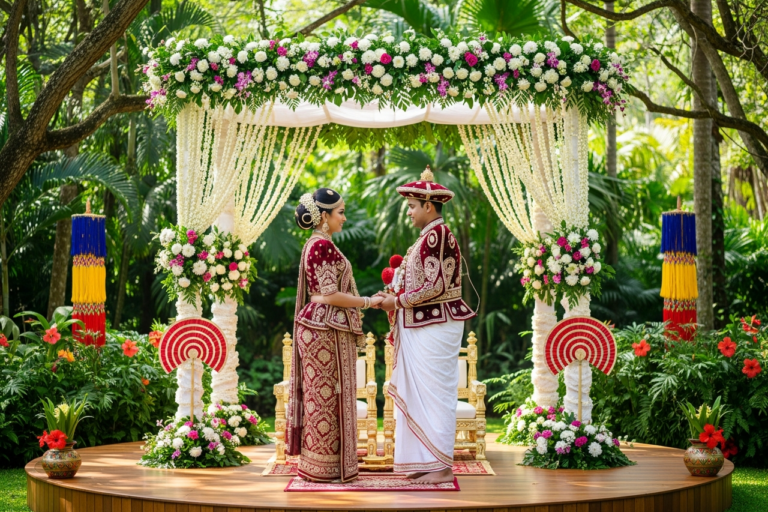
The Poruwa ceremony is at the heart of Sinhalese Buddhist weddings. This ritual happens on a beautifully decorated wooden platform.
-
Tamil Hindu weddings are known for the tying of the gold necklace called Thaali. This shows promise and commitment.
-
Muslim weddings in sri lanka mix Islamic rules with local customs. There is a formal Nikah ceremony and later a Walima meal.
-
Traditional attire, like the saree on brides, stands out with deep colors. It shows cultural significance for sri lankan weddings.
-
Across many types of weddings, people offer betel leaves and light an oil lamp. These acts mean good fortune and prosperity for all.
Introduction
Imagine going to a party full of bright colours and old customs. At Sri Lankan weddings, you get to see all that and more. Sri Lanka is a beautiful country, and it is full of life and strong cultural traditions. The weddings there are like nothing else. There are ancient rituals and moments that will warm your heart.
If you look at these ceremonies from Canada, you see something very interesting. There is a strong sense of family, friends, and culture in everything at the wedding. The way people work together and keep their history alive is easy to notice. Sri Lankan weddings are truly special.
Let’s take some time to look at what makes these wedding ceremonies in Sri Lanka stand out. There is so much to learn and enjoy from these beautiful and unique events.
A Canadian’s Closer Look at Wedding Traditions in Sri Lanka
For many Sri Lankans, a wedding is not just about two people coming together. It also brings two families together and celebrates their rich heritage. There are many cultural elements found in these ceremonies. These have been passed down through the years. This makes every wedding special and personal for Sri Lankan couples.
From a Canadian point of view, the focus on family and ancient rituals stands out. Sri Lankan culture really values these traditions. They help guide the couple as they start their life together. In the next sections, we will look at important customs. These include the Poruwa ceremony and the big feasts after the event.
1. The Poruwa Ceremony: Heart of Sinhalese Weddings
At the centre of many Sri Lankan weddings is the Poruwa ceremony. This is an old tradition that goes back more than 2,000 years. The whole ceremony happens on a beautifully decorated wooden platform called a Poruwa. It is the stage where the bride and groom take part in a series of rituals at an auspicious time picked by astrologers.
The cultural significance of the Poruwa ceremony is big. It gives meaning to the union through important steps. The couple exchanges vows and goes through rituals that show their commitment, wish for prosperity, and coming together of their families. This part of sri lankan weddings is also amazing to see and full of deep feeling.
Key rituals often include:
-
Offering gifts like white cloth and betel leaves to parents and elders as a sign of respect.
-
Tying the couple’s little fingers with a sacred thread. Then holy water is poured over them.
-
Lighting a traditional oil lamp to show hopes for a bright and prosperous future together.
2. The Thaali and Hindu Wedding Customs
For the Sri Lankan Tamil community, the wedding ceremony is special and full of its own traditions. Most people in this group follow Hinduism. One of the most important parts is when the groom ties a sacred gold necklace, called the Thaali, around the bride’s neck. This happens at an auspicious time chosen by astrology.
This moment stands for their lasting love. The groom and bride hear drums and pipes play, as guests throw flower petals at them. Both wear beautiful, traditional attire for the day. They take part in other key rituals, too, so they can get blessings as they start their life together.
Some customs they follow are:
-
The Saptapadi, when both take seven steps together, showing their journey in life.
-
Rituals to ask for blessings from gods like Lord Ganesha and Lord Shiva.
-
The couple is tied with a sacred thread, meaning they are bound to each other forever.
3. Unique Rituals in Sri Lankan Muslim Weddings
Sri Lankan Muslim weddings are a beautiful blend of Islamic principles and distinctive local customs. These ceremonies are guided by religious leaders, known as Maulvis, and are centred around the sacred marriage contract, the Nikah. Unlike Sinhala or Tamil weddings, the focus is on religious observance and modesty, though celebratory elements are certainly present.
The groom’s family and the bride’s family play significant roles throughout the events, from the engagement to the post-wedding celebrations. The bride’s mother is especially honoured during the gift-giving traditions. Following the Nikah, a joyous reception called the Walima is held, where both families come together to celebrate the union with a grand feast. These weddings gracefully merge faith with the cultural fabric of Sri Lanka.
|
Key Stage |
Description |
|---|---|
|
Nikah Ceremony |
The formal wedding contract, officiated by a Maulvi, where the bride and groom consent to the marriage. |
|
Mahr |
A mandatory gift from the groom to the bride, declared during the Nikah, symbolizing respect and financial responsibility. |
|
Walima |
The wedding feast hosted after the Nikah, where families and guests celebrate the new union with traditional dishes. |
4. Traditional Wedding Attire and Its Symbolism
The traditional attire seen at Sri Lankan weddings is bright and colourful. It stands out with many small details that show care and skill. Brides usually wear sarees in lively colours. This is chosen because it shows joy and fresh starts for the couple. The clothes are not just for style. They tell stories and show the culture of Sri Lankan couples.
Grooms have their own special outfit too. At a poruwa ceremony, a groom may wear the “Nilame” outfit. This look is similar to old Kandyan kings. Guests also dress in formal clothes. Women often go for sarees that look fancy. Most men put on suits.
The clothing people pick is based on things like:
-
The family’s culture, be it Sinhalese, Tamil, or Muslim.
-
The rituals done during the event.
-
The wish for the couple to have good luck, clean hearts, and happy times ahead.
5. Pre-Wedding Rituals: Blessings and Astrology
In Sri Lankan culture, the wedding journey starts long before the big day. Astrology is key throughout the process. The couple’s horoscopes are matched first to make sure they are a good fit. People go to an astrologer to find the most auspicious time for each important step. The astrologer also helps set the wedding date and tells everyone the best times for main rituals.
A series of rituals happen before the wedding to bless the couple. One custom stands out. Monks tie a sacred thread called Pirith Nool around the couple while they chant blessings. This is said to keep away bad luck and bring good fortune. The rituals are deeply rooted in Sri Lankan culture. They aim to help the couple begin their life together with strong blessings and good energy.
These ceremonies prepare everyone for the main event. The stage is set with warmth and spiritual support. It shows how tradition and faith are part of everyday life and big moments, such as weddings.
6. Sacred Offerings, Betel Leaves, and Oil Lamp Lighting
Certain symbolic acts are a big part of almost all Sri Lankan weddings. These acts hold a lot of meaning for the couple’s life ahead. The offering of betel leaves is one of the most important traditions. The couple gives these leaves to family members and elders. It is a way to show respect and it acts as an official invite to their wedding. This gesture comes from Sinhalese culture.
The oil lamp lighting is another important ritual. The couple and their parents light traditional oil lamps together. This moment stands for bringing light and hope into their new life. It marks the start of a path filled with good fortune. The oil lamp lighting helps to clear away any darkness and brings happiness. These acts, while simple, mean a lot and are often the main parts of any Sri Lankan wedding.
These rituals are there to:
-
Show thanks and respect to parents and elders.
-
Bring both families together, as everyone joins in the ceremony.
-
Bless the couple so they have a happy and lucky marriage.
7. Wedding Feasts and Signature Sri Lankan Cuisine
No Sri Lankan wedding is finished without a big traditional wedding feast. In Sri Lankan families, food shows joy and warmth. The main dish for this happy meal is often milk rice, called Kiribath. People serve it at all big events in life. At the wedding, the bride and groom feed each other a piece of milk rice. This act means they will take care of each other.
The wedding meal is a bright show of Sri Lankan cooking. It comes with many curries, rice dishes, and traditional sweets. Sweetmeats, like Kavum and Kokis, are known as a symbol of joy. They are set out nicely for everyone to eat. When food is shared at the feast, families and friends come together. This makes the meal very important at the celebration.
A typical wedding menu could have:
-
Many kinds of curries, both with meat and vegetarian, for all guests.
-
Milk rice or Kiribath, showing wealth and fresh starts.
-
Different sweetmeats, a must-have for any celebration.
Regional and Modern Influences on Wedding Traditions in Sri Lanka
Sri Lankan weddings have deep roots in ancient rituals. But they are always changing. The cultural heritage of Sri Lanka keeps growing, and you can see this change in its weddings. Each part of the island has its own local customs, which bring a new twist to celebrations. For example, a wedding in a seaside town may not look the same as one in the central highlands.
These days, many couples mix old traditions with new ideas. You can see modern trends together with ancient rituals. This mix of old and new makes sure that Sri Lankan weddings stay very special and feel fresh for everyone. The next parts will show you how these things help shape what weddings in Sri Lanka look like today for all couples.
Fusion Elements and Contemporary Changes
Today’s Sri Lankan couples are finding new ways to show their traditions while making their wedding special to them. These modern changes bring together old customs and fresh ideas. For example, a couple may have a poruwa ceremony first, then enjoy a party with a DJ and a first dance, like in a Western wedding.
Traditional music and dance can go with a modern band, or the bride may wear a classic white dress at the party after wearing a saree for the main ceremony. These changes help couples make a wedding that feels real to them, showing both their heritage and their own style.
Some well-liked fusion ideas are:
-
Adding a ring exchange to the poruwa ceremony.
-
Getting wedding photographers and videographers to catch the day in a movie-like feel.
-
Mixing digital invites and wedding hashtags with old traditions.
Differences Across Sinhala, Tamil, and Muslim Celebrations
Sri Lanka shows off its mix of cultures in the way people get married. Each big group in the country, like the Sinhala, Tamil, and Muslim, has its own style of celebrating. While all the weddings focus on family and joining two people, each group follows a special traditional marriage ritual. These different ways help us see the rich variety of people on the island.
The Sinhala Buddhist community is known for the Poruwa ceremony. It comes from old royal customs. The Tamil Hindu weddings use Vedic rituals. The big moment in their weddings is tying the Thaali. Muslim weddings follow Islamic law. They center on the Nikah contract and a feast called Walima.
Key differences:
-
Religious Officiants: Sinhala weddings have a master of ceremonies. Tamil weddings have a Hindu priest. Muslim weddings have a Maulvi.
-
Core Ritual: A Poruwa platform in Sinhala weddings, Thaali tying in Tamil weddings, and the Nikah contract for Muslim events.
-
Attire: Every group has its own bridal and groom clothes to show off their culture.
sri lanka, poruwa ceremony, traditional marriage ritual
Conclusion
Exploring the many parts of Sri Lankan wedding traditions shows us a lot about culture and how people come together. From the famous poruwa ceremony to the colourful feasts that are filled with love, every part has its own meaning. These show deep values and things people share. Here in Canada, taking on these traditions can add something special to our own celebrations. It’s a nice way to mix different cultures. You might want to add things like the Thaali or the special clothes. When you learn about these customs, you get to see just how good and full of life different weddings can be. If you want to find out how to blend these beautiful Sri Lankan customs into your own wedding day, feel free to get in touch. You can ask more about adding these traditions to your celebration.
Frequently Asked Questions
What are the most important cultural customs in a Sri Lankan wedding?
Some of the most important cultural customs in Sri Lankan weddings are the Poruwa ceremony for Sinhalese, the tying of the Thaali for Tamils, and the Nikah for Muslims. People often wear traditional attire at a wedding ceremony. It is common to pick an auspicious time for the main event. Lighting an oil lamp to bless the couple is also an important part of these Sri Lankan weddings.
How can Canadians incorporate Sri Lankan wedding traditions into their own celebrations?
Canadians can add Sri Lankan culture to their wedding by using some wedding rituals, like lighting an oil lamp or giving betel leaves to elders. They can also wear traditional attire, such as a saree or sherwani. It’s nice to serve Sri Lankan food and play traditional music at the ceremony. These things help honour the beautiful cultural traditions of Sri Lankan culture.
What makes Sri Lankan wedding rituals unique compared to other South Asian ceremonies?
Sri Lankan weddings stand out because they mix Buddhist, Hindu, and native ancient rituals that are older than many others in the area. The Poruwa ceremony is a special part of these weddings. It comes with its own customs and symbols. This tradition is a big part of the rich heritage of the island. It is also centered on getting blessings from elders, which many believe will bring good fortune.