Key Highlights
-
South African wedding traditions are lively and colourful. They mix ancestral heritage with things from today. These weddings celebrate two families coming together.
-
Lobola, also called bride price, is one key custom. It shows respect and the strong bond between both families.
-
Because there is a lot of cultural diversity in South Africa, wedding customs are different in each group—like Zulu, Xhosa, and others.
-
Traditional African wedding attire means a lot. You often see vibrant colours and careful beadwork in this wedding attire.
-
Music and dance play a big part. They help people show their happiness and the joy they feel at a South African wedding.
-
South Africa lets people have both civil and customary marriages. This helps all people in the country have their wedding how they want.
Introduction
Are you planning a wedding or interested in how people celebrate around the world? The wedding traditions in South Africa are something special. In a South African wedding, you see more than just two people coming together. The event brings two families into one. There is support from grandparents and the rest of their families. Their cultural heritage is in everything at the ceremony. Family, community, and love are all at the heart of it.
This guide will tell you about the meaningful customs and beautiful parts that make a South African wedding different from others. You will see how their wedding traditions bring all the people together to welcome a new family.
Overview of South African Wedding Traditions
South African wedding traditions come from the history and strong beliefs of many groups in this country. They are not just a mix of vows. A traditional South African wedding is about two families joining together. These weddings honor old customs and bring in new ideas. The cultural richness in these African weddings is what makes them so special.
You will see wedding traditions in South African weddings through set rituals and clear symbols. If you know about these, you can better see the real meaning of a traditional South African wedding and the accessories used for these African weddings. Let’s take a look at some common wedding traditions and the meaning behind these symbolic acts.
Common Wedding Practices and Symbolic Rituals
A traditional wedding in South Africa brings together many customs that mean a lot to the people. The ceremony is a big step for the couple. It marks when they become adults and start a new life. The community takes part in many ways and plays a crucial role in these events.
African traditions often put focus on honouring ancestors and bringing the group closer. For example, the bride is welcomed into her new family home. The elders are there, and they offer blessings. They also introduce her to the family’s members and their past. This shows that she is now part of her husband’s family.
There are also key rituals that people use in traditional weddings in south africa:
-
Formal Introductions: The groom’s family visits the bride’s family to talk about their plans.
-
Palm Wine Ceremony: In some groups like the Igbo, the bride gives her husband the palm wine. This shows he is the groom.
-
Blessings from Elders: Elders give prayers and advice so the couple has good fortune.
-
Welcoming the Bride: The bride’s entry into her new family is made official through certain rituals.
These rites of passage and traditions help bring all people together. They also show how important it is to welcome someone into a new family.
How South African Ceremonies Differ from Canadian and Western Weddings
While love is a universal theme, the way weddings are celebrated can vary dramatically. A traditional wedding in South Africa places a much stronger emphasis on the union of families and communities, compared to the more individual-focused approach common in Canadian and Western ceremonies.
In many African weddings, the celebration extends beyond the couple to involve extensive negotiations and introductions between the two families. Wedding customs like the lobola (bride price) are central, symbolizing a bond between clans, a concept that is not part of Western traditions. The festivities themselves can last for days, incorporating multiple events before and after the main wedding ceremony.
Here’s a simple breakdown of some key differences:
|
Feature |
South African Traditional Wedding |
Canadian/Western Wedding |
|---|---|---|
|
Focus |
Union of two families and communities. |
Union of two individuals. |
|
Family Role |
Deeply involved in negotiations, blessings, and formal introductions. |
Primarily guests and supporters. |
|
Key Customs |
Lobola (bride price), welcoming ceremonies, ancestral blessings. |
Exchange of vows, first dance, cutting the cake. |
|
Duration |
Can last for several days, including pre- and post-wedding events. |
Typically a single-day event. |
Cultural Diversity in South African Weddings
South Africa is called the “Rainbow Nation.” This is because the country has many different cultures, and you can see them at weddings. South Africa has a lot of ethnic groups. Every group follows its own wedding routines. These come from past generations. So, there is not one set way to have a South African wedding.
Groups like Zulu, Xhosa, Sotho, and Tswana each have their own style for wedding ceremonies. This makes every wedding in South Africa special. There is so much variety across the African continent. Because of this, every wedding shows the couple’s identity and background. Here, we look at some customs you may spot.
Unique Customs Across Zulu, Xhosa, Afrikaans, and Other Heritage Groups
The cultural richness in South Africa shows in the wedding customs of its many ethnic groups. Each wedding is different and comes from a long history of African traditions. A Zulu ceremony has clear rituals that help the bride become part of her new family.
In the Xhosa culture, marriage has rites of passage with a big spiritual meaning. Most customs come from Black African cultures, but white South Africans, like those of Afrikaans heritage, also have their own wedding customs. These often mix European styles with South African ways, such as having a braai (barbecue) to celebrate.
Here are a few examples of wedding customs with a central role in south africa:
-
Zulu: The bride wears special clothes to show her new marital status.
-
Xhosa: Parties often feature the umbhaco, which is a traditional garment, and the events focus deeply on spirit and tradition.
-
Igbo (Nigerian, but influential): There is a well-known ritual where the bride finds her groom in a crowd and gives him palm wine.
-
Sotho: Music and dancing are very important. They share stories and bring people together with joy.
These customs help people keep their african traditions strong and show the beauty in all their ethnic groups.
Traditional Roles of Families During South African Marriage Celebrations
In South African marriage celebrations, family is at the centre of everything. Marriage is seen as a promise shared by two families, not just between the couple. It is a strong collective commitment, showing the importance of both the bride’s family and the groom’s family as they come together.
At the start of this process, people from the groom’s family will meet the bride’s family. They come to share their hopes and plans, which helps both sides build trust and respect. This early meeting starts a close connection, showing cultural proximity between the families of the future spouses.
Family elders have a crucial role in these plans. They act as guides and peacemakers, leading talks about lobola and helping to solve any problems. Elders also give their blessings for the new life ahead. Their advice stands out in the community because people trust their wisdom and have faith in their experience.
The whole community takes part and makes sure the new family does not feel alone. Through for example the lobola, the bride’s family is respected and thanked for raising her. Support from both families is a big reason family solidarity is so strong. When families step in and help, it lets everyone know that the marriage is not just about two people but a group, and that everyone will be there if help is needed.
Traditional South African Wedding Attire
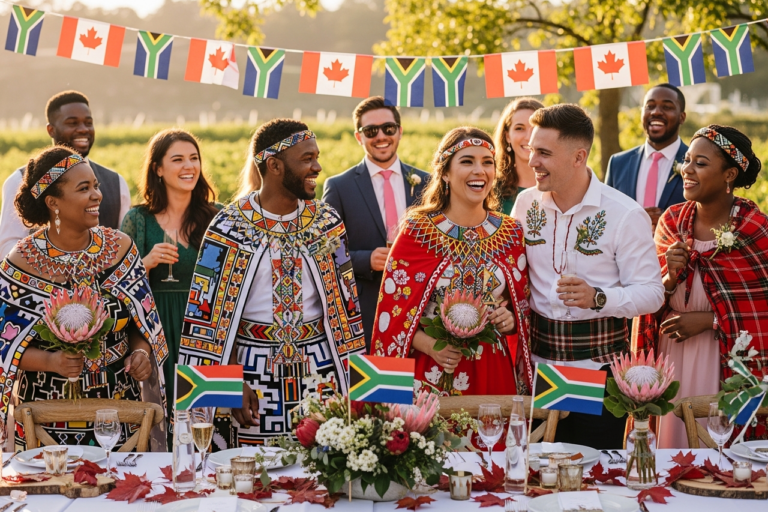
The wedding attire at a South African wedding stands out with its vibrant colors and unique designs. The clothing is not just for looks. It shows the cultural identity, family history, and social standing of each person. The fabric, the bright colors, and the accessories are picked with care because they mean something special.
From the detailed beadwork to the patterned fabric and the decorative belts, every part of African wedding attire matters. The bride and groom can wear something that shows their roots or background. This is how African craftsmanship comes to life at a wedding. Now, let’s look more at their special wedding outfits and what they stand for.
Distinctive Outfits for Brides, Grooms, and Guests
South African weddings are full of color and life. Brides, grooms, and guests wear wedding attire that shows their culture. These outfits are different from typical Western wedding dresses. They use lots of patterns and have deep meaning. This display of african craftsmanship and traditional elements is something people feel proud about.
A Zulu bride may wear a skirt that means something and add beaded jewellery. For a Xhosa bride, the umbhaco is popular. It has bold shapes and lines in its look. The groom sometimes mixes traditional elements with a modern suit or goes with a full traditional outfit. Everyone at the event enjoys the bright and colorful attire. It helps people feel close to their roots.
Some examples of what you might see are:
-
Shweshwe Fabric: This fabric has small, repeating prints. It is common for wedding dresses and guest clothing.
-
Xhosa Umbhaco: People spot this piece for its clear black and white shapes.
-
Zulu Attire: Brides often wear beaded jewellery and special skirts.
-
Ndebele Blankets: Bright blankets with patterns mark important times.
In every wedding, there will be neat and unique wedding attire. These items let people show who they are and what they value.
Meaning Behind Colours, Beadwork, and Symbols in Wedding Clothing
The vibrant colors and detailed decorations on south african wedding dresses are more than just pretty. They are a language. Every color, pattern, and bit of beadwork can show something about a person’s place in society. It can be about marriage, their ethnic group, or their family history.
Beadwork is very important in african wedding attire. The beads have meaning. For example, white may stand for love and purity. Red could mean passion or even anger. Patterns or designs also say something. They help people share feelings and facts without speaking. Everyone in the community understands this silent way of talking.
All the care in choosing decorative elements makes the wedding attire authentic. Handmade bracelets and symbolic headdresses are picked with meaning. Nothing is random. These details are central to the importance of the celebration. They give layers of meaning to the wedding dresses. It is more than just how everything looks.
Legal Requirements and Marriage Laws in South Africa
If you want to have a wedding in South Africa, you need to know about the marriage laws in the country. South Africa is known for having a legal framework of customary marriages. This includes civil marriages like in Canada and also marriages based on african traditions.
So, traditional ceremonies can be legal. This can happen if certain rules are followed. The Recognition of Customary Marriages Act sets the framework of customary marriages. It helps make sure that the rights of spouses, and especially women, are looked after. Here are the main things you should know.
Key Legal Steps Canadian Couples Should Know
If you are a Canadian couple and want to get married in South Africa, it’s very important to know the legal steps. This will help make sure your marriage will be accepted when you get back to Canada. For full legal recognition of customary marriages in South Africa, you need to register the marriage with the Department of Home Affairs. You have three months to do this after your ceremony.
One main rule for a legal marriage in South Africa is the consent of both spouses. You and your partner must both agree to the marriage. There has to be a licensed marriage officer there to perform the ceremony. This is needed for both civil and customary marriages. If there is no prenuptial agreement, your marriage will fall under the community property regime. That means anything you both get during your marriage will be shared.
Here are some key legal points you must know:
-
Registration: All civil and customary marriages in South Africa must be registered. That’s how they become legal.
-
Consent: Both of you must give your free consent for the marriage.
-
Age: You both have to be the legal age for marriage.
-
Marriage Officer: The person who officiates your ceremony must be allowed to do this by South African law.
If you follow these steps, you and your partner can make sure that your marriage will get full legal recognition in both South Africa and Canada.
Understanding Lobola, Bride Price, and Marriage Contracts
One of the biggest customs in african weddings is lobola. People sometimes call it “bride price,” but it is more than that. Lobola is a special way for families to connect. The groom’s family gives gifts, cows, or some financial compensation to the bride’s family. It shows gratitude and respect, and it brings both sides together.
Family elders lead the negotiation of lobola. They do this with care and kindness. It is not about buying a bride. It is about saying thank you for all the work her family did to raise her. The process helps make things fair and strengthens the bond between the families.
Lobola is common in many African weddings. It works with modern laws, too. Couples can make marriage contracts, like prenuptial agreements, to sort out property. This balance lets people honour their old customs and also look after their assets in today’s world.
Conclusion
Knowing about wedding traditions in South Africa can help you see how rich the culture is in the country. The way people dress, the things they do during the ceremony, and the rules for getting married, all make each wedding stand out and be special. If you want to have a destination wedding or just learn about the customs, understanding these traditions can help you plan a day that feels real and important. Remember, every culture has its own way to show love and come together, and this is what makes weddings unique. If you want to find out more about wedding traditions in South African wedding customs, or need help with your plans, you can reach out for advice.
Frequently Asked Questions
What are some unique wedding foods in South Africa?
At a South African wedding, you will see a big meal. People love to have a braai, which is like a barbecue. They also serve filling stews like potjiekos. There is often pap, which is a maize porridge, and there can be samp with beans. The wedding cake can show family history with special patterns or other decorative elements. This helps link the food with the culture of the day at a south african wedding.
Can traditional rituals be incorporated in modern ceremonies?
Many couples today mix traditional elements with modern ceremonies in a wonderful way. Some might wear traditional clothes for part of the day. Others may include a palm wine ceremony. They also add traditional touches into a new and different venue. This way, couples today can honour their African traditions. At the same time, they get to celebrate their own love story.
How do families and elders participate in South African weddings?
Family elders are very important in african weddings. They guide lobola talks, give blessings, and help with advice. The families of the future spouses take part in every step. This shows that a wedding is a collective commitment. It also helps everyone feel part of the family. The involvement of family elders and all the families builds strong family solidarity in african weddings.