Key Highlights
-
Rwandan wedding traditions include more than just a wedding day, because the events have a lot of meaning and history.
-
Things start with events before the wedding, when the groom’s family goes to the bride’s family to ask if the groom can marry their daughter.
-
One big moment is called the Gusaba. In this part, both families talk and the groom’s family asks for the bride.
-
The dowry is a main part of the Gukwa. This is often in the form of cows, and is given to the bride’s family.
-
On the wedding day and during the parties after, there are special things the families do together that bring the groom’s family and the bride’s family closer.
-
These days, a Rwandan wedding may mix these traditional customs with a legal or church wedding, making the event special and new.
Introduction
Are you interested in Rwandan culture or going to a Rwandan friend’s wedding? Welcome. This guide will help you understand the special and charming wedding ceremonies that are part of Rwanda’s rich cultural heritage. A Rwandan wedding is not just one day. It is made up of many events that bring together families and people from the community. Starting from the first meeting to the parties after the wedding, each moment has a lot of meaning, happiness, and traditions that go back many years.
Understanding Rwandan Wedding Traditions from a Canadian Perspective
From a Canadian point of view, a traditional Rwandan wedding may look like a big event. There is more than one ceremony. These days are not just parties. They show a strong sense of community spirit and bring together two different families. The way people go through this process shows respect, careful talking, and everyone helps plan for what comes next for the couple.
A Rwandan wedding is different from most Western weddings. The focus is not just on the couple, but on the whole group. This guide will help you see the meaning in these Rwandan traditions and why they matter so much.
The Cultural Significance of Marriage in Rwanda
Marriage is very important in Rwandan society. Rwandan marriage customs are not just about two people loving each other. These customs bring together two families and, as a result, their communities. The whole process is a big symbol of respect, not only for the loved ones involved but also for the Rwandan cultural heritage.
One main value in these traditions is that the welfare of children is seen as something everyone in the neighbourhood should care about. When people marry, the whole group of neighbours is talked to and included because they will help support the marriage and the family that comes from it.
In the end, these customs make sure the couple gets strong help when starting their new life together. The help of elders and family gives advice and a solid base. This shows that a marriage is a symbol of respect and a social tradition that Rwandans care about a lot.
Key Elements That Define Traditional Rwandan Weddings
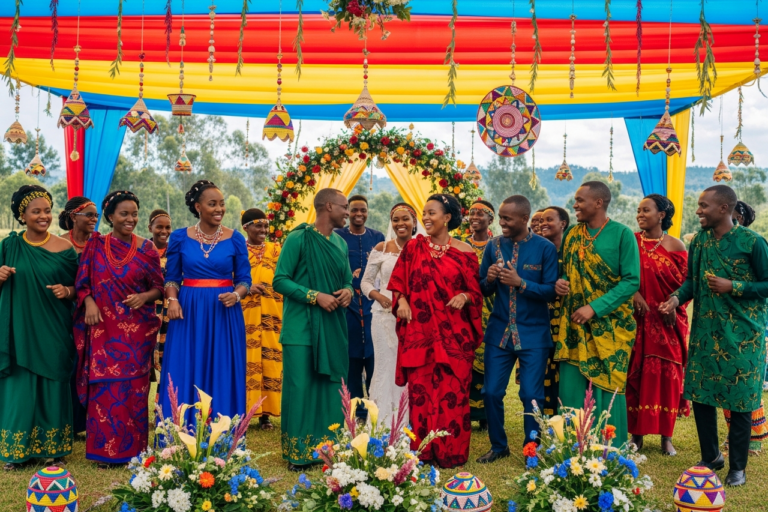
Several important things make Rwanda wedding traditions stand out and be remembered. The events are usually outside, sometimes in a special tent at the bride’s family home. This makes the day feel both fun and like a big group of people celebrating together. The traditional ceremony is full of important signs and acts that have been shared for many years.
The talk between the two families is one of the big parts. The groom’s side does not just say “yes.” They have to answer riddles and take on playful challenges given by the bride’s family. Some of the most important Rwanda wedding traditions are:
-
The Dowry (Gukwa): In the old way of doing things, the dowry means giving one or more cows. This stands for wealth and shows the groom can take care of the new family.
-
Symbolic Gifts: The main dowry is cows, but there can be other gifts too. These might be agricultural tools, which show hard work and a way for the family to keep going.
-
Community Involvement: People like family, neighbours, and friends are part of the whole thing—from the talk about the dowry to the celebration.
These traditions in Rwanda, from using a special tent to the giving of agriculture tools, make the day special for everyone.
Important Customs and Rituals in Rwandan Weddings
A Rwandan wedding is made up of different traditional rituals. Each one has its own name and reason. These steps are very important. They help the groom’s family and the bride’s family get to know each other. Rwandan weddings build a strong bond between both sides. The families work together during every part of the process.
The events start when someone says they want to get married. They end after a final visit after the wedding day. There is meaning in all these steps. Let’s talk about some of the key events before the wedding, on the wedding day, and after the celebration that are part of a rwandan wedding.
Kuranga, Gufata Irembo, and Gusaba – Pre-Wedding Events
The journey to a marriage in Rwanda starts before the wedding day. The first step is called Kuranga. In this stage, a family member looks for a possible bride for the bachelor. Someone from the groom’s family then checks the family’s history and reputation of the bride.
After this, a few important pre-wedding ceremonies take place. These steps help get the family’s blessing and set things up for talking about the dowry. Some of the main wedding ceremonies are:
-
Gufata Irembo: This means “take the gate.” At this step, the groom’s father or someone else from his family goes to visit the bride’s father. The goal is to say that his son wants to marry the daughter.
-
Gusaba: This is the part where the groom’s side asks for the bride’s hand. During this part, there is often a battle of wits. The groom’s team uses clever and funny language to impress and win over the bride’s family.
If things go well in these two steps, both families start talking about the dowry. For many people in Rwanda, this moment is very important in the journey before the wedding day.
Gukwa and Gutwikurura – Wedding Day and Post-Wedding Celebrations
After the pre-wedding talks, the focus is on the Gukwa and main celebrations. The Gukwa is where the dowry is paid. This has, in the past, often been cows. After both sides settle things, they share a drink. It is their way to agree it’s all done. These days, many couples also have a civil or church wedding on their wedding day.
One important event after the wedding is called Gutwikurura. It means “to unveil.” Before this, the bride would have stayed away from others. At this time, her family goes to her new home. The family brings things the couple will use as they start their new life. The new wife cooks her first meal for the two families to show she is now in her new role.
On this day, the new couple might also feed kids with gourds of milk. This act shows the hope for a good and healthy family. The visit brings both families together. It shows the new life the couple and their families will share.
Beginner’s Guide: How to Experience or Participate in a Rwandan Wedding
If you get an invite to a Rwandan wedding, you will have a lively and warm time. There is so much heart and colour in every part of the day. You will see many special things, like the unique clothes and the rituals that mean a lot to the families and the people taking part. Weddings in Rwanda are not just one-day events the way they might be in Canada. They last longer and are full of joy, with the feel of a close community.
It is a good idea to learn about the manners, what people wear, and how gifts are given. This helps you join in with care and respect. It can make your rwandan wedding trip one you will always remember. Here is a friendly guide that will help you get ready for your first wedding in Rwanda, from what the attendees expect to important little tips about attire.
What You’ll Need to Get Started (Gifts, Dress Code, and Etiquette)
When you are getting ready to go to a Rwandan wedding, start by thinking about what you will wear and what gift to bring. Guests at a Rwandan wedding usually dress in nice and bright clothing. At some traditional ceremonies, many people wear Rwandan attire, but a suit or a classy dress is good too.
The way the bride and the groom dress is very important. For the bride, she may wear a Mushanana gown. The groom often goes with a suit or sometimes a traditional tunic. These traditional customs are also part of the gifts you give. It is common to give money, but giving gifts with meaning is nice too.
Here are a few things to think about:
-
Dress Code: Pick elegant and simple clothes. People like to see bright colours.
-
Gifts: Cash gifts work well for most, but gifts for the home are good too. Sometimes what you give matches Rwandan tradition, like special agricultural tools.
-
Etiquette: Make sure to greet elders with respect. You should get ready for a joyful day that could last a long time.
Step-by-Step Guide to Attending or Planning a Traditional Rwandan Wedding
Planning a traditional Rwandan wedding involves coordinating multiple events, each with its own significance. While modernization has streamlined some aspects, the core ceremonies remain vital. The process is a beautiful journey, marking the beginning of a new chapter for the couple and their families.
For those planning, the key is to start early and delegate roles. For attendees, understanding the flow of events will enhance your experience. A typical wedding journey involves several stages of introduction, negotiation, and celebration.
Here is a simplified table of the main stages in a Rwandan wedding, from the initial meeting to the final celebrations:
|
Stage |
Kinyarwanda Term |
Description |
|---|---|---|
|
The Introduction |
Kuranga |
A relative points out a potential bride. |
|
The First Visit |
Gufata Irembo |
The groom’s family declares their son’s intent to marry. |
|
The Asking Ceremony |
Gusaba (Kuganira) |
A formal request for the bride’s hand, involving witty negotiations. |
|
The Dowry Payment |
Gukwa |
The groom’s family presents the dowry, traditionally cows. |
|
The Wedding Day |
Ubukwe |
The main celebration, which can include traditional, civil, and religious ceremonies. |
|
The Unveiling |
Gutwikurura |
The bride’s family visits her at her new home, marking her official unveiling as a wife. |
Step 1: Understanding the Invitation and Your Role
When you get a Rwandan wedding invitation, it can be for one part of the wedding or for the whole event. The invitation will tell you exactly what you are invited to, like the traditional ceremony called Gusaba or just the reception. Sometimes, these happen on different days.
Your main role as a guest will be to see and celebrate the couple getting married. You are there to support the new couple. Most of the time, the ceremonies happen at the bride’s family home. There can be a large, special tent to have room for all the guests from both the bride’s family and the groom’s family.
Get ready for a fun time. You will see the bride’s family and the groom’s family join in Rwandan rituals and talk in special ways with each other. As a guest, you do not have to take part in the money talks or big decisions of the day. Being there is what matters. Your being at the Rwandan wedding shows you care about the groom, the bride, and their families.
Step 2: Choosing the Right Attire for the Ceremony
Choosing what to wear to a Rwandan wedding is one way to show that you respect the day and want to follow the local culture. At most weddings in Rwanda, guests are expected to dress in formal clothes. Men often put on suits, and women can wear smart dresses or go with the traditional Rwandan attire known as a Mushanana. This is a striking outfit, with a sash over the shoulder and a wrap skirt.
The bride’s outfit is sure to get most of the attention. She is the focus during the big ceremonies. In the past, a bride in a rwandan wedding would arrive to the groom in a special carrier called an ingobyi, wearing her best clothes. These days, a bride might pick a white gown for the church event, then switch into a bolder Mushanana for the parts that stick to rwandan tradition.
The groom will usually choose attire that goes well with what the bride is wearing. He can put on a suit, or go for a rwandan traditional outfit in the same colours as the bride’s. The people in the wedding party often have clothing that matches too, which makes the scene lively and full of colour in Rwanda.
Step 3: Preparing an Appropriate Gift for the Couple
Gift-giving has a big part in Rwandan weddings. People do this to show they care and want the best for the newlyweds. The biggest gift is called the dowry, or Gukwa. The groom’s family brings it to the bride’s family. In the past, this took the form of cows. These cows stand for wealth and show that the groom can provide.
The dowry is something between the groom’s and bride’s families. But people who come to the wedding also bring gifts for the couple. In modern times, it is common and helpful to give cash. Still, gifts for the home are nice and help the new couple get started.
Here are things to think about when you pick a gift:
-
Cash: This is easy and handy. People give it in an envelope.
-
Household Items: Try things like kitchenware, small machines, or nice bed sheets.
-
Group Gifts: Sometimes, friends or workmates put their money together. This way, they get a bigger gift for the couple.
Step 4: Participating Respectfully in Rituals and Celebrations
As a guest at a Rwandan wedding, your kindness and attention really add to the day. You help make it special by watching the ceremonies closely and joining in the happy parts of the day. This means you sit and watch during the Gusaba, where the families have a meeting that is both interesting and funny.
You will see many beautiful rwanda wedding traditions at the event. For example, you might notice the bride has used special herbs to look her best. A long time ago, men known for their strength would carry her to the groom in a traditional carrier called an ingobyi. While it’s not often done today, people still have a lot of respect for the bride.
The best way to be part of a rwandan wedding is to do what the local guests do. Clap your hands when they do, move with the music, and watch the dancers. After the formal part, say congratulations to the couple and their families. If you show respect for their ways and share your happiness, you help make the day great for everyone and support rwanda wedding traditions.
Conclusion
To sum up, being part of a Rwandan wedding or knowing more about these events can be a great experience for people in Canada. These weddings have a lot of meaning. The parties show special ways of doing things and happy celebrations. If you are going to a wedding or just want to learn more about rwandan culture, this guide is here to help you understand different parts of rwandan wedding traditions. Take this time to join in and make good memories with others. If you want to know even more about rwandan or need some help, you can always get in touch with us. We are here to help you out!
Frequently Asked Questions
What should Canadians expect if invited to a traditional Rwandan wedding?
If you go to a wedding in Rwanda, you will see a happy and busy event that goes in many steps and has everyone involved. At the traditional ceremony, the groom’s family and the bride’s family talk and bargain with each other. As one of the attendees, you should wear formal clothes and get ready for a long, joyful wedding day. Come with an open mind, and enjoy the strong culture around you.
How do Rwandan wedding traditions compare to modern weddings in Rwanda?
Today, many Rwandan couples mix old ways and new ways. They often have a traditional Rwandan wedding called Gusaba. After that, there is a civil ceremony and a church wedding. This is common in cities like Kigali. Now, some steps are faster because of modernization. Still, the main ideas of family and respect for the community are very important in every rwandan wedding.
Are there unique dances or music performed at Rwandan weddings?
Music and dance play a big role at a rwandan wedding. At most rwanda wedding traditions, you will see Intore dancers move with energy and grace. People often hold the party in a special tent. The place is full of singing and dancing, bringing different families and guests together at this rwandan event.
How do families participate and contribute during Rwandan wedding customs?
Families are a big part of Rwandan weddings. The groom’s family will ask for the bride’s hand in marriage. The bride’s family is the one that hosts the traditional ceremony. Both these different families have a crucial role. They work on talks, give gifts, and send blessings. All these parts of the wedding show real community spirit.