Key Highlights
Here are the key points from a russian wedding:
-
A russian wedding often starts with something fun called a “ransom.” The groom has to do a few tasks before he can see his bride. Her family gives him these tasks to finish.
-
After that, the wedding day moves to the civil ceremony. It is the part that makes the marriage legal, and the law says all couples have to do this.
-
Many newlyweds also want a church wedding ceremony. There are russian wedding rituals at this part, like the special “crowning.”
-
At this point, the wedding party will usually go around the city. They stop to take photos together at famous places. After that, the big reception starts.
-
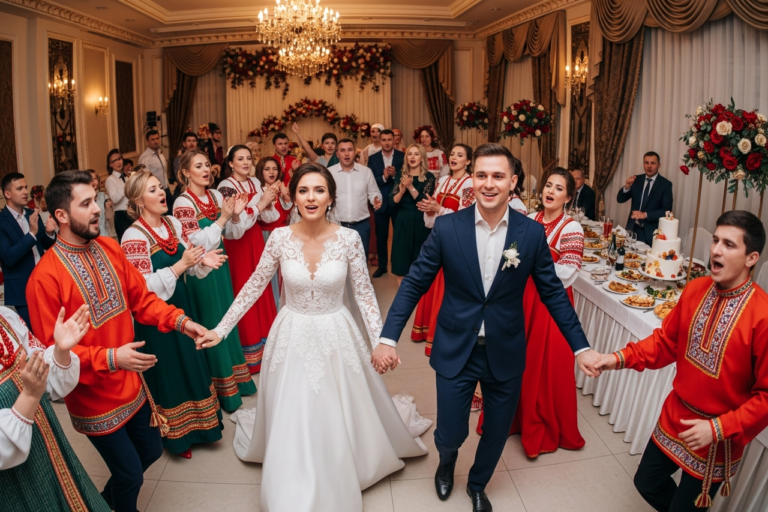
The wedding party at the end of the day is usually full of life and fun. There is a “tamada” (the person who guides the party), lots of time for toasts, good music, and people dancing.
-
Often, the wedding day is not the end! People sometimes have a second day for more festivities. It is mostly just for family and good friends.
Introduction
Have you ever thought about what a russian wedding is like in russia? From a Canadian point of view, a russian wedding is full of fun customs, strong history, and a lot of excitement. This event is not just a wedding ceremony. It lasts many days and has many special rituals, deep family ties, and lots of fun times. This guide will help you see the bright and lively world of russian wedding traditions. You will get a clear look at these customs and find out what makes a russian wedding in russia so special.
Historical Roots of Russian Wedding Traditions
The wedding traditions in Russia have been shaped by the country’s long history. A lot of these customs are old. The people mix folk beliefs with church practices. These get shared from one family to the next. When a young couple has a wedding day, these blend to make a special wedding celebration for them.
But things started to change in the 20th century. This was when the Soviet Union took over. The leaders added new, non-religious ways to mark a wedding day. These new customs changed the way people in Russia celebrated. The changes have stayed. Now, a russian wedding combines old ways and new ideas. Let’s look at how culture and history have both shaped the wedding celebration for couples in Russia.
Influence of Russian Culture and Religion
Russian culture and the Orthodox Christian faith shape how people celebrate weddings in the country. The wedding ceremony in church is full of beauty and meaning. At the start of the ceremony, the priest stands at the altar with the couple. He reads from scripture and leads everyone in prayer. A very important part of the wedding ceremony is the crowning. The placing of crowns on the heads of the couple shows the start of a new life together, like a king and queen in their own home.
The crowning is a special time. It helps people see the wedding day as a joining of two people who now share ways of doing things and take on responsibilities together. After that, the couple walks in a procession around the altar. This shows the couple taking their first steps together as married people, watched by friends and family. In Russia, there is also a civil ceremony you must do for your marriage to be legal. Many people want both: the civil ceremony for the law and the wedding ceremony in church to respect what is important in their families and faith.
The wedding party is filled with more traditions, going beyond the church walls. A wedding celebration in Russia is known for its special food and drinks. People serve caviar at the table and raise a glass of vodka to honour the couple. Everything, from what you eat and drink to how people join together, shapes the wedding ceremony into a lively and rich event. In Moscow and in smaller towns, these moments make a wedding day feel part of a long
Evolution from Imperial Russia to Soviet Times
The time when Russia went from being Imperial Russia to the Soviet Union brought a lot of big changes to how people had their weddings. The Soviet state did not allow religious events, so churches could not do weddings anymore. Now, everyone had to have a civil ceremony. People went to the ZAGS office, which is a government spot that handles public services, to make their marriage legal. Because of this, the wedding ceremony changed a lot. It became more formal and was not about religion anymore.
When the Soviet union was in power, there were also new things done at weddings. People did not have a best man or a maid of honour. Instead, the couple had “witnesses.” These witnesses wore red sashes and their job on the wedding day was to sign all of the legal papers. The wedding celebration would often include a tour around the city. Many couples stopped at famous places, especially ones that showed history from the Second World War. They laid flowers to remember the past. This made the wedding day feel like it was about the couple and also about their country.
After the Soviet Union ended, things started to go back to how they used to be. There has been a revival of older wedding traditions in Russia. Today, many couples choose to have both a civil ceremony and a religious ceremony. At a modern wedding celebration in Russia, you can see old customs from before the revolution, things started during Soviet times like city tours, and also some new Western ideas. All these different
Russian Engagement Customs and Pre-Wedding Rituals
Before the wedding day, a Russian engagement starts with a mix of fun and deep traditions. It is not just about the groom asking for marriage. In these customs, the families have an active part in what comes next. The journey to the altar is filled with things that show the groom’s spirit and include both families in a joyful way. These moments help everyone feel included and raise excitement as the wedding gets closer.
A well-known tradition is the “ransom.” This is a lighthearted event where the groom faces a challenge set up by the bride’s family and her friends. The idea is to see how far he will go for the bride. Along with this game, family members join in making arrangements and add to the day in many ways. These customs help the wedding day feel like a celebration that belongs to the whole group. Let’s take a closer look at these wedding day traditions from the groom, bride’s family, and all those who love them.
The “Ransom” (Vykupl nevesty) Ceremony
One special thing about Russian pre-wedding traditions is the “vykup” or bride’s ransom. On the wedding morning, the groom comes with his best man and friends to the bride’s home. When they get there, the groom finds his way blocked by the bride’s family and her bridesmaids. He can’t see his bride yet because he must pay a ransom first. But this ransom is not about giving real money. It’s about showing he cares for the young couple. He has to take part in fun and sometimes silly challenges.
The groom’s way to get to his love is full of things he must do. He may have to sing a song or answer questions about them as a couple. Sometimes, he has to do funny little tasks. The best man stays close to help him through all these small tests.
What the groom and his friends give as “payments” can be:
-
A box of chocolates or sweets for the bride’s friends.
-
A bottle of champagne or other drinks for family members.
-
Small bits of money or gifts for each step.
When the bride’s family feels happy with all he has done, the groom gets to see his bride. Then the wedding party can move to the wedding ceremony.
Family Involvement in Arrangements
In Russian weddings, family members do more than attend. They are a big part of everything. Right from the start, the parents of both the bride and the groom help plan the wedding day. They give money if needed. They help make many decisions. They also see to it that old ways are kept during this special day.
It is not only the parents who get involved. Some things, like the bride’s ransom, are done by the bride’s family. This is a fun moment, and people remember it for a long time. Close people, like relatives, each get a job to do. You may see them help put up decorations, or help make food for everyone who comes. This shows that a wedding in Russia is not just two people. It brings two families together on this new day.
The maid of honor and the best man play big parts too. In Russia, they are also called “witnesses,” or svideteli. They help the pair with tasks before the big day and during the wedding party. They are always there to help, showing how important friends are for the new couple. It is not only about the couple—the support from family members and friends matters too.
The Sequence of Events on the Wedding Day
A russian wedding day has a set order of things that happen. It mixes the official parts and lots of fun. Most of the time, the wedding starts with the groom going to the bride’s house for the ransom. This is a playful part that helps to kick off the wedding day full of joy. After that, the couple, with their best man, maid of honor, and all the guests, go on to enjoy different things planned for the russian wedding celebration.
Once all the morning fun is done, the wedding day is split into a few main parts. First, there is a civil ceremony that everyone must do. Next, there is sometimes a service at church. Then, people go all around town for photos in a big procession. In the end, everyone also joins a big party to eat, dance, and cheer for the new couple. Every part of the ceremony brings its own way to make the day special for the bride and groom. Let’s take a closer look at how each part happens on this special wedding day.
Civil Ceremony at the ZAGS
In Russia, the only legally recognized marriage is one registered at a ZAGS office. ZAGS stands for the “department of public services,” and attending a civil ceremony there is a legal requirement for all couples. This formal process is what officially makes the newlyweds husband and wife in the eyes of the law. While the ceremony is often brief, it is a pivotal moment of the wedding day.
During the ceremony, the couple and their two official witnesses sign the marriage register. The officiant gives a short speech, and the couple exchanges wedding rings. While some ZAGS offices are simple administrative buildings, others are grand “Wedding Palaces” designed for more elaborate ceremonies.
The process is straightforward but essential. It formalizes the union and allows the couple to proceed with the rest of their wedding celebration, knowing the legalities are complete.
|
Step |
Key Fact |
|---|---|
|
Application |
Couples must apply at a ZAGS office at least one month before their desired wedding date. |
|
Witnesses (Sideteli) |
Two official witnesses are required to be present and sign the legal documents. |
|
The Ceremony |
A state official conducts a brief, formal ceremony, declaring the couple legally married. |
|
Ring Exchange & Signature |
The newlyweds exchange wedding rings and sign the official marriage registry. |
|
Marriage Certificate |
The couple receives their official marriage certificate immediately after the ceremony. |
Traditional Church Ceremony
For many couples in Russia, the wedding day comes with more than just the civil registration. They also have a traditional Orthodox church wedding ceremony. This part of the wedding is full of old customs and deep meaning. It is not a legal contract, but it is a strong spiritual promise between the bride and groom. The best man and the maid of honor stand close and hold crowns above the heads of the bride and groom. This job takes some effort but is seen as important and is respected.
There is a key moment called the “placing of crowns.” The priest puts crowns on the heads of the bride and groom. This shows that they are the king and queen of their new family. Crowning is a special and serious part of the wedding ceremony, showing both the happiness and hard work that come with marriage. The wedding ceremony also has scripture readings. At one point, the couple takes part in a procession as they walk around the altar three times. This marks their first steps as a married couple, starting life together.
These wedding ceremony traditions carry a lot of history and meaning. They are very different from the formal civil service most people know. The church ceremony helps the couple connect with their faith and background. For many, it is the spiritual core of the wedding day. After the church part ends, the festivities go on. Sometimes, they last until the second day.
Russian Wedding Attire for Bride, Groom, and Guests
At a Russian wedding, the clothes people wear mix new styles with old customs. Many brides now pick a white wedding dress, which is like the style you see in the West. Still, traditional touches and important details are a big part of what both the bride and groom wear. Their outfits often show a bit of where they come from and what is special to them.
Every part of their clothes, from the bride’s bridal veil to the suit the groom wears, may have its own story or meaning. Sometimes, you might see the sarafan or other old-style clothes at the wedding, mainly if the couple wants to keep things more traditional. In this way, both the wedding party and guests get to wear outfits that have a deeper meaning. Up next, we look closer at the main parts of what the bride and groom wear, along with what the wedding party and other guests often put on for a russian wedding.
Symbolic Elements in Bride and Groom’s Outfits
The wedding clothes for the bride and groom in a Russian wedding often have special details that mean something important to the couple. Many brides wear a modern white wedding dress, but some also add old customs to their look. For example, a bridal veil stands for modesty and purity. In some places, brides may wear a sarafan, which is a long, old style dress like a pinafore that is often covered with careful embroidery.
In a Russian wedding, the embroidery on the dresses can use gold thread. This shows wishes for success and happiness. The colour red is a big part of Russian culture. You often see it in a special sash or in other details on the outfit, because people feel it stands for beauty and joy. Adding these things to what they wear helps the new couple remember their family history.
The groom usually wears something more simple, like a formal suit. Still, sometimes the groom will wear clothing with tradition too, such as a shirt with embroidery on the cuffs or neck that matches what the bride is wearing. These small matching touches with symbols and patterns help to show that the bride and groom are starting their life together as one.
Customs Around Guest Attire
When you go to a russian wedding, you are expected to wear something formal and suited for a party. The men will often wear a suit. Women usually wear a nice dress or a skirt with a blouse that looks smart. The goal is to look tidy and show respect for the special wedding day. Wearing the right clothes shows you understand the meaning of the wedding ceremony.
In some Western places, it is not right for women to wear white. But at a russian wedding, women can wear white if the dress does not look too much like a bridal dress. It is better if you do not wear black since that reminds people of sad times. It is good to pick colours that are bright and fun, as these go well with the happy feel of a wedding celebration.
People in the wedding party may wear similar or coordinated clothes. For all the other guests, the main thing is to “dress up” for the wedding ceremony and wedding celebration. These events matter a lot. Looking your best shows respect for the couple. If you are not sure, it’s better to be a bit too dressed up than to arrive looking too casual.
Unique Wedding Ceremony Traditions
A Russian wedding is filled with special and fun traditions that make the wedding day more than just an exchange of vows. These customs bring more meaning and a lot of happiness to the wedding celebration. After the couple is married, they take part in customs that are there to bless their life together and help tell what their life might be like.
Two important Russian wedding traditions are the welcome with bread and salt and the many toasts that happen at the party. These and other customs on the wedding day turn the wedding ceremony and celebration into a rich, cultural moment. Let’s look closer at why these wedding day customs matter.
The Significance of Bread and Salt
One of the most loved moments in a russian wedding is the giving of bread and salt. After the wedding ceremony, the newlyweds will see their parents, often the groom’s parents, standing there with a big round loaf of bread called “karavai.” This bread sits on an embroidered towel. The custom is to welcome the bride into her new family and give a blessing to the couple.
The bread stands for having enough in life and wishing for many children. It hopes the couple never goes hungry. Salt means that life can be hard sometimes, and the couple will need to face these times together. Salt also shows that life with each other will have flavour and richness.
This ritual on the wedding day is simple, but it means a lot.
-
The newlyweds each break off a piece of bread, dip it in salt, and then eat it.
-
There’s a little bit of fun too—whoever gets the bigger piece of bread may get to be boss at home!
-
After that, people often have a shot of vodka or a bite of caviar, and the party really starts.
[russian wedding],[wedding day],[wedding ceremony],[piece of bread],[newlyweds],[groom],[caviar],[vodka]
Rituals During and After the Vows
The rituals in a Russian wedding are made to be special and fun. Right after the official “I do’s,” the wedding celebration kicks off with a set of toasts. The first toast is usually with champagne. The new couple drinks it together, then they smash their glasses for good luck. The number of glass shards people see is thought to say how many happy years the new couple will have together.
During the wedding ceremony and celebration, the guests say “Gorko!” which means “bitter.” When you hear this, it’s a sign for the couple to kiss. The kiss is meant to make the taste of the drink, and life itself, sweeter for them. The more the couple kisses, the sweeter it is. This light game happens many times on the wedding day.
There is also a tradition with the wedding cake. The couple does not just cut the cake. The bride and groom feed each other the first bite. This is their way of showing they will care for one another. All these traditions—from the first toast to feeding cake—turn the whole wedding day into a full celebration of the new couple and their union.
Festivities, Music, and Community Participation
The heart of a Russian wedding is all about having a great time together with family and friends. The wedding celebration is always full of energy. There is a lot of music, dance, and happy moments with everyone joining in. At this wedding party, there is no room for silence or shyness. Every person is invited to join, share their happiness, and cheer for the new couple.
One important person at a Russian wedding is the tamada, which means toastmaster. The tamada keeps the good mood going during the whole wedding. This person leads games, starts fun times, and makes lots of toasts with the guests. So, the tamada helps the people at the wedding to feel closer and have fun together. In this way, music, dance, and the tamada all play a part in making a Russian wedding celebration feel special.
Role of Music, Dance, and Toasts
Music and dance are at the heart of every Russian wedding celebration. You will often see a live band or DJ play a mix of folk songs, Russian pop, and some international tunes. The first dance is special for the couple. But after that, everyone can get up and dance, no matter their age.
At these wedding festivities, you will find the “tamada.” This is either a professional emcee or a lively friend who leads the party. The tamada’s job is to keep it fun by setting up games, getting everyone involved in activities, and making sure the toasts keep coming.
The night’s events usually go in this order:
-
Toasts: Each guest who means a lot to the couple needs to give a toast. The tamada asks them to speak throughout the night. After every toast, people take a drink and shout “Gorko!”
-
Games: The tamada runs different games and contests for the couple and guests. One favourite is when someone takes the bride’s shoe and the groom has to win it back by doing something fun.
-
Music and Dance: There is always music. People get up to dance between meal courses and toasts. This helps keep the energy high and everyone happy all night.
At a russian wedding, you will see how much people love to dance, toast, and be together. The groom, the tamada, and everyone at the wedding celebration work together to make the festivities special.
Conclusion
In the end, taking part in Russian wedding traditions lets you see what is important to the people and history in Russia. There are special things done before the big day, like the “ransom” ceremony. There are also lots of songs, dancing, and kind words during the party. Every part means something important. Learning about these things helps you better enjoy the russian wedding. It also shows how love and people coming together is important all over the world.
If you want to know more, if you are planning a wedding, or if you are just interested in new customs, taking in these russian wedding traditions can help make your day feel more special. To get more advice about wedding customs or the ransom part in a russian wedding, ask for a consultation!
Frequently Asked Questions
How do Russian wedding traditions differ from Canadian ones?
A russian wedding is special because the celebration can last for many days. The couple must also have a civil ceremony, and this is different from a church service. There are some fun things they do, like having a “ransom” for the bride. The wedding day in Canada is also a happy event. But the way things happen, and the steps in a russian wedding ceremony, are not the same as in Canada.
What is the meaning behind bread and salt at a Russian wedding?
At a russian wedding, bread and salt stand for good luck, health, and a long life with each other. When the newlyweds share a piece of bread, it means they hope never to go hungry in life. The salt shows that they will face hard times together. It helps add some flavour to their journey as one.
How have Russian wedding customs changed over the years?
Russian wedding traditions have changed a lot over the years. When the Soviet Union was in power, couples could not have religious wedding ceremonies. They had to use civil services run by the state instead. Today, many couples in Russia like to mix old Soviet customs with older religious traditions. This mix brings a special touch to their wedding ceremony and shows the revival of what people did before in russian wedding events.