Key Highlights
-
Portuguese weddings are lively and all about family, food, and love. They mix old ways with new styles and have wedding traditions that bring everyone together.
-
In a traditional Portuguese wedding, the bride walks to the wedding venue along with her wedding party and with guests by her side.
-
The wedding ceremony comes first, then there are reception moments like the money dance and passing around the bride’s shoe to collect money for the newlyweds.
-
Food at Portuguese weddings is important. You will see a big dessert table with treats like pastel de nata and there will also be a wedding cake, meant to be shared with single guests.
-
Portuguese brides and grooms like to sneak out of their own reception for fun. Guests playfully try to make it hard for them to get away.
-
Many wedding traditions, like the money dance, can be added to modern or overseas wedding ceremonies.
Introduction
Are you thinking about a wedding that is full of culture and happiness? Portuguese weddings have it all. There is a mix of old traditions, family love, and lots of sweet moments. When you look at it from a Canadian view, you may see that some things are new, but many feel like home.
This guide will show you the top wedding traditions of portugal. You will learn about the special way people have the ceremony. It will also tell you how they party at the reception. You get to see customs from portuguese weddings that make you feel good inside. Who knows, the magic of these wedding traditions might give you ideas for your own big day!
Understanding Portuguese Wedding Traditions: A Canadian Perspective
When you look at Portuguese wedding traditions, you see the big part that community and family play at every wedding day. Many modern weddings in Portugal have some things you find in Canada, but the things that are just for Portugal really make the day stand out. The Catholic ceremony has a strong hold here, and the celebrations last a long time. These wedding day festivities are all about love, people, and holding on to old ways.
If you know about these wedding traditions, it tells you a lot about Portuguese life and what people care about. Now, let’s look at where these portuguese wedding traditions started, how they changed over the years, and think about how they are not the same as a wedding day in Canada.
The Historical Roots of Portuguese Weddings
The traditions found in Portuguese weddings are a big part of the country’s history. Many of these wedding customs started a long time ago—some as early as the 16th century. The Catholic Church had a strong effect on how the wedding ceremony was shaped back in those days. It turned the event into something special for families, friends, and the community as a whole. These religious wedding ceremonies became a key part of Portuguese life and their cultural identity.
In a traditional Portuguese wedding, you often see old rituals that focus on community and bringing good things to the couple. One common practice was for the bride to walk to the church with her wedding party and all her guests. This started in small villages, and it was a way to show that everyone supported the couple. Walking together like this made the wedding something that involved all people close to them.
These happenings, some that go back to the early 19th century or even before, show why family and village life matter so much during a traditional Portuguese wedding. Even now, as times change, these community events still play a big part in portuguese weddings. This helps keep new couples connected to their history and traditions.
How Customs Have Evolved Over Time
In the past few decades, portuguese weddings have taken on many things from Western Europe and North America. Today, many couples like to use popular trends for their wedding clothes and the way the party is set up. At the same time, some of the old customs have come back in a big way. This gives the event a nice mix of the old and the new.
People seem to want both tradition and a feeling of continuity. For example, a couple planning a destination wedding in lisbon might hire a modern wedding planner. But, they may still have the money dance to help them start their new life together. This is not always seen in other countries, where old customs may have faded or only be found in some areas. The portuguese are good at keeping their culture strong.
By mixing these things, the look of the wedding might change but the celebration keeps its special portuguese style. Young couples are coming up with new ways to honour their past, so these old practices do not get lost, but grow with the new generation.
Comparing Portuguese and Canadian Wedding Traditions
When you place Portuguese and Canadian wedding traditions side-by-side, you see both interesting parallels and charming differences. Both cultures prioritize celebrating with family and friends, but the execution of certain customs varies greatly. A Canadian wedding might focus on a structured reception with speeches and a first dance, while Portuguese weddings often feel more like a day-long festival.
The wedding party in both countries plays a supportive role, but the specific traditions they participate in can differ. For instance, the “money dance” is one of the most popular wedding traditions in Portugal, where guests pay to dance with the bride, a practice less common in Canada. Similarly, the theatrical “escape” of the couple at the end of the night is a uniquely Portuguese highlight.
Here is a quick comparison of some common traditions:
|
Tradition |
Portuguese Weddings |
Canadian Wedding |
|---|---|---|
|
Pre-Ceremony |
The bride often walks to the church with the entire wedding party and guests. |
The bride typically arrives separately, with the walk down the aisle being the main procession. |
|
Financial Gifts |
A “money dance” or passing of the bride’s shoe is common to financially support the couple. |
Monetary gifts are usually given discreetly in a card box or through a registry. |
|
Reception End |
The couple attempts a playful “escape” from the party, with guests trying to stop them. |
The couple typically has a formal send-off (e.g., with sparklers) at a set time. |
|
Cake Cutting |
The first slice of cake is often given to a single friend for good luck in finding a partner. |
The couple shares the first slice, and then it is served to all guests. |
Essential Elements of a Traditional Portuguese Wedding
At the heart of a traditional Portuguese wedding, you will find a mix of quiet moments and big, joyful parties. Most often, the day starts with a church ceremony. This usually takes place in a stunning, old cathedral. This important time in the church gets everyone ready for all the fun and excitement that waits at the wedding venue.
The wedding is filled with rituals that have been shared from one generation to the next. Some people follow superstitions too, hoping it will bring good things to the couple. All these parts of the day are full of meaning. Now, get set to see what makes a traditional Portuguese wedding stand out—like the church ceremony, favourite superstitions, and the amazing food and drinks you can enjoy at the venue.
Symbolic Rituals in the Ceremony
The wedding ceremony in Portugal is full of special actions that show both the importance and the happiness of two people joining as one. Many couples now share their own vows during the wedding, but there are still old portuguese traditions that continue in the service. One of the oldest rituals lets all people in the community be a part of everything. They do not just watch but really join in to bless the couple.
One old tradition is the walk to the church. In a lot of villages, on the wedding date, the bride, the groom, and both their families go together to the ceremony. This is a strong sign that both families are coming together. The way everyone walks together also shows that the people around them are happy for them and support them on this day. After the group gets to the altar, everyone pays attention to the special acts that make the couple one in the eyes of God and the whole community.
Some really old ways, like giving arras, which are coins that show the groom will provide for their future, are not as often seen now. But what stays is the sense that the wedding ceremony is held out in front of everyone and gets their stamp of approval. The event is not only about the two people saying their vows to each other. It is also a big part of their culture and has a deep meaning for all who come to see it.
Superstitions for Luck and Love
No wedding day is finished without some superstitions to help bring good luck and happiness, and this is true for Portuguese weddings too. There are many nice traditions mixed in with the party that make the day special for the newlyweds. These old beliefs help keep away bad luck and try to bring more love and good things for the couple.
Everyone at the wedding gets to take part in these fun acts for luck and love. Many focus on the wedding cake. There are special rules for how the cake is used, all made to help spread good fortune to everyone. A lot of these things have come from family to family for years. Many modern couples still love using them at their weddings.
Here are some favourite Portuguese wedding superstitions:
-
The Single Friend’s Cake: The bride and groom give the first piece of wedding cake to a single friend to help them have luck finding someone special.
-
Dreaming of a Future Love: Any single guest can put a piece of the wedding cake under their pillow. It will help them dream of who they might marry one day.
-
Barefoot Dancing Sibling: If the younger brother or sister gets married before an older one, the older has to dance at the wedding with no shoes. This is to make sure they don’t stay single forever.
Signature Foods and Drinks Served
Food is a big part of a Portuguese wedding. The feast can last for hours. There are a lot of traditional dishes on the table, showing what Portuguese food is all about. Menus change from one region to the next, but you can count on a large amount of good food. That helps guests have energy and fun for a night full of dancing.
The dessert table is a sight to see at these weddings. There is always a big mix of sweets. Along with the main wedding cake or bolo de noiva, you get many other treats. People enjoy all sorts of pastries and cakes. Some foods and drinks mean a lot at these events. They can stand for joy, sweetness, and good times for the new couple. You will see port wine quite often. This drink is famous in Portugal and used in toasts for the newlyweds. It stands for wealth and having much to celebrate.
Some things you might find at a Portuguese wedding reception include:
-
Pastel de Nata: These custard tarts are famous and you always see them on the dessert table.
-
Bola de Berlim: This sweet treat is a lot like a doughnut and is filled with cream.
-
An Extensive Dessert Spread: There are always more cakes, puddings, and pastries besides the main wedding cake.
-
Port Wine: People use this to toast the newlyweds and to celebrate together.
Pre-Wedding Customs and Preparations
The time before a Portuguese wedding is very special. It is filled with customs where family and close friends come together. As soon as a couple gets engaged, they start to get ready for the big day. Most of the time, both families want to help and be part of these plans. If you want to have a destination wedding, having a wedding planner will help a lot. The planner can guide you with the local ways of doing things and also help with the small things that need to be done.
All the things done before the wedding are to make the couple, their friends, and their families happy and close. They help everyone get ready to celebrate. In this piece, we will talk about special things done at the time of engagement, what godparents do, and other steps only the bride and groom go through as they get ready to say “I do.”
Engagement Traditions and Family Involvement
In Portugal, getting engaged is often something for the whole family. These days, some couples might make a private proposal, but once the news is out, both families get very involved when planning for the wedding celebration. In Portuguese culture, this shows that a wedding party is not just about two people. It is about bringing two families together as one group. The time before the wedding is the chance for families to get close and work together on all the details.
Parents and other family members get a big say in many parts of the celebration. This includes who gets invited, what people will eat, and how the day will go. Having family in the plan gives people support and brings more happiness as they look forward to the big day. The couple also picks out who will be part of the wedding festivities. People like close friends or relatives are asked to help by taking on special jobs at the wedding party.
Before the major event, there’s a custom for the groom and his loved ones. He gets a bachelor party. What is different in Portugal is that even the oldest people—sometimes grandparents—join the party, not just younger friends. The groom says goodbye to his single days, and everyone is there. This unique tradition highlights how important it is to include people of all ages. This way, the wedding celebration brings everyone together and shows respect for the elders in Portuguese life.
The Role of Padrinhos and Madrinhas (Godparents)
One of the main pre-wedding customs in Portugal is picking the padrinhos and madrinhas, which means godfathers and godmothers. These roles are much more than simple names. They are like a maid of honour and best man, but in Portuguese culture, they carry much more importance for the couple’s new life. The bride and groom choose them, and they are usually close friends or family who promise to help and support the couple from the wedding day and on.
Their job is very important at the church ceremony. They stand by the couple as official witnesses when the vows are shared. But, these padrinhos and madrinhas also promise to be there for years after the wedding. Picking them is a big step for the bride and groom because it shows a lot of trust.
On top of duties for the wedding day, the padrinhos and madrinhas play a strong part in getting ready for the big day. They help out with planning, are there to listen, and become a main support as the couple starts their life together. These choices show just how much the Portuguese believe in strong community and family ties, especially when two people get married.
Special Practices for the Bride and Groom
In the days before the wedding day, Portuguese traditions focus a lot on community, family, and a bit of good fun. Portuguese couples often do not do a “first look,” which is when the bride and groom see each other before the ceremony. Instead, in traditional weddings, the bride and groom do not see each other until the bride walks down the aisle. This is a big moment that feels very strong and is full of real feelings.
One of the special Portuguese traditions is how the bride gets to the wedding venue. In many villages, the bride will leave her home and walk to the church or ceremony spot, with her wedding party by her side. The guests follow along too. The whole village often comes out, turning this into a happy event for all. This walk shows their love and support for the couple.
Even though a private moment is not planned before the ceremony, the bride and groom do get some time alone late in the night. There is a fun and playful tradition where they try to “escape” their own wedding party. The couple tries to leave the reception and start their new life together. The guests join in the fun by blocking the car, hiding their luggage, or doing anything they can to stop the couple from leaving right away. This makes the end of the celebration memorable and full of laughter.
Beginner’s Guide: How to Incorporate Portuguese Wedding Traditions
Do you want to bring some Portuguese charm to your wedding celebration? It’s easy to do this, no matter if you’re in Canada or having your big day in another country. You do not have to be Portuguese to enjoy these traditions. They are all about family, fun, and good food.
There are many things you can add, like the attire, music, or the fun events at the party. You can pick the parts that you like most. This guide will help you start. You will know where to get the right things and how to fit them into your big day.
What You’ll Need to Get Started (Attire, Decor, Music, Food)
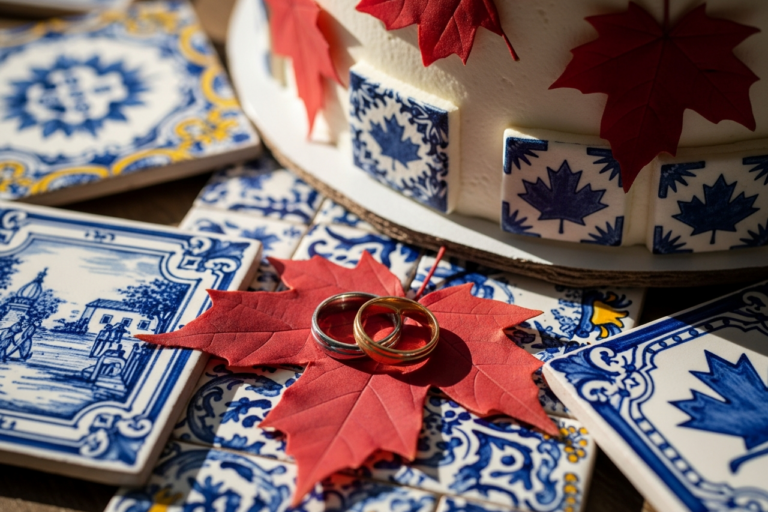
Bringing in Portuguese traditions to your venue can be easy. Start by thinking about some key things you see, hear, and taste. You do not have to be in Portugal to give your guests an authentic feel. First, think about the vibe you want in the place. Decor that feels Portuguese often has rustic style pieces, lots of flowers, and colourful tiles called azulejos.
Music is a big part of making the mood right. Book a band that can play traditional music or Fado for the meal, then play some fun songs for everyone to dance later. You could also get a group that does folk dances, and even let the guests join in if they want. For attire, you can wear a classic dress or suit, but you can add a Portuguese touch with lace or some special embroidery.
Here’s what you can use as a starting list:
-
Decor: Make it feel warm with wood, lace, and maybe some blue and white tile styles.
-
Music: Mix in some Fado for calm times and folk music for when you want to dance.
-
Food: Ask your caterer to put together a dessert table with Portuguese favourites like pastel de nata.
-
Attire: Try adding Azorean embroidery or a classic lace veil for a bit of tradition.
With these ideas, your venue can have some of the best parts of Portuguese traditions — music, food, and style.
Step-by-Step Guide to Planning
If you want to add Portuguese wedding traditions to your Canadian wedding, you need some good planning. The main thing is to bring these customs into your special day in a way that fits you as a couple. This will make your wedding feel like it is really your own. Start by choosing which Portuguese wedding traditions to use and where they will go in your day, like the ceremony or the party after.
Get your wedding party and your family to help with planning. They can help you to do research, find people who can provide what you need, and talk to guests about what the traditions mean, especially if some guests do not know about them. Keep an eye out for any extra or additional costs. Sometimes you have to pay more for special food, getting entertainers who know the traditions, or adding some extra things to your big day.
Remember the most important thing when you include Portuguese wedding traditions is to have fun. These traditions are all about happiness, and celebrating together. If you do everything with an open heart and keep things light, your wedding day will be a good time for everyone. You will get to honour a beautiful culture and enjoy your own love story with the people you care about most.
Step 1: Research and Choose Your Traditions
The first thing to do when you start planning is to look at different Portuguese traditions. You do not have to use every one. Just pick a few you both enjoy the most. Think about which parts of the culture stand out to you. It could be the food, the music, what the community does, or even some fun superstitions.
Talk to Portuguese people you know, check out cultural centres, or use online resources. Find out where these Portuguese traditions come from and what they mean. Doing some research will help you decide what fits best with your values. It also helps you find out what kind of vibe you want at your wedding. This gives your special day more meaning and a real sense of cultural identity. Your wedding will be more than a simple party.
In the end, what you choose should be about you both and your journey together. Maybe you want to ask your padrinhos to share in the day, add the fun money dance, or put together a bright and busy dessert table. Choosing Portuguese traditions you love will show who you are and celebrate the rich roots of your families.
Step 2: Sourcing Portuguese Wedding Elements in Canada
Once you pick out your favourite Portuguese wedding traditions, the next thing to do is find what you need in Canada. Many Canadian cities, like Toronto and Montreal, have big Portuguese communities. There are a lot of resources in these places. You can get Portuguese pastries from special bakeries. You can find caterers who know how to make traditional dishes. There are even musicians who play Fado.
To start, go to local Portuguese neighbourhoods. These spots usually have family-owned stores and shops. These small businesses give you real Portuguese products and services, like your wedding cake or decorations. If you’re not sure where to look, just ask people in the community or reach out to cultural groups. They are often happy to help.
Here are a few tips for getting what you need:
-
Bakeries: Check out Portuguese bakeries to order your bolo de noiva (wedding cake). You can also get treats like pastel de nata and bola de berlim.
-
Caterers: Pick a caterer or restaurant that makes traditional dishes for your dinner or party.
-
Musicians: Look for local Fado singers or a folk band so you have real Portuguese music.
-
Decor: Try online shops or special import stores for Portuguese-style decor, like ceramic tiles or embroidered linens.
Step 3: Integrating Traditions into Your Ceremony and Reception
To add Portuguese traditions to your wedding day, you need to plan where they will fit best in your schedule. The aim is for these moments to feel special and like they belong in the celebration, not something extra at the last minute. During your wedding ceremony, you can include a reading in Portuguese. Ask your padrinhos and madrinhas to stand with you at the altar during the ceremony to show how important they are.
At the reception venue, choose the right time for each tradition. After dinner, set up the money dance. Your MC can talk to your guests about the tradition so everyone understands. When you cut your wedding cake, give the first slice to a single friend to follow the custom. You might also bring in folk dances to get people excited and out on the dance floor.
When you fit Portuguese traditions into your wedding ceremony and reception this way, they add to your day instead of taking over. This will give your wedding a smooth flow, and guests get to see and feel the rich culture. You are making your wedding day special and bright with experiences that come from Portuguese heritage.
Step 4: Inviting Family and Guests to Participate
Many portuguese wedding traditions are about coming together, so it is important to get your wedding guests involved. To help everyone feel at home and a part of the day, take a little time to talk about the customs you will have. You can use a small note on your wedding website, share this in your program, or let your emcee speak before you start an event like the money dance.
Your wedding party can help people join in. When it is time for the money dance, your friends should be the first to get up on the dance floor. This helps make others more at ease and shows them what to do. The idea is to make these portuguese wedding traditions a fun and interactive part of your day for everyone.
Here are some ways you can get more people to join in:
-
Explain the Tradition: Tell your guests what the money dance or the passing of the shoe is about in a simple way.
-
Lead the Way: Let your wedding party start things off, like being the first to dance or add cash to the shoe.
-
Create a Fun Atmosphere: Say that these traditions are games to help the couple start their new life together.
-
Teach a Dance: If you have folk dances, you can get the instructor to teach guests a few of the easy steps.
Modern Adaptations and International Celebrations
Portuguese traditions are not just seen in Portugal. They have become part of weddings around the world. Many people choose a destination wedding in Portugal, or they want to show their heritage in another place. These traditions are now mixed with new ideas. This helps every wedding celebration to feel special and close to the couple.
You can see that Portuguese traditions are strong and last a long time. Let’s check out which traditions people like the most in other countries. You can also learn how to bring together Portuguese traditions with Canadian ways to have a wedding that is all yours.
Popular Portuguese Traditions Abroad
Many Portuguese traditions fit well in today’s wedding celebration because they are all about love, togetherness, and having a good time. Couples want to bring some of these Portuguese customs to their big day so the celebration feels special and different.
One Portuguese tradition that many people like is the focus on food. The dessert table is always big and looks very nice. You will see lots of sweets, and pastel de nata is usually one of them. People at a wedding celebration enjoy both the look and taste of sweets from the dessert table. Another custom that many choose is the money dance. Guests get to be on the dance floor and give the bride or groom a money gift. This makes for a fun moment and lets everyone share good vibes.
There is another tradition where the bride and groom “escape” at the end of the night. This adds a bit of drama to wrap up the wedding celebration. All these Portuguese traditions are easy to use. They let couples celebrate their roots in a way that feels real for them and fits a modern wedding everywhere.
Blending Portuguese and Canadian Customs
Bringing together Portuguese and Canadian customs at your wedding is about finding the right balance. You can honour both backgrounds by picking things from each one. This will help make a wedding ceremony and reception that is special to the two of you. The main plan for a Canadian wedding is a good start, and adding some traditions from Portuguese weddings is sure to make people smile and feel good at your party.
Start off with a normal Canadian ceremony. Then, add something from Portuguese weddings, like inviting padrinhos and madrinhas to stand with your wedding party as special witnesses at the venue. Later at the reception, everyone can enjoy the first dance in a classic Canadian way. After that, you could have the exciting Portuguese money dance.
Here are some ways that can make your customs come together:
-
The Ceremony: You have the main parts of a Canadian ceremony. Bring in padrinhos and madrinhas as main witnesses.
-
The Grand Entrance: Walk into your reception venue, then share a toast with port wine.
-
The Reception: Plan a money dance as a fun event after the main speeches and dinner.
-
The Food: Give your guests a meal they know from Canada, but at the end, let them try a big Portuguese dessert table.
This mix of Portuguese weddings and traditions from home will make your day happy for you and your guests.
Conclusion
In the end, learning about Portuguese wedding traditions helps you see a mix of old and new that makes each wedding special. These rituals and good food show love, togetherness, and happiness. If you want to add these traditions to your big day, remember your own story while using what feels right for you. Mixing these wedding traditions can help make your day great for you and your guests. If you want help to plan a wedding with a Portuguese touch, reach out for a free consultation. Let us help you set up the wedding you want!
Frequently Asked Questions
What are the most unique Portuguese wedding traditions?
Some unique Portuguese wedding traditions are fun to watch. During the wedding party, there is the money dance. Guests give money to dance with the bride. Another tradition is to pass her shoe around for gifts of money. When the couple cuts the wedding cake, the first slice goes to a single friend for good luck. At the end of the night, the couple sometimes tries to sneak out of the venue. This playful escape is a favourite part of Portuguese wedding traditions for many people at the reception venue.
How can we include Portuguese customs in a Canadian wedding?
It is easy to bring in Portuguese wedding traditions for your big day. You can name *padrinhos* and *madrinhas* as part of your wedding party. Have a money dance at the reception. This helps you get a good start for your new life. Walk to the church ceremony with your guests, which is also a great idea. You may also have a dessert table that is full of Portuguese treats.
Are there specific foods or drinks that symbolize love in Portuguese weddings?
There is a lot of food at weddings, and the dessert table shows a wish for a sweet and good life. The wedding cake stands for shared joy for all. When people make a toast with port wine, they want the future to be happy and full, too. Eating treats like pastel de nata adds to the sweetness and love in the room.
How is the typical wedding day timeline structured in Portugal?
A normal wedding day starts with a wedding ceremony around the middle of the day. This is usually in a cathedral. The couple say their vows to each other.
After the wedding ceremony, there is a long and relaxed reception. People enjoy a big meal with many courses. There is a toast to the couple.
The party often has a lot of dancing, and it can go on until the early hours of the next morning.