Key Highlights
-
Nigerian weddings are big and colourful. They usually have two parts: first is a traditional wedding, and then a religious or “white” wedding.
-
The cultural heritage of Nigeria is deep. The main tribes—Yoruba, Igbo, and Hausa—have their own wedding traditions.
-
Family and community are at the heart of the event. The guest list is often huge, and most people are welcome.
-
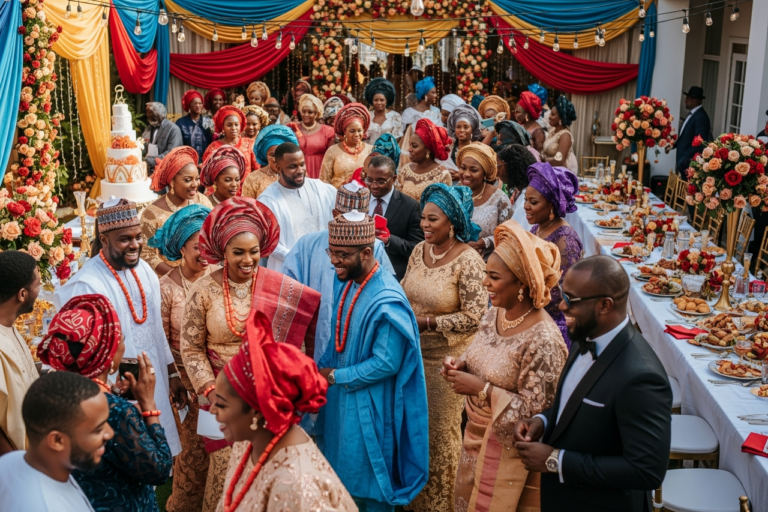
Nigerian wedding traditions include wearing special clothes, like the Aso-Ebi. This is a set outfit worn by family and friends.
-
Count on lively parties. There is lots of food, music, dancing, and special acts such as money spraying.
-
This guide takes a look at Nigerian culture. It helps any Canadian guest know what to expect at these amazing celebrations.
Introduction
Have you ever been asked to go to a Nigerian wedding? This kind of big day is not just a small ceremony. It is a huge celebration of love, family, and the whole community. As someone from Canada, you may be surprised by how big and bright everything is. A Nigerian wedding lets you see and feel a rich cultural heritage up close. There are colourful traditions, great food, and live music. The music and fun often go late into the night. It is a happy event where people gather, have fun with the couple, and enjoy a true celebration of love.
Exploring Nigerian Wedding Traditions from a Canadian Perspective
For anyone from Canada, going to a traditional Nigerian wedding can be a fun and new experience. Nigerian culture has a lot of variety, and you will see this in the different wedding traditions. Nigeria has many tribes, and each one has its own way of doing things. So, every marriage ceremony brings together religion, language, and culture in a special way.
The main wedding traditions at a Nigerian wedding are built around family and the community. These celebrations are often big. There can be more than one event. People wear bright clothes. You will also see different rituals depending on the ethnic group, like the Yoruba, Igbo, or Hausa.
Understanding the Cultural Significance of Nigerian Weddings
A Nigerian wedding is more than two people getting married. It is about two families coming together. It is a big celebration that shows the value of their culture and past. The whole community is part of the event. It is a happy time that honours ancestors and keeps old traditions alive. For Nigerian couples, the marriage ceremony is a way to show respect to their elders and where they come from.
There are some special things found in Nigerian wedding traditions. One is the money spray. This is when guests throw money on the couple as they dance. The money is for good luck and a good life. Another is the tradition with the kola nut. The kola nut is given and broken as part of the ceremony. It stands for blessing, respect, and being kind to others. The kola nut marks the start of the wedding and is seen as a good sign.
Nigerian wedding traditions are full of meaning. All parts of the celebration, like the bright clothes or the food, come from history. These traditions are made to bring both families closer. They help show unity and love.
The Influence of Family and Community in Nigerian Ceremonies
In Nigerian culture, family means a lot, and you can see this clearly in wedding ceremonies. Family roles are important at every part of a traditional wedding. This starts from the proposal and goes all the way to the last party. It’s not only the parents who take part. The extended family, like aunts, uncles, and elders, have a big role, too. Their approval and blessing are needed for the wedding to move forward.
You will not see many small, private weddings. The guest list often has almost the whole community. This big family involvement comes from the idea that it takes many people to help a child grow. So, those same people should be there to celebrate the child’s marriage. Family expectations help shape many choices for the wedding. This keeps important customs in place and respected.
At the end, both the bride’s and groom’s families work together in planning the event. The bride’s family usually puts on the traditional wedding ceremony. They welcome the groom’s family openly. This teamwork shows that a marriage is more than just about two people. It is the coming together of two families.
Types of Nigerian Wedding Ceremonies
Nigeria has many different cultures. Because of this, there is no single type of traditional wedding ceremony. You will see a lot of different ceremonies, and each one is special to one of the 370 ethnic groups in the country. The most well-known tribes are the Yoruba, Igbo, and Hausa. Their wedding traditions are different and very beautiful in their own ways.
A nigerian traditional wedding is important and has a strong focus on culture. Still, many couples choose to also have a “white wedding.” This follows western or religious ways of doing things. Here, you will learn about some key things that happen in wedding ceremonies of the three largest tribes. This will help you get a good idea of how wedding ceremonies show the country’s rich culture, with so many different ceremonies and traditions.
Yoruba Wedding Traditions
Yoruba weddings, called Igbeyawo, are full of life and fun. They come from the Yoruba tribe in southwestern Nigeria. One thing that makes Yoruba culture stand out in these events is the job of the alagas. The alagas are women who lead the show and guide the day with jokes and smart words. The alaga can tease the groom and his friends in a playful way. This makes everyone laugh and adds a great touch to the traditional marriage rites.
There is a part called Ìdobálè that means a lot during these weddings. The groom and his friends lie down flat on the floor in front of the bride’s family. It is their way to show deep respect. The family clothes, or aso-ebi, matter a lot too. Each family wears matching outfits to show they stand together.
The bride’s entrance is one of the best moments at these Yoruba weddings. She comes in dancing with her bridesmaids. After many small traditional marriage rituals, the groom lifts her up to show his love and that he will be a good husband. The families of the couple pick the wedding date together. Elders from both sides lead the ceremony, help the couple, and give them good wishes. This helps the day go well and makes sure everyone feels close as they honour the old Yoruba ways.
Igbo Wedding Traditions
Igbo wedding traditions are full of meaning, and they follow a clear marriage process. The main event is called Igba Nkwu, which means “wine carrying.” This day comes after a few steps, like an introduction and agreeing on the bride price. In Igbo culture, the Igba Nkwu is bright and lively. Families and friends get together at the bride’s family home.
One big difference from Yoruba traditions is how the bride is the focus during the Igba Nkwu. Her father gives her a cup of palm wine. She then has to find her groom in the crowd of guests. When she finds him, she gives him the wine. He drinks it, showing that he agrees to the marriage. This moment shows everyone that they are now joined as a couple.
After he drinks the cup of palm wine, he puts money in the cup. Then, the couple goes back to her parents for a last blessing. The Igbo marriage traditions are special because they let the bride choose and have everyone watch, which makes the celebration warm and close. It brings the two families together and makes the marriage strong in their eyes.
Hausa Wedding Traditions
Hausa weddings are common in northern Nigeria. They follow Islamic traditions and are shaped by Hausa culture. Their marriage rites last for a few days and are more quiet than the Yoruba or Igbo nigerian weddings. It all starts when the groom’s family visit the bride’s family to ask for her hand.
Payment of the bride price, called Sadaki, is a key part of the hausa traditional marriage. After this, there are other events. One is the Kamu, which is a henna party for the bride. Then comes the Fatiha, which is the main ceremony. Vows are made at the Fatiha and only men from both families take part.
The marriage rites are not like other traditional nigerian wedding ceremonies. Men and women stay in separate areas during the celebrations. At the reception, known as Walima, there is a big feast. Couples do not show affection in front of others. Modesty, religious blessings, and joining the two families matter most.
Beginner’s Guide: How to Prepare for Experiencing a Nigerian Wedding
Going to a Nigerian wedding for the first time may feel like a lot, but you will always remember it. These weddings often have many guests and there is a lot of family involvement. The day is full of joy, and everyone can join in. You may meet family you have never seen or friends of other people. At a Nigerian wedding, the more people, the better.
If you are a guest, you can expect a day with lots of colour and fun. Most of the time, there will be a wedding planner to help make things go well. But you will feel a relaxed and happy mood. You will see bright clothes and people dancing from start to end. This is a great experience. The few tips here will help you get ready for the day.
Essential Items and Attire Needed for Guests
When you get invited to a Nigerian wedding, dressing up is a great way to show respect and to be a part of the culture. People often wear traditional clothes, and you will be welcomed if you do the same. The most common thing to wear is the aso-ebi. This is a matching cloth picked by the families for guests to wear. The bride will choose the fabric many months before the wedding date, so you get time to make your outfit.
If you don’t have aso-ebi, you can still wear something bright and fun that fits the party. Women should go for a nice dress or a top and skirt. Men can wear a suit or nice pants and a shirt. The main thing is to look good and ready to party.
Here are some things you want to bring:
-
Comfortable shoes: You will dance a lot!
-
Cash: For the “money spray,” bring plenty of small bills.
-
A fan: It can get warm inside with all the people and dancing.
-
Your camera: Capture the colours and happy times.
-
An empty stomach: There is lots of food that tastes great.
-
An energetic spirit: Be ready to celebrate day and night.
Common Customs and Etiquette to Know
To get the most out of a Nigerian wedding, it helps to know a few common customs. The mood will be welcoming and happy. If you understand the basics, you will feel at ease and show respect to the families and their traditions. Family expectations are there, but they are about coming together to celebrate.
A fun part of nigerian wedding traditions is the “money spray.” When the couple dances, guests throw cash their way to wish them good luck. This tradition is lively and has meaning, so bring some small bills if you want to join in. Nigerian weddings offer a marriage ceremony that is quick, but the reception lasts many hours with lots of dancing and food. Be ready for a long day.
Here are a few etiquette tips to remember:
-
Greet elders with respect: A slight bow or a curtsy is a nice way to show respect.
-
Pace yourself with food: There will be plenty, so try all to enjoy the variety.
-
Join in the dancing: The dance floor is for everyone, so jump in and have fun.
-
Accept gifts graciously: Guests usually get a gift as thanks for coming. Take it with a smile.
-
Be patient: Things may not start or end on time. Try to relax and go with the flow.
Keywords: nigerian wedding, wedding traditions, nigerian wedding traditions, dance floor, marriage ceremony, family expectations
Step-by-Step Guide: Participating in a Nigerian Wedding Ceremony
A traditional Nigerian wedding is more than just one event. It is made up of a series of steps that together make the full marriage process. The whole thing starts with the families meeting for the first time. It ends with a big party. Each part of this marriage ceremony is important in its own way. Knowing how the nigerian wedding works will help you see just how deep these traditions go.
The wedding party includes both close family and extended family. Everyone has something to do at different points during the process. If you are there as a guest or as family, it helps to know what happens next. This way, you can take in every part of the nigerian wedding. Here is a simple look at how a typical traditional nigerian wedding moves from start to finish.
Step 1: The Marriage Proposal Process and Introduction Ceremony
The road to a Nigerian wedding starts with a marriage proposal. This is done through an introduction ceremony. It is not just an everyday meeting. At this event, the groom’s family goes to see the family of the bride to talk about what they want. They come with gifts to show respect for the bride’s parents and family.
At the introduction ceremony, the older people from both families do most of the talking. The groom’s family will speak with some poetry or sayings. They may say things like, “We have seen a lovely flower in your home and want to pick it.” This helps make everyone feel at ease. After this, the bride is asked if she knows who the groom is and if she says yes to the union. Often, families do informal background checks during this time to know more about each other and make sure it is a good match.
This first step is very important for a Nigerian wedding. It shows the official start of everything. It is also the time when both families get to know each other, talk about the traditional wedding, and agree on a day for the marriage. All this happens after they get the blessing from the family of the bride.
Step 2: Engagement and Bride Price Rituals
After the introduction, the next big step is the engagement and bride price part of the marriage. In Igbo culture, this bride price is called Ime Ego. It’s a key step in their marriage rites. Some people might think the bride price means “buying” the bride, but that is not true. The bride price is really a symbol of appreciation and respect for the bride’s family. It shows thanks for how they raised her.
The groom’s family gets a list of things to bring. This can be yams, palm wine, fabrics, and a small bit of money. The real amount of money for the bride price is usually low, sometimes less than $10. What matters most is the gesture and making sure to do what’s on the list. Family members from both sides talk and lightly bargain over the items. This helps everyone get to know each other better.
Sometimes, the bride’s family will take the bride price and then give it back to the groom’s family right away. This is their way to share a strong message. They want everyone to know their daughter is not being sold. She is a gift to the family she is joining.
Step 3: Traditional Wedding Day Celebrations
The traditional Nigerian wedding ceremony is the main event everyone has been waiting for. On this day, culture takes centre stage. Guests arrive in their vibrant family clothes, the bride and groom wear stunning traditional outfits, and the venue is decorated to reflect their heritage. A master of ceremonies, or Alaga in Yoruba weddings, keeps the energy high and guides the celebration.
The ceremony is filled with beautiful rituals. For instance, in a Yoruba wedding, the groom and his friends prostrate before the bride’s family. In an Igbo ceremony, the bride searches for her groom with a cup of palm wine. These moments are followed by prayers, blessings from the elders, and of course, a lot of joyous dancing on the dance floor.
The sequence of a traditional wedding day can vary, but here is a general flow of events:
|
Stage of the Day |
What Happens |
|---|---|
|
Arrival of Guests |
Guests arrive and are seated. The bride’s family, as hosts, are already present. |
|
Groom’s Entrance |
The groom and his family dance into the venue, often accompanied by drummers. |
|
Bride’s Entrance |
The bride makes a grand entrance with her bridesmaids, dancing her way to her family. |
|
Main Rituals |
This includes prostration (Yoruba), wine carrying (Igbo), or other cultural rites. |
|
Blessings |
Elders from both families offer prayers and blessings for the couple’s union. |
|
Celebration |
The couple is officially declared married, and the party begins with dancing and feasting. |
Step 4: Reception, Food, and Festivities
After the formal event, the wedding reception is when the real party starts. At this time, everyone gets to eat, have a drink, and celebrate with the bride and groom. The fun times at a wedding reception are full of life and can go on for hours. One of the things most people look forward to is the money spraying. Here, guests toss cash at the dancing couple. This is a sign that they wish them well and want to help them start their life together.
Food is a big part of a Nigerian wedding. You will see a lot of tasty, well-known dishes on the menu. It is common for the bride’s mother and her friends to be in charge of the food, making sure all the guests leave happy and full. With beer and other drinks, you will often find a cup of palm wine as well. A cup of palm wine is a traditional drink served at many Nigerian parties.
Some must-try foods at a Nigerian wedding reception include:
-
Jollof Rice: This dish is full of flavour and cooked in one pot. It is a main part of any Nigerian party.
-
Pounded Yam with Egusi Soup: This is a hearty mix that many people love.
-
Meat Skewers (Suya): These are spicy grilled pieces of meat that people love to eat as a snack.
-
Fufu: This is a soft, doughy food made from cassava or yams. People eat
Modern Influences and Evolving Nigerian Wedding Traditions
Nigerian wedding traditions have a long history, but they do change with time. Today, many couples are mixing old ways with new ideas. This change is happening because of the way the world is more connected and because many Nigerians now live in other countries. These people bring new ways to the celebration of love.
Modern ways don’t take away from what these wedding traditions stand for. They just help people add their own touch. This way, each couple can keep their nigerian wedding traditions but still make their wedding feel like their own. The wedding then becomes something that is both from the past and fits today.
Blending Tradition with Contemporary Elements
Many Nigerian couples have both a traditional wedding and a white wedding. This helps them respect where they come from and also have the kind of ceremony they saw growing up in movies or online. A wedding planner can make things easier. The planner helps balance everything that goes into having two important events.
At these weddings, couples bring in new styles with decor, clothes, and music. For example, there may be a modern colour theme for the traditional wedding. Some couples get a DJ who plays Afrobeats and international hits. The bride could wear a fresh twist on the usual style, or switch into another, stylish dress for the party.
By mixing these ideas, couples make their day special to them. They like to have pre-wedding photo shoots, big wedding cakes with cool designs, and planned dance moments. This way, the wedding shows their lives as a couple, and it honours their past while fitting in with now.
The Impact of Globalization and Canadian-Nigerian Connections
Globalization has led to a mix of cultures around the world. You can see this in how Nigerian couples who live in Canada and the United States blend their roots during their big day. Looking from a Canadian point of view, the way people mix wedding traditions is interesting. Many Nigerian-Canadians set up weddings that join their original customs with things from their new home. This makes for a fun, lively party where guests get to know more about Nigerian culture in a close and real way.
There are a few ways this sharing of ideas changes wedding traditions. As an example, a couple could add something Canadian, like a toast with friends or the first dance, right next to Nigerian parts, like sharing the kola nut. On the guest list, you might see people who come from all sorts of lives. In the end, everyone is there to enjoy the day together.
The big things in Nigerian culture, like strong family involvement and bright, full parties, still stand out in these weddings. But Nigerian couples who now live in the United States or Canada are changing small parts of these wedding traditions to work for them. This gives life to new traditions that show both of their backgrounds. In this way, Nigerian culture goes on living, changing, and growing stronger, no matter where it finds a new home.
Conclusion
Nigerian wedding traditions are full of life and meaning. These weddings, whether they are Yoruba, Igbo, or Hausa, show the importance of family and community. Every tradition comes with its own customs and rituals. These make each wedding special and help people build strong memories.
For Canadians planning to go to a Nigerian wedding, it’s good to know the right way to act and what to expect. This will let you enjoy the event more and feel closer to everyone there. Nigerian weddings mix old customs with modern ideas. This mix shows how these traditions keep their meaning in the world we live in now.
If you want to learn more about nigerian wedding or wedding traditions, or if you need help with nigerian wedding traditions, feel free to ask.
Frequently Asked Questions
What should a Canadian guest expect when attending a Nigerian wedding?
A Canadian guest at a Nigerian wedding will see a big and busy party. The guest list will be huge, and the day will be full with many things to do. People wear bright clothes, and there is a lot of dancing. There will be plenty of good food for everyone. The mood is happy and friendly. You should join in and enjoy the fun!
How do family roles shape Nigerian wedding ceremonies?
Family roles are very important in Nigerian wedding traditions. At a Nigerian wedding, elders from the extended family help lead talks and offer their blessings. Parents play a big part, as they host and guide the wedding events. The strong family involvement shows the joining of two families, not just the marriage of the couple. Their approval is key in Nigerian wedding traditions.
What traditional attire is recommended for Nigerian weddings?
Guests are asked to wear traditional outfits. Many times, the family gives out a fabric called aso-ebi for everyone to make matching family clothes. If they do not provide the fabric, you can wear something bright and nice. The style of dress might depend on the couple’s background. You could see looks from the Yoruba tribe or igbo culture, like gele headwraps or isi-agu fabric.
Are there unique foods served at Nigerian weddings?
A traditional Nigerian wedding reception is the time for a big meal with all kinds of special foods. You can see Jollof rice, pounded yam with soups, and spicy meat skewers (suya). There is more, too. Palm wine is a drink you will get at a Nigerian wedding. It is the classic choice and brings a real taste of the party.