Key Highlights
Here are the key highlights of Moroccan wedding traditions:
-
Moroccan wedding traditions often go on for a few days, and sometimes the celebrations last for the whole week.
-
One important part is the pre-wedding henna ceremony. This tradition is said to bring good luck and help the bride have children.
-
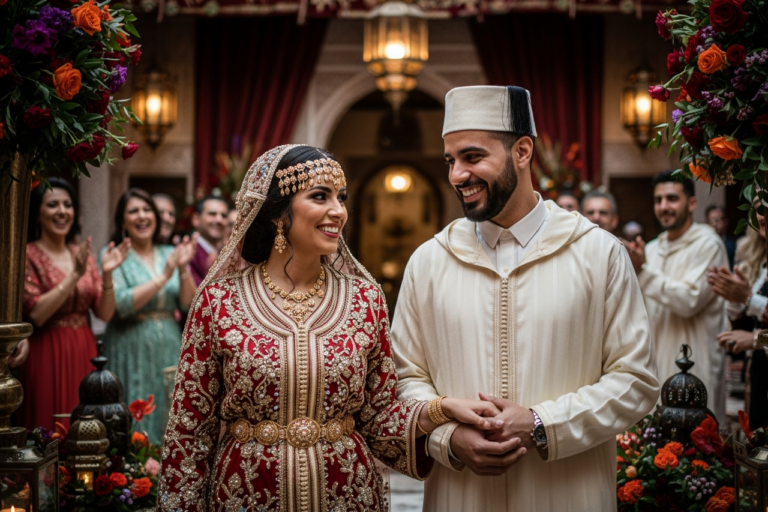
You will see traditional attire during these events. Both the bride and groom put on a few different beautiful outfits.
-
Family members have a key role in everything, starting with talking about the two getting married, and going all the way to the final party.
-
There is a wedding feast filled with the best Moroccan dishes and pastries. People also take part in special food rituals during this time.
-
These celebrations show their rich cultural heritage and mix the old with the new. It makes for an event that people don’t forget.
Introduction
Have you ever thought about what a big celebration can be like? Moroccan weddings show off rich culture and traditions that go back many years. The wedding ceremony is not just a one-day thing. In Morocco, it lasts a few days and is full of meaning. It brings people, their families, and the whole community together. This event shows what matters most to them. That is why it stays in the minds of all who take part. If you want to see rich culture in action, a Moroccan wedding is the way to go.
Moroccan Wedding Traditions Overview
The wedding traditions in Morocco show the country’s deep cultural heritage. A traditional Moroccan wedding is a big event. People put a lot of effort into every part. It is more than just the joining of two people. The wedding ceremony also brings two families together.
Every part of the wedding ceremony has special meaning. These start with the engagement and end with the last goodbyes. There are some main steps in a traditional Moroccan wedding. These are the Hammam purification bath, the detailed henna party, and the big show for the bride and groom.
People really value their wedding traditions in Morocco. The customs in a wedding ceremony help everyone feel that they share culture and history. The henna party is one loved tradition that makes every wedding special.
Historical Roots of Moroccan Wedding Rituals
The wedding rituals you see in Morocco today are part of the country’s deep cultural heritage. These practices hold a lot of cultural significance. People respect tradition and what the institution of marriage means in their lives. Marriage, in the past, was seen as one of the most important choices a person could make. Because of this, families had big and often expensive ceremonies to show respect for the couple’s decision.
Some traditions, like giving a dowry and the gifts from the groom to the bride, have been there for many years. The aim was to give the couple a good start in their new life. Both families come together to support them.
Over time, some things have changed. Still, the main values stay the same. Many of these rituals link couples to their ancestors. They show that family, community, and commitment are very important in Morocco. All these moments are proof of how strong and lasting these cultural traditions are.
Key Symbols and Their Meaning in Moroccan Ceremonies
In Moroccan weddings, objects and actions often have deep meaning. People use these symbols to bring good luck, give the couple a good start, and keep them safe from harm. The whole event is full of these special touches.
One of the most known symbols is henna. The detailed art found on the bride’s hands and feet is more than just for looks. People believe it helps keep away evil spirits, works as a symbol of fertility, and brings good fortune. Most times, you will find the groom’s name carefully hidden in the henna designs.
Other important symbols are:
-
Milk: The bride takes a bath in milk, called a Hammam. This is to clean her for the wedding.
-
Wedding Blanket: A mattress and wedding blanket are placed where the couple will stay. These show the new home they are about to build.
-
Dates and Milk: Guests are given dates and milk as they come in. This stands for being kind hosts and hoping the marriage has a sweet start.
The Duration and Flow of Moroccan Wedding Celebrations
Many people may think the wedding day is just a single event. But that is not true. In fact, Moroccan wedding celebrations are known to go on for three to seven days. The whole thing is like a big party, with fun starting from the pre-wedding rituals and going on until the actual wedding day.
It starts off with the couple getting engaged and signing the wedding contract. After that, there are days of getting ready and enjoying with family and friends. Every day means something different. Each day helps get everyone excited for the main event. This is when the couple is seen as husband and wife for the first time. Now, let’s see what happens during this special week!
Multi-Day Structure: From Engagement to Ceremony
The journey to the wedding day in Morocco is a structured, multi-day celebration. It often starts long before the party with a courtship period that can last from six months to two years. Once the families agree, the formal process begins, starting with the signing of the marriage contract, known as the Drib Sdak.
This contractual step is followed by a series of events leading up to the main celebration. The festivities kick off with rituals like the Hammam bath and the henna party, each taking place on separate days. The energy builds with each passing day as more family and friends join the celebrations.
The climax is the wedding day itself, an evening filled with traditional music from a main band, lavish food, and dancing. Here is a simplified look at the structure:
|
Stage |
Description |
|---|---|
|
The Proposal |
The groom’s family visits the bride’s family with gifts to ask for her hand. |
|
Engagement (Khutuba) |
A large party to celebrate the engagement and allow families to mingle. |
|
Pre-Wedding Rituals |
Days dedicated to the Hammam bath and the Henna ceremony. |
|
The Wedding Day |
The main reception with feasting, music, and the presentation of the couple. |
|
Post-Wedding Visits |
The newlyweds spend the following week visiting relatives and showing their new home. |
What Happens Each Day of a Moroccan Wedding
Each day of the Moroccan wedding celebrations has its own meaning and special customs. The events start in the middle of the week. This helps everyone get excited for the big wedding day at the end. In the first days, that time is used to get the bride ready for her new role.
A big part of the ceremony is about cleaning and making the bride beautiful. Five days before the wedding day, people bring things like a mattress and blanket to the room for the couple. After that, there is a Hammam milk bath. This is one part of the wedding celebrations that helps clean and refresh the bride. Then there is the henna party, where her hands and feet get decorated. This part of the ceremony is just for women. There, you can hear music, laughter, and lots of good advice given to the bride-to-be.
As the wedding day gets closer, more and more people join in the fun.
-
Day 1-2: There can be an engagement party, known as Khutuba.
-
Day 3: The Hammam ritual is held, where the bride gets cleaned.
-
Day 4: The henna party takes place. This brings blessings, fun, and nice designs on her hands and feet.
-
Day 5 (The Wedding): The big wedding day comes, with good food, lots of dancing, and the bride showing off symbolic dress changes.
Traditional Moroccan Wedding Attire
The wedding clothes at a Moroccan wedding are truly amazing. You will see vibrant colors and details that stand out in the traditional attire. One of the best parts of the big day is when the bride changes into many outfits. Each outfit shows a different region of Morocco or a stage in the ceremony.
These symbolic dress changes make the night even more special. You get to see many fabrics, stitches, and looks. The groom also wears traditional attire. What he wears matches well with the bride and adds to how nice they look together. Let’s look more at what the happy couple wears on their big day.
Bride’s Garments: Kaftans, Takchitas and Accessories
The Moroccan bride really is like the queen of the ceremony, and you can see this in what she wears. On her wedding day, she will have many different outfits, and each one is more beautiful than the last. The main things she wears are the Kaftan and the Takchita. These are long, fancy dresses made from nice fabrics like silk or brocade.
A traditional Moroccan dress has a lot of beads, detailed stitching, and shiny thread. The bride puts on a lot of gold jewelry to the outfit. Her eyes are made to stand out with kohl, which makes her look even more beautiful. On her wedding day, these outfits are not just something to wear. They really are like art.
Here are some things you see in the Moroccan bride’s clothing:
-
Takchita: This is a dress made of two pieces. There is a simpler layer under (Kaftan) and a more decorated one over it that stays open.
-
Kaftan: This is a long robe with sleeves. The bride might wear it at times during the ceremony.
-
Regional Outfits: The bride might put on outfits that show the different areas of Morocco.
-
Amariya: The bride is carried into the wedding hall on an opulent tented platform called an Amariya, so she really does look like royalty.
On her wedding day, every part shows that she is the queen of the ceremony. These different outfits, her heavy gold jewelry, and
Groom’s Clothing: Djellaba, Jabador and Details
The bride’s outfits usually catch most of the attention, but the groom’s clothing is just as important. His traditional garb is very nice and follows old customs from Morocco. The way he dresses goes well with the bride’s special gowns for the wedding ceremony.
The groom will often put on a fine Djellaba. It is a long robe that feels loose and has a hood. He might also pick a Jabador, which comes with a tunic top and pants that match. These outfits are made from good fabric and sometimes show off some simple embroidery on the neck and sleeves.
He finishes his look with leather slippers called “babouches” and may also wear a red hat called a “fez.” The whole style gives the groom a royal and sharp look as he stands with his bride during the wedding ceremony.
Pre-Wedding Ceremonies and Their Significance
Before the big party kicks off, there are a few important pre-wedding events. These moments mean a lot and help get the bride and groom ready for their married life. Things start for real when the marriage contract is signed. But after that, the fun and joyful plans begin.
Two of the most loved pre-wedding moments are the hammam ritual and the henna ceremony. These are more than just get-togethers. They are close, warm times when people share strong feelings. The bride and her family see these as full of meaning, both for their culture and their spirit. Now, let’s look at what these old and special traditions mean and why they are so beautiful.
The Henna Ceremony: Rituals and Blessings
The henna ceremony, also called a henna party, is one of the most loved pre-wedding events. It happens a day or two before the wedding. This event brings the bride together with her female relatives and friends. There is music, laughter, and everyone has a good time. People use intricate henna designs to decorate the bride’s hands and feet.
These beautiful patterns are not just for looks. In the henna ceremony, putting on henna is meant to give a special blessing. It is said to bring good luck, happiness, and good health to the bride. The designs often feature shapes that stand for fertility and help keep away evil spirits. The bride’s designs are always bigger and more creative than anyone else’s.
There is also a fun tradition at the henna party. The groom’s name sometimes gets hidden in the design on the bride’s hand. There is even a saying that a bride does not need to do any housework until her henna fades. This gives her some time to relax and enjoy her first days of married life.
Hammam Spa Ritual: Family Gathering and Preparation
Another important part of the wedding day is the hammam ritual. In this tradition, the bride goes to a Moroccan steam bath, or hammam. She is joined by her close female relatives and friends. It is more than just a regular spa day. This is a special time for the bride to get clean before her new life begins.
This time with family and friends has a deep cultural significance. In the hammam, the bride gets bathed, scrubbed, and massaged. Fragrant oils and clays are often used. People sometimes call it a “milk bath.” This shows purity and a new beginning. The women sing old songs and talk, giving the bride-to-be advice. The mood is happy and a little loud as they enjoy being together.
The hammam ritual has guides called “negaffa.” These women are close to the bride. They make sure that everything is done the right way. The tradition helps make the bond between the bride and her female relatives stronger. It helps her body and mind get ready for her wedding day. This shows just how much cultural significance the hammam ritual holds in their lives.
Family Roles and Responsibilities in Moroccan Weddings
In Morocco, a wedding is more than two people getting married. It brings two families together. Family members are very important and are part of everything that happens during the wedding. This starts with the first proposal and continues until the end of the last party. The groom’s family and the bride’s family help plan and make sure everything goes well.
Parents, siblings, closest friends, and even the big extended family all work together. Their jobs are not just to be there at the wedding. They help make the wedding ceremony what it is. Family unity and support play a big role in these special traditions.
Involvement of Extended Family and Elders
In Moroccan wedding celebrations, family members and elders play a big part. The elders are important because they give their support and blessing to the happy couple. They are also asked to help with big decisions from start to finish.
Right from the start, both families are part of the process. The first meeting is a formal talk between the two families. Throughout the wedding celebrations, aunts, uncles, and cousins help out. They do things like cook, make the place nice, and welcome people. Many times in the past, family members would cook plenty of food so there was enough for anyone who might show up.
Elders use their experience to give advice when making the wedding contract. They also guide the couple as they begin their lives together. This helps keep old traditions alive and shows how family, elders, and community are at the centre of every wedding celebration.
Cultural Importance of Family Unity in Celebrations
In Morocco, you can see how much people value family at every wedding ceremony. The day is not just about the bride and groom. It is about everyone coming together to share joy. The whole community gets involved, showing how close families and friends are in this culture.
This sense of togetherness during a wedding traditions shows the pride people have in their cultural heritage. When families join to celebrate, it proves they are strong and will stand by each other. People share both the good times and the work in these special wedding traditions, which brings them even closer.
In the end, how big and joyful a Moroccan wedding can be says a lot about how much people care about family there. It tells the couple that they are never alone. There is always a group ready to stand by their side now and for years to come. This strong feeling of being part of something bigger is one of the best things about these wedding ceremonies.
Moroccan Wedding Feasts and Culinary Traditions
What’s a wedding feast without good food? At a Moroccan wedding, there is always a big and exciting meal. The hosts will do a lot to make sure each guest gets plenty to eat. You will see tables full of different dishes, and hospitality is the most important thing.
The wedding feast menu has lots of classic food. You will find things like savoury tagines, sweet moroccan pastries, and other traditional pastries. People look forward to the food as much as the music and the dancing at this special event. Let’s take a look at what you might see at these happy times.
Signature Dishes, Drinks and Desserts Served
The wedding feast gives you many dishes, meant to please the senses and show off the flavours of Morocco. Most of the time, the meal starts after the main ceremonies are going, usually late at night. Guests get to enjoy special foods. Each one is full of flavour and follows old ways.
Some main dishes you find are chicken with olives and preserved lemons. You also might get lamb cooked with prunes and almonds. These dishes are soft and rich. They are cooked slowly and have a lot of different spices, like saffron sauce, which makes them unique to Moroccan food. People do not get a regular wedding cake. They finish the meal with a big plate of fresh fruit. That gives everyone a sweet, cool taste at the end.
The feast takes you on a food journey. Here are a few things you can expect:
-
Chicken with Olives: This classic tagine is popular with everybody.
-
Lamb with Prunes: This dish is both sweet and salty, showing a life full of rich taste.
-
Fruit Platter: You will get plenty of fresh fruit for dessert.
-
Moroccan Pastries and Tea: These treats, like Kaab el Ghazal (gazelle horns), and tea come out all night.
They all make the wedding feast special with the moroccan pastries and the saffron sauce, giving the meal many different flavours instead of the usual wedding cake.
Unique Food Rituals and Their Symbolism
Beyond the great taste, many food rituals at a Moroccan wedding feast have deep meaning. When people serve a lot of food, it is a symbol of hospitality and giving. It shows that they want the couple to have a life full of good things. Some dishes are made and served in a special way. This is to bring good fortune, luck, and blessings to the couple and their guests.
One wedding feast tradition is to serve a whole sheep, which is often cooked in mechoui style over a spit. The whole sheep stands for wealth and a big welcome. There is also a special dish called pastilla. It is a pie with both sweet and savoury flavours. Sometimes people serve a kind of pastilla with milk. This milk pastilla means purity and a wish for a sweet life together.
These food rituals are at the heart of the wedding feast. They turn eating into something with real meaning. Each dish brings a story and a wish for the couple’s future. That is why the wedding feast is a real celebration of love, life, and people coming together.
Conclusion
Moroccan wedding traditions bring a lot of colour and excitement. They show a rich history and deep meaning. The big celebration brings people together, and everyone feels joy. Every part, from the days of fun to the detailed clothing, reflects what the people value. To know about these customs makes you enjoy Moroccan weddings more. It also helps you choose what’s right for your own big day. You can embrace these ways and think about how to use them in your wedding. If you want to know more about wedding traditions, or need tips for your moroccan wedding, reach out to get help and advice.