Key Highlights
-
Kuwaiti weddings are lively and full of colour. These events have deep ties to tradition, family, and community.
-
The wedding ceremony starts with the “Melcha.” This is when the couple signs the official marriage contract.
-
Before the wedding, there’s a special henna night. At this event, the bride gets intricate henna designs on her hands and feet.
-
The families play a big part. They help at every step, including the engagement and the celebration after the wedding.
-
The bride gets gold jewelry as part of the gifts. This gold jewelry is called the ‘al-shabkah.’ She wears it during the wedding ceremony.
-
These Kuwaiti weddings are grand affairs. People enjoy traditional music, lots of dancing, and big meals together.
Introduction
Welcome to the world of Kuwaiti weddings. If you are from Canada and want to know about global marriage customs, you will find this interesting. Traditional Kuwaiti weddings go on for many days and mix Islamic beliefs, family traditions, and a bit of modern style. These weddings show how important family and community are to the people. The groom and his relatives walk together in a formal procession to the bride’s house. This is a big part of traditional Kuwaiti weddings. It shows the start of a new life for the couple and a strong connection for both families.
Understanding Kuwaiti Wedding Traditions from a Canadian Perspective
From a Canadian view, Kuwaiti weddings are quite different. The wedding ceremony is not one thing. It is made up of many celebrations. The couple’s extended family take part in all these moments.
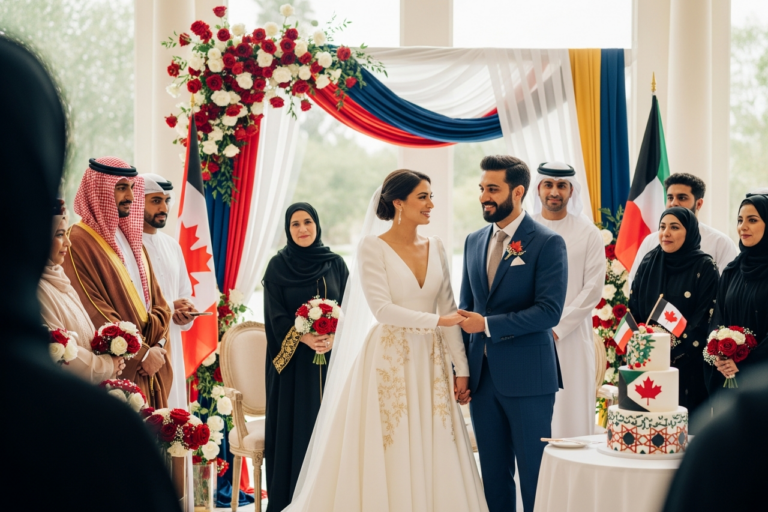
Many notice the special clothes at these events. Brides often wear either a classic kaftan or a white gown. These can be covered with a lot of gold jewelry.
There are many customs. People pass them down from their families. Let’s look at the main stages and what you will find in Kuwaiti weddings.
Key Stages of a Kuwaiti Wedding Ceremony
The Kuwaiti wedding ceremony unfolds in distinct, meaningful stages. The process begins long before the main party, starting with the official signing of the marriage contract, which legally binds the couple.
One of the most important pre-celebration events is the “Melcha,” the religious signing of the Islamic marriage contract. This is where vows are recited and the official papers are signed by the groom and the bride’s father or guardian. The Melcha is followed by the “Jalwa,” a party to celebrate the signing. The bride, sitting on a special seat, is celebrated by her female relatives.
After the main wedding, the couple spends their first week as newlyweds at the bride’s parents’ home. Following this, a procession escorts them to the groom’s home, marking their transition into their new life together.
|
Stage |
Description |
|---|---|
|
Al-Melcha |
The religious signing of the Islamic marriage contract, often at the bride’s home or a mosque. The groom, bride’s father, and witnesses sign the official papers. |
|
Jalwa |
A party held to celebrate the Melcha. The bride sits on a special seat while female relatives sing traditional songs. |
|
Al-Tehwaal |
The procession that escorts the newlyweds from the bride’s parents’ home to the groom’s home after the first week of marriage. |
Cultural Customs Before and During the Celebration
Before the main celebration, there are a few special customs in the culture that help get things started for the union. One important gift, the “Daza,” is given by the groom’s father. This Daza includes things like bed covers and rolls of cloth for the bride.
One of the big events before the wedding is the henna night. At this women-only party, the bride gets intricate henna designs on her hands and feet. It is a happy time with traditional songs and dancing. Female relatives and friends come together to celebrate the bride-to-be.
There is also the “Jalwa” party where certain rituals are done. Female relatives use a green silk scarf. They hold this scarf over the bride’s head, moving it up and down to music. Other important customs include:
-
Women sing traditional songs while they walk from the bride’s house to the groom’s.
-
The groom comes for a short time to the women’s party so he can be introduced.
-
People enjoy performances like Al-Fann and Al-Sameri, with traditional music and dancing.
Engagement and Marriage Proposals in Kuwait
In Kuwait, getting engaged is seen as a set event, not a sudden surprise. It is the start of the path to marriage. Both the bride and the groom bring their families together for this important day. This is often when people talk about the marriage contract and both sides give their okay to move forward.
The families will sit down and agree on the dowry and other important points. The way they do things is still based on old ways. But some couples also hire wedding planners to help put the big day together. Most people use an email address to speak with vendors in a clear, formal way. Next, we will go into detail about what steps happen during the proposal. We will also talk about what the family does at this time.
Traditional Steps for Proposing Marriage
In Kuwait, the steps to a marriage proposal are clear and based on family customs. It starts when the groom’s family meets with the bride’s family to show they want to move ahead.
When both sides agree in a friendly way, they set a date for a formal engagement. At this party, the bride’s father gives his approval. They also settle things like the dowry. The future couple may give each other rings at this time. This event is more than just a simple get-together. It sets up everything for the Melcha, which is the part where they sign the marriage contract.
The usual steps are:
-
The groom’s family contacts the bride’s family first.
-
Both families meet, often at the bride’s house, to get to know each other.
-
The groom’s father asks the bride’s family for her hand for his son.
-
The families talk about the dowry and wedding gifts and try to agree on those.
-
There is an engagement party where everyone celebrates what they’ve agreed on.
The Role of Family and Community Support
Family plays a big part in Kuwaiti wedding traditions. They give help from the start of the proposal and stay close even after the vows are made. In Kuwait, the extended family and the whole community must get involved. People here think marriage is between two families, not only the bride and groom.
At each step, parents and older family members help and guide the couple. They look for the right partner and help with the engagement. You will see family there for all big moments like signing the marriage contract and the special dinners. Their support shows they agree with the match. The newlyweds also get a strong network to lean on.
The wider community is part of many events too, mostly at the procession. Neighbours and friends will be with the groom’s family when they go to the bride’s house. Later, they all walk together as the bride and groom go to their new home. These events bring people together. It gives the couple many blessings as they start their new life.
Conclusion
In the end, looking at Kuwaiti weddings from a Canadian view shows that there are many special traditions to enjoy. When you learn about the main parts of these weddings, you start to see how much family and friends matter. This helps all of us see why Kuwaiti weddings are so full of beauty.
From the bright clothes to the old customs, there is something special about every part of Kuwaiti weddings. Taking part in these traditions makes life richer. It is also a good way to bring people from different places closer together. If you want to know more about kuwaiti weddings or if you plan to be part of one, it’s a great idea to learn about these customs and see what makes them stand out.
Frequently Asked Questions
What Makes Kuwaiti Weddings Unique Compared to Other Gulf Countries?
Traditional Kuwaiti weddings, while having many Islamic and regional customs, stand out because of special local events. One of these is the “Jalwa” ceremony. Another is the “Al-Tehwaal” procession. The land and history of Kuwait help shape these special moments. At every step, the extended family also plays a big role. This strong family support is seen a lot in traditional Kuwaiti weddings.
What Distinctive Attire Is Worn at Kuwaiti Weddings?
Traditional bridal clothes can be a colourful kaftan or a modern white gown. The bride wears a green garment for the Jalwa ceremony. The groom usually has a cloak, called a “Bisht,” over his thawb. The bride may also wear special trousers and a scarf.
How Have Kuwaiti Wedding Traditions Changed Over Time?
Modern Kuwaiti weddings bring together old and new ways. The couple still keeps some customs, like the special seat for the bride. But now, many go for big parties with a lot to see and do. Some people get flowers from other countries, ask famous singers to come, or even bring in food from Paris. This change shows how kuwaiti weddings have grown. Things are bigger and brighter now, compared to their simple past.