Key Highlights
Here are some important points from this guide to Kenyan wedding traditions:
-
Kenyan weddings often have two parts: a traditional wedding and a “white wedding.”
-
The dowry, or bride price, is a big part of Kenyan weddings. Families talk a lot to agree on it.
-
Family and the community are very important. Elders and other relatives help and support the couple.
-
Wedding traditions are quite different across Kenya’s ethnic groups, like the Kikuyu and Maasai.
-
Traditional weddings are bright and lively. There is special clothing, good food, music, and meaningful gifts.
-
In Kenya, people are very welcoming at weddings. But be ready—it’s common for ceremonies to start later than planned.
Introduction
Have you ever thought about what a wedding in Kenya is like? It’s a real eye-opener – full of lively culture, great community spirit, and traditions that go way back. If you are asked to come to a Kenyan wedding, you will get more than just seeing the couple say their vows. You will be part of something big that mixes modern ways with wedding traditions. The bride’s family and lots of people there work together to make the day special. When you go, you get to see the heart and soul of weddings in Kenya and what their celebration is all about.
Overview of Kenyan Wedding Traditions
Kenyan weddings are full of life and bring together many traditions. People often mix Christian or modern steps with their own deep-rooted customs. It’s normal for couples to hold two types of celebrations. One is a traditional wedding ceremony. The other is a “white wedding” that may look like weddings in the West.
On the wedding day, the groom’s family and the bride’s family both come together. There is a lot of happiness, music, and talks between the families. In these wedding ceremonies, there is focus on the whole community, and respect for elders is important. The goal is for the families to join, not just for the couple to get married.
Common Rituals Shared Across Kenya
Across Kenya, many traditional weddings have rituals that bring people together. The groom’s formal introduction to the bride’s family is the first step. This is not just a meeting. It is a way for him to show his true intentions.
Music and dance are part of these weddings. People sing wedding songs and dance to celebrate the couple. Other family members take part with big smiles. There is also care taken to avoid any bad omens. Elders make sure that all customs are followed so the couple gets blessings for their future. The exchange of vows is very important, whether it is a traditional wedding or a modern one.
Key shared practices often include:
-
Formal Family Introductions: The groom must greet and share his plans with the bride’s family.
-
Community Celebration: The wedding is for all, not just for the couple. The whole community takes part in the joy.
-
Blessings from Elders: Getting blessings from clan elders is needed. These elders must approve for the marriage to be valid.
These rituals in traditional weddings are an important part of Kenya. The vows, music, and elders play a strong part in making sure the wedding goes well.
Influence of Community and Family on Ceremonies
In Kenya, people see a marriage as more than just two people coming together. It is about families and the community joining as one big group. This idea shapes every part of the wedding ceremony. The family is very involved, especially the clan elders and aunties, who play important parts from the very start. They help keep wedding traditions alive. They also show the young couple each step they need to take.
These family members make sure the couple learns what the responsibilities of marriage are. The aunties often give the bride advice and helpful tips for her new life. The elders help with talks and make sure every rule in the wedding ceremony is followed.
Their help does not stop on the wedding day. The family and community still support the bride and groom as they start living in their new home. They help the newlyweds build a strong and happy life together. The whole clan being there means the couple is now part of a bigger family set up, with everyone looking out for them.
Unique Marriage Customs Among Major Ethnic Groups
Kenya has more than 40 ethnic groups. Each of them has its own wedding traditions that are special and interesting. Some ways of doing things are the same, but many are not. Every community has wedding traditions that go with their past, their beliefs, and the way their people live. This is what makes Kenyan wedding traditions feel rich and lively.
When you go to a wedding in Kenya, you can see many different things happen. It depends if the people getting married are Kikuyu, Maasai, Luo, or from some other group. Learning about all these different wedding traditions can help you know and love the many kinds of people you find in Kenya.
Kikuyu Wedding Traditions and Symbolisms
Kikuyu weddings are big events that take place over many steps and have lots of meaning. The journey starts well before the wedding day. There are visits and talks between the two families, where they both get to know each other. For the Kikuyu, getting married is a rite of passage. They make sure every part of the wedding goes as planned and shows respect for this change in life.
One important part of Kikuyu weddings is the payment of dowry. This is a step that has its own rules and traditions. What the bride wears also matters. A modern bride may wear a white wedding dress during one of the ceremonies, but the traditional look has beautiful fabrics that show her Kikuyu roots.
These weddings are about more than the bride and groom. They bring the couple and the community together to support the union. The steps, from getting introduced to each other to the big party after, help see if the groom is truly ready, and make sure the bride is joining a caring and strong new family.
Maasai and Luo Wedding Practices: Rites and Rituals
The wedding practices of the Maasai and Luo communities showcase the incredible diversity of Kenyan culture. For the Maasai community, a pastoralist group, marriage is deeply connected to their way of life, with livestock playing a central role in ceremonies and dowry. The bride’s attire is particularly stunning, featuring intricate beadwork and bold colours.
Luo traditions, on the other hand, have their own unique set of rituals. While specific details can vary, the emphasis is always on family, respect, and community celebration. Both groups demonstrate how wedding customs are shaped by a community’s heritage and values.
Here’s a brief look at some distinct features:
|
Tradition |
Maasai |
Luo |
|---|---|---|
|
Dowry |
Primarily consists of livestock, reflecting wealth and status. |
Can involve livestock, but also other goods and money. |
|
Attire |
Bride wears elaborate beads and often brown attire. |
Traditional attire often features vibrant, colourful fabrics. |
|
Key Rituals |
The groom’s family ‘kidnaps’ the bride in a playful ritual. |
Involves a series of visits and formal negotiations. |
The Dowry Process in Kenyan Weddings
The dowry, also called the bride price, is a big part of many Kenyan weddings. The groom’s family gives the dowry to the bride’s family to show thanks for bringing up their daughter. This is not the same as buying a bride. It is more about joining the two families together in a good way.
The dowry negotiations bring together elders from both families. They talk and set the terms for the dowry. There is a lot of respect shown during these meetings. The point is to help the families get along well even before the wedding starts.
Negotiations, Exchanges, and Their Meanings
The dowry negotiations are seen as formal and respected in the wedding process. This is not just a simple trade. It is a careful talk led by family elders. The groom’s family goes to the bride’s home to tell their plans and start the dowry talks. People treat each other with respect, even with lively back-and-forth about what the dowry will be.
The payment of dowry means more than just giving cash. The groom shows he can care for his new wife and understands the loss felt by the bride’s family. It is common for the dowry to include things like livestock, blankets, and drinks. Every item has its own meaning. There are times when the dowry negotiations get so deep that they can happen the morning of the wedding, making everything late.
The thoughts behind these dowry exchanges are big:
-
Appreciation: It is a way for the groom and family to show thanks to the bride’s parents.
-
Commitment: It is a sign the groom and his family really mean it.
-
Union: It brings the two families together. This link starts even before the exchange of rings.
Roles of Elders and Family During Dowry Ceremonies
At dowry ceremonies, family members and clan elders are right there in the action. They are not just watching what happens. The elders from both sides do a lot. They talk for their family, help work out deals, and sort out any problems. Their years of wisdom and life experience guide every step. They help keep the tradition alive. The elders also stand up for the family’s honour. They help build trust and respect between the two clans.
The groom and his group go to the bride’s family house to share what they want. The elders from the bride’s family listen and tell them what they expect too. It is up to the elders to make sure they find an agreement. They need to make the deal good for both families. Aunties always have a helpful part as well. They give everyone a warm welcome and offer support and good advice, especially to the young people.
In the end, the way all these people take part shows the whole community’s support for the new couple. The elders share honest wisdom about the responsibilities of marriage. They want the couple to start off strong in life. The family’s support and advice for the bride and the groom come well before the wedding ceremony even happens.
Traditional Attire, Food, and Gifts in Kenyan Wedding Celebrations
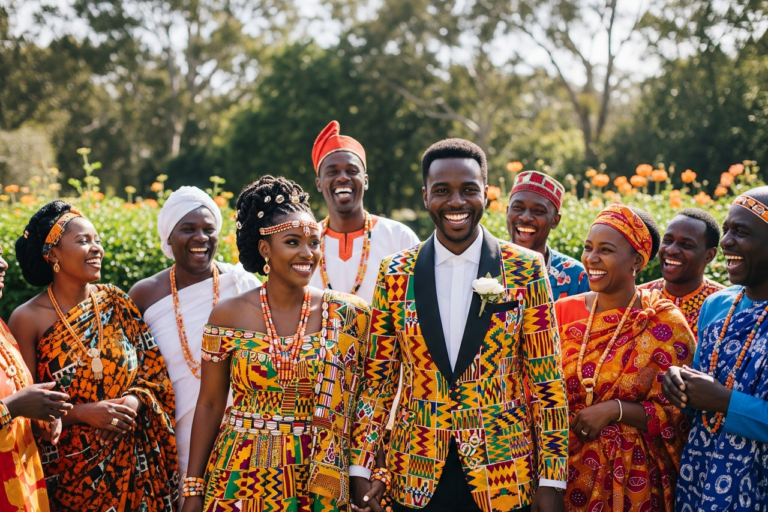
A Kenyan wedding has a lot to see, hear, and taste. The clothes, the food, and the wedding gifts are a big part of this day. The bride’s clothes are beautiful and full of life. You may see her in bright colours or fabrics like Ankara prints. Even if she wears a modern dress, she may add a touch of tradition to it.
At the wedding reception, there is so much good food. The dishes come from the area, and there is enough for everyone with the couple to enjoy. The food shows joy and is for all the guests to share. The wedding gifts also matter a lot. They are more than things to have; they give the couple luck and good things for their years ahead.
What to Expect: Outfits, Cuisine, and Symbolic Gift Giving
When you go to a Kenyan wedding, get ready to see lots of colour and life. Guests are asked to wear clothes from their culture. Many people choose the bright Ankara fabrics for this. The bride might put on a white wedding dress for part of the day. But, you will also see her in her main outfit that shows her culture.
The food stands out at these events. You can find many tasty dishes at the buffets. Even if the party starts late, the food will still be good and warm. The caterers know how to keep it fresh. Eating together is a big part of the day. It is when people share with each other and enjoy the moment.
There is an old tradition of giving wedding gifts that really matter. You may see family members give the couple special things for their future new home:
-
Suitcase: People often give a suitcase. It means the bride is going to her new home.
-
Wooden Bed: In a few cultures, a bed is brought into the party. This shows that the new couple is now making a home and a family.
-
Household Items: Gifts for the house help the couple start their life. These kind of wedding gifts are always useful.
Conclusion
To sum up, learning about the many wedding traditions in Kenya can make the day even more special for Canadians who join these events. The Kikuyu, Maasai, and Luo each have their own ways of showing love, family, and history. People use special symbols, wear different clothes, and give gifts and food, showing how the whole community is part of the wedding. The dowry is one key part, and all these details show respect for cultural values. Going to a Kenyan wedding means you will see lots of joy and old customs, and it can help bring people from different backgrounds closer together. If you plan to go, get ready to join happy moments and learn about many wedding traditions.