Key Highlights
-
An Israeli wedding brings together old tradition and new joy. It mixes special customs with today’s ways of having fun.
-
The wedding ceremony has big parts like the ketubah signing and standing under the chuppah with the wedding couple.
-
There are unique parts in a traditional Jewish wedding. You will see the bedeken, when the bride gets her veil, and the bride walking in a circle around the groom.
-
The Sheva Brachot, or the seven blessings, are said to bring good thoughts and hope to the new Jewish marriage.
-
At every Jewish wedding, the breaking of the glass is a big moment. This is right before everyone yells out “Mazel Tov!” and cheers for the couple.
-
Israeli weddings are full of bright energy, great food, a lot of dancing, and very happy people.
Introduction
Have you ever gone to an Israeli wedding? Going to one is something you won’t forget. It is full of happy moments, deep meaning, and excitement. For Canadians, knowing what happens at a Jewish wedding can help you enjoy the wedding ceremony even more. This guide will show you the lovely and important parts of a Jewish marriage in Israel. You will see the heart of what happens at these weddings and enjoy the rich story of the Jewish people.
Understanding Israeli Wedding Traditions: An Overview
An Israeli Jewish wedding is made up of old and rich history and tradition. These special moments are not just about having a party. They are a deep marriage ceremony that links the couple to their roots and to all Jewish people.
You will see many steps in a Jewish wedding, from important legal parts to heartfelt spiritual acts. Every step has its own story. Modern Jewish wedding traditions in Israel still come from old ways, adding a feeling that the celebration is part of something much bigger. Let’s take a closer look at where these jewish wedding traditions begin.
The Cultural Roots of Jewish Weddings in Israel
The traditions seen in a modern Jewish wedding go back many years. They connect the day to the long history of jewish people. Many of these customs come from jewish law and the Law of Moses. Every tradition links the couple to other jewish people who lived before them. These are not just symbols—they remind people of their past and how life keeps going.
One example is the breaking of the glass. This happens at the end of the ceremony. It makes people think about the destruction of the Second Temple. At this special moment, people know that life can be fragile. It shows that even when there is a lot of joy, there can still be some sadness in life.
All of these traditions come from strong cultural roots. They are based on the law of Moses and jewish law. The end of the ceremony is more than just a part of the wedding. These customs give the event deep meaning. They turn the wedding into more than a normal joining of two people. The wedding becomes a time to honour the past and be happy about what will come next. That is why a jewish wedding is a strong and moving time for everyone.
Differences Between Israeli and Canadian Wedding Customs
While both Israeli and Canadian weddings celebrate the union of two people, there are some noticeable differences in their customs. A typical Canadian wedding might focus on a more secular or personalized marriage ceremony, while an Israeli Jewish wedding ceremony is steeped in religious and cultural rituals. The entire flow of the wedding day can feel quite different.
For example, the pre-ceremony events, the structure of the ceremony itself, and even the reception have distinct Israeli characteristics. The emphasis on community and tradition is often more pronounced. The Jewish marriage contract, or Ketubah, is a central legal and symbolic document in Israel, unlike the civil licenses common in Canada.
Here’s a quick comparison of some key elements:
|
Feature |
Israeli Wedding |
Canadian Wedding |
|---|---|---|
|
Seating at Ceremony |
Often only provides seating for about a third of the guests. |
Seating is typically provided for every guest. |
|
Ceremony Length |
Usually shorter, around 15-20 minutes. |
Can vary widely but is often longer, around 30-60 minutes. |
|
Processional |
Couple enters together or with parents; no large bridal party. |
Often includes a large processional with bridesmaids and groomsmen. |
|
Post-Ceremony |
Guests congratulate the couple immediately, then head to dinner. |
Often includes a receiving line, cocktail hour, and a first dance before dinner. |
Key Elements of a Traditional Israeli Wedding
A traditional Israeli Jewish wedding has many important parts. Each has meaning for both the law and for faith. Before the main wedding ceremony starts, the couple does some key steps like signing the Ketubah. This sets the stage for their new life as a married couple.
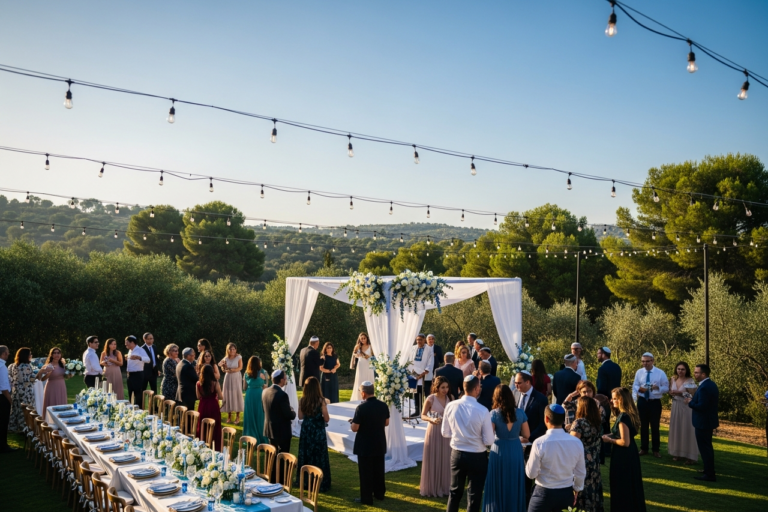
The main, public part of the jewish wedding ceremony happens under a wedding canopy. This canopy is called a Chuppah. Here, the couple say their vows in front of family and friends. This is when they become married in the eyes of their community. Knowing these details will help you better understand what happens at a jewish wedding and why each part matters.
The Ketubah: Marriage Contract and Its Importance
The Ketubah is the official Jewish marriage contract. Signing it is an important part of any Jewish wedding. The primary reason for having a Ketubah is to clearly say what the groom must do for his bride. This marriage contract explains all his duties and makes sure the bride has her rights and safety in the marriage. The Ketubah is based on Jewish civil law. It is not a religious text, so it does not talk about God blessing the couple.
This important marriage contract is signed by the couple and two valid witnesses. This is done before the main wedding ceremony starts, usually in a private room. The two witnesses must be observant Jewish men. They cannot be related to the bride or groom. Signing the Ketubah makes the couple’s promises to each other official.
Later, at the main event, there is a reading of the ketubah. Some of the Jewish marriage contract text is read aloud, and this is done in front of all the guests. It shows that the couple’s promises are finally known to everyone. Many couples choose a Ketubah with nice art, so they can put it up in their home as a reminder of their wedding and their vows.
The Chuppah: Meaning and Symbolism
The Chuppah is the wedding canopy used during the Jewish wedding ceremony. It has four poles and a piece of cloth on top. Even though it looks simple, it holds a lot of meaning in a Jewish wedding. The Chuppah stands for the new home the couple will have together. It has four open sides to show that their home will welcome family members and friends. This goes along with the idea of being open and kind to others.
During some Jewish marriage ceremonies, friends or family members hold the Chuppah poles. This is a way for people to show their support for the couple’s new life together. Many times, the canopy itself is made from a prayer shawl from a family member. This adds a special touch and helps everyone feel close to their family.
Most times, the Chuppah is placed under the open sky. People say this is a way to ask for God’s blessing so the couple may have children, like the many stars above. At a Jewish wedding ceremony, the Chuppah is the main spot. It makes a holy space where the couple can exchange their vows.
Rituals That Define an Israeli Wedding Ceremony
The Israeli Jewish wedding ceremony is more than just a wedding day. It is a series of special events that guide Jewish couples through a very important time. These traditions come from Jewish law and add meaning to their wedding ceremony.
Each part starts before the wedding ceremony and goes up to the happy last words. Every step has a goal that makes the jewish wedding so special. Some moments stand out, like when the bride wears her veil, and when she walks around the groom. These traditions help make the jewish wedding ceremony even more special.
Bedeken: Veiling of the Bride
The Bedeken, sometimes called the veiling of the bride, is a touching part of a jewish wedding. It happens soon after the ketubah signing and is important for both families. At this moment, the groom, his family, and his friends all come to the bride. The groom looks at her, makes sure she is the one he wants to marry, and then gently lowers a veil over her face.
This tradition is old and meaningful for jewish people. It goes back to a story in the Bible when Jacob was once tricked into marrying the wrong woman, Leah, instead of Rachel. Because her face was hidden by a veil, he could not see who he was marrying. With the Bedeken, the groom puts the veil over his bride. This way, he knows that he is marrying the right woman. Everyone feels excited and full of emotion during this part of the marriage ceremony.
There is more to the Bedeken than just its history. It shows that the groom loves his bride for her inner beauty, not just how she looks on the outside. This sweet act brings everyone together, marking the start of a new life for the couple. For the couple and for their families, it is a powerful and moving moment in the marriage ceremony. Many jewish people at the wedding look on with happiness and pride.
Circling the Groom: Ritual and Significance
Once the couple stands under the Chuppah, there is a special part in many Ashkenazi jewish weddings. The bride walks around her groom. She usually does this seven times. This act means a lot and comes with many different ideas about what jewish marriage is all about.
Many say that when the bride circles the groom, she builds a wall to keep him safe. She is keeping him away from any harm or bad things. Some people think she is also making a new family with him at the very center. This shows both will build a fresh home together, apart from their old families. The circling shows the new home they will share as one.
The number seven is important in jewish traditions. It means everything is whole and complete. So, when the bride goes around her groom seven times, it shows that their home will be strong and whole. This quiet moment is full of feeling. It comes just before the marriage contract is signed and marks the beautiful start of their new life together.
Unique Customs in Israeli Wedding Celebrations
Beyond the main event, an Israeli wedding has many customs that make the day special. When people go to a jewish wedding, these customs help set the mood. They are a big part of jewish wedding traditions. People look forward to the sheva brachot and the breaking of the glass most of all.
At the end of the ceremony, the couple and guests take part in the sheva brachot, or Seven Blessings. Then, the breaking of the glass happens. These two events happen at the end of the ceremony and are very important at any traditional jewish wedding. This is when the couple is seen as not just engaged, but now joined in married life.
The Seven Blessings (Sheva Brachot)
The Sheva Brachot, called the Seven Blessings, are an important part of a Jewish wedding. You hear these old blessings spoken over a cup of wine during the marriage ceremony, right after the rings are given. Jewish law says that saying these blessings is needed for a jewish marriage to be finished.
These blessings tie the couple’s new life to the start of the world, the story of the jewish people, and a wish for joy and peace in the days to come. At first, the blessings thank God for making the world. Then they speak about love, being together, and the happiness of the jewish wedding.
Many times, family members or guests say one of the blessings in Hebrew, and sometimes in English. This way, more people can help out in the marriage ceremony and take part in wishing good things to the couple at their jewish wedding ceremony.
The Breaking of the Glass: Symbolic Meaning
The breaking of the glass is one of the most well-known and exciting moments at a jewish wedding. At the end of the wedding ceremony, the groom, or sometimes both of them, steps on a glass wrapped in a cloth. This breaks the glass, and you hear people right away yell “mazel tov!”
This meaningful part of the wedding ceremony has more than one message for the couple and their families. The main or primary reason for this is to help everyone remember the destruction of the temple in Jerusalem. Even when we feel happy, this moment shows us that we also need to think about sorrow. It makes people think about how life can be good or bad, how things are not always perfect. So, everyone gets one small time to remember what can be sad in life.
Some people also say the breaking of the glass is about starting a new life together. It can mean that the couple will keep going together through good times and the hard times. When the glass is smashed and the guests say “mazel tov!”, it is the sign that the wedding ceremony is done, and now, the big celebration really gets going.
Beginner’s Guide: How to Experience an Israeli Wedding as a Canadian
Going to an Israeli wedding is a fun chance to try something new, but the day can feel a bit different from a normal Canadian wedding. You may want to get ready, so you can take part in everything and enjoy the big wedding day with the couple and their family.
This guide is here for you, the Canadian guest, to help you learn about the special ways people celebrate a jewish wedding. You will read about what you should wear and how you can join in during the jewish wedding ceremony. We will walk you through all you need to know to help honour the couple—and to have a good time with the jewish people who are sharing this day.
What You’ll Need: Invitations, Attire, and Understanding Traditions
When you get an invitation to an Israeli wedding, make sure you read all the details. The invitation will let you know the plan for the wedding day. Sometimes, things get started earlier than you may expect, and there may be a get together before the ceremony. Israeli weddings are often less formal than some events in Canada, but it is smart to come ready for anything.
When you think about what to wear to a jewish wedding, go for clothes that look good and feel good. The wedding day can be long, and there is a lot of dancing, so be sure you are comfortable. The dress code can be anywhere from cocktail wear to a bit fancier, but it is usually a little more relaxed. Men often wear suits, usually without ties, and women wear nice dresses or a top with a skirt or pants. It is good to dress more covered for the ceremony part.
When you know about jewish wedding traditions, it helps you connect more to the wedding day. When you understand things like the Chuppah, the Ketubah, and other special moments, you get to see what these things mean to the jewish people and enjoy it even more.
Here are a few key things to know:
-
RSVP as soon as you can, the way it says in the invitation.
-
Pick clothes that are comfy and still look classy for a big party.
-
It is polite to bring a gift. Most people give money as their gift.
-
Show up ready to have a good time and
Step-by-Step Guide to Participating in an Israeli Wedding
Taking part in an Israeli wedding is a happy and full-of-life experience. This is not like a very formal wedding you may know. From the start, you will see that guests take part in every step of the celebration. If you want to enjoy it and make the most of your time, it helps to know what will happen during the jewish wedding ceremony.
The feeling at an Israeli wedding is special. As soon as you get there, you will feel the excitement all around you. Do not be afraid to join in! Walk around and meet new people. Try the tasty food and get ready for the fun things they do here. The couple will be glad when they see you taking part in their special day. Your smile and kindness are the best gifts you can give them.
Here is a simple guide to help you:
-
Arrive for the pre-ceremony reception (Kabbalat Panim).
-
Watch the special steps of the jewish wedding ceremony.
-
Join in on the dancing, mostly the Hora!
-
Tell the couple and their families good wishes.
This way, you can get the best out of an israeli wedding and be part of the joy on this big day.
Step 1: Preparing for Pre-Wedding Rituals
The wedding day at an Israeli wedding usually begins much earlier than the main ceremony. When you get there, you walk into the Kabbalat Panim, or “receiving faces.” This is a part of the day where guests meet the bride and groom before the wedding. The bride and groom greet guests in different spots.
The groom sits with his family and friends at a table. The bride sits in a special chair that looks like a throne. Guests come to see her and wish her all the best. There is also a short service for signing the wedding contract, which is called a Ketubah. Only close family and a few witnesses take part in this.
If you are coming as a guest, this is when you can meet others, try some appetizers, and wish the couple happiness. This part of the wedding is a lively way to begin the wedding day. It also gives you a chance to mix with other Jewish people and guests who are there to celebrate the couple at the Israeli wedding.
Step 2: Attending the Ceremony Under the Chuppah
After the Kabbalat Panim, guests will be shown where to go next. Everyone will head to the Chuppah for the main wedding ceremony. Try to find a good place to stand or sit, so you can see the canopy. Many guests will stand close by, as there are often not many seats. This lets people gather around and feel close during the ceremony.
The marriage ceremony that takes place under the Chuppah is the heart of the wedding. You will probably see the bride and groom walk in with their parents. Some special moments might happen, like the circling, the rings being given, and the Seven Blessings. Even if you do not know Hebrew, it is easy to feel how special and big these moments are.
For the Jewish people at the wedding, this part is very important and full of meaning. The couple gets support from everyone who came. So please be respectful and watch closely. This marriage ceremony will usually be done under the open sky, helping the couple feel linked to the world as they start life together.
Step 3: Joining the Festivities and Traditional Dances
Once the glass breaks, the party gets started! After the jewish wedding ceremony is over, guests go to the wedding feast. Israeli weddings are known for good food and high-energy parties that can last for many hours. You will see tables full of tasty food.
At the wedding day reception, the biggest highlight is usually the traditional dances. You will know it’s coming when you hear music for the Hora. People make a circle and dance with a lot of energy. The newly married couple is lifted up on chairs and everyone cheers—even just watching makes people happy. Do not be shy about joining the dance!
Now it is time to have fun and enjoy the new union. The dancing, the food, and the happy mood all help make the wedding day so special. When you take part, it brings you closer to the joy of the couple and shares your good wishes for a happy life together.
Conclusion
To sum up, getting to know and taking part in Israeli wedding traditions can give Canadians a rich and special time. These customs, like the Bedeken and the breaking of the glass, show real emotion and history. There are also fun parts, such as traditional dances, that help make the big day feel full of joy. Each part of an Israeli wedding shows the family’s deep roots and culture. When you know about these customs, you get to enjoy the beauty in the day even more. These ideas are helpful whether you are about to go to an Israeli wedding or just want to know how it is different. If you are going to an Israeli wedding soon, reach out to learn more about what you need to know for a day to remember!
Frequently Asked Questions
Are Israeli weddings different for secular and religious couples?
Yes, they can be. People who are religious often stick closely to traditional Jewish wedding customs. Those who are not as religious may choose to have a non-Orthodox or civil marriage ceremony in another country. Later, they have a party in Israel. Even so, many not-so-religious couples still include special things from Jewish wedding traditions, like the Chuppah and breaking the glass, in their celebrations.
How long do Israeli wedding celebrations usually last?
An Israeli wedding is a big event that goes on all night. The wedding day starts with a pre-ceremony reception. There is then a marriage ceremony followed by a wedding feast. People often stay for seven or eight hours to celebrate. Some destination weddings can last even longer. When guests come from other countries, it sometimes turns into a multi-day event.
What do guests typically wear to an Israeli wedding?
Attire for an Israeli wedding is usually “dressy casual” or cocktail style. People tend to wear clothes that look good and feel comfortable. Men can wear a suit, but most of the time, there is no tie. Women might pick a nice dress or a smart outfit with separate pieces. It is a little more relaxed than what you see at formal North American weddings, but you still want to look neat for an israeli wedding.
What are the most popular wedding venues in Israel?
Israel has many beautiful places where you can have your wedding day. Some people pick green gardens, old sites in Jerusalem or Jaffa, lovely villas, or spots by the beach in Tel Aviv. Many also like to find special wedding venues. These can be among olive trees or near old ruins. These spots help make the wedding day feel one of a kind.