Key Highlights
-
Indian wedding traditions are many, and each part of India has its own ways of doing things, from the North to the South.
-
Big wedding ceremonies can last for a few days. They also have pre-wedding events, like the Haldi, Mehndi, and Sangeet.
-
One main part of the ceremony is the couple walking around the sacred fire. This shows that they are seen as a couple starting a new life.
-
The bride’s family is very important. In the Kanyadaan part of the ceremony, they give their daughter to the groom.
-
You will see lots of bright colours, fancy clothes, lively music, and many guests, making these wedding ceremonies feel like a grand celebration.
Introduction
Have you ever got an invite to an Indian wedding? If you have, you know that these are not just one-day things. They are big stories full of events, colours, and happiness. Indian weddings show their cultural heritage in a special way. There are many indian wedding traditions that go back many years. These big celebrations are famous for being loud, bright, and for having family be part of everything. All this makes it something that people will always remember.
Exploring Indian Wedding Traditions: An Overview for Canadians
Diving into Indian wedding traditions can be like finding a whole new world, especially for Canadians who are seeing it for the first time. You get to see Indian culture, full of colour and fun. There are events that last for days and rituals that are very special. A wedding planner who knows about these types of weddings will say each thing, from when the event is to what decorations are used, has its own meaning.
If you learn about these customs, you feel the celebration even more. Family members help make these moments great. The bride’s family is very important. These events are full of strong feelings and happiness. Now let’s take a closer look at the ways these weddings show cultural diversity, what makes them different from Western weddings, and why so many people find them amazing.
Understanding the Cultural Diversity of Indian Weddings
Many people think all Indian weddings are the same. This is not true. India’s large cultural heritage means wedding ceremonies and customs change a lot depending on the region. The customs in a North Indian wedding can be very different from ones in the South.
These changes make each wedding special. A Punjabi wedding will have its own rituals. A Bengali or Tamil wedding will show the couple’s traditions, too. Their customs are shaped by where they live, their family roots, and the community they are in.
When you go to an Indian wedding, you are seeing more than just a marriage. You get to see one part of India’s rich and diverse culture. If you know the family’s background—like if they are from North India, South India or somewhere else—you will understand and enjoy the traditions of their wedding more.
Why Indian Wedding Customs Fascinate Canadians
The size and bright colours of Indian weddings often leave Canadian guests amazed. Indian weddings are not like most Western events. The wedding celebration is a big party spread over many days. There are lots of different ceremonies, dance nights, and big meals. You see shimmering silks and smell rich spices everywhere. It is a treat for your senses.
Family members play a huge part, and that is another thing people notice. The celebration is not just for the couple. It is about both families coming together. This joy and group fun help build a strong feeling of community. Everyone feels the warmth. A wedding planner knows that all guests, young and old, need to feel welcome and part of the event.
If this is your first Indian wedding, get ready for an exciting time. You can expect a big party, loud music, lots of dancing, and good food. There are many lovely and important rituals happening. You are asked to dive in and enjoy a culture that honours love and family with energy you will not find anywhere else.
Key Differences Between Indian and Western Wedding Celebrations
One big difference between Indian weddings and Western ones is how long they last. Most Western weddings take just one day. But Indian wedding traditions often go on for many days. There can be a lot of wedding ceremonies before the main event. These include pre-wedding rituals. These are also important, not just the wedding day.
The guest list for Indian weddings is another big difference. Indian weddings are famous for being huge. There is an “invite everyone” idea, so no one feels left out or upset. Western weddings usually have a smaller guest list with only close friends and family. The bride’s family also has a special part in Indian customs, with some wedding rituals just for them.
The wedding ceremonies at Indian weddings are not the same as in the West. In Western weddings, the day might end with the couple having a kiss. In Indian weddings, you do not see much kissing in front of others. This is because of respect for older people. Indian wedding rituals focus more on the holy moments, good wishes, and joining two families together.
Types of Indian Weddings: North, South, East, and West
India is a place with a lot of variety, and you can see this in indian weddings. You should not look at all wedding ceremonies in India as the same, because each area has its own cultural heritage and customs. The things people do at a North Indian wedding will not be the same as what you see in the South, East, or West of the country.
The different regions bring new ideas and their own feel to these special days. The prayers people say, the food on the table, and the clothes they wear all show where the family comes from. Now, let’s look at some wedding traditions that make indian weddings in India so special.
North Indian Wedding Traditions
North Indian weddings, particularly Punjabi and other Hindu weddings, are known for their energy and grandeur. The wedding day is packed with vibrant wedding rituals, starting with the groom’s grand procession, the Baraat. The bride’s family welcomes the groom and his family with warmth and enthusiasm.
One of the first key rituals is the exchange of garlands, known as Jaimala or Mala Badal. This playful ceremony symbolizes the couple’s acceptance of each other. Following this, numerous other ceremonies take place at the mandap, each holding deep significance for the couple’s new life together. The atmosphere is joyous, with music and dancing often woven into the day’s events.
Many traditions involve the active participation of both families. Here are a few common rituals:
|
Ritual |
Description |
|---|---|
|
Baraat |
The groom’s lively wedding procession, often on a horse, arriving at the venue. |
|
Jaimala |
The bride and groom exchange floral garlands, signifying their union. |
|
Kanyadaan |
The bride’s father officially gives his daughter to the groom. |
|
Saptapadi |
The couple takes seven steps together around the sacred fire, making seven vows. |
South Indian Wedding Customs
South Indian weddings in Tamil Nadu are known for their rich tradition and simple beauty. These hindu weddings usually happen in the morning. There is a focus on old customs that have been carried on for many years. The ceremonies are quieter than north indian weddings, but they mean just as much to the families.
The wedding altar, called a mandap, is at the centre of the event. The main rituals take place there, led by a priest. Family members play a big role. They give blessings and join in many parts of the day. The customs show the cultural heritage of the region. Everyone takes special care to follow each tradition.
The clothes at indian weddings are also special. Brides wear bright silk sarees and gold jewellery. The groom’s outfit is more simple. The music, the food, and the decorations let the cultural heritage of Tamil Nadu shine. It all comes together to make a day that is both beautiful and full of meaning.
Eastern Indian Wedding Rituals
In Eastern India, a Bengali Hindu wedding is a beautiful event with special wedding rituals and long traditions. The ceremonies in these Indian weddings stand out for their own customs. They look bright and have lots of meaning. The bride’s family is a big part of all the celebrations.
One well-known moment is the Sindoor Daan. During this part, the groom puts red powder in the bride’s hair, right at the parting. This shows that she will be a married woman. It is a strong symbol that they now be together. As in most Indian weddings, the sacred fire is there too, watching the marriage vows.
The whole celebration is full of sounds, colours, and wedding rituals. These things that make it unique to Bengal. You will hear the blowing of conch shells and the women will do ululation. Each part adds more meaning and makes the day feel good. This is what makes a Bengali Hindu wedding different from others.
Western Indian Wedding Practices
Western Indian wedding ceremonies, especially in Gujarat and Maharashtra, are full of joy and color. In these Hindu wedding rituals, there is a good mix of fun and respect for old ways. Family members join in at every part of the ceremony. They make sure the day is special and full of love.
One part of the ceremony shows the bride and groom swapping flower garlands. Their family members often pick them up to make it a fun game. This play means they both want to be with each other. It is also the start of their new life together.
The groom then ties a sacred necklace, called the Mangalsutra, around his bride’s neck. This sacred necklace is a way for him to say he will always stand by her and take care of her. Each piece of the wedding rituals brings out the heart of the day — a mix of promises, family support, and happy moments — all showing what this region’s people love about wedding ceremonies.
Essential Elements of an Indian Wedding Ceremony
During Hindu wedding ceremonies, there are a few main parts that make up the wedding day. The wedding altar, called the mandap, is at the centre. This is the special spot where the couple comes together. There is also the sacred fire, called Agni. The fire is seen as a divine witness when the couple exchanges their vows.
These things are not only there to make the place look nice. They matter a lot. They are key to the marriage being real and important. Knowing about them helps people understand why these rituals mean so much. The mandap, the sacred fire, the seven circles, and the exchange of garlands all play big roles in the wedding.
The Mandap: Sacred Wedding Altar
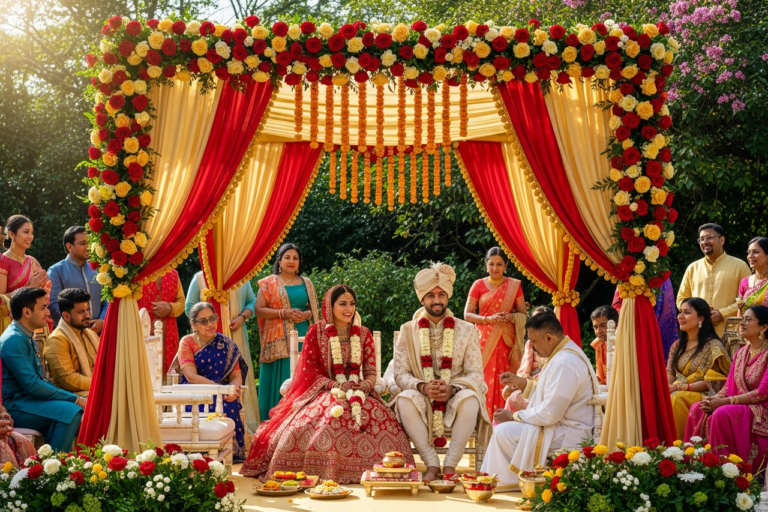
The mandap is a structure with four pillars. It is the wedding altar for a Hindu ceremony. The mandap is usually decorated with flowers, fabrics, and lights. The dome shape marks it as a special spot. The most important wedding rituals happen here, led by a Hindu priest.
Under the mandap, the couple stands with their parents and close family members. The bride’s parents help with key rituals in this space. This wedding altar shows the home the couple will build together for their new life. The four pillars stand for support from their parents.
The mandap is a place where prayers are said and blessings are given to the couple. Before going into this sacred space, people take off their shoes as a sign of respect. Here, the couple makes their vows and becomes husband and wife.
The Ritual Fire (Agni) and Its Significance
Agni, the sacred fire, is at the heart of Hindu wedding ceremonies. This holy fire is seen as the top witness to the wedding. It shows purity, light, and knowledge. The fire is started in the center of the mandap, and its light blesses the whole wedding.
In these wedding ceremonies, the couple gives gifts to the holy fire. They also walk around it during important times, like the Pheras. Each walk or circle is a promise and good wish for their new life together. The fire takes the couple’s prayers and gives them to the gods. This makes their bond strong.
When Agni, the sacred fire, is there, it means that every pledge is watched by the best. Vows given in front of this fire cannot be broken. The light from the ritual fire helps keep away darkness. It shows the couple where to go as they start out. The holy fire in Hindu wedding ceremonies shows how strong and pure the couple’s new life together will be.
The Seven Circles (Saptapadi or Pheras)
The Saptapadi, also called the seven circles or Pheras, is the most important part of a Hindu wedding day. In this ritual, the couple holds hands and walks around the sacred fire seven times. Each circle has a set of marriage vows and promises to each other.
With every step, the priest says a verse, and the couple makes a promise. The vows are about how they will live together. They talk about respect, good fortune, happiness, raising strong children, being loyal, and staying together for life. When they complete the seventh step, it means the ceremony is over. This step makes them husband and wife, both by law and in spirit.
This ritual is the heart of the wedding day. It is when the couple formally takes their first steps into married life. The seven circles stand for the path they will walk together, with the sacred fire as a witness. This ritual bonds them forever.
Exchange of Garlands (Jaimala)
The Jaimala or Jai Mala is a nice and often playful part of Indian wedding ceremonies. It is one of the first times the bride and groom see each other on their wedding day. During this part, the couple gives each other big, colourful floral garlands. This garland exchange shows that they accept each other.
This moment, also called Mala Badal in some places, can be a lot of fun. Family members and friends might lift the bride or groom up to make it harder for them to place the garland on their partner. Everyone laughs and cheers, making it a joyful event.
But this wedding day garland exchange is not just about fun. It means unity, mutual respect, and the start of their new life together. The fresh flowers stand for beauty, good times ahead, and the start of their new journey as a couple.
Pre-Wedding Ceremonies and Rituals
An Indian wedding is more than just a one-day event. The celebration starts many days before the main ceremony. It includes a lot of pre-wedding ceremonies and wedding rituals. These events are for close family members and friends. There is music, dancing, and traditions that help prepare the couple and their families for the main ceremony.
People put turmeric paste on the couple for good luck. The bride also gets beautiful henna on her hands. Every wedding ritual has its own meaning. A wedding planner can help plan and manage all the wedding ceremonies. Now, let’s look at some of the most popular pre-wedding rituals, like Haldi, Mehndi, and Sangeet.
Haldi Ceremony: Turmeric Blessings
The Haldi ceremony is a happy and lively pre-wedding event. In this ceremony, family members and friends put a paste made with turmeric, sandalwood, and rosewater on the bride and groom’s skin. This usually takes place one or two days before the wedding day.
People believe that using turmeric paste gives good luck and blessings to the couple. Turmeric helps make the skin look better, so the ceremony lets the bride and groom look more glowing for their wedding day. It can get messy, but most find it fun. There is a lot of laughter and singing during this time.
The Haldi ceremony is about more than just beauty. It gives family members a chance to show their love and send their best wishes. The bright yellow colour of the turmeric paste stands for happiness and good times. It helps set a happy and lucky feeling for the couple as they get ready for their wedding.
Mehndi Celebration: Henna Art for the Bride
The Mehndi ceremony, sometimes written as Mehendi, is one of the most loved events before the wedding day. It is very special for the women in the family. At this event, the Indian bride gets intricate henna designs on her hands and feet. This body art is a big part of how she looks on the wedding day.
The mehndi ceremony is a relaxed and fun time. Female family members and friends come together to celebrate. While the bride gets her detailed henna, guests can also get small, easy designs on their hands. There is music, food, and lots of joy.
The intricate henna designs are beautiful, but they also have meaning. People say the darker the colour of the mehndi, the stronger the love between the husband and wife. Many times, the groom’s initials are hidden in the bride’s henna. He has to search for them when it is the wedding night.
Sangeet Night: Music and Dance Festivities
The Sangeet night is the big party before the wedding. The word “Sangeet” means “sung together.” This night is full of music, dancing, and good times. It is when both families get together, meet each other, and celebrate the soon-to-be wedding.
In old traditions, the Sangeet had female family members singing traditional songs and playing instruments. Now, it has become a bigger event with the wedding party and other family members. Everyone gets ready for dance shows. These dance shows often share the couple’s story or play popular Bollywood songs.
Later, everyone gets up and dances on the dance floor. The night is full of energy and fun. For guests, the Sangeet is the time to have fun, relax, listen to music, and see how happy both families are.
Tilak and Engagement Rituals
The Tilak ceremony is an important ritual before the wedding. It is about bringing the two families together and making the bond official. In the past, the men from the bride’s family would go to the groom’s house to ask him to marry into their family. Now, people often have this ceremony along with the engagement.
During the event, the bride’s father or brother puts a mark, called the “tilak,” on the groom’s forehead. The tilak is made with red powder or another sacred item. This shows that the bride’s family accepts him into the family and wishes him good luck in his new marriage. Family members also give gifts to each other to show kindness.
Sometimes, the Tilak ceremony is also the engagement, and the couple may exchange rings. The wedding date gets set at this time. After the ceremony, both families come together and celebrate the start of the wedding events.
Selecting an Auspicious Wedding Date
In many Indian cultures, and for Hindu weddings, choosing the date is not simple. You do not just find any Saturday for the wedding. The date and time have to be picked, so they bring good luck. People feel this step to be important, and they think it helps bring happiness and good fortune for the couple.
Most families ask a Hindu priest, or pandit, to find the right date and time. The priest uses astrology. He looks at the couple’s birth charts and planets to see what is best. That is why many Indian weddings happen on the same day. Those are likely the dates that are good and bring luck.
This custom can make planning hard. It can be tough for couples living outside India who also want to book the right venue. A wedding planner who knows indian weddings and these rules gets that it’s not easy to match a lucky date with a venue you want. But for family members, picking the proper time and date is something they will not skip.
The Wedding Day: What to Expect
The wedding day is when all the celebrations come together. This day goes by fast and has a lot going on. When you get to the wedding venue, you will see family members and other guests in their best outfits. They are ready for the main ceremony.
On this day, you will notice many big moments. These include the groom’s exciting entrance, the bride’s grand entrance, and a heartfelt emotional farewell. You will watch nice rituals and join in the happiness with the couple and their families. Here is what happens on the wedding day.
The Groom’s Grand Arrival (Baraat)
The wedding day usually starts with the groom’s parade, called the Baraat. This is not just about him showing up. It is a bright, happy event where he walks to the wedding venue with family members, friends, and other guests. There is music and people dance in the street.
In the past, the groom would sit on a decorated horse. These days, you may see him come in a fancy car or sometimes on an elephant. The people in the group are loud and cheerful. They play music with a live band or even a DJ.
If you are a guest, the Baraat is the best way to be part of the celebration. You get pulled into the dancing and fun. It gives everyone energy for the wedding day. It is also a big welcome to the groom before he meets the bride’s family.
The Bride’s Entrance and Reveal
After the groom gets there, everyone turns to look at the bride for her grand entrance. On the wedding day, the bride’s arrival, called Kanya Aagaman, is a big moment people wait for. This is the first time many there see her in her wedding clothes. Wedding photography makes sure to catch this moment well.
The bride is escorted by her uncles or by the oldest men in her family. Sometimes she is carried on a fancy palanquin. There is often music as she comes in with her wedding party, which is made up of her bridesmaids.
The moment when the bride comes out is full of feeling and beauty. Her family feels proud as they watch her join the groom at the mandap. This is the start of the ceremony. It is one of the most memorable and beautiful parts of the wedding day.
Blessings from Elders (Ashirvad)
Ashirvad means “blessings” and it is a big part of wedding ceremonies in Indian culture. During the wedding, and especially after the main rituals are done, the couple look to family members for their blessings. They want good wishes for their married life.
Family members, like the bride’s parents and the groom’s parents, come up first to bless the couple. They sometimes put their hands on the heads of the newlyweds. Other times, they toss rice or flower petals on them, or share kind words and advice.
This tradition shows how much family and community matter in Indian culture. Ashirvad is not just something you have to do; it is a real show of love and support. The people close to the couple want them to have a happy life together.
Kanyadaan: Giving Away the Bride
The Kanyadaan is one of the most emotional moments in Hindu weddings. The word “Kanyadaan” means giving away the maiden. In this ritual, the bride’s father puts his daughter’s hand in the groom’s hand. He trusts the groom to care for her for their life ahead.
This act shows the bride’s family giving their most special gift to the groom’s family. It is full of deep feeling. Many cry at this point, as the father lets go for the bride to start her new life. Sometimes, they pour holy water over the joined hands to bless the wedding ceremony.
Even though this tradition is very old, the meaning stays the same. It shows the huge trust the bride’s family has in the groom. They ask him to love and keep their daughter safe. Kanyadaan is a key part of Indian wedding ceremonies.
Indian Wedding Attire: Tradition and Style
Indian wedding traditions bring a lot of colour and beauty. The wedding attire is a big part of this. People know the outfits for their bright colours, fine fabrics, and detailed work. Guests and the wedding party usually wear their best clothes. This makes the whole celebration look feel like a big fashion show.
The bride and groom have clothing that stands out the most. They wear traditional outfits such as sarees, lehengas, and sherwanis. The bride also wears heavy jewellery. Let’s take a look at the amazing style in Indian wedding fashion.
Bridal Outfits: Sarees, Lehengas, and Jewellery
The Indian bride is the star of the day. Her outfit shows how important she is. Indian brides often choose to wear more than one dress during the wedding events. For the main ceremony, most brides pick lehengas. This is a long skirt with a top and scarf. Some brides choose sarees. This is a long piece of cloth that is wrapped in a pretty way.
Red is the usual colour for a bride’s wedding dress. This colour stands for good luck, love, and being strong. Now, many brides also like deep jewel colours. These outfits always have a lot of stitching and pretty patterns. Brides wear big jewellery, too, like necklaces, earrings, bangles, and headbands.
One important piece for the Indian bride is the Mangalsutra. This sacred necklace is put on the bride by the groom. Along with other special jewellery, this makes the bride look beautiful and full of meaning for the main ceremony. She shines with tradition and style.
Groom’s Attire: Sherwanis and Turbans
The groom’s outfit at a traditional Indian wedding is meant to look grand, just like the bride’s outfit. Most grooms wear a Sherwani. It is a long jacket and is worn with fitted pants. Sherwanis be made from rich fabrics like silk or brocade. They often have detailed designs stitched into the fabric.
The groom also wears a turban, which is called a safa. The way the turban looks and its colour be different, depending on where you are from and what the family likes. There is a special time called “safa bandhai” when the older men in the groom’s family help tie the turban for him.
The groom, like the bride, may switch to other clothes for some events. The families often plan their clothes for certain ceremonies together. This makes sure everyone look good and match well. Overall, the groom’s look shows the pride and class of a traditional Indian wedding.
Guest Dress Code and Etiquette
As a guest at an Indian wedding, what you wear is part of the fun. People usually dress in bright colours and choose clothes that cover up. Jewel tones are a good pick for the wedding day, and they help you feel like you fit right in. Traditional Indian clothes like sarees, lehengas, or anarkalis are great. If you want, you can wear a nice Western dress or suit, and it will still be okay.
There are some simple tips to follow about what to wear for the wedding day. If you stick to these, you show respect for the couple, their families, and the traditions.
-
Avoid Red: This colour is for the bride on her wedding day. Pick something else.
-
Avoid White and Black: People wear white at funerals in India, and black is not for parties. It’s good to choose bright and happy colours for the wedding day.
-
Dress Modestly: At Indian weddings, people cover up more. Wear long dresses or skirts and don’t wear anything too open.
Regional Variations in Wedding Fashion
Just as Indian wedding traditions change from place to place, so does what people wear on the wedding day. The clothes you see tell a lot about where the couple comes from. For instance, an Indian bride from the South will often wear a thick silk saree. It will be bright and have a strong gold edge. But a North Indian bride might pick a lehenga with lots of embroidery.
This difference shows up in what the groom wears too. Across India, many go for a sherwani on the wedding day. Still, the kind of material, the fashion, and even things like turbans shift a lot from one area to another. In South India, a groom may choose a veshti, which is a silk dhoti, for his ceremony.
These changes in style make Indian wedding fashion bright and full of life. From what fabric is picked, to the way a saree is wrapped, and even the embroidery used, each little thing shares the couple’s story. It is a wonderful show of Indian wedding traditions and how rich textiles and designs can be.
Reception and Post-Wedding Festivities
The wedding celebration is not just about the ceremony. After the main event, there is a big reception. This is a large party where everyone comes together to celebrate the new couple. The reception feels more relaxed than the wedding ceremonies.
There are also some post-wedding ceremonies. These happen to show the bride joining her new family. The couple and their family members have good food and fun entertainment. Post-wedding festivities are all about spending time with the wedding party and family members.
It is the food, dancing, and traditions that make this part of the wedding something people remember. People come together, eat, dance, and enjoy many customs during this time with their wedding party. The celebration with family members helps welcome the couple into their new life.
The Wedding Feast: Food and Desserts
No Indian wedding is complete without a great feast. The food at the reception is a big deal for wedding guests and something family members feel proud about. You will find all kinds of dishes, often laid out in a buffet that shows off the best of Indian food.
The menu usually has dishes from different parts of India. But now, many couples add both Indian and Western food to make sure everyone likes something. There will be lots of vegetarian and non-vegetarian choices. You will see biryanis, curries, breads, and appetizers, all smelling and tasting good.
Remember to save space for dessert! Indian weddings are well-known for their sweet tables. These tables have treats like gulab jamun, jalebi, and kulfi. With so much food, it is a way to show care and make sure all wedding guests and family members leave happy and full.
Dancing and Entertainment
Dancing is a big part of any Indian wedding celebration. The reception is when everyone gets to be on the dance floor. After the more planned dances of the Sangeet, the reception is all about having fun and dancing together. Usually, a DJ will play Bollywood hits, Punjabi Bhangra, and popular Western songs.
The wedding party and family members often start the dancing, but soon, everyone is up on the dance floor. Sometimes the couple or their friends do special dances to entertain the guests. After that, the dance floor stays busy for hours.
Don’t be shy if someone asks you to dance. The energy in the room is strong—it’s hard not to get into it. You do not need to know any steps. Just feel the music, get on the dance floor with the family members and wedding party, and be part of the fun. This is a time for joy and letting go.
Fun Post-Wedding Games and Customs
The fun does not end when the wedding reception is over. Many families have games and wedding rituals that take place after. The goal is to help everyone relax and to bring the bride into her new family. These moments are a light way for the couple to start their married life.
One well-known game has the bride and groom look for a ring in a bowl of milk. The story goes that the person who gets the ring first will be the one in charge at home. There is also a wedding ritual where the bride’s sisters or cousins take the groom’s shoes. They ask him for money if he wants them back.
All of this is just for fun. The games make people laugh and help the bride feel more at home. It gives the family members sweet memories as the couple steps into their new life together.
Bidaai: The Bride’s Farewell
The Bidaai is when the bride says goodbye to her family after the wedding day. It is a very emotional farewell, and this is the moment she leaves her family’s home to begin her new life with her husband. This marks the end of all the wedding festivities and the start of her new journey.
As the bride gets ready to leave, she throws rice over her shoulder at her family. The rice shows her gratitude to her parents for raising her. She also wishes them good luck and success for their home as she moves away. It’s a touching goodbye for the bride and her family.
Most people cry during this ceremony, both the bride and her loved ones. It is a sad and sweet ending to the celebration. The Bidaai shows the strong bond between family members and the importance of the big change the bride makes as she steps into her new life.
Griha Pravesh: Entering the Groom’s Home
The Griha Pravesh is a ceremony for when the bride comes into her new home for the first time. It is full of warm touches and helps to make her feel welcome. It is done to give a good start to her married life. The groom’s mother greets the couple at the door.
When the bride enters the house, she has to step in with her right foot first. People see this as a way to bring good fortune. She then gently knocks over a pot that is filled with rice and is set at the entrance. The rice spilling on the floor shows she will bring plenty and hope to the new home.
In some families, the bride puts her feet in a tray with red alta. She walks ahead and leaves red marks, one step at a time, on the floor. People say this is like the goddess coming into the house. The Griha Pravesh is all about making the bride feel good as she begins her life in her new home.
Beginner’s Guide: How to Experience an Indian Wedding in Canada
Have you got an invitation to an Indian wedding in Canada? That’s great! You will get to be part of an exciting and colourful event. If this is your first time going to a wedding like this, it might feel a bit hard to know what to do because there are many days of events and strong Indian wedding traditions. That is normal, but it doesn’t have to be hard. With some time set aside to get ready, you can join in and feel happy as a wedding guest.
This guide can help you right from the start. You will learn how to read your invitation and what to do next. We also tell you about what clothes to wear and what gifts to bring. You will find out what you need, so you will feel sure of yourself and show respect for their customs as a guest.
What You’ll Need to Get Started (Invitations, Attire, Etiquette Tips)
The first thing you need to do is read each invitation in the bundle. Indian wedding invites often have separate cards for every event. Make sure you check the dates, times, and places. You should RSVP to each part. This helps the wedding planner and the hosts keep track of people.
Then, it’s time to think about what to wear. As a guest, you get to join in the colourful fashion. If you do not have Indian clothes, you can rent them or just pick nice, bright Western wear. There are some simple rules here: do not choose red, white, or black.
Here are a few main things to remember:
-
RSVP Promptly: Answer each invite to help the hosts and the wedding planner.
-
Plan Your Outfits: Pick what you will wear to every event.
-
Consider a Gift: Most people give cash as a gift, with the amount ending in “1” (for example, $101), as it is seen as good luck.
-
Read Up on Etiquette: Learn a bit about what you should do or not do, so you feel at ease.
Step-by-Step Guide to Attending an Indian Wedding
Attending Indian weddings for the first time is a big adventure. It can help to break it down into easy steps. Start when you get the invitation, and end with the last dance at the reception. Some planning will make everything go well.
This guide shows you how to have a smooth time as wedding guests. You are a valued part of the celebration, and being ready helps you join in with respect. The family members of the couple will like your energy and what you put into the day.
Here’s a simple way to enjoy an Indian wedding for the first time:
-
Understand the events and reply if you are coming.
-
Get your clothes ready and bring a nice gift.
-
Learn some basic rules and what the main rituals mean.
Step 1: RSVP and Understand Wedding Events
Your time as a wedding guest starts when you get the invitation. Indian weddings have more than one event, and the invitation will have details for each part, like Mehndi, Sangeet, the main wedding, and the reception. There will be a wedding date, time, and place for each one.
You should tell the family members and the wedding planner which events you will attend. This helps them get ready for food, seating, and all the other work that goes into a big wedding. They will be happy if you let them know soon.
If you cannot go to every event, it is okay to choose some to go to. Try your best to come for the main wedding ceremony, because that is important. You should not come just for the reception, as people may think you do not care enough.
Step 2: Prepare Your Outfit and Gifts
Once you have let the couple know you will be there, it is time for the fun part—picking what to wear! Indian wedding traditions are full of colour. So, go for a bright outfit to match the celebrations. You can wear traditional Indian clothes or choose formal Western clothes, but pick bright jewel tones. Just remember, it is best not to wear red, white, or black.
When thinking about gifts, you only need to bring one nice gift, even if you are at more than one event. Cash is common at Indian weddings and it is a kind choice. Give the cash in an envelope, and the number should end in a “1.” For example, $51 or $101. People say this brings good fortune and blessings to the couple.
Do not feel you must bring a gift to every event. What matters most is that you are there, spending time with the couple, and sharing your good wishes with them and their family members.
Step 3: Learn Basic Etiquette and Rituals
To feel good and show respect at an Indian wedding, it helps to know some basic etiquette. There are a few things you can do that will mean a lot to the family members. Simple actions will show you care.
During the wedding rituals, try to be a quiet observer. You should stay silent during prayers or when there are chants. Keep your phone on silent. If you see others take off their shoes before they go into a holy place, like the mandap, do that too. It’s fine to be curious, but remember that some moments are serious.
Here are a few tips for wedding guests:
-
Follow the Crowd: Not sure what to do? Watch what the other guests do.
-
Engage and Mingle: Talk with other wedding guests and the family members of the couple.
-
Accept Hospitality: People will offer you food and drinks often. Just say yes, it’s a nice way to join in.
Step 4: Participate Respectfully in Ceremonies
One thing I like about Indian weddings is that they involve everyone. You are not just watching. You are in the middle of the fun with the couple and their loved ones. The best thing you can do at indian weddings is to be a part of the wedding ceremonies and join in with an open mind.
At these events, watch what the family members do. If they throw flower petals and you can join in, do it. If someone asks you to dance at the Baraat, give it a try. When you take part, you help make the day better and let everyone see you are glad to be there.
You should always be aware and careful, too. Don’t take photos where it is serious unless you know it is okay. Check what is going on around you. When you join in with respect, you not only show the couple you care. You also get more from the experience and enjoy the day as a guest at the wedding.
Conclusion
When you look at the wedding traditions in India, you see a rich mix of joy, family, and cultural heritage. Each part of the wedding, like the haldi ceremony or the bright jaimala, shows the strong values of love and unity. Family members come together during the wedding celebration, and this helps build close bonds. These moments help couples get ready for their married life in their new home.
The rituals that people do are old and full of meaning. They hold good wishes for good fortune and future happiness. When you understand what these steps mean, you can see more beauty and purpose in every Indian wedding celebration.
Frequently Asked Questions
How long does a typical Indian wedding last and what events are included?
An Indian wedding usually goes on for a few days, mostly 3 to 5 days. There are many events that take place, like the engagement, mehendi, sangeet, the main ceremony, and after that, a reception. Each event in the wedding is full of culture and traditions. It is a lively and colourful celebration.
What etiquette should I follow as a guest at an Indian wedding?
If you are a guest at an Indian wedding, make sure you dress in bright colours and cover up well. It is good to respect all important traditions. Try to get there on time and join in the special moments and rituals. Say hello to both families with a smile and enjoy the party, but also be careful to show respect for how they do things.
What is the significance of the seven circles (pheras) in Indian weddings?
The seven circles, also called pheras, are important in an Indian wedding. The couple walks in a circle seven times together. Each time, they make a promise to each other. These promises are about love, trust, and being together for life. They show that both people are ready to stay with each other, follow their culture, and respect spiritual beliefs.
Which traditional outfits are typically worn by the bride and groom?
In Indian weddings, you will see brides often wear sarees or lehengas. These come with a lot of bright embroidery and pretty jewelry. Grooms wear sherwanis or kurtas, and they pair these with dhotis or churidars. The outfits show the cultural heritage of Indian weddings. They are different in each area, which makes every celebration special.