Key Highlights
Here are the key things you should know about celebrating your special day with a Fijian wedding:
-
Fijian wedding traditions focus on family and exciting parties. This gives the day a real sense of meaning and authenticity.
-
The South Pacific has amazing views for your wedding, like beaches or gardens. It is a great place for photos.
-
You can have a small and private ceremony or a big party with more Fijian wedding traditions. The choice is yours.
-
Important wedding traditions, like the Tevutevu, having kava, and giving special gifts, make your day feel deep and rich in history.
-
It is easy to get a legal wedding in Fiji. So, Fiji is not just beautiful, but also a practical and good place to get married.
Introduction
If you are thinking about a destination wedding, Fiji is a great choice. The island is a true tropical paradise. You can say your vows there with blue water and clean beaches all around. But there is more than just the view. The rich Fijian culture can add something special to wedding ceremonies. The Fijian people are kind and welcoming, and this will make your day feel good and fun.
You can keep things simple, have a small wedding, or choose a bigger celebration. A Fijian wedding is a good way to start your new life with magic. You will remember it for a long time.
A Canadian’s Guide to Unique Wedding Traditions in Fiji
From the snowy parts of Canada to the warm beaches in the Fijian archipelago, weddings happen all over the world. There may be many wedding traditions out there, but Fijian weddings show their own style. They put a real sense of life and authenticity into a special day, thanks to Fijian tradition that goes way back.
In Fijian wedding traditions, everyone is part of the big day. People from all over the community take part. Weddings become a time for everyone to get together and have a good time. Let’s look at some things that make a Fijian wedding one to remember. These south pacific celebrations always have those little parts of Fijian tradition that set them apart from any other special day you may go to.
1. The Tevutevu Ceremony: Family and Gift-Giving Customs
Family plays a big part in Fijian culture, and you see this most during wedding traditions. One important tradition is the Tevutevu ceremony. This is when the families of the bride and groom give gifts to each other. It is a sign of respect, unity, and shows how two families come together.
In this gift-giving ceremony, the focus is on the meaning, not just the gifts. Giving these items is a way for each family to show kindness and welcome the other side. The number and kind of gifts can show how much respect families have for each other.
Key parts of the Tevutevu are:
-
Presentation of mats
-
Exchange of masi (bark cloth)
-
Giving a tabua (a special whale’s tooth)
-
Sharing food and coming together to celebrate
This helps make weddings special in Fijian culture. It is a way for people to feel close and show support to both families.
2. Fijian Wedding Attire and Its Cultural Significance
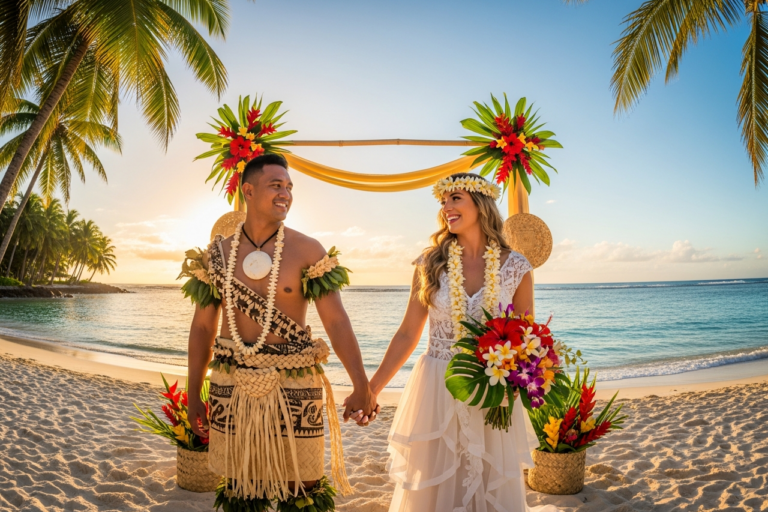
When you think about a Fijian wedding, the clothes the bride and groom wear really stand out. This special attire is not just for looks. It is a true mark of Fijian culture and shows who they are. It brings more authenticity to the ceremony, and connects the couple with both the south pacific and their ancestors.
The bride and groom usually have matching outfits made from Masi. Masi is a traditional Fijian cloth made from the bark of the mulberry tree. These outfits have patterns and designs that speak about the couple’s roots and their village. Wearing Masi shows respect for Fijian culture and highlights how important this event is.
If you go to a traditional Fijian wedding, you could see costumed warriors taking part in the ceremony. This detail brings even more depth to the beauty of the event. Choosing this attire is a way to honour the strength and spirit of Fijian traditions.
3. Kava Rituals: Symbolism and Celebration
No Fijian wedding is complete without the kava ceremony. This special drink is made from the root of the yaqona plant. In Fiji, kava is very important. It shows a welcome, respect, and brings people together.
At a wedding, the kava ceremony is called the ‘sevusevu’. It is done to bring the two families together. The groom’s family gives the kava root to the bride’s family. It is a sign of respect and they are asking to marry their daughter. If the family accepts the kava, the wedding celebration begins and both families come together.
Drinking kava is also a big part of this tradition. People drink it from a coconut shell cup called a ‘bilo’. Elders and the couple drink kava to make the wedding agreement final and give a blessing. This act means a lot. It is why the kava ceremony is a big part of Fijian wedding ceremonies and always happens in Fiji when a groom and bride get married.
4. Masi Decorations and Traditional Accessories
The look of a Fijian wedding is shaped by time-honoured decorations and things like Masi and hand-woven mats. Masi is a classic bark cloth that people will wear, but it is also used to dress up where the wedding happens. It can be put up as backdrops, used for table runners, and is part of the special day in so many ways.
These decorations are a big part of the Fijian tradition and help turn any place into a sacred area for the wedding. The patterns that you see on the Masi usually tell something about the family’s background and standing. Also, carefully woven mats, which are called ‘ibe’, are laid out on the ground for the couple and important guests so they are shown respect.
Key things people see for decoration are:
-
Masi Banners: These are hung to make things feel joyful.
-
Woven Mats: These cover the floor or may be given as a gift of honour.
-
Floral Garlands: These are made with tropical flowers and are for the couple or put up in the wedding area.
5. The Role of Elders and Family in the Wedding Process
In Fijian culture, a wedding is much more than just about two people. The whole community takes part. Family members are there from the start and have a big and active place in all the plans. The social hierarchy is seen at every step, so elders have great honour and are trusted to help guide what happens.
Elders from both families are key to all the talks and getting ready for the big day. They lead important ceremonies, give out blessings, and tell the young couple what they need to know. The marriage must have their approval and for them to take part. If not, it will not be seen as right in the community. This way of doing things helps to keep old traditions strong and lets them move from one group to the next.
Family members help in all that must be done. They might set up the time to ask for the marriage or handle gifts. You see family members at the centre of every step. This teamwork shows that, in Fijian culture, marriage connects two families, not just two people. This gives the couple a strong support right from the start of their new life.
6. Ancient Rituals and Modern Adaptations in Fijian Weddings
While ancient customs form the foundation of Fijian wedding traditions, many couples today blend these rituals with modern elements. This is especially true for the popular destination wedding, where couples from abroad wish to honour local culture while also incorporating their own personal touches. Resorts across Fiji are skilled at creating these hybrid celebrations.
Many modern adaptations involve the setting and logistics. For instance, while a traditional village wedding is common, many now opt for a stunning resort ceremony on the beach, in lush gardens, or even in an overwater chapel. These venues offer packages that can be customized to include traditional elements like a Fijian choir or warrior escort.
This fusion allows couples to experience the best of both worlds—the deep meaning of ancient customs combined with the convenience and beauty of a modern destination wedding.
|
Traditional Element |
Modern Adaptation |
|---|---|
|
Village Ceremony |
Resort beach or garden wedding with traditional Fijian decorations. |
|
Traditional Masi Attire |
Couple wears Masi for the ceremony and changes into modern attire for the reception. |
|
Community Feast |
Catered buffet at a resort featuring traditional Fijian and international cuisine. |
|
Warrior Escort |
A ceremonial warrior escort for the bride’s arrival at the resort venue. |
7. Traditional Wedding Feasts and Fijian Cuisine
A wedding event anywhere in the world feels incomplete without a feast, and in Fiji, this is a big deal. Fijian weddings include a special meal called ‘magiti,’ and it’s the main event of the special day. It shows off the best of Fijian food. Food means a lot in this tropical paradise, since sharing a meal is how people in Fiji express community and warm welcomes.
The highlight at many Fijian wedding feasts is the ‘lovo.’ It is an underground oven used to cook food slowly for hours. This makes the meat and vegetables soft, smoky, and good to eat. Preparing the lovo is something everyone does together, so it brings all the people close.
A usual Fiji wedding feast might have:
-
Lovo: Pork, chicken, or fish cooked with root foods like dalo (taro) and cassava.
-
Kokoda: This is a Fijian take on ceviche, using raw fish soaked in coconut cream and citrus.
-
Fresh Tropical Fruits: The table is full of bright, tasty fruit that’s sweet and fresh.
Visiting Fiji for a Fijian wedding means food, happiness, and time with people in a tropical paradise.
8. Exchange of Wedding Gifts and Their Meaning
The gift exchange is an important part of any Fijian tradition. At a wedding, this moment means a lot to the families. These gifts show respect, commitment, and bring two families together. In Fijian culture, the Tabua is the most special gift. It is a polished tooth from a sperm whale.
Giving a Tabua shows the highest respect. It happens during key moments like a marriage proposal from the groom’s family. When the other family accepts this Tabua, it connects the two families. This gift is very valued and holds deep meaning.
Other big gifts in Fiji include large mats, Masi cloth, and sometimes things like traditional canoes or livestock. People call this exchange ‘tevutevu.’ It shows the families’ wealth, status, and kindness. This act makes the new bond strong.
Conclusion
To sum up, looking at the bright wedding traditions in Fiji gives you a good idea about the unique fijian culture of this amazing country. There is the Tevutevu ceremony, and there are happy moments around kava rituals. Each one shows how much family and community mean to them. Knowing about fijian wedding traditions helps you see how people show love and commitment in different places. If you want to have a wedding or just want to know about something new, you could use these fijian culture elements to make your day special. Get in touch for a consultation and see how the traditions from fiji can inspire your celebrations!
Frequently Asked Questions
What are the key differences between Fijian wedding traditions across various islands?
Core rituals like the kava ceremony can be seen across the whole archipelago in Fiji. Still, each island and area in Fiji can have its own special ways of doing things. The Masi cloth they use might show different patterns, the ceremonial chants sound different, and the steps for giving gifts might not always be the same. All of these things join together to make a Fijian wedding feel full of life and colour.
How do Fijian weddings blend modern practices with ancient customs?
Many Fijian wedding ceremonies today happen at resorts. This mix lets couples have both ease and the feel of their culture. On the wedding day, couples might wear the traditional Masi attire for their ceremony. Later, they change into modern clothes. With these changes, couples can enjoy the authenticity of Fijian tradition. At the same time, they get to have the comfort and fun of a destination wedding.
Why is kava important in Fijian wedding celebrations?
In Fijian culture, people hold the kava ceremony as an important way to show respect and bring people together. In Fijian wedding traditions, this ceremony helps make the marriage between two families official. Drinking kava shows everyone agrees, gives a blessing to the couple, and plays a big role in the whole wedding. It brings all the guests close and makes the day special.