Key Highlights
-
Ethiopian wedding traditions are all about days of celebration, starting when elders called the Shimagelay bring both families together to talk things over.
-
The traditional Ethiopian wedding ceremony mixes in religious steps, such as those from the Orthodox Christian faith, with colourful cultural events.
-
On the wedding day, the groom and his group go to the bride’s family home. They make an official request for her hand and then the party starts.
-
A big part of the celebration is the feast. The couple share “gursha,” where they feed each other, as a special gesture.
-
Music and dance, like “eskista,” are a main part of the reception. These bring great energy and happiness to the event.
-
The Telosh ceremony happens before the wedding day. During Telosh, people give gifts to the bride.
Introduction
Have you ever thought about what makes an Ethiopian wedding so full of life and hard to forget? There is a lot to see in Ethiopian culture, and you will notice this on the wedding day. Each place and group of people in Ethiopia has its own way of doing things, but they all share the love of coming together with family and friends and of sharing joy. You will see detailed plans that start before the wedding, as well as big, colorful parties when the wedding day comes. If you get to be a part of an Ethiopian wedding, you will not forget it. This guide will help you understand more about these beautiful wedding traditions across the different regions and ethnic groups found in Ethiopian culture.
The Significance of Ethiopian Wedding Traditions for Canadians
For Canadians, learning about Ethiopian traditions is important if you have Ethiopian friends, family, or partners. This can help you better understand their lives and feel more connected. These celebrations are not just parties. They show the strong bonds people have with their families, the meaning of community, and deep spiritual beliefs. At an orthodox Christian wedding or a wedding from one of many ethnic groups in Ethiopia, you can see that every ritual means a lot. The families of the groom and the bride, plus the wedding party, all have big roles.
When you understand these customs, you can enjoy being part of an Ethiopian wedding and act in a helpful and kind way. It shows you care about the couple and respect where they come from. Being curious about the different ways people celebrate in Ethiopia helps you see how many ethnic groups and new ideas the country has. Most Ethiopian weddings have things in common, but each group’s traditions, such as the attire and the food, are special and different. So, every wedding is a new way to learn and see the amazing heart of the Ethiopian wedding and its people.
Understanding the Cultural Heritage of Ethiopian Weddings
An Ethiopian wedding is full of life and shows old customs and community spirit. It is more than just two people coming together. The families also join and become close, with family members taking on important parts from the very start to the end.
The main wedding traditions in Ethiopia often last for days. The events start long before the wedding day by making formal meetings and talks between the two families.
These traditions end in a big gathering where there is a lot of food, music, and Ethiopian dances. Everyone involved, from the couple to the farthest family members, helps make this a happy and united time. This is what makes an Ethiopian wedding special in Ethiopia.
Why Learn About Ethiopian Wedding Customs in Canada
As the Ethiopian community in Canada gets bigger, there are more chances for people to share and learn from each other’s cultures. Taking time to understand these traditions is a good way to get closer to your friends, neighbours, or anyone you know from Ethiopia.
It does not matter if you are in Toronto or in Addis Ababa. The real meaning of these traditions stays the same. When you learn why the groom goes to the bride’s home on the wedding day, or what makes the wedding ceremony special, you get even more out of being a guest.
If you are a Canadian couple who has Ethiopian roots, you can honour where you come from by including these customs. This brings people of different ages together, helps families keep something important, and makes your wedding day both personal and full of meaning.
Pre-Wedding and Engagement Customs in Ethiopia
Before the big wedding party, there are some important things to do first. Everything starts when the two families meet and talk. This step is very important and gets everyone ready for what is coming.
During this time, the Telosh happens. This is when the family gives gifts to the bride. People also talk about the dowry. All these steps are very important to the family of the bride. They are done to get the family’s blessing. It also makes the engagement real in a way that is old and respectful.
The Shimagelay: Negotiations and Family Roles
The “Shimagelay” is an important part of the pre-wedding process. This word means a group of respected elders, usually from the groom’s family, who act as the go-between group. Their job is to meet the bride’s family and ask for her hand in marriage for the groom.
These talks show there is deep respect for the bride and her family. The Shimagelay share good things about the groom and his family’s name to show he is a good choice. The whole thing is often lively and can take a few visits before the bride’s family says yes. The Shimagelay help in these ways:
-
They are the official voice for the groom and his family.
-
They guide the marriage proposal talks.
-
They make sure the union is respected by both family members.
This part of Ethiopian culture shows how people value support from both families and the community. It is not just about the couple. It is about two families coming together with the elders showing the way, as is seen in many Ethiopian families.
Traditional Engagement Rituals Across Ethiopian Ethnic Groups
Ethiopian engagement rituals vary beautifully across its many ethnic groups and different regions. A common and colourful ceremony is the Telosh. This event, held before the wedding, is when the groom and his family present gifts to the bride, often including gold and other valuables, to honour her and her family.
Discussions around the dowry are also a traditional part of the engagement process in many communities. This isn’t a payment for the bride but rather a way to show that the groom is capable of providing for his new family. It solidifies the commitment between the two families.
While customs differ, the underlying theme is always celebrating the couple’s commitment with family and community. Here are some examples of engagement customs:
|
Custom |
Description |
|---|---|
|
Shimagelay |
Elders from the groom’s side formally ask the bride’s family for her hand in marriage. |
|
Telosh |
A formal gift-giving ceremony where the groom presents the bride with jewelry and other presents. |
|
Dowry Negotiation |
A traditional discussion between families about gifts or resources to support the new couple. |
Wedding Day Ceremonies and Rituals
The wedding day is a big, happy event full of feelings and long-held ways of doing things. On this day, the groom and his bridal party often start by going from his place to the bride’s home. This trip matters a lot. The group will sing, dance, and ask the bride’s family if they can take the bride with them.
After that, the bride and groom come together. They both put on their best wedding dress and attire for the day. Now, they head to the wedding ceremony. In front of their family and friends, they will say “I do” and become husband and wife. Everyone there gets to share in this special moment with them.
Step-by-Step Guide to an Ethiopian Wedding Ceremony
A traditional ethiopian wedding is full of joy and meaning. It usually mixes old customs with special religious parts, especially in an orthodox christian setting. Though each day is a bit different, most weddings follow a pattern that brings together both the cultural and religious sides of life.
The wedding ceremony is often held in a church or a special venue. A priest or someone from the church will lead things. The bride and groom give their vows to each other and trade rings. After that, the priest will give the two of them his blessings, wishing them a happy and long life. This moment means a lot to everyone.
Here is a basic look at what happens during a traditional ethiopian wedding ceremony:
-
The groom and his wedding party go to the bride’s house to pick her up.
-
The couple and their wedding party head to the wedding venue to start the ceremony.
-
A priest or an elder runs the ceremony and says prayers and blessings.
-
The couple then takes turns sharing their vows and exchanging rings.
-
The new husband and wife are introduced to their friends, family, and everyone else, and after that the big celebration begins.
Unique Religious and Community Customs in Ethiopian Weddings
Ethiopian weddings go far beyond just the formal ceremony. These weddings are full of special customs, and many of them bring together the whole community. When it comes to those who follow the Orthodox Christian faith, there are faith-based traditions. It is common for a priest to bless the bride and groom. He asks God to watch over their marriage. This is a big part of the day for everyone.
One special part found in an Ethiopian wedding is called “gursha.” This is when the bride and groom feed each other. They start with the first slices of cake. This is a nice way for the couple to show they want to care for each other and help one another in life. Many people see this as a strong sign of respect and warmth.
The friends and family at an Ethiopian wedding also join in and take part in gursha. This helps build a sense of togetherness and creates moments full of happiness. Whether it is saying prayers or feeding each other, these things make an Ethiopian wedding a day to remember for all who are there.
Conclusion
In the end, getting to know Ethiopian wedding traditions can make the experience even better for Canadians who want to celebrate this culture. The talks handled by the Shimagelay are real and heartfelt. These events are full of color and show deep Ethiopian customs. Every part tells a story about love and people coming together. By learning about these ethiopian traditions, couples can put something special and meaningful into their wedding day. This lets them take parts from both cultures and make the day their own. It does not matter if you are planning an ethiopian wedding or just want to know more about it, checking out these customs will give you a new way to look at love and two people coming together. If you want to know more about these great ethiopian wedding customs, feel free to ask for more help and ideas!
Frequently Asked Questions
How do families participate in Ethiopian wedding traditions?
Family means everything. Family members, like the groom’s parents and the bride’s family, are part of the talks from the very beginning. During the wedding party, close family, the best man, and bridesmaids have important jobs. They help set up parts of the celebration and guide the traditional rituals.
What is unique about Ethiopian wedding attire?
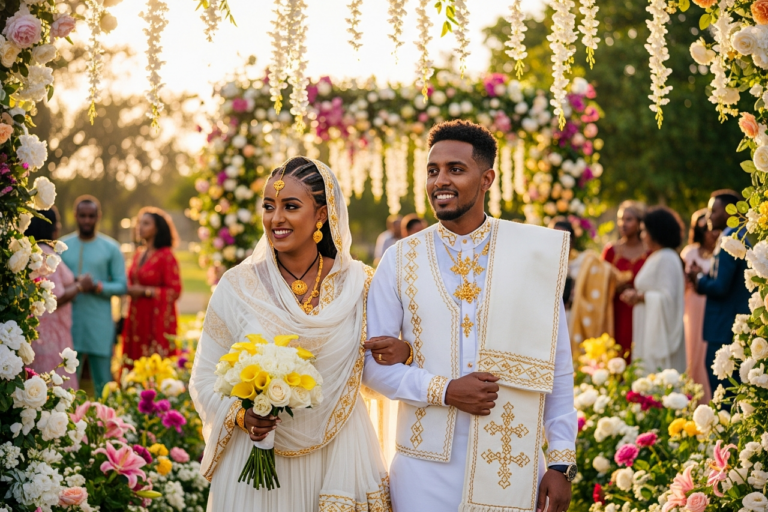
Ethiopian wedding attire is always special and stands out. The bride usually wears a white wedding dress for the main ceremony. After that, she changes into loved traditional Habesha clothes, like a lovely Habesha Kemis with fine embroidery. The groom and the wedding party also put on matching traditional attire. Together, they make the whole event look wonderful and full of Ethiopian culture.
What are the main customs at an Ethiopian wedding reception?
An Ethiopian wedding reception is full of energy and fun. It starts with a big feast. The food is traditional and tastes great. The group has some special customs. One is cutting the wedding cake. Another is the “gursha.” The best part is the traditional dance called “eskista.” At this time, everyone moves to the dance floor and celebrates with the newlyweds.