Key Highlights
-
Ukraine has lots of different ways people believe, with Eastern Orthodoxy being the main faith in the country. There are many religious communities here.
-
The Orthodox Church in Ukraine has changed a lot, as many people have joined the independent Orthodox Church of Ukraine.
-
The Ukrainian Greek Catholic Church is also very strong, mostly in the west. Along with it, there is the Roman Catholic Church and other catholic church groups.
-
The country is home to many Jewish and Muslim communities. They all help make the religious diversity in Ukraine full of life.
-
People in Ukraine celebrate many religious holidays. These holidays, both Orthodox and folk-based, are a big part of how people live and what they do.
Introduction
Welcome to a trip into the heart of Ukraine’s spirit. Many Canadians try to understand Ukraine by learning about the people who live there, and you will see that faith is a big part of life. Ukraine has many different religious communities, but the Orthodox Church has been the top group for a long time. There is also the Ukrainian Greek Catholic Church, along with other types of churches. These faiths are a strong part of the country’s story and ways. This guide will help you get to know the beliefs and old ways that guide how people in Ukraine live, pray, and gather each day.
Overview of Religion in Ukraine
Ukraine has a great mix of religions, with Eastern Orthodoxy being the main one. The Orthodox Church is the largest, but the Catholic Church is also strong in some areas. This group includes the Ukrainian Greek and Roman Catholic Church. The mix of faiths makes the spiritual life in Ukraine very special.
There are other religious communities in the country too, such as Protestants, Jews, and Muslims. Here, we will look at how different religions shaped the history of Ukraine. We will also talk about the numbers of people in each faith and how religion is part of everyday life for Ukrainian people.
Historical influences shaping Ukrainian faith
The story of faith in Ukraine goes a long way back. It started with old pagan ways that were close to nature. The real change came in 988 when Kyivan Rus’ was baptized. At that time, Eastern Christianity came from the Byzantine Empire and became part of daily life. This moment changed the spirit of the land in a big way.
Over many years, Ukraine has stood at a crossroads in Eastern Europe. The area was shaped by many who ruled there. At one time, the Polish-Lithuanian Commonwealth brought a Catholic feel to the region. Later, the Russian Empire took over and made sure its own Orthodox church was in charge.
The 20th century was hard. The Soviet Union came and forced atheism on the people. Religious freedom was lost. Many churches and faith groups had to go underground just to keep going. After the Soviet Union fell in 1991, people who wanted to practise faith got their chance. It was a good time for those who wanted to show their faith openly again.
Modern religious demographics
Today, Ukraine is a religiously diverse nation. Data from organizations like the Kyiv International Institute of Sociology shows that a majority of Ukrainians identify as Christian. The largest single denomination is the Ukrainian Orthodox Church, but there are many other active religious groups across the country.
Beyond the Orthodox majority, a significant portion of the population belongs to the Ukrainian Greek Catholic Church. Other groups include the Roman Catholic Church, various Protestant denominations, and a notable Jewish population that has been reviving since Ukraine’s independence.
Here is a general breakdown of religious affiliations in Ukraine, based on recent data:
|
Religious Group |
Approximate Percentage of Population |
|---|---|
|
Eastern Orthodox Christian |
~60% |
|
Ukrainian Greek Catholic |
~9.6% |
|
‘Just Christian’ (unaffiliated) |
~8% |
|
Protestant Traditions |
~1-2% |
|
Roman Catholic |
~0.5-1.5% |
|
Islam |
~0.5% |
|
Judaism |
~0.5% |
|
Non-Religious/Atheist |
~8.5-9% |
The importance of religion in Ukrainian daily life
For many people in Ukraine, religion is tied closely to daily life. It’s not just about what you believe. It is part of all social and family events. This is clear when there is a baptism or a wedding. These moments are often in a religious setting, even for those who do not go to church services all the time.
Not everyone goes to church every week. Some do, but there are more who come together for religious holidays. Big days like Christmas and Easter stand out. These special times mean a lot to families. They also bring whole communities together and add to the religious life of the nation.
After Ukraine became its own country, it put freedom of conscience into the law. This gave people a chance to practise faith again. Now, religion is a way for many to feel strong and tied to their country. During hard days and big changes, faith helps people trust in their future. That shows how important religious belief and religious practice are for Ukrainians, even today.
Roots of Ukrainian Spirituality
The spiritual story of the Ukrainian lands goes back a long way. Before Christianity came, people had strong beliefs and followed pagan customs. They respected nature and had many gods. Everything changed when the Kyivan Rus’ people took up Christianity. With this, the Byzantine Rite came to the region. It connected Ukraine to the bigger Christian world.
In this part, you will go back in time with us. We’ll talk about old beliefs that still show up in Ukrainian stories. There will be a look at the big change to Christianity and how groups from nearby areas helped create the special spiritual life that you find in Ukraine today.
Pre-Christian beliefs and pagan traditions
Before Christianity came, the area we now call Ukraine was home to many Slavic pagan traditions. People back then were very close to nature and farming. They believed in many gods who each stood for a part of nature. The main god was Perun, who ruled over thunder and war, and was the top god to early Eastern Slavs.
There were also other gods, like Dazhbog, who was the sun god, and Veles, who was linked to cattle and the underworld. Many people took part in rituals to honour these gods, and these old beliefs were a big part of their daily lives. When Christianity started to spread, these customs did not go away right away. Instead, some pagan traditions mixed with new christian traditions. This has left a mark that is still a part of Ukrainian culture today.
It’s interesting that in the early Middle Ages, a different faith was also strong in the region. The khazar khaganate was led by a group whose top leaders became Jewish. This fact shows that even before Kyivan Rus’, there were many kinds of spiritual life in the area.
Adoption of Christianity in Kyivan Rus’
The official Christianization of Kyivan Rus’ started in 988 when Prince Volodymyr the Great made it happen. This was a big event in history. By choosing Eastern Christianity from the Byzantine Empire, Volodymyr made sure his land would be close with a large world power. He also helped choose how people would live and believe for many years. With this, the Church of Jesus Christ became the new state religion, and old pagan worship was left behind.
This change was not just about power or leading the people. It was also a big cultural move. New kinds of art, buildings, and books came to Kyivan Rus’ because of Byzantine Christian traditions. The church began to be guided by the Patriarch of Constantinople. For many years after, this link shaped the way people followed their faith and the things they did in church.
Still, moving from old beliefs and into Christianity took time. The leaders and those in the towns were first to join in the new faith, but many out in the countryside mixed their old habits with the new Christian traditions. This went on for years. It led to a blend of beliefs that you can still see as part of Ukraine’s spiritual life.
Influence of neighbouring cultures on religion
Ukraine’s religious identity has changed a lot because of its neighbours. The biggest early impact came from the Byzantine Empire. It was the reason why Eastern Orthodoxy came to Kyivan Rus’. This tie set up both the religious and cultural roots for Ukraine. It’s still a key part of the country’s identity, linking it to many others in the Orthodox world.
In the 13th century, the Golden Horde invaded. This brought new changes to the area. The Mongols let people keep their old religions. Still, the rulers shaped the politics and helped Islam grow stronger in the south parts of what is now Ukraine.
When the Golden Horde’s power faded, the Crimean Khanate rose in the 15th century. This Muslim state was closely connected to the Ottoman Empire. The Khanate made Islam an even bigger force on the Crimean Peninsula and nearby lands. This long history helped build a place where more than one faith lived beside the other for many years.
Orthodox Christianity’s Central Role
Orthodox Christianity has played a big part in Ukrainian religion and in building national pride for over a thousand years. The Ukrainian Orthodox Church has seen a long history—filled with both togetherness and times when people were divided. It has also had a close and sometimes difficult link with the Moscow Patriarchate. Events in recent years have really changed how religious organisations in the country look and work.
This section looks at the different groups that are part of the Eastern Orthodox Church in Ukraine. It talks about why the church matters so much and shows how its festivals and customs are important to the daily lives of Orthodox believers. You will get a better idea of how the orthodox church, from the Ukrainian Orthodox Church to the ties with the Moscow Patriarchate, still shapes life in the country.
Ukrainian Orthodox Church – key branches
For many years after Ukraine became independent, the Ukrainian Orthodox Church was split into three big groups. This split showed long-standing issues between the church and Russia.
The push for a united, independent church led to an important event in 2018. There was a council of churches that ended with two main churches joining to make one. This new church, called the Orthodox Church of Ukraine, got full independence from the Ecumenical Patriarch of Constantinople in 2019. This was a big deal for many people in Ukraine.
The main groups of the Orthodox church in Ukraine have been:
-
The Orthodox Church of Ukraine (OCU): This started in 2018. It is the church that most Ukrainian Orthodox people belong to now.
-
The Ukrainian Orthodox Church (Moscow Patriarchate) (UOC-MP): This group used to be close to the Russian Orthodox Church. Since 2022, fewer people connect with it.
-
The Ukrainian Autocephalous Orthodox Church (UAOC): This was one of the churches that joined together to start the OCU.
Cultural significance of Orthodoxy in Ukraine
In Ukraine, Eastern Orthodox Christianity is more than just a religion. It is a big part of the country’s way of life and history. For a long time, the church of the people has been tied to how Ukraine grew as a country, and it has helped shape art and books. A lot of people there say they are Orthodox because it helps them feel close to their family’s past, even if they do not go to church often.
Many people in Ukraine trust the church a lot. Even folks who are not strong believers see it as a thing that helps keep the country steady and keeps old customs alive. People from other religious groups also respect the church’s place in their country. The church of the people brings others together and shows how much it means to all.
Orthodox Christians follow the church in different ways. Some go often, and others show up only for main religious holidays. Still, its place in the culture is easy to see everywhere. You will spot church icons, special old buildings, and holidays all over—at home and where people gather. These have deep roots in the minds and hearts of everyone living there and show how the eastern orthodox faith shapes life, work, and even the way people spend their days.
Orthodox festivals and customs
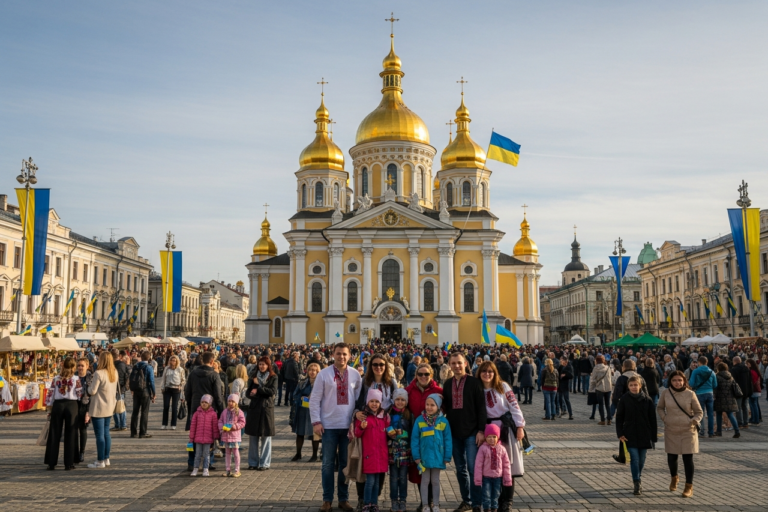
Orthodox religious holidays are big events in Ukraine. They bring families and people in the community together. On these days, they celebrate and also take time to reflect. People go to special church services, make good food, and do things that their families have done for many years. The beautiful religious buildings of the orthodox church are busy during these times.
Christmas (Rizdvo) and Easter (Velykden) are the main holidays on the Orthodox calendar. At Christmas, families have a supper with 12 dishes on Christmas Eve. They sing carols and set up nativity scenes. For Easter, people make colourful eggs, called pysanky, and bake blessed bread called paska. There are midnight church services that many go to.
These holidays mix religious ways with local traditions. That’s why they are such a special part of life in Ukraine. Here are some main things that happen at orthodox festivals:
-
People go to special church services, and these are often late at night or early in the morning.
-
Families and friends get together and share festive meals.
-
People do things like sing carols or decorate Easter eggs as part of the tradition.
Christianity Beyond Orthodoxy
While Orthodoxy is very strong in Ukraine, you will find that the country’s Christian life is full of the different faiths. The Ukrainian Greek Catholic Church is a big part of this story, mostly in the west of the country. You will also see the Roman Catholic Church, which has been there for many years. Protestants have also grown a lot since Ukraine became independent.
In this part, we are going to look at these key Christian groups. We will see what makes the Ukrainian Greek Catholic faith special. You will find out where the Roman Catholic Church is strongest in the region. We will also talk about the many types of Protestant churches in Ukraine and how fast they are growing. All of this comes together to paint a picture of a country with different forms of Christian life.
Ukrainian Greek Catholic Church
The Ukrainian Greek Catholic Church (UGCC) is one of the biggest religious groups for minorities in Ukraine. It is also the largest Eastern Catholic Church in the world. The Ukrainian Greek Catholic Church stands between the ways of Eastern and Western Christianity. It uses the Byzantine Rite just like the Orthodox Church, but it also accepts the authority of the Pope in Rome.
This special mix started with the Union of Brest in 1596. Then, a group of Orthodox bishops joined together with the Roman Catholic Church. The greek catholic church faced hard times during the Soviet era. It was not allowed to work openly and had to go underground. But after 1989, the Ukrainian Greek Catholic Church came back in public. From that time, it has seen strong growth.
Today, the Ukrainian Greek Catholic faith is a big part of life, mostly in western Ukraine. The greek catholic church has a strong role with many religious organizations and parishes. These greek catholic eparchies help millions of people, both inside Ukraine and for those who are part of the worldwide ukrainian greek group.
Roman Catholicism and its regional footprint
The Roman Catholic Church has been in Ukraine for hundreds of years. It started when missionaries showed up near the end of the first thousand years. The Church grew more in the western regions of Ukraine, a place where the catholic church was strong, like during the time of the Polish-Lithuanian Commonwealth.
The Roman Catholic Church follows the Latin rite in Ukraine. This is not the same as the Ukrainian Greek Catholic Church, which uses the Byzantine rite. They both have the same main beliefs and listen to the authority of the pope, but the way they do their church services is different from the greek catholic church and from the Orthodox too.
Now the roman catholic church is not the biggest church in Ukraine, but it is well-known and has many people. You find more catholic church communities in the western regions and central parts of the country. This is often where Polish and Hungarian groups lived in the past. The roman catholic church in Ukraine has over a thousand religious organization groups that are registered. It is still a good piece of the country’s religious life and history.
Protestant denominations in Ukraine
Even though there are not as many Protestants compared to the whole population, Protestant denominations have grown a lot in Ukraine. Since independent Ukraine started in 1991, these religious communities have done well. They have built thousands of new churches and groups all across the country.
There is a lot of change and variety in Protestantism in Ukraine. Different traditions are present. Evangelical and Pentecostal churches are growing the fastest. They are popular, especially with younger people who want something new. Baptist churches have been around for a long time. There are also a lot of Baptist groups.
People in these church groups are busy and work in many parts of Ukrainian life. They even join together with groups such as the All-Ukrainian Council of Churches and Religious Organizations. Some of the main Protestant denominations to know about are:
-
Baptist churches
-
Evangelical and Pentecostal churches
-
Seventh-day Adventist Church
Exploring Ukraine’s Religious Minorities
Ukraine has more religious diversity than just its Christian groups. There is a strong Jewish community here. The country also has a large Muslim population, mainly from the Crimean Tatar people. The Jewish and Crimean Tatar groups have deep histories in Ukraine. They have helped shape Ukrainian culture in many ways.
We can’t talk about Ukraine’s religious life without mentioning these groups. We will look at how Islam and the Crimean Tatar community connect to the country’s past. We’ll also see the lasting mark the Jewish community has left in Ukraine. Other groups like Buddhists and Hindus are there, too. Together, these faiths add to the religious diversity of the nation.
Islam and the Crimean Tatar community
Islam has been in Ukraine for many years, mostly around the Crimean Peninsula. It became strong with the Golden Horde during the 13th century. The faith grew even more when the Crimean Khanate, which was a Turkic state with Sunni Muslims, came into power. For a very long time, the Crimean Tatar people kept the faith alive in that area.
People in Muslim communities have gone through many hard times in Ukraine. The Russian take over of Crimea in the 18th century caused big problems. Later, the toughest time came in 1944, when the whole Crimean Tatar group was forced by Stalin to leave. This move was terrible and took the people away to Central Asia for many years.
In the late 1980s, the Crimean Tatars were allowed to come back. Then, when Ukraine became independent, they started to rebuild their culture and Islam faith. Things are still tough, especially after Crimea was annexed again in 2014. But even now, religious organisations are working throughout Ukraine. They help the Crimean Tatars and other Muslim communities too.
Judaism’s rich cultural legacy
The Jewish community in Ukraine has been there for many years. It has shaped a lot of life in the country. People in the Jewish community first came to this land more than a thousand years ago. They grew fast, especially when the Polish-Lithuanian Commonwealth ruled the area. There was a time when Ukraine had one of the largest Jewish communities in the world. Big cities like Odesa and Kyiv were known for being places where Jews came together. They shared their culture and built new ideas there.
But this proud story took a hard turn during the Holocaust. At that time, about 1.5 million Jews in Ukraine were killed. Life got even harder for the Jewish population because of Soviet anti-Semitism after the war. When Ukraine became its own country, only a small part of the once-large Jewish population was left.
Since 1991, things have changed. There is now a strong revival in the jewish community. Today, you can see active synagogues, schools, and places where people of the Jewish faith get together. Every year, tens of thousands of Hasidic Jews make a big trip to Uman during the Jewish New Year. This event shows that there is new life in the jewish community in Ukraine and reminds us all of a deep, lasting bond between Judaism and this land.
Other faiths: Buddhists, Hindus, and minority groups
Ukraine has more than just the large, well-known faiths. There are also many smaller religious communities, such as Buddhists and Hindus. These groups help add to the religious diversity in the country. Ukraine protects these groups through laws that say everyone should have religious freedom.
There are not as many Buddhists and Hindus as there are Christians, Jews, or Muslims in Ukraine. But you can still find their communities in large cities. These groups include both people who grew up in Ukraine and some who have come from other places. They bring their own traditions, which helps make the country’s religion life rich and full.
Even though these communities are not big, they show that Ukraine wants to give space to different ways of faith. Some of these other religious communities are:
-
Buddhists
-
Hindus
-
Neopagan movements (Rodnovery)
-
The Church of Jesus Christ of Latter-day Saints
-
Various new religious movements
Unique Ukrainian Religious Traditions
Ukraine’s spirituality shines through a mix of official church ways and strong old folk customs. These come together to make special local rituals, important sacred places, and folk holidays. People celebrate these traditions with energy, often at the same time as big church festivals.
In this section, we will talk about some of these interesting customs. We will look at the folk beliefs and local ways that are part of daily life. We will also go to some of the country’s top sacred spots and find out what beloved folk holidays mean to the people of Ukraine and how these connect them to their history.
Folk beliefs and local rituals
In Ukraine, the way people mix old beliefs with church traditions is quite common. Most see this as normal, not in conflict. Many of these customs, like some things from before Christianity, bring a special flavor to how people connect to their faith.
You can see the mix of these ways in things people do every day and on special days. For example, when someone moves into a new house, they might use amulets to keep bad luck away. You will also notice Ukrainian style in the way people use embroidery on cloths, called rushnyky, and signs like sunflowers. These are a big part of both church and regular celebrations.
The way faith and folklore come together makes the culture in Ukraine truly unique. Some well-known examples of these traditions are:
-
The midsummer festival of Ivan Kupala, which combines church and old pagan rituals.
-
Blessing homes with holy water.
-
Using pretty signs on objects for luck and safety.
-
Special funeral rites that have both Christian prayers and old folk ways.
Sacred sites and pilgrimage destinations
Ukraine has many sacred sites and places for pilgrims. People come from all over the country and the world to visit them. These places have a long history and mean a lot to the faith and story of Ukraine. One of the best known sites is the Kyiv-Pechersk Lavra. It is a big monastery in Kyiv and it is also on the UNESCO World Heritage Site list.
There are many more important places for pilgrims around Ukraine. In the Ternopil Oblast, you will find the Pochayiv Lavra. It is a large Orthodox monastery and lots of pilgrims visit. The Zarvanytsia spiritual centre, which is also in Ternopil Oblast, is a special place for Greek Catholics to go and pray.
These holy sites are for everyone. They are not only for people who are very religious. They show the culture and spirit of Ukraine. Ukraine’s story can be seen in old places like Bogit and the Babina Valley, which were used long ago for their old faith. Pilgrims also travel to Uman and Medzhybizh, which are important in Hasidic history. All these places show the many kinds of faith and the deep roots of the people who live in Ukraine.
Enduring folk holidays and their meanings
Along with the main religious holidays, people in Ukraine also have many folk holidays. These are old and full of meaning. Most come from very old times and were linked to farming and the seasons. These days, many are mixed with church traditions.
Ivan Kupala is one of the favourite holidays for the people. It happens when summer is at its longest. On this night, there are fires, making wreaths, and many ways people use water and fire, which stand for making clean or fresh, and for bringing new life. Another big holiday is Malanka, or what people call Old New Year’s Eve. Here, people wear costumes and play tricks and hold lively parties.
All these folk parties let people show and keep their Ukrainian culture. They help many keep close to their roots and to people who came before them. Other key celebrations held each year include:
-
Hasidic Jewish people go on trips to Uman in the Cherkasy Oblast to mark Rosh Hashanah.
-
People go to Medzhybizh in the Khmelnytskyi Oblast, which is where Hasidism started.
-
Different towns have their own parties for special saints or big events in their story.
Religion and Everyday Life in Ukraine
In Ukraine, religion is not just something you find in church services. It is an active part of people’s lives and has a big effect on social values. Leaders in faith often help in more ways than just giving spiritual advice. The religious diversity in the country has also helped to shape a special social scene. This is very clear in Western Ukraine, where religious life stands out even more.
The idea of freedom of conscience lets many religious communities grow. These groups give a lot to the wider community. Let’s look into how churches and their leaders take part in society, how religious diversity shapes social values, and how the bigger culture celebrates festivals together.
Role of churches and faith leaders in communities
Churches and faith leaders in Ukraine are the heart of their local communities. Their reach goes far beyond weekly church services. People trust them, not just for spiritual help but for social support too. They also act as organizers, counsellors, and stand up for others in the neighbourhood.
When hard times come, faith leaders step up in big ways. They get aid moving, bring comfort where it is needed, and help people feel steady. The church is seen as a strong part of social life. Many people have confidence in what it does. Because of this trust, these leaders can have an important role in public life and in civil society.
There are times when faith leaders from different religious communities come together to work on big problems in the country. They often do this through groups like the All-Ukrainian Council of Churches and Religious Organizations. When these leaders join forces, it shows how much they care about helping others, keeping the country together, and showing good morals.
How religious diversity shapes social values
Ukraine has many different religions, and this has helped the people learn to live together with tolerance and respect. There are a lot of religious organisations and ways to practice faith in the country. This has taught people to accept new ideas and beliefs. The law in Ukraine also supports this. Its constitution gives the right to freedom of conscience, and there can be no state religion.
Religious diversity is now a big part of what it means to be from an independent Ukraine. For a lot of people, being able to practice their faith freely is a basic value. It sets the country apart from its life during Soviet times. The presence of many strong religions means that many voices can join in talks about society and ethics.
There are many ways this mix of faiths and religious freedom shows up in everyday life of Ukraine:
-
A big focus on religious freedom as a key part of democracy.
-
People from different faiths meet and work together on important issues.
-
A culture where everyone can join in and enjoy each other’s religious holidays, even if it is not their own tradition.
Celebrating major religious festivals in Ukrainian culture
Major religious holidays in Ukraine are big cultural events. They go far beyond just what happens in religious buildings. These days, Christmas (Rizdvo) and Easter (Velykden) are very important national holidays. The whole country stops, and people of all faiths enjoy them with excitement.
Families get together for big traditional meals at this time. The whole place feels full of life with celebration. On Christmas, people have “Sviata Vechera” (Holy Supper). This meal has 12 dishes with no meat. After that, people go out and sing carols, called koliadky. During Easter, the decorated eggs—called pysanky and krashenky—stand out. People also bring baskets of special foods for an Easter blessing at church.
These religious holidays mix church services with joyful folk customs. They show what it is to live in Ukraine. Some of the main parts are:
-
Attending all-night vigils or morning church services.
-
Singing traditional carols and holiday songs.
-
Preparing and sharing special foods like kutia for Christmas and paska for Easter.
-
Visiting family and friends to join in the fun.
Conclusion
Religion in Ukraine is colourful and full of life because of its past and new ideas. To know more about the different faiths, cultural ways, and spiritual habits helps us see why Ukrainian heritage is special. It also helps us, in Canada, feel close to people from Ukraine. Orthodox Christianity plays a big part in these lives. At the same time, there are some special customs from other groups too. These things show that faith is all around in Ukraine. If you learn more about these parts of Ukrainian culture, you may find new ways to connect with people from many places. If you want to know more about Ukrainian traditions and how they fit in with life in Canada, you can always ask for a chat or hear more in a meeting!
Frequently Asked Questions
How has the religious landscape changed in recent years?
Since the fall of the Soviet Union, people in independent Ukraine have started to take part in religious practice a lot more. Religious freedom in the country has helped religious communities grow. In the past few years, there has been a big change in the orthodox church. Many people now belong to the Orthodox Church of Ukraine. This move shows that they want to break away from the old Russian influence and be part of something that is for their own country.
What are the legal protections for religious groups in Ukraine?
Ukraine’s constitution gives the right to religious freedom and freedom of conscience to all people. There is no official state religion. This means church and state are kept separate. Every registered religious group has the same rights under the law. Groups like the council of churches help people talk to each other and help protect these rights.
Which Ukrainian religious traditions might interest Canadians?
Canadians may be interested in how people in Ukraine celebrate different religious holidays, such as Orthodox and Ukrainian Greek Catholic Christmas and Easter. These days are full of special foods, old customs, and many traditions. When you look at folk holidays like Ivan Kupala, you see a mix of faith and stories from the past. The many places people visit for faith in Ukraine also show a lot about the country’s culture. This helps us learn more about the ukrainian greek catholic and greek catholic way of life, and how they keep these traditions going.