Key Highlights
-
Turkey is a secular state. Most people in the country are part of the Muslim population. But the history of this place is filled with many different faiths.
-
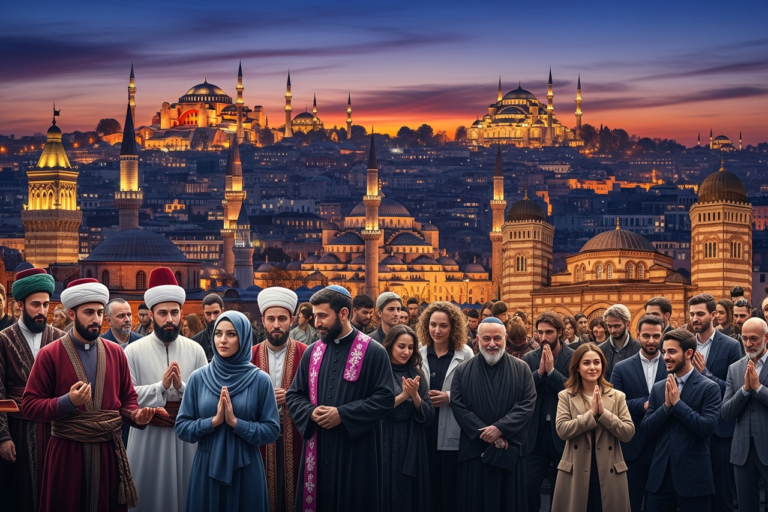
The religious mix in Turkey includes Sunni and Alevi Muslims, along with well-known Christian and Jewish communities.
-
The law in Turkey says there is a clear line between religion and the state. Still, talks about what secularism should look like often shape both politics and daily life.
-
When you go to Turkey, you can see famous places of worship like the Hagia Sophia and Blue Mosque. The country also has old sites from Christian and Jewish heritage.
-
If you are travelling from Canada, it is smart to know local customs, especially when you visit any places of worship.
-
Today, more people in Turkey want a secular life and the young people are showing many ways of thinking about religion.
Introduction
Planning to visit Turkey? Knowing the local culture can help make your trip better. One big part of this culture is religion in Turkey. The Turkish government works as a secular state, but you will see that religious beliefs are still a big part of daily life, old customs, and history. This guide will show you the different sides of religion in Turkey, from many years ago up to today. By reading it, Canadian visitors like you will understand more about Turkey and what makes its people unique.
Overview of Religion in Turkey
Turkey is a place where many faiths have lived side by side for hundreds of years. This has made a mix of spiritual life that is both strong and colourful. Most of the people here are part of the Muslim population and they follow Sunni Islam. But you will also find many other religious groups in the country. These different religious communities have helped shape the culture that you see in Turkey now.
Even though there are many Muslims, Turkey is a secular state by its laws. This means that there is no official religion, and the leaders try to keep the work of the state and religion apart. This rule affects how the major religions are followed and how all the religious groups get along with each other. In the next sections, we will look at the many faiths, some main definitions, and some numbers about religion in Turkey.
The Diverse Religious Landscape of Turkey
When you think about religion in Turkey, the first thing that may come up is Islam. It is true that most people in Turkey are Muslim, and many follow the Sunni branch of Islam. But, the country is not the same everywhere when it comes to religion.
There is also a big Alevi Muslim group that has its own beliefs and ways of worship. Besides Muslim population, Turkey is also where christian and jewish communities have lived for many years. Religious groups such as greek orthodox christians and sephardic jews have shaped Turkey’s history and culture in a big way.
These different faiths make Turkey a great place for people who like to learn about other ways of living. You can see the signs of this mix every day—like old synagogues in Istanbul and many orthodox churches all over. These places show how turkey’s history brought many people and religions together, and made it what it is now.
Key Terms and Definitions Canadians Should Know
To get a better idea of what religion is like in Turkey, you need to learn some important words. These ideas are a big part of the way people act together and what goes on in politics. Knowing them will help you see the big picture in Turkey.
This basic vocabulary makes it easier for you to talk about and notice things in Turkish culture. You will feel more sure about what you say. Here are some key terms:
-
Secular State: This is when the government and religion are kept apart, and the two do not mix officially.
-
Sunni Islam: This is the biggest branch of Islam. Most of the Muslim population in Turkey belongs to this group.
-
Alevi Community: This is the largest religious minority in Turkey. The Alevis follow a different branch of Islam, and have their own ways of practicing.
-
Places of Worship: These are spaces where people come to pray, like mosques for Muslims, churches for Christians, and synagogues for Jews.
-
Religious Minorities: There are also people who are not Muslim in Turkey. Some of these groups, like Christians and Jews, have lived there for a long time.
It is very important to know how these groups are different. For example, when you know about Sunni Islam and Alevi Muslims, this helps you understand the ways the Muslim population has its own mix of beliefs and practices in Turkey.
Statistical Breakdown of Major Beliefs
While personal faith is complex, statistics can help paint a broad picture of Turkey’s religious demographics. Official government figures often suggest a near-total Muslim population, but independent surveys show a more nuanced reality. The Presidency of Religious Affairs primarily serves the Sunni Muslim community, but many other groups exist.
A 2023 Ipsos survey provides a recent snapshot of how Turkish citizens identify. It’s important to remember that these numbers reflect self-identification and that religious minorities have a significant historical and cultural presence despite their smaller numbers.
Here is a breakdown based on the survey:
|
Religious Identification |
Percentage of Population |
|---|---|
|
Islam |
83% |
|
Non-believer/Irreligious |
12% |
|
Christian |
2% |
|
Other Religions |
2% |
|
Prefer not to answer |
2% |
These figures highlight that while Islam is dominant, a notable portion of the population identifies as non-believers, and small but historic religious groups continue to be part of Turkish society.
Regional Differences in Religious Practice
Religious practice in Turkey is not the same everywhere. It changes a lot between big cities and smaller towns. In large cities like Istanbul, you will see a more open and mixed way of living. People in these places have many different lifestyles. Some follow their religion closely, while others are more secular.
In small towns or rural places, there are often stronger traditional and conservative values. The people in these areas may feel more pressure to follow the rules of their religion. You will also see that religion is a bigger part of daily life and community events.
For religious minorities, the difference between life in large cities and rural areas can also be clear. There are houses of worship for people from different faiths all over the country, but you will see more of them where there are bigger groups of minorities, especially in large cities. For these people, daily life is very different in a busy and diverse city compared to a smaller town where most people are the same.
Historical Roots of Religion in Turkish Society
The story of religion in Turkey goes back many years. People have lived in these lands for a long time. Ancient Anatolia was home to some of the world’s oldest faiths, even before big monotheistic religions came. This deep past has a strong effect on today’s culture in Turkey.
There were groups like the Hittites and the Greeks. Over time, Christianity spread in the area. Things changed again when the Seljuk Turks came. Later, the ottoman empire rose and brought Islam to these lands. Islam soon became the main faith. Both the old Christian roots and the rule of the ottoman empire still shape who Turkish people are today. In the next parts, we will look at these key moments in more detail.
Ancient Faiths of Anatolia
Long before today’s major religions were here, the lands of old Anatolia had many different ancient faiths. There are places like Göbekli Tepe, thought to be the world’s oldest temple. It goes back to 9600 BC and shows that organized worship has been in this area for thousands of years.
The Hittites were one group that had their own many gods and goddesses. Their main city, Hattusha, was a big religious centre. People can still see parts of their old places of worship now. You will also find the big stone heads at Mount Nemrut. These show a mix of Greek and Persian beliefs.
These early faiths started the history of a land that would turn into a meeting point for religions. Polytheistic worship in the old city of Troy and the fire altars of Zoroastrianism are just some examples. All these old places of worship help us understand Turkey’s very deep and wide religious past.
The Spread of Islam in Turkey
Islam came to Anatolia slowly at first. It spread faster when the Seljuk Turks took over in the 11th century. People in Anatolia started to follow this new faith, which changed their culture and religion. Until then, the area had been mostly Christian.
The shift toward Islam got stronger with the rise of the Ottoman Empire. After the Ottomans took Constantinople in 1453, Istanbul became the heart of a strong Islamic caliphate. That caliphate led the Muslim world for a long time. During this time, Islam became important for the state and how people lived every day. It touched laws, art, and daily life.
The Ottoman Empire supported the building of beautiful mosques and schools for religion. This made Islam easy to see everywhere and showed it was a key part of their society. This history explains why the muslim population is so large in Turkey today and how Islam plays a big role in its national identity.
Christian and Jewish Heritage in Turkey
Turkey’s religious history is not just about Islam. It is also known for its deep Christian and Jewish roots. Anatolia was once a big centre for early Christianity. Many events from the New Testament happened here. For many years, this area was at the heart of the Byzantine Empire, which was a major Christian state.
Many Christian groups, like the Greek Orthodox, Armenian Orthodox, and Syriac communities, are part of Turkey’s story. Roman Catholics also live in Turkey and celebrate different rites here. All these groups have held on to their beliefs and ways, even as times have changed.
Jewish communities have lived in Turkey for more than two thousand years. In the 15th century, many Sephardic Jews came to the Ottoman Empire after leaving Spain. Now, you can still go visit historic Jewish areas, like Balat in Istanbul. These places help you see and understand this strong and rich history.
The Ottoman Influence on Modern Beliefs
The legacy of the Ottoman Empire still has a big impact on religious life in Turkey now. For many years, the rule of the empire and Sunni Islam went hand in hand. The state took care of building mosques and running religious groups. It was also in charge of religious education. This made religion and power work closely together.
You can still see the Ottoman Empire’s effect in how religious matters work in modern Turkey. The idea of a central government taking care of religious issues comes from the Ottoman times, when the state had a big role in people’s religious lives.
Even after the Ottoman Empire ended and a new, secular country was made, its culture and social impact did not just go away. The strong history of the Ottoman Empire with Islam still shapes talks about religion’s place in public and in politics in Turkey today.
Keywords: ottoman empire, sunni islam, religious education, central government, modern turkey
Islam in Turkish Culture and Society
Islam is a big part of daily life in Turkey, but it is not all the same. Most people in Turkey follow Sunni Islam. This is the main way people see Islam in the country. Still, there is more to know about the faith here.
Groups like the Alevi community and Sufi followers also have their own customs. These groups bring new ways of practicing Islam in Turkey. When you look at daily life, you will see these different traditions and how people spend time during Islamic holidays. The next parts will help you see how sunni islam, the alevi community, and daily life all shape what people do and how they live in Turkey.
Sunni Islam: The Majority Faith
Sunni Islam is the main branch of Islam in Turkey. Most of the country’s Muslim population belongs to this group. The Hanafi school of Sunni thought is the most common. It has shaped how people follow religion and see the law for many years.
The state works with religion mainly by supporting Sunni Islam. The Presidency of Religious Affairs, or Diyanet, is a government group that looks after mosques. It hires imams and gives religious education, all from a Sunni point of view. This group has a big part in how people show their faith across modern Turkey.
If you visit, you will see signs of Sunni Islam everywhere. There are thousands of mosques in the country. You will also hear the call to prayer from cities and towns five times every day. Knowing about the strong role of Sunni Islam helps you understand the religious life in modern Turkey.
Alevi and Sufi Traditions
Turkey has a Sunni majority, but the Alevi community is the biggest religious minority in the country. Alevi Muslims believe in ways that are not the same as Sunni or Shia Islam. They mix their own special rituals with a rich spiritual background. Their places of worship are called cemevis. These are not mosques.
There is also Sufism, which is the mystical side of Islam. Sufism goes way back in Turkey. It is linked to Jalaluddin Rumi, a poet from Konya. Sufism focuses on having a close and personal bond with God. There are different Sufi brotherhoods and groups that follow this practice.
These old traditions give Turkey a deep religious culture. The whirling dance of the Mevlevi dervishes, which is well known in Sufism, brings in both spiritual seekers and many tourists. Both the alevi community and Sufism give Turkey religion that is rich and complex. They are both important threads in the story of Islam in Turkey.
Islamic Festivities and Daily Customs
Islamic traditions play a big role in the daily life of people in Turkey. You can see their influence all year, and major Islamic holidays are public holidays with lots of excitement. These events are about family, thinking, and being part of a community.
Many people in Turkey show their faith with daily habits. This might be saying an evening prayer or choosing certain foods. You will notice these traditions in how people greet each other and take part in local life. Famous celebrations include:
-
Ramadan: This is a month when people fast from sunrise to sunset. It ends with Eid al-Fitr (Ramazan Bayramı), a joyful holiday.
-
Eid al-Adha: Also called the Festival of Sacrifice (Kurban Bayramı). This honours Ibrahim’s offer to sacrifice his son. During this time, families share meat and help those who need it.
-
Mevlid Kandili: This is for the Prophet Muhammad’s birth. People join in prayers and listen to religious poems.
These holidays help people feel close to each other. They show faith in a bright and lively way. Learning about these traditions gives you a better idea of daily life and culture in Turkey.
How Canadians May Encounter Islamic Practices
As a visitor in Turkey, you will see Islamic practices in many parts of daily life. The most direct way you will notice this is at the country’s beautiful houses of worship. Many old mosques are a big tourist attraction. They welcome visitors from all faiths.
When you visit a mosque, it is good to follow local customs. This shows that you respect the culture and the holy nature of the place. Keep these key points in mind:
-
Dress Modestly: Men and women should cover their legs and shoulders. Women will also be asked to cover their hair. Scarves are often given at the entrance.
-
Remove Your Shoes: You will need to take off your shoes before you go into the main prayer hall.
-
Be Quiet and Respectful: Do not speak loudly. Be careful not to disturb people who are there to pray.
-
Check Visiting Hours: Try not to visit during prayer times when the mosque is closed to tourists.
Besides mosques, you will hear the call to prayer five times a day. This sound is a gentle reminder of faith’s place in Turkish daily life.
Religious Minorities in Modern Turkey
You can’t tell the full story of Turkey without talking about the lives of religious minorities. For many years, there have been people like Orthodox Christians, Jews, and Catholics living here. Even though there are not many of them now, their impact on Turkey’s history and culture is huge.
These groups find their way to make life work in a place where most people are Muslim and the country is officially secular. The next parts will look at the daily life, traditions, and challenges that groups like Orthodox Christians, Jewish citizens, and others go through. This gives us a better look at what life is like for all people in Turkey.
Orthodox Christian Communities
Orthodox Christians have lived in Turkey for almost two thousand years. The Greek Orthodox Church is part of this history. Anatolia was once the main area for the Byzantine Empire.
Istanbul is still where the headquarters of the Ecumenical Patriarchate of Constantinople is located. This is an important place for millions of Greek Orthodox Christians around the world. The Ecumenical Patriarch is respected everywhere, but there are just a few Greek Orthodox Christians living in Turkey now.
Over the last hundred years, there are not as many Orthodox Christians in Turkey. Even though their numbers are small, they keep looking after their churches and schools. They work hard to keep their way of life and customs. Orthodox Christians show all of us how Turkey is made up of people from different backgrounds, even with tough times happening with politics and groups getting smaller.
Jewish Life and Traditions
Jewish communities have been in Anatolia for over 2,000 years. In the 15th century, the Ottoman Empire welcomed Sephardic Jews who left Spain because of trouble there. This group grew and got strong. For many years, they helped a lot with trade, culture, and arts.
Most Jewish citizens in Turkey live in Istanbul now. They keep up synagogues, schools, and cultural centres that help them hold on to their past. Their community is smaller today than before. Still, it is very active and important in the city, where people from many backgrounds live together.
You can see this history in places like Balat, which is Istanbul’s old Jewish area. You can also visit synagogues that are in great shape. These places show the long time of living side by side and how traditions in Jewish communities stay strong in Turkey, even with changes.
Armenians, Syriacs, and Other Groups
Turkey is home to more than just the greek orthodox and jewish communities. There are other religious groups here too. One is the armenian orthodox community. This group has lived in Anatolia for many years. They have their own churches and traditions that have lasted a long time.
The syriac orthodox community is also known as syriacs. They are one of the oldest christian groups in the world. They speak their own language, which is a kind of Aramaic. Their churches and monasteries are found mainly in the southeast of the country. There are also smaller groups like chaldean christians and some protestant groups.
Each of these communities adds something special to Turkey’s rich mix of religions. They try to keep their ways and beliefs alive, sometimes facing problems. Still, they practise their faith in the same places their families lived for many generations.
Challenges and Opportunities for Minorities
Turkey’s constitution gives everyone freedom of religion. Still, religious minorities in the country face some challenges and have chances too. These groups have both a strong history and legal protection, but they also deal with a hard legal and social system.
The Treaty of Lausanne from 1923 gave Greeks, Armenians, and Jews legal minority status. The treaty did not include other groups like Syriacs or Alevis. Because of this, there are differences in rights and legal recognition between groups. There has been some progress on human rights, but some troubles are still there.
Some main concerns and changes are:
-
Legal Recognition: Many groups don’t have their places of worship or community foundations officially recognized.
-
Education: It can be hard for religious minorities to offer religious education to their children.
-
Property Rights: There have been past arguments over who owns community properties and places of worship.
-
Social Acceptance: A lot of Turkish people support diversity, but societal prejudice can still make life tougher for some religious minorities.
Secularism and the Turkish Constitution
One of the main ideas in the modern Republic of Turkey is to be a secular state. When Mustafa Kemal Atatürk started the republic in 1923, he set it up to be separate from religion. This was a big change from the Ottoman Empire, where religion was part of how the country was run.
This means the Turkish government is set up by law to not be part of any religion. The rules in the constitution have clear steps, or provisions of article, to keep religion and the state apart. These rules also make sure that every citizen has the right to follow their own beliefs. The info below looks at the main points of this secular government, the laws that support it, and the ongoing debates around it.
Principles of Secular Governance
The principle of secularism, also called laïcité, is key in the Turkish Republic. In Turkey, it is different than in some Western countries where secularism is just not having a state church. In Turkey, the state often steps in and manages how religion shows up in public life.
The main belief is that religion should be something private, up to each person, and it should not get in the way of how the order of the state works. Turkey does not have an official religion, even though most people are Muslim. The idea was to make the country more modern and keep religious leaders out of politics and law.
Atatürk brought in this principle to build a strong national identity based on being a citizen, not on what religion you have. This was a big change from the old Ottoman system, where religion was linked to both who you were and how the country was run.
How Law Separates Religion and State
The separation of religion and state in Turkey is set out in its constitution. Some provisions of article make sure that the state stays neutral about faith. This means no one religion can take over the political system. These laws are there to keep the country secular and protect the freedom of belief for all people.
Important groups help to keep this rule working. For example, the Council of State is the top court that deals with these matters. It has a history of using and defending secularist laws, especially for topics like religious signs in the public sector.
There were tough rules for many years, such as not letting people wear headscarves in government offices and schools. In the last few years, these rules have been easier, but the laws that keep religion separate from state work are still a big part of Turkish law, even if many talk about changing this.
Controversies Surrounding Secularism
Turkey’s way of being a secular state has always started arguments. For years, people in the country have talked a lot about it. Many groups have strong opinions about what it should really mean to be a secular state.
When the Justice and Development Party (AKP) came to power in the early 2000s, these arguments got even bigger. This party started off as part of political Islam. The AKP went against the tougher ideas of secularism. This led to big changes in policy.
Some of the main things people fight about are:
-
The Headscarf Ban: There used to be a ban on wearing headscarves in higher education and the public sector. For a long time, this was a major problem that people argued about before the ban was taken away.
-
Religious Education: People keep arguing about what should or should not be taught in religion classes in schools, and if they should be mandatory or not.
-
Role of the Diyanet: The Presidency of Religious Affairs now has more money and more power, which has made people ask if the state is really fair and neutral.
-
Hagia Sophia’s Reconversion: Making the Hagia Sophia go back to being a mosque instead of a museum was a big deal for many. It was seen as a strong step away from what Atatürk wanted with the secular state.
Reflections for Canadian Perspectives
For people coming from Canada, the way Turkey mixes religion and government can be both well known and new. Canada and Turkey both have many different groups, and they are working out how to let people be free while also staying together as a nation. Still, their history and the ways they handle things are not the same.
Canada’s system of multiculturalism wants many faiths to be shown out in the open, but Turkey’s rules of secularism have mostly kept religion back in private places. The gap between these two styles is most clear in spaces run by the government.
Here are some ways to compare:
-
Public Sector: Canada allows signs of religion in public jobs, while Turkey has a lot of talk about this idea.
-
Education: In Canada, a few provinces pay for religious schools, but Turkey gives religion classes that teach Sunni Islam, which is a different way of handling things.
-
Human Rights: Each place says religious freedom is main to human rights, but because their laws and pasts are not the same, they come to different end results.
-
State Neutrality: What it means for the state to be neutral is not equal in the two countries, so they each have a different way to deal with religious differences.
Religion’s Role in Turkish Politics and Law
Even though Turkey is called a secular state by the constitution, religion still plays a big part in politics and law. The Turkish government tries to keep a balance between secular rules and the religious beliefs of its people. This mix has started a lot of political movements and has been the centre of many public talks for years.
There are political parties shaped by religion. People often talk about religious rights and laws. The next sections will show how faith has an impact on political groups, present debates about law, and new trends in making religious rules.
Parties and Political Movements Influenced by Faith
Political movements based on religious beliefs have shaped Turkey for many years. These groups often rise when the government pushes hard for a strict secular way of life. They call for religion to have a bigger role in the country.
The most well-known example is the Justice and Development Party (AKP). This party grew out of older religious groups and has led Turkey since 2002. The AKP gets much support from people who are religious and conservative. Many in this group felt left out before, as the government pushed for strict secular rules.
The AKP calls itself a “conservative democrat” party, not an “Islamist” one. But many of its moves help Islam stand out more in public. The AKP ended the ban on headscarves. It also gives more money to religious groups. This shows the party’s ideas and choices come from their faith.
Contemporary Debates on Religious Rights
The talk about religious rights in Turkey is both busy and not easy. Some people want more freedom of religion for all, like being able to show their faith out in the open and build places of worship without too much red tape. People often talk about this using words around human rights.
But these talks can split people. Some who support a secular government fear that bigger religious rights, mostly for the Sunni group, might chip away at Turkey’s secular laws. They say a few people use calls for religious freedom to break down the walls that keep religion and government apart.
At the same time, religious minorities push for full legal recognition and the equal rights that others get. The alevi community, for example, has been working for a long time to have their places of worship, called cemevis, officially accepted like mosques are. All these talks show that people see Turkey’s future in more than one way.
Trends in Religious Legislation
In the past few years, Turkey has changed some of its laws related to religion. The Grand National Assembly of Turkey now lets people show their religion more in public, mainly for the Sunni majority.
One big change was removing the rule that did not let people wear headscarves in public places, like at school or at work for the government. The government said this law was to give more religious freedom. But, some people think it moves the country away from old, secular rules.
More new laws give more money to the Presidency of Religious Affairs. There are also more religious schools now, called Imam Hatip schools. These laws from the Grand National Assembly show that the country is now putting religious groups deeper into the government. This is a new way for Turkey, as it moves away from much stricter secularism from before.
Comparing Turkish and Canadian Approaches
As visitors from Canada, you may want to see how Turkey deals with religion compared to your own country. The two places are both modern democracies that care about human rights. But each has its own way of handling religion because of their histories.
In Canada, the model supports multiculturalism. People can show their religion in many open ways and feel the freedom to live how they want. Turkey uses a harder kind of secularism and has tried for a long time to keep religion out of public life. But, in the last few years, this has changed a little.
Here are some main things to think about:
-
Public Expression: In Canada, you can wear a religious symbol—like a hijab or a turban—while in a public job and that right is protected. In Turkey, it was not allowed for many years. Even now, it is still something people talk about a lot.
-
State Funding: People in Canada talk about if the state should pay for faith-based schools. Turkey’s government gives money and support right to a big religious office for sunni islam.
-
Higher Education: Campuses in Canada be open and let people show or not show their faith. It’s up to each person. In Turkey, what part religion can play at universities has caused a lot of talk and even fights in the country.
-
Separation of Church and State: Canada keeps church and government apart but is more easy-going about it. Turkey writes this
Notable Religious Sites and Pilgrimages in Turkey
Turkey has many amazing places of worship. People from all over the world come here every year. These sites are not only tourist attractions. They also hold the history of the land and tell about the faiths that have been here through time. You will see the well-known domes in Istanbul and old monasteries built in rocks. There is much spiritual heritage for everyone to see.
If you want to know more about big old mosques from the Ottoman period or see old Christian churches, there is lots to explore. You can also visit the historic synagogues in Istanbul. Turkey will take you on a special trip filled with history and beliefs. Be ready to see the famous Hagia Sophia and the Blue Mosque.
Mosques of Historical Significance
Istanbul is known for its big and stunning mosques. The city is famous for the Blue Mosque. The mosque is also called the Sultan Ahmed Mosque. It gets its name from the blue tiles you can see inside. Built in the early 1600s, it has six tall minarets that stand out in the city.
These places of worship are about more than faith. The mosques were part of large areas. These often had schools and hospitals by them, and markets as well. The heart of life in the ottoman empire was shaped by these spaces. You can see amazing designs, large domes, and slim minarets that show the skill of people from that time.
If you visit these mosques, you get to see a big piece of the ottoman empire’s history. You are walking where sultans and so many worshippers once walked. You get to learn about Turkey’s culture and its faith, all in one place.
Christian Churches and Monasteries
Turkey has a very rich Christian heritage. The country is home to some of the oldest churches and monasteries in the world. The most well-known of these is Hagia Sophia. This building was first made to be the main cathedral of the Byzantine Empire. Its large dome has shown great skill in building for more than 1,500 years.
There are many other important Christian places you can visit. In Cappadocia, there are many cave churches. These have old paintings on their walls. In Istanbul, you can go to the churches of the greek orthodox and armenian orthodox groups. They have been holding services for hundreds of years.
These places of worship are not just old. They are still used today by Christian people living in modern Turkey. If you visit, you will get to see a part of history that is older than Islam and is still a part of the country now, even if the group is small.
Jewish Synagogues and Cultural Centres
The Jewish heritage in Turkey can be seen through old synagogues and cultural centres, especially in Istanbul and Izmir. These places show the story of Jewish communities who have been there for thousands of years. A big part of this story includes Sephardic Jews who came from Spain and made the culture richer.
In Istanbul, Neve Shalom Synagogue is the biggest and most active synagogue where Jewish citizens go. The Ahrida Synagogue is in the Balat district. It is one of the oldest in the city. Its design shows many years of Jewish life in the city.
When you visit these synagogues, you get a special look at the history of Jewish communities in Turkey. Many of them have had repairs to keep them looking good. Some places, like the Jewish Museum of Turkey, focus on keeping and sharing the important culture and ways of Turkish Jews. These synagogues and centres help people learn about the country’s multicultural past.
Popular Pilgrimage Routes for Visitors
Turkey is home to many pilgrimage routes. These paths bring in both people who be devoted to their faith and those who be interested in stories from the past. The trips let you walk where ancient religious people once did. You can feel a strong link to the old spiritual side of the land. For those who be Christian, a well-known pilgrimage is walking where St. Paul once went or going to the Seven Churches of the Apocalypse. These churches are the ones named in the Book of Revelation.
These pilgrimage routes are more than just another tourist attraction. They give people a real way to see the country’s wide mix of religious history. These journeys join up old cities, ruins, and wonderful landscapes. People have seen this land as holy for thousands of years.
Popular places for a pilgrimage are:
-
The House of the Virgin Mary: Found close to Ephesus, many Catholics and Muslims think this is the place where Mary spent her last years.
-
Konya: This city is famous as the last home of Rumi, the Sufi mystic. It welcomes Sufi believers along with many other people from all over who look for something spiritual.
-
Antioch (Antakya): In this city, followers of Jesus first got called “Christians.” That makes it a very important spot in early Christian history.
-
Harran: Near the border with Syria, this city is talked about in the Hebrew Bible as where Abraham lived.
[Book
Changing Religious Trends and Social Attitudes
The way people practice religion in modern Turkey keeps changing. Things like globalization, bigger cities, and easier ways to get information are starting to shape how people think about faith. This is true for everyone, especially young people. While many still hold on to old traditions, new ways of thinking are becoming more common in the country.
You can see more kinds of ideas, mostly in the cities. Plenty of people are choosing to live in a more open way. Some do not follow a religion at all. At the same time, many still show clear signs of strong beliefs. In the next parts, we will talk about how young people, city life, and what many think about religion help to shape what faith looks like in Turkey today.
Youth Perspectives and Urbanization
Turkey’s youth play a big role in social change. Their views about religion are more mixed than they have ever been. More people leave smaller towns and move to large cities for higher education and jobs. They see new ways of living and meet different people.
This move to cities helps change how people think about religion. In the busy, mixed crowds of Istanbul and Ankara, young folks feel freer. They can ask questions about old customs and make their own choices. Some are very religious, some are not, and some are in the middle.
Young people in Turkey all have their own way of thinking. Some want to be more conservative or religious. Some choose to be secular or do not care much about religion. This mix of ideas between the young is important. It is changing what the country may look like in the coming years.
Rise of Irreligion and Secular Lifestyles
One of the biggest changes people have seen in Turkey over the past few years is the way more people are choosing to live without religion or be part of a secular lifestyle. Some surveys, like the one from Ipsos, say that about 12% of the people now call themselves non-believers. This number is important for a country where many think almost everyone is religious.
This change stands out even more if you look at younger people and those who live in cities. Many of them have the internet, feel unhappy with the way religion gets mixed with politics, and want to live life the way they want. All of this makes more of them move toward a secular way of life. For lots of people, living a secular life is something they have chosen. They do not want to be part of organized religion.
Religion classes are mandatory in schools and teach about Sunni Islam. But these classes sometimes do something no one expected. They can make students start to ask questions and think more. Some young people then look into other ideas outside of religion, or even no religion, and that adds to why more people in Turkey are living without religion.
Common Misconceptions About Religion in Turkey
Many people come to Turkey with ideas about the religious life that are not always right. But, the truth is more complex than people think. It’s good to clear up these misconceptions so you can have a better understanding of the country.
Turkey is a secular state, but most people here are Muslim. This mix often confuses outsiders. To truly know what religion and living together mean here, you have to see it for yourself.
Here are some common myths people have:
-
All Turks are devout Muslims: Yes, most people are Muslim, but how much they practice their faith is not the same for all. There are also many who are secular or do not follow a religion.
-
Turkey is an Arab country: Turkey is not an Arab country. The people here have their own language, history, and culture.
-
Religious minorities are non-existent: Even though the groups are small, Christian and Jewish religious minorities have been part of Turkey for a long time and still are today.
-
Secularism means freedom from religion: In Turkey, being a secular state does not mean there is no religion at all. It means the state has had control over religion in public life.
You will see there are many different ways that people in Turkey live, work and believe. Getting to know the truth helps all of us understand each other better.
Conclusion
To sum it up, knowing about the religious scene in Turkey is very helpful for Canadians who want to understand the people and the way of life there. Islam plays a big role in Turkey, but you will also find many other faiths. The mix of beliefs really affects daily life and how people act. When you are there, it helps to know the history, the government’s role in religion, and how things are done now. This knowledge will make your experience even better. It is smart to show respect and keep an open mind if you want to connect with others. If you plan to visit, take the time to learn about the local ways and get involved. If you want more advice or help for your trip, you can get a free consultation!
Frequently Asked Questions
Is there religious freedom in Turkey today?
Turkey’s constitution says people have the right to religious freedom, and this is a basic human right. The Turkish government runs as a secular state, but the way it handles religion can be complicated. People can practice the religion they choose, but religious minorities sometimes do not get legal recognition or the same rights as others. This is why there are still many talks about how things should be for these groups.
How are Canadian visitors expected to behave at religious sites?
When you go to places of worship, like the Blue Mosque, make sure to dress modestly. Your shoulders and knees should be covered. Women will need to cover their hair, and many places give you a scarf for this. Take off your shoes before you go into prayer areas. It is important to be quiet and respectful, especially during prayer times.
What is daily life like for religious minorities?
Daily life for religious minorities, like Jewish communities and Orthodox Christians, can be different. They have freedom of religion, but there are still challenges. For example, it can be hard to get full legal recognition for their places of worship and institutions. They might also feel pressure in the community. Most of them live in large cities. There, they stay active in their community centres, schools, and places of worship.