Key Highlights
-
More than 95% of Thai people follow Theravada Buddhism. This has a big effect on their daily life and how they see right and wrong.
-
Thailand allows a number of religious groups in the country. The country gives everyone religious freedom, but Buddhism is special to many of the people there.
-
Buddhist temples are very important places in Thailand. Thai people use them as spots to worship, learn, and meet with others.
-
Thailand has some special religious festivals like Songkran and Loy Krathong. People all over the country take part, and the festivals show most of the rich culture too.
-
Even though Theravada Buddhism is the biggest faith, some people in Thailand also practice Islam, Christianity, and other religions. This helps make the country’s religious groups more mixed and interesting.
-
When you visit, you should respect local ways. Be sure to follow the right rules at religious places like Buddhist temples.
Introduction
Welcome to a journey into the heart of Thailand’s spirit. When you plan your visit, it helps to know about the local faiths. Doing so can make your trip richer and help you connect with Thai culture. Religion plays a big part in daily life in this lovely country. It shapes the routines of people and their big events, too. There are a few recognized religions here, but one main faith gives shape to the nation’s way of life. In this guide, you will learn about different religious groups and what they do. This is all from the view of a Canadian exploring faith in the Land of Smiles.
Overview of Religion in Thailand
Religion is a major part of life for thai people. The dominant religion in Thailand is Buddhism. It has been the main faith for a very long time, and now the vast majority of the people follow it. Buddhism helps guide people on how to live. It teaches about kindness, patience, and living in peace with each other.
This strong belief system is one reason why thai people show so much respect for other religions. Even though Buddhism is at the heart of life in Thailand, the country also officially accepts other recognized religions. This makes for a mix of many beliefs in the community. In this article, we will talk about the main faiths in Thailand, share some facts about how many people follow each religion, and explain how believing in something greater shapes daily life.
Main faiths practiced across Thailand
The main faith in Thailand is Theravada Buddhism. About 95% of the people follow this religion. Theravada Buddhism is a branch that focuses on monks and self-growth. It came to this area around 300 years before Christ. Over time, it has had a big effect on the country’s values and culture.
Besides Buddhism, Islam is also practiced by many, mostly in the southern part of the country. Christianity has been here for a long time too. There are still groups that have been around for centuries.
There are other smaller religions in Thailand as well, such as Hinduism and Sikhism. These faiths help add to the country’s mix of religions. The king and the Thai constitution help keep all religions safe. They make sure people can follow their beliefs and show respect to others.
Religious demographics and statistics
The religious landscape of Thailand is overwhelmingly Buddhist. The vast majority of the total population, over 95%, identify as followers of Theravada Buddhism. This includes most of the ethnic Thai population and many among the tribal populations.
The largest religious minority is the Muslim population, numbering around one million people. They are concentrated mainly in the four southernmost provinces that border Malaysia. Christians make up the next significant group, with a population of about 250,000.
Smaller communities of Hindus, Sikhs, and followers of Confucian ethics also exist, though their numbers are quite small. This demographic breakdown highlights both the dominance of Buddhism and the presence of a diverse range of minority faiths.
|
Religion |
Approximate Percentage of Population |
|---|---|
|
Theravada Buddhism |
95% |
|
Islam |
4-5% |
|
Christianity |
Less than 1% |
|
Other Faiths |
Less than 1% |
Role of spirituality in Thai society
Spirituality runs through every part of life in Thailand. It is present in the way thai people live and interact. The religious life of people there shapes how they behave each day. It sets a moral code that says people should show kindness, get along with each other, and accept differences. These beliefs shape what thai people do and how they get along. It also puts a special feeling in the social atmosphere.
For most thai people, faith is a daily way of life. It is not only a list of rules. You can see this in small things they do. They greet with the wai. They show respect to elders and monks. Rituals and offerings happen often. These actions keep them close to their religious life every day.
Spirituality is a strong part of society. Even if some people do not feel very religious, they still follow habits that come from these beliefs. This helps everyone feel like they belong to the same group. It brings the culture together. You can see it and feel it when you visit.
The Influence of Buddhism in Daily Life
Buddhism is everywhere in Thailand. It is the main religion in the country. Theravada Buddhism tells people how to live. It affects events on the calendar, art, and buildings. You see Buddhist monks getting food in the morning. Buddhist temples can be found all over. For most Thai people, Buddhism is part of how they live each day.
People give a lot of respect to Buddhist monks. The Supreme Patriarch is their leader. The teachings are important in Thai life. Many everyday habits come from Buddhist ideas. Now, let’s talk about what Theravada Buddhism believes. We will look at why Buddhist temples matter and how the faith makes a difference in the daily life of Thai people.
Theravada Buddhism—beliefs and practices
Theravada Buddhism is thought by its followers to be the oldest and most traditional school of Buddhism. It is about working on yourself through meditation and learning. The main goal is to reach enlightenment. Theravada Buddhism, with strong roots in Sri Lanka, is focused on monks and sticking to what the Buddha really taught.
The most important religious practices in Theravada Buddhism are built around the Eightfold Path. This path helps people get past suffering. It means building up wisdom, doing good things, and training your mind. For regular people, this can mean making merit with good actions. They might give food to monks, follow certain rules, and join in temple events.
One main idea in Theravada Buddhism is that it is a “way of life,” not just a strict religion. It acts as a guide for thai people through daily life. It teaches people to be caring and aware of the present moment.
Temples and their significance
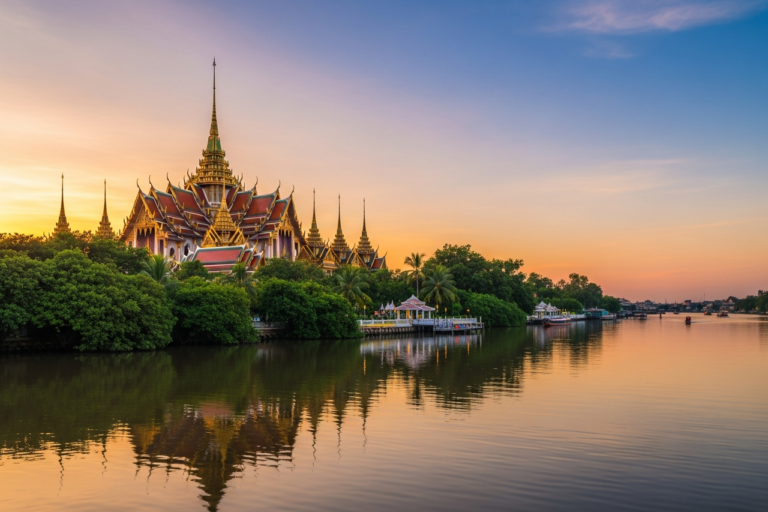
Buddhist temples, called “wats,” are much more than a place of worship in Thailand. These buildings are the heart of the community. Temples are open for things like religious ceremonies, learning, and meeting with others. You will see buddhist temples in every city and small town. Many have beautiful design that shows the religious principles at the centre of people’s lives.
Temples do more than just help with worship. People go there to pay their respect to the Buddha, make offerings, or get advice from monks. Some big life moments, like festivals and funerals, often take place at the local temple. The Phra Pathom Chedi found in Nakhon Pathom is the world’s biggest stupa and has special importance for many.
Once you go into a temple, you step into a space with a lot of spiritual depth and meaning. Temples are there for:
-
Community meeting and big festivals.
-
Learning about Buddhist teachings and meditation.
-
Showing respect to past family and making merit.
How Buddhism shapes the daily routine
Buddhism plays a big part in the daily life of the Thai people from morning to night. At dawn, you can often see people giving food to buddhist monks as they walk in the streets. This is called “making merit.” Many believe this will bring good things into their lives, and it is one of the things people do every day.
The calendar in Thailand uses buddhist holidays. These are public days off. On these days, thai people who follow the faith will go to the temple. They pay respect to the Buddha and give donations. Religious beliefs also shape how people act, like taking off shoes before going into a home or a temple, and always showing a lot of respect to monks.
There is another important tradition for young thai men who are 20 or older. They may become buddhist monks for some time, often just a few days to three months during the rainy season. They leave normal life for a bit. They go to study and spend time in meditation. This shows how deep the connection is between the people and their beliefs.
Other Religions in Thailand
While Buddhism is a big part of life in Thailand, there are also other religious groups in the country. Thailand is known to be friendly toward people with different faiths. The country’s constitution says everyone should have freedom of religion. You can find Muslims, Christians, Hindus, and Sikhs living there. These groups are small, but they bring color and life to the area.
People from these communities have lived together in peace for many years. This mix has helped grow the nation’s rich culture. The king’s job is to be the “Upholder of All Religions.” This shows how serious the country is about religious harmony. Next, we will talk about who these people are and what they believe.
Islam—communities and beliefs
Islam is the largest minority religion in Thailand. There are about one million Muslims in the country. Most of the Muslim population in Thailand comes from Malay families. They live mainly in the southernmost provinces, close to the border shared with Malaysia.
Many in these communities follow Islamic traditions but also keep some local customs. The central islamic committee of thailand gives advice to the government. It helps take care of both religious and school issues for Muslim people.
The government backs Islamic schools. It also lets Muslims in the southernmost provinces use parts of Islamic law for families and money matters, like when someone dies. This is one way the country shows respect and support for the Muslim population.
Christianity—presence and heritage
The history of Christianity in Thailand goes back to the 1500s. That is when Portuguese traders and european missionaries came to the country. The Thai king helped set up the first Christian mission at that time. He also gave money to build the first Roman Catholic church.
Over the years, both Catholic and Protestant missionaries worked a lot in Thailand. They had a hard time getting people to join Christianity since most people in Thailand followed Buddhism. Even so, they made a big difference in things like modern health care and teaching. For example, some American missionaries brought in the first printing press with the Thai alphabet.
Now, there are about 250,000 people in the Christian community in Thailand. This group is seen as one of the official religious groups in the country. They can worship freely and have set up many churches and organizations. They help make Thailand’s religious world more mixed and full.
Hinduism, Sikhism, and other minority faiths
Beyond Buddhism, Islam, and Christianity, Thailand has smaller groups, like Hinduism and Sikhism. These religious groups may have fewer people, but they be part of Thai society. They still keep their own religious identity.
Many Thai people who have roots in India belong to Hinduism and Sikhism. Their temples are in places, such as Bangkok. These communities have lived in Thailand for a long time and be part of the country’s mix of cultures.
The Thai government is open to new religious groups and gives freedom for people to worship. Because of this, these small groups can follow their own beliefs. That helps make Thailand’s spiritual life rich and mixed.
Historical Roots of Thai Religion
The roots of Thai religion connect closely with Theravada Buddhism. Buddhist missionaries from Sri Lanka brought this belief to the country. Theravada Buddhism is the main faith for the Thai people. It guides the way they live each day and helps create social harmony in the country. The Thai people follow many cultural practices because of this.
But Thailand includes other religious groups too. There is a large Muslim population, and many of them live in the southern border areas. Over the years, religious identity in Thailand has changed. Some of these changes came from the work of European missionaries. The Ministry of Culture also helps by giving support for religious education and freedom for all.
These changes and the support people get in Thailand help everyone live and work together. You can see the way religious groups grow side by side. Religion is important to the people and shapes the country in many ways.
Evolution from ancient traditions
The faith you find in Thailand today grew from old customs and beliefs brought in from other places. Early on, people in Thailand followed animist and folk beliefs. You can still see signs of these in modern Thai spirituality. Everything started to change when Buddhism came to Nakhon Pathom around 300 BC.
Thai Buddhism is special. It mixes parts of theravada buddhism with the local ways of doing things. Because of this mix, the faith is now an important part of Thai people and their culture. It feels like a true Thai way of life, not something from somewhere else.
Big events in history, like building new kingdoms or coming into contact with other cultures, helped shape this change. What we have now is a deep spiritual tradition. It tells the long and winding story of the Thai people and their beliefs.
Impact of historical events on religious landscape
Thailand has a rich history of religious changes. In the 17th century, during King Narai’s rule, European missionaries came and had a big impact. After he died, people pushed back against the West. Westerners were sent out, and the country did not open itself to others for about one hundred years.
In the 19th century, things changed when King Mongkut, also known as Rama IV, decided to welcome the West back. He met American missionaries and learned English and science from them. He respected people who followed Christianity, even though he said its ideas were “foolish.” Still, he liked their good actions. His support helped to set up the idea of religious tolerance in Thailand.
King Bhumibol Adulyadej, also called Rama IX, helped keep religious harmony strong through his long time as king. The government worked to recognize some religions officially. This helped keep the peace and order between different groups, so people could live together without conflict. Thailand still shows this tolerant way of life today.
Religion and monarchy
The link between religion and the monarchy in Thailand is strong and clearly set out in the constitution. Buddhism may not be marked as the official state religion, but it does get special treatment. The king must be a Buddhist by law. This bond has lasted for a long time, and people have always seen their king as the one who looks after the faith.
The Thai constitution calls the king the “Upholder of All Religions.” This means the king has to look out for Buddhism and also care for other faiths that are recognized in the country. In the past, kings have helped build churches and mosques. This shows that they take this duty seriously.
Because of this setup, even though Buddhism is close to what it means to be Thai, other religions still have respect and care from the king. This tradition is a big reason why the country has been welcoming to many religions for many years.
Religious Festivals & Celebrations
Thailand’s calendar has many colourful religious festivals and celebrations. These big events give people a great look at the heart of the country. Most are linked to Buddhist holidays, but people of other religions also share their traditions out in the open. To see these festivals is to see the faith, sense of togetherness, and old customs in Thailand.
The country is known for huge water play fights and quiet times when people set lanterns free into the sky. People who live there, and people who visit, look forward to these special days. The spirit of Thai faith and the country’s deep traditions really shine in these events. Now, let’s look at some wild Buddhist holidays, festivals of smaller religions, and what makes each time unique in Thailand.
Unique Buddhist holidays observed in Thailand
Thailand has some special Buddhist holidays that are very important to the Thai people. These special days are national holidays, and the whole country takes part. People from different religious groups come together to join in. These events show how strong national Buddhism is in the country.
One holiday many people know about is Vesak Day. This is when people remember the birth, the moment of enlightenment, and the death of Buddha. On Vesak Day, Buddhists go to the temple. They give merit, listen to teachings, and join candle processions. It is a peaceful and beautiful time. It shows the heart of being devoted to Buddhism.
There are other big holidays too:
-
Songkran: This is the Thai New Year. It happens in April and is best known for big water fights all over Thailand. People throw water to wash away bad luck from the last year.
-
Loy Krathong: This is in November. It is called the “festival of lights.” People float little baskets on the water and send lanterns into the sky. It is a way to thank the spirits and let go of bad feelings.
Festivals celebrated by minority religions
While Buddhist festivals are the main ones in Thailand, people from other religions also have their own special celebrations. There is real tolerance in Thailand, so these groups get to follow their own traditions in the open and with a lot of joy.
For the Muslim population, especially in the south, important holidays include Eid al-Fitr, which comes at the end of Ramadan, and Eid al-Adha. On these days, people pray, have feasts, and spend time with family. It helps the community come together.
Christian people mark Christmas and Easter with church and other events. Hindus and Sikhs also have big festivals such as Diwali and Vaisakhi. These all make Thailand’s culture even richer and show the different faiths that live together peacefully in the country.
Customs during major festivities
During big festivals in Thailand, people follow special customs and religious practices that show the heart of Thai culture. One thing many do is called “making merit.” This can mean giving food or gifts to monks. It can also be letting birds or fish go, or giving money to temples.
There is also a lot of respect for the monarchy. For example, if a royal picture is shown at the movies, or if the national anthem plays in a public space, people will stand up as a sign of respect. Doing this is a key part of public behaviour.
Festivals are important for families too. Many people go back to their hometown to be with family, eat good food together, and join in with local traditions. These events help people grow closer with their faith and their village. The strong ties people make during festivals are a big part of why Thai culture is so special.
Religion and Thai Culture
Thai culture and religion go hand in hand. You cannot have one without the other. Religious principles shape how the thai people act, and help make their unique arts and buildings. Buddhism is at the heart of thai culture. It gives the thai people their way of seeing beauty and sets their rules for how to live.
This close bond helps build the religious identity of the thai people. It leads to a culture where faith is part of daily life. Let’s see how belief has shaped customs, arts, and how it affects family and communities. We’ll also talk about the way thai culture asks people to behave in social situations.
Influence on customs, arts, and architecture
Religion has a strong impact on Thai culture, and you can see this clearly in the arts and buildings. Many traditional Thai art forms, like sculpture, painting, dance, and music, come from religious ideas. Most of these stories are from Buddhism and Hindu legends. The smooth and careful moves in Thai dance often show stories about gods and spiritual things.
Temple buildings around the country also show how deep this spiritual influence goes. The many-layered roofs, shiny tiles, and calm Buddha figures are all there to help people feel close to their faith. These temples are more than just places; they are made to show what people believe.
Mixing art with religion in this way gives people a strong feeling of religious identity and pride in Thai culture. It shapes how people see the world and helps share what is most important in Thai life with others from both in and outside the country.
Spiritual beliefs in family and community life
Spiritual beliefs are at the heart of family life and community life in Thailand. In the family, thai people learn to respect their elders. This comes from Buddhist teachings about hierarchy and karma. Children know they must honour their parents and grandparents. This helps the family stay close.
In the community, the local temple is very important. It is the place where thai people go for festivals, ceremonies, and to help each other. Everyone gathers there, so it brings people together and makes them feel they belong. It also helps everyone care about the good of the whole community.
These beliefs help thai people feel joined together and stronger. “Making merit” is not just for personal spiritual good. It is also about helping the community and keeping everyone safe and happy. Society becomes a place where people look after each other.
Religious etiquette and social interactions
Knowing how to act in religious situations is important for good social life in Thailand. The habits people have every day often come from religious practices and show respect for the beliefs of the Thai people. One good example is the “wai,” the way people say hello by pressing their hands together like they are praying. You will see this a lot in daily life.
The idea of rank matters a lot, too. People look up to monks and follow certain rules when they meet them. For instance, women should not touch or sit next to a monk when they are on a bus or a train. The seats right at the front of buses are almost always set aside for monks.
Here are some tips to help you show good manners:
-
The head is thought to be the holiest part of the body, so do not touch it.
-
Feet are seen as dirty, so you should not point them at people, at holy images, or at photos and statues of the royal family.
-
Wear modest clothes when you go into temples. Make sure your knees and shoulders are covered.
You can have a good time and get along better with others in Thailand when you follow these simple rules. Doing this will show that you value the religious practices and way of daily life of the Thai people.
Religious Freedom and Government Policy
Thailand’s government supports religious freedom. This idea is part of the country’s constitution. While Buddhism gets a lot of support from the state, the government also helps other recognized religions. The Ministry of Culture and other groups give this support too. The goal is to bring social harmony to people of different faiths.
There are some rules and habits that have limits and preferences. The government’s role with faith is not simple. It tries to protect people but also has to set rules. Below, we will talk about what the laws say for religious practice, explain how they help faith groups with less people, and look at how much social harmony and tolerance there is.
Laws protecting or limiting religious practice
The Thai constitution gives everyone basic rights, like the freedom to follow any religion and to practice it, as long as it does not put the security of the state at risk. This makes a wide legal ground for religious freedom.
But, there are some laws that may limit what people can do. The penal code has rules that say people cannot cause trouble in religious places or insult a religion. These laws are set to keep peace between all groups and respect for each other. However, they could be used to stop some kinds of expression.
Key legal aspects include:
-
Constitutional Guarantee: Freedom of religion is a basic right that is protected.
-
Penal Code: There are rules to punish anyone who insults or disturbs religious assemblies.
-
State Security: People can practice their religion, but it must not be a danger to the country’s security.
This whole legal setup tries to balance everyone’s rights with the need for social harmony and the security of the state.
Keywords: religious freedom, security of the state, social harmony, penal code, exercise of religious freedom, disturbance of religious places, freedom of religion, basic rights
How minority faiths are supported
The Thai government helps religious groups, mostly if they have official recognition. Getting this recognition is important. It lets a group get state benefits. Recognized religions are Islam, Christianity (different types), Hinduism, and Sikhism.
The government gives these groups different kinds of support. One is state subsidies for religious education. There is also help with building places of worship. For example, the government pays for Islamic schools. It also helps people with the Hajj pilgrimage from the Muslim community. There is a special way to give resident visas to foreign missionaries in recognized religions.
Unregistered religious groups do not get these state benefits. They often have more government steps to deal with. The government’s practice is to support big, recognized faiths. It watches newer or unregistered religious groups closely.
Social harmony and religious tolerance
Thailand has a long history of showing respect for many religions. This is one of the main reasons for social harmony in the country. The ideas of kindness and not fighting with others, which come from Buddhism, help people of different faiths live together in peace.
The government works to keep this harmony strong. It does this by holding events and interfaith dialogue, where people from different backgrounds talk and connect. The king is called the “Upholder of All Religions.” This is an important sign that the country wants respect for all faiths.
There are still some problems, mainly in the Deep South. Even so, most of the country shows a lot of tolerance for others. This feeling makes it possible for people from many beliefs to live and work together. So, it helps Thailand be a stable and diverse place.
Guide for Canadian Travellers
If you are a Canadian traveller in Thailand, it is good to know about local religious customs. Thai people are friendly and most of the time they forgive mistakes if you do not know all the rules. Still, when you visit a place of worship, showing respect for what people believe will be noticed and appreciated.
It is not hard to follow the right way to act around religion if you use a few simple tips. When you want to go into a temple, there are some customs everyone should know, because these holy places are a big part of life for Thai people. Here are some steps you can take to learn more, keep polite, and enjoy the deep spiritual side of Thailand while you travel.
Tips for visiting temples and sacred sites
When you go to buddhist temples in Thailand, know that you are in a place of worship that is very special. It is important to dress in the right way. Make sure the your shoulders and knees are covered. The temple will have a sarong for you to use if what you wear is not enough.
You have to take off your shoes when you step into a temple. When you are inside, the way you act has to be careful. Talk softly, and do not be loud with others. You must not point your feet at a Buddha statue or at a monk. People would see that as very rude. Sit with your legs and feet under your body.
When you come to any place of worship, you are like a guest. You show the it matters to you. When you do these things, you let your own and others’ religious freedom happen in a good way.
-
Dress modestly, covering shoulders and knees.
-
Remove your shoes before entering temple buildings.
-
Do not point your feet at Buddha images or people.
-
Be quiet and respectful inside.
Respecting local religious customs
When you are in Thailand, you need to respect local religious practices and customs every day, not just when you visit a temple. Thai culture is shaped by these beliefs, so knowing about them can help you have a better stay there. For example, people in Thailand believe the head is special. Because of this, do not touch anyone’s head—not even a kid’s.
There are also clear rules for how people should act with monks. Women should never touch monks or give them something straight to their hand. If you want a monk to have something, you should put it down so he can pick it up. You can also give it through a man.
To fit in well and show that you know about Thai culture, you should remember these points:
-
Use the “wai” gesture to show respect, especially to people who are older than you.
-
Do not show affection in public, because this is seen as not proper.
-
Be sure to stand and act with respect when the national or royal song is played in public.
These small ways of acting make it easier to get along with people and show that you care about their religious practices and way of life.
Conclusion
To sum up, knowing about the many religions in Thailand helps you connect with the culture. Buddhism is a big part of daily life, and there are bright celebrations from different faiths. Religion shapes the way people think and act, and even sets the customs in the community. If you’re a Canadian traveller, seeing all of this adds to your trip. You will get to notice the real beauty of Thai ways. It’s important to show respect when you are at religious places. This will help you get along with others and understand the local customs. If you want an even better experience, you can talk to local guides or folks to get to know their ways. Have a good time exploring Thailand’s faith and culture!
Frequently Asked Questions
Are there rules for entering Thai temples?
Yes, there are rules when you visit buddhist temples. The most important thing is to dress in a way that covers your shoulders and knees. You also need to take off your shoes before you go into a temple building. Be quiet. Try not to point your feet at images of Buddha. This shows respect for the place of worship.
How does religion affect daily life in Thailand?
Religion has a big impact on daily life in Thailand. Theravada Buddhism plays a big part in shaping the values, customs, and everyday habits of Thai people. Each day, many give food to monks in the morning. Many public holidays match with religious beliefs as well. Because of this, there is a strong sense of spirituality in the way people of all religious groups live and think.
What etiquette should Canadians follow regarding religion in Thailand?
Canadians need to remember to dress in a modest way, especially if they visit a place of worship. This is a big part of local religious practices. It is good to show respect by not touching monks if you are a woman. You should also not point your feet at any sacred images. When you show respect for Thai culture and its strong faith, people will really appreciate it.