Key Highlights
-
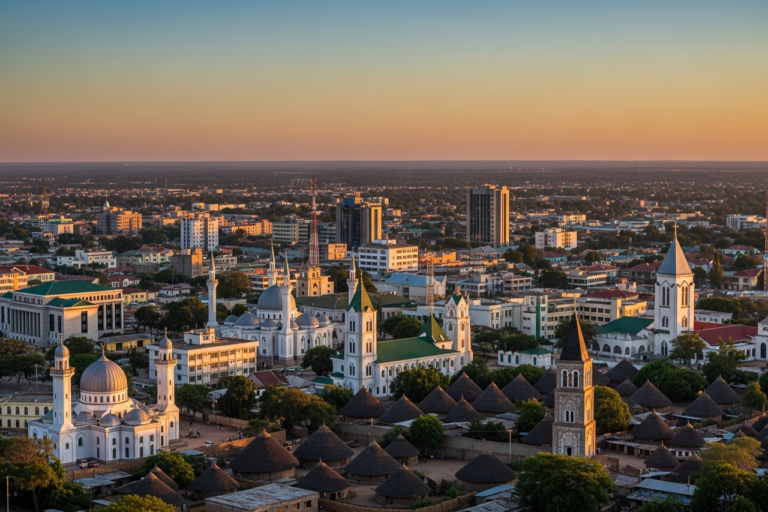
Tanzania has a lot of religious diversity. Christianity and Islam are the two largest religions there.
-
The Tanzanian constitution gives their people freedom of conscience and religion.
-
Christianity is the largest religion. But Islam is important too, especially in the coastal areas and in Zanzibar.
-
Many religious groups live together in peace, which helps build a colourful and rich culture.
-
The Swahili language, which grew out of trade and mixing of cultures, helps bring people from different faiths together.
-
Local or indigenous beliefs are often mixed with newer religions, so people have some special ways of practicing their faith.
Introduction
Welcome to a look at the spiritual side of the United Republic of Tanzania. This country in East Africa is full of many different religions. The people have lived together with these beliefs for many years. The Tanzanian constitution makes sure there is religious freedom. This lets many different faiths grow.
From the busy streets of Dar es Salaam to the quiet towns, religion is part of daily life. You see it both in public and at home. This guide will show you, as a Canadian, what it’s like to live among so many beliefs in Tanzania.
Understanding Tanzania’s Religious Landscape
Tanzania is a good example of religious diversity. This place has been shaped by many different groups over time. There is a wide variety of religious groups here. Each one helps make the country’s identity special.
It can be hard to know the exact religious affiliation of people in the country. The reason is that the government has not put out any data on this in their government census reports since 1967. Still, you can see that many different religious beliefs are followed openly all over Tanzania.
Historical Overview of Faith in Tanzania
The story of faith in Tanzania started many years ago. In the early days, Arab traders came to the east African coast around 1000 CE and brought Islam with them. The new faith was strong in towns on the coast and on the island of Zanzibar. There is even an old mosque on Zanzibar from 1107 CE. This shows that Islam has a very long history in this place.
Then, some years later in the 1500s, Portuguese explorer Vasco da Gama and other Europeans came to the area. They started to bring Christianity to the people. Catholic missionaries began to work in the region. They started churches where Islam had not reached. In the early 19th century, the Omani group took over the coast and brought in more Islamic beliefs. They pushed the Portuguese out at this time.
Even as these new faiths came in, many people held on to their traditional beliefs. Traditional African religions continued in many groups. After many years and many changes, the religions in Tanzania are different today. People now practise both Christianity and Islam, along with these strong and old traditional beliefs.
Current Statistics on Religious Affiliation
While the Tanzanian government has not published official religious statistics in government census reports since 1967, estimates from organizations like the Pew Research Center provide a snapshot of the country’s religious landscape. These figures help us understand the approximate breakdown of the total population.
The Christian population is generally considered the majority, with Muslim communities forming a substantial minority. A smaller percentage of the population adheres to ethnic or traditional religions, Hinduism, or other faiths.
Here is a general estimation of the religious breakdown in Tanzania:
|
Religion |
Percentage of Population |
|---|---|
|
Christian |
57% |
|
Muslim |
31% |
|
Ethnic Religions |
11% |
|
Hindu |
1% |
It’s important to remember these are estimates, but they paint a picture of a nation where Christianity and Islam are the dominant faiths.
Religious Distribution across Regions
The way religious groups are spread out in Tanzania is not the same everywhere. It changes a lot depending on the region. This happened because of the country’s past. The coastal regions and the zanzibar archipelago were in touch with Arab traders many years ago. That is why you will find a lot of Muslims living there.
In Zanzibar, almost everyone is Muslim, about 99%. On the mainland, the majority of Muslims live on the coast and in urban areas like dar es salaam. These places saw trade and were where Islam started to grow.
In the mainland’s rural areas, you will find more Christians. This happened mostly because Christian missionaries moved to places that did not have much Islamic influence before. So, when you travel across Tanzania, you can really see where the two main religious groups live.
Changing Religious Makeup Over Time
The religious story of Tanzania changed a lot in the 20th century. Before the spread of Islam and Christianity, people across the land mostly followed traditional African religions. These old beliefs were very important for their lives. They grew from the local culture and the world around them.
If you look at a Pew Research Center study, you can see there was strong growth in both the Christian community and the Muslim population over time. The rise of these new religions meant that fewer people practiced traditional African religions, but people still kept some old ways when they became Christian or Muslim.
This kind of change did not only happen in Tanzania. A similar shift was seen in other places in Africa, like in West Africa as well as East Africa. What you see today is a mix. There are both new and old religious ideas and practices. These ways of life come together and grow as people try to make sense of their world. This shows how religion in Tanzania—and all across Africa—has been changing over the years.
Christianity in Tanzania
Christianity is the main religion in Tanzania. Today, the christian population is more than half of the people in the country. There is a long story of this faith in Tanzania, starting with catholic missions. Over the years, the number of groups or branches, like the evangelical lutheran church and many Pentecostal groups, has grown a lot.
Christianity is a big part of life in this country. It shapes how people live and how they spend time with others. Let’s look at the different christian denominations in Tanzania, what they do in society, and how they help their communities.
Denominations and Their Presence
Tanzania has a wide christian population, with many christian groups and churches active across the country. The Catholic Church is the biggest group thanks to the early catholic missions that came here. There are a lot of Catholic churches, hospitals, and schools here. A Tanzanian named Laurean Rugambwa also made history as the first african cardinal.
After the Catholic Church, you will find the Evangelical Lutheran Church in Tanzania, which is the second largest denomination. It is one of the biggest Lutheran churches in the world. This church came mostly from German and Scandinavian missionary work. It is still very strong when it comes to education and health care.
Besides these two, there are now many pentecostal christian groups and other protestant churches. This mix shows how christianity in Tanzania keeps changing to meet what the people want. That is why it is still one of the main faiths in the country these days.
Influence on Society and Culture
The Christian faith has a big role in the life and culture of people in Tanzania. The religious teachings from many groups can shape how people live every day. They can help set family values and guide how people work together in the christian community. Churches are often the heart of a community. People go there to get more than just help for their spirit. They also get things they need for life, like a good education and care when they are sick.
There are many places where the christian community mix their beliefs with local customs. This has made a new way of showing culture in Tanzania. For instance, when there is a Christian holiday, people celebrate in their own way. There can be local music, dance, and other things done that come from their country. This shows how christian community use their faith with what is already part of their daily life.
In matters of religion and things that touch the public, christian leaders talk and take part in important talks about the country’s growth and social topics. The christian community helps shape what the nation thinks and does. That shows that religion in Tanzania is not just something people keep to themselves. It also has a strong part to play for all of Tanzania and its people.
Key Churches and Community Roles
Churches in Tanzania are more than places to pray. They stand strong in the community. Places like the Evangelical Lutheran Church and the Catholic Church have been around since the first Catholic missionaries arrived. They run many schools, hospitals, and social programs. These things help people from the Christian community and people from other faiths, too.
Religious leaders from these religious groups often help organize the community. They are important in bringing people together for social projects. They also help settle problems between people and support those who need it most. Many look up to these religious leaders, and their power reaches past their own group and into all of society.
Churches are busy spots where people gather. They hold weddings, funerals, and festivals that many go to. These events help everyone connect and build strong ties. Through what they do, religious groups help people work together and feel a part of something bigger, both inside the church and in their city or town.
Islam in Tanzania
Islam has been in Tanzania for a long time. Muslim communities have lived and thrived here for over a thousand years. Islam is now the second-largest group out of all the religious groups in the country. Many Muslims live in the coastal regions and on the islands of Zanzibar.
The faith is a big part of life in Tanzania. It shapes the language, culture, and what people do every day. The National Muslim Council of Tanzania is one group that helps lead and support people in the Muslim communities. Let’s talk more about these Islamic groups and see how they change daily life and culture here.
Major Islamic Communities
Most Muslims in Tanzania are Sunni. They follow the Shafi’i school of law. Early Arab traders helped spread this way of life along the East African coast. The Shafi’i tradition shapes the religious practices for many people, mostly in coastal areas and in cities like Dar es Salaam.
There are also some Shiite groups. These include the Ismailis, Bohras, and Ithna-Asheris. Many in these groups came from South Asia and the Middle East. Even though they are fewer in number, they are active and well-organized. They also play a part in the country’s economic and social life.
Religious leaders from both Sunni and Shiite groups help guide their people. They look after mosques and speak up for their groups. This mix of people shows the diversity of Islam in Tanzania. It is one of the main religions people practice today.
Islam in Zanzibar and Coastal Regions
The Zanzibar archipelago and the coastal areas in Tanzania are the main centers of Islam in East Africa. In Zanzibar, about 99% of the people are Muslim. The faith is a big part of life, law, and government in the islands. It is so common here because people from the Arabian Peninsula traded and shared their culture with the islands over many years.
The government in the Zanzibar archipelago shows how strong this faith is. While the President of Zanzibar takes care of day-to-day rules, the Chief Qadi, who is an Islamic judge, looks after religious courts. These courts deal with family and personal matters for Muslims. This system shows that Islam is a central part of life in Zanzibar.
In Tanzania’s coastal areas, there are the same signs of the faith. People hear the calls to prayer five times a day, and there are mosques everywhere. All of this shows how the land has shaped where and how religious practices are found in Tanzania.
Cultural Practices Linked to Islam
Islam in Tanzania is much more than just some beliefs. It shapes the way people live, and it has changed the culture in the region in a big way. You can see this in local customs and how people act with each other, especially where there are many Muslims. The effect of Islam can be seen in the way people greet each other, what they wear, and how they act in social situations.
The Swahili language is a good example of how cultures have come together in this area. It started when Arabic traders and local Bantu-speaking people met and mixed their languages. A lot of the Swahili words come from Arabic, mostly about religion, trade, and law. This shows how the cultures and languages came together over time.
Religious holidays in Islam, like Eid al-Fitr and Eid al-Adha, are very important in Tanzania. Everyone takes part in these events. In some places, Islam has mixed with local beliefs. For example, ideas about spirits and magical abilities are still found in some Islamic practices. This shows that old traditions are still part of the faith today, even as things change.
Indigenous Beliefs and Traditional Practices
Long before people brought Christianity or Islam to Tanzania, the country was full of different local beliefs. These traditional African religions were built around ancestor worship and a strong respect for nature. They were very important in people’s lives.
Many people in Tanzania are now Christian or Muslim. But traditional African religions and local beliefs are still here. People often mix these older ways with their modern faith each day. This makes a special mix that still shapes life in Tanzania.
Local Faiths and Spiritual Customs
Traditional Tanzanian spirituality is different among the many ethnic groups, but there are common ideas found in most of these local beliefs. Ancestor worship is an important part. Many people think that their loved ones, after they die, still live on as spirits. They believe these spirits can have an effect on the lives of those who are still alive.
In many places, people honour their ancestors. They do this through rituals and by giving special offerings. They ask their ancestors for help and hope for good things to come from them. People are also close to nature in these beliefs. Some think that natural objects like big trees, mountains, or lakes are special. They believe these may have spirits living in them, making these places important or even holy.
In some groups, people believe that certain others have magical abilities. They think these people can heal, tell what the future holds, or speak to the spirits. These special roles make sure that everyone understands what happens in their lives. It helps them know why bad things might happen, ways to heal, and about the powers we cannot always see at work in the world.
Integration with Modern Religions
One interesting thing about faith in Tanzania is the way traditional beliefs are mixed with Christianity and Islam. Many people there do not give up their old ways. Instead, they add parts of their traditional beliefs to their life with the new religion. Someone might go to a church or a mosque, and at the same time, see a traditional healer when they have a problem.
You can see this mix the most during big life moments. For example, a Christian wedding could have both local customs and church teachings. Families there often use rituals from the past that are passed down through the years. They do all this with the church’s religious teachings. This kind of mixing shows that people there are very practical when it comes to faith.
Most people in Tanzania do not see a reason why they cannot have both traditional beliefs and Christian or Muslim faith. They feel that this helps them honour their history. They also believe it is good for their spirit and body. It shows how strong local customs and religious teachings are in their daily lives now.
Magic, Witchcraft, and Social Perspectives
The belief in magic and witchcraft is still strong in some parts of Tanzanian society. People there often think that supernatural forces can affect their daily lives. Things like getting sick, having bad luck, or finding success might all be linked to magic in these traditional beliefs. Some believe that a person with magical abilities can help as a healer. At the same time, people may also fear them as someone who can cause harm.
But there is another side to these beliefs that can be harmful. Sometimes, people are blamed for using witchcraft, and this can lead to violence. The elderly and those with albinism can often be targets of such acts. It is a big concern for both society and human rights. Because of this, the government and other groups are working to try to deal with the problem.
The formal judicial system in the country does not see witchcraft as real, but beliefs still matter in local communities. This shows how traditions can cause tension with the modern ways of law and society. It is not easy to find a balance, because these traditional beliefs shape how people think about religion and society, even now.
Religion in Tanzanian Society
Religion is a big part of life in Tanzania, and it is important to many people. Even though Tanzania is a secular state, faith has a key role in building the country’s identity and the way people live each day. Christians and Muslims in Tanzania usually have good relationships with each other. This good relationship has helped maintain peace and stability in the country.
Religious leaders from all groups often come together to support harmony and to talk about issues that affect the nation. In the next part, we will see how these relationships work and what part religion plays in politics and the nation’s identity.
Interfaith Relations and Cooperation
Tanzania has a good record for how different religious groups get along. This has been very important for keeping the country together as one. Religious leaders from Christian and Muslim communities often work side by side. They try to help with the same social goals. When they work together, it helps bring people from different ethnic groups closer. It also helps everyone feel part of the same country.
You can see this kind spirit between people in daily life too. Many times, neighbours with different beliefs join each other to celebrate religious holidays. People also help each other out when there is trouble or need. This way of living shows how much Tanzania wants to handle religious diversity in a calm and kind way.
Religious groups work together in many simple ways to help make life better:
-
Joint Social Projects: Faith groups take on projects to help with education, health, and fighting poverty.
-
Peace Committees: People form local groups with members from different faiths to solve problems and keep the peace.
-
National Dialogues: Religious leaders join in talks with the country about peace and getting better as a nation.
-
Public Statements: Leaders from different groups send out joint messages when the country faces problems or needs people to come together.
Religion’s Role in Politics and National Identity
Religion and politics in Tanzania have a long and tricky history. The Tanzanian constitution says the country is a secular state. But, faith is still a strong force in public life. In the past, the government tried to make people focus less on religious groups and more on one national identity. This was shaped by Tanzanian citizenship and the use of the Swahili language.
Still, religious affiliation sometimes quietly shapes what happens in politics. Even if there is no big political party in Tanzania that stands with one religion, the leaders think about the beliefs of the people who vote for them. Faith leaders also have a lot of sway. What they say, and who they support, can change people’s opinions.
The political setup of Tanzania is special. It joins together the mainland and Zanzibar. Zanzibar chooses its own president and most people there are Muslim. Balancing religion in this Union takes care and skill. All of this shows that faith holds a significant role in Tanzania. It touches on politics, the idea of a nation, and the daily life of the people.
Celebrations and Religious Festivals
Tanzania has a lot of religious diversity, and you see this most during the many celebrations in the year. The calendar has many religious holidays and festivals. These days are important for the major religions in the country. Many of these religious festivals are also national holidays, so all the people can join in.
You will find everything from happy Christian and Islamic festivals to bright traditional ceremonies. These events are a big part of what makes Tanzanian culture special. Here are some of the main celebrations you might see.
Christian Holidays and Observances
Christian holidays are very important in Tanzania. People celebrate these religious holidays with lots of excitement, and they are at the heart of the national holidays there. Special events like Christmas and Easter are national holidays. On these days, most businesses close and families come together to enjoy the day.
These events have a lot of meaning for the people. They are not only special for the church but also for the whole community. Churches hold special services during these religious holidays. Choirs sing with energy, and you may see processions outside by large groups. The influence of old catholic missions and other groups is clear. Both big cities and villages hold these events in big ways.
Some of the main Christian religious holidays and observances in Tanzania are:
-
Christmas (Krismasi): Families gather at church, share a meal, and give each other gifts.
-
Easter (Pasaka): This is a quiet time at first, with more happy events by Easter Sunday.
-
Good Friday: This is a day off work, and people go to church and think about its meaning.
-
Saba Saba Day: This is not a religious holiday, but churches often do things for the community on this day.
Islamic Festivals in Tanzania
Islamic festivals play a big part in the cultural and religious life of Tanzania, mainly in the coastal areas and on Zanzibar. These religious holidays hold deep meaning for people and bring many together to celebrate. Many in the country are Muslim, and people look forward to these days. The dates for these holidays follow the lunar calendar. The National Muslim Council of Tanzania helps by telling everyone the official moon sighting.
During these times, you will see people gather at the mosque for prayers. Families enjoy big meals, and many give to charity. The Swahili language also has many phrases and greetings that fit these festivals. This shows how much these special days are a part of daily life.
Major Islamic festivals in Tanzania that are religious holidays include:
-
Eid al-Fitr: This holiday comes after Ramadan, the fasting month. People go to pray, they eat special foods, and many wear new clothes to mark the day.
-
Eid al-Adha: Called the “Festival of Sacrifice,” this festival remembers the time Ibrahim almost sacrificed his son. During this day, people share meat with their family, friends, and with those in need.
-
Maulid (Mawlid al-Nabi): This is the Prophet Muhammad’s birthday. People celebrate with processions, special prayers, and listen to religious talks.
Traditional Ceremonies
Besides the large Abrahamic faiths, Tanzania also has many ceremonies based on local beliefs. These events are not often seen as national holidays, but they mean a lot to the groups who follow them. They are usually linked to farming seasons, growing up, or showing respect for the spirit world.
A lot of these ceremonies come from ancestor worship. People have rituals to ask for help or advice from spirits of their family members. The events can have special dances, music, and offerings that have been shared over many years. These traditions show us what life was like before colonial times.
Even though they may not be seen by many, these ceremonies are special. Belief in magical abilities and faith in healers or diviners is sometimes part of these practices. They let people keep a real link to the past. This way of looking at life is still strong for many Tanzanians, even for those who also practice Christianity or Islam.
Religion and Daily Life in Tanzania
In Tanzania, religion is part of everyday life. It is not just for special days or big events. You can see and hear it every day, from the call to prayer in the morning to church bells on Sunday. People often show their faith in open ways. For many, these religious practices are a big part of who they are. They also help shape how people in the different variety of religious groups come together and connect.
Faith is mixed in with many things people do. It has a big part in the way the community comes together. It is also in how people teach and learn new things, and even in art and music. The variety of religious groups and their practices mean that the spiritual life of Tanzania shows up in many parts of the country. Now, let’s see how the day-to-day activities in Tanzania are shaped by this spiritual way of life.
Community Gatherings and Social Structures
Religious institutions are at the heart of community life in Tanzania. Churches and mosques are much more than places where people come to pray. These are places where people meet, talk, and help each other. Big events like weddings, funerals, and religious festivals bring the whole community together. These events help people in the christian community grow closer.
Many communities follow the lead of their religious leaders, and that shapes how they live together. In the christian community, there is a church system with different groups, like women’s fellowships or youth groups. These groups give people a way to work together and support one another. Religious leaders often give advice and help these groups stay strong.
In Tanzania, this way of living, surrounded by people who share the same faith, brings a sense of unity. Local customs and what people believe in also go together. This makes a strong set of rules for how people act with each other. It also gives everyone support, from one person to a whole family.
Educational Institutions and Faith
Faith and education go hand in hand in Tanzania. Many of the top schools in the country started with help from religious groups, and even today, these are mainly faith-based schools. Both Christian and Muslim groups started these schools, and they have helped open up education to people all over Tanzania.
These schools in Tanzania add religious teachings to their classes. They want children to learn school subjects and also know about morals. Many families in Tanzania like to pick faith-based schools because it helps their kids get an education that matches their beliefs.
People at places like Georgetown’s Berkley Center have said that these faith-based schools show how religious groups can work together. These groups do more than just teach kids from their own faith. They let in students from all religions, so they help the country grow. They also help young people in Tanzania to know and respect those from other faiths.
Religion’s Impact on Tanzanian Arts
Religion is a strong inspiration for the arts in Tanzania. People often show their religious beliefs in many ways, like through music, dance, carvings, or paintings. Gospel music is very loved here. It has grown to be one of the most important types of music, with choirs who are well-known even outside Tanzania.
You can see the influence of Islam, especially in the coastal areas. It shows in the special calligraphy, buildings, and geometric designs there. The Swahili language has deep roots in poetry, and a lot of this poetry is about Islamic stories and ideas. This shows how connected faith and art are in Tanzania.
Local customs and beliefs also play a big part for artists. They make masks, sculptures, and dances that show spirits, ancestors, or myth stories. This wide range of art comes from Tanzania’s religious diversity. It shows how religious beliefs and different spiritual ways shape the country’s lively and colourful culture.
Religious Freedom and Legal Protections
Tanzania takes the right to religious freedom very seriously and sees it as something the country should have. The Tanzanian constitution clearly states that people have the freedom of conscience and can follow any religion they choose without others stopping them. This legal protection is a big part of what makes Tanzania a peaceful and secular state, where many faiths can exist together.
Even though the law is strong on this, what happens day-to-day can be a bit different. People in Tanzania often respect other religious groups and ways of life, but sometimes there are problems. In the following part, we will talk about what the government does, how people get along with others with different beliefs, and some challenges that different religious groups in Tanzania face.
Government Policies and Laws
The government of Tanzania says it is a country where religion and state stay apart. This idea comes from the laws of the country and is written clearly in the Tanzanian constitution. In this country, people have freedom to think for themselves and follow any religion they want. The Tanzanian constitution says everyone can choose and practice religion. This is a big part of religious freedom there.
The government works to keep things fair for everyone and not let any one religion take over. For example, they do not ask about religion in the national census anymore. They stopped doing that to help people feel part of one nation, not just of one religion.
If a religious group wants to work in Tanzania, they must register with the government first. This rule is there for all kinds of groups. The laws want to make sure that religious freedom works for everyone. People with different faiths can live by the same rules and be safe to practice their beliefs.
Societal Respect for Religious Diversity
Most people in Tanzania show a lot of respect for religious diversity. This respect is one thing that helps keep peace in the country. You can see it in the way people of different faiths treat each other every day. It is normal to find friends, people at work, or neighbours, from both Christian and Muslim groups, living together in a good way.
This friendly way of living helps bring together all the different ethnic groups in Tanzania. There are more than 120 different ethnic groups in the country. Many people find that having the same faith can join people from different groups. Social and community leaders try to build good relationships between faith groups. They know how important this is for Tanzania to do well.
There is real respect in society for religious diversity, and this is an important part of what makes Tanzania’s culture special. It’s more than just learning to live with each other—people in Tanzania accept that being different makes the country better. While it isn’t perfect, Tanzania’s respect for different groups is a big part of life there.
Challenges Facing Religious Groups
Even though the law is strong and society respects it, religious groups in Tanzania still deal with some problems. Sometimes, issues come up when religion gets mixed with the political situation. There have been times when violence, driven by religion, happened. This is most common in places with past problems, like Zanzibar.
There are legal and paperwork problems, too. For example, foreign missionaries or groups can get caught up in visa delays and in getting registered. This can slow down or stop their work. Also, there is a dual judicial system. There are secular courts and Islamic courts. These Islamic courts look after personal things, like inheritance and child custody, for some mainland cases and in Zanzibar. This can sometimes make things more tricky.
All of this shows that, while religious freedom is strong, there are still problems in real life. The judicial system can be hard to deal with, and sometimes there are fights between or within religious groups. These are ongoing struggles for some people in religious groups in the country.
Conclusion
In short, the mix of religious beliefs in Tanzania gives a special look into its culture. From the beginnings of Christianity and Islam to the bright customs of local faiths, each one helps build how people live and work together. Knowing about this mix not only helps us enjoy Tanzania’s story, but it also helps people show respect and talk to others with different beliefs. If you are from Canada and you want to visit this beautiful place, it’s good to learn about these old ways. It will make your trip better and help you meet new people. If you want to know more about Tanzania’s religious festivals or how you can join these groups, just ask for help!
Frequently Asked Questions
How is religious diversity reflected in Tanzania’s culture?
Religious diversity in Tanzania can be seen in many parts of daily life. This shows up in festivals, art, and music. The Swahili language also has Arabic roots. People from different ethnic groups mix their local customs with Christian or Islamic religious beliefs. This blend creates a way of life where many traditions are part of everyday life, and they are respected and enjoyed by all.
Are there any notable religious festivals or events Canadians should know about?
Yes, the big religious holidays like Christmas and Easter for Christians, and Eid al-Fitr and Eid al-Adha for Muslims, are national holidays. People across the country celebrate these days. There are also many lively traditional ceremonies in the country. But these events are held in local communities, and they are not national holidays.
Is religious freedom respected for all faiths in Tanzania?
Yes, the Tanzanian constitution gives all people religious freedom, and the law protects it well. People in Tanzania also show a lot of respect for different faiths. Still, like you see in other countries, there can be some problems. For example, religious groups may face paperwork that can slow things down. Sometimes, there are small tensions between people in local areas. But overall, the country shows that it is serious about giving everyone religious freedom.