Key Highlights
-
Switzerland has mostly Christian people. The biggest groups are Roman Catholicism and Protestantism. More people now have no religious affiliation.
-
The Swiss religious landscape changes in different regions. Some cantons are strong Catholic areas. Others are mostly Protestant.
-
Religious freedom is important in Switzerland. The Swiss constitution gives this right to everyone, but the link between church and government is not the same in each canton.
-
In the 16th century, the Protestant Reformation made a big impact on Swiss culture and history. Leaders like Ulrich Zwingli and Jean Calvin helped shape this time.
-
New immigration has brought more religious diversity to Switzerland. There are now more Muslims and Orthodox Christians in the country.
-
Secularism is on the rise. The Federal Statistical Office has shown more people are part of the non-affiliated group.
Introduction
If you are planning a trip to Switzerland and want to know about its culture, you should know about the role of religion there. Switzerland is not a country where religion is the main focus, but its history and traditions are shaped by its religious past. For Canadians, learning about the swiss religious landscape helps you see what makes the country unique. This guide will share info about different religious communities. You will find out about the key christian groups and also the people in Switzerland who do not have a religious affiliation. This way, you get a full look at belief in the heart of Europe.
Religious Demographics in Switzerland
The Swiss religious landscape shows both tradition and change. The Federal Statistical Office says Christianity is still the most common religious affiliation. This is true for the total population of 8.9 million. But the latest census data shows belief patterns are shifting in the Swiss population.
Most people still belong to Christian denominations. But their share of the Swiss population has been going down. This lines up with what we see in the rest of Europe. More people want a secular life and new spiritual identities. Now, it’s good to look at which religions are practiced and how non-religious groups are growing.
Overview of Major Religions Practiced Today
Christianity is the most prominent religion, with the Roman Catholic Church and Protestant churches being the two largest Christian groups. Roman Catholicism, for a long time the largest single denomination, has deep roots, particularly in the central cantons. Protestantism, shaped by the Reformation, also holds significant historical and cultural importance.
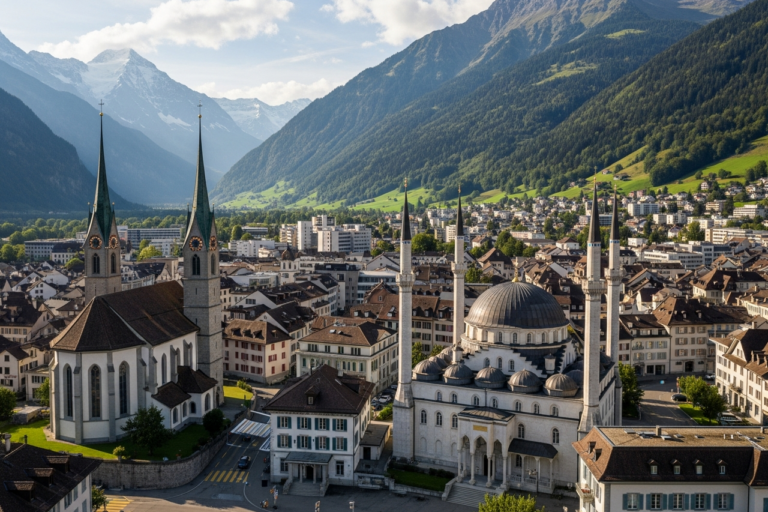
Beyond these major Christian groups, religious diversity is a key feature of modern Switzerland. Immigration has introduced other faiths, leading to a notable presence of Swiss Muslims and Orthodox Christians. The Jewish community, though small, has maintained a stable presence for many years. This mix of religious communities contributes to the country’s rich cultural mosaic.
Here’s a breakdown of the religious affiliations based on available data:
|
Religious Group |
Percentage of Population |
|---|---|
|
Roman Catholic |
30.7% |
|
Protestant |
19.5% |
|
Muslim |
6.0% |
|
Other Christian Groups |
2.4% |
|
Jewish |
0.2% |
|
No Affiliation |
35.6% |
Growth of Secularism and Non-affiliated Populations
One of the most important trends with religion in Switzerland is that more people are choosing to be secular. The Federal Statistical Office reports that the number of people who do not belong to any religion has gone up a lot. In 1970, this group was only 1.1% of the population, but now it is over 35%. It is now the fastest-growing group in Switzerland when we talk about religious affiliation.
This change shows that for many Swiss people, religion is not as big a part of life as it was before. Census data shows fewer people in the Swiss population believe in God, and not as many people go to church or attend things like baptisms and weddings. These numbers show that people value personal choice and that freedom of religion means people can decide not to have a religion.
With more people saying they do not follow any religion, there is a shift to a more secular society. People in Switzerland now think about spirituality and belief in new ways. While fewer people belong to traditional churches, the country is seeing many different points of view. The swiss population is now made up of people with strong faith, those with no religion, and everyone in between.
Historical Roots of Religion in Swiss Culture
To understand Switzerland today, you need to look at its religious history. The country’s way of life has been shaped in a big way by Christianity. In the 16th century, big changes happened. There were strong clashes between christian groups but also some peace at times. The way these christian denominations got along or disagreed left a mark on swiss cantons, their politics, and culture.
This history helps us see where the values and ways of each area come from. The big christian groups, and their fights or teamwork, played an important role in building Switzerland as we know it now. We will also take a look at how early Christianity and later the Protestant Reformation set up the special character of the nation.
Christianity’s Influence Through the Centuries
Christianity has played a big role in the region for many years. Roman Catholicism stands out as a sign of conservatism and a way to keep local power. The oldest Swiss areas, which formed the first Swiss confederation back in 1291, were mainly Catholic. They wanted to be independent, and this goal is still part of their politics now.
As time passed, other christian groups arrived. Along with the roman catholic church and later protestant churches, smaller groups like the christian catholic church and apostolic church took root. These groups are not large, but they do add more depth to Switzerland’s religious past.
How these christian groups worked with and against each other was important for the birth of the modern state of Switzerland in 1848. The push and pull between catholic church and protestant churches gave rise to the federal system that the country uses today.
The Reformation and Its Legacy
The Protestant Reformation in the 16th century was a key time in Swiss history. At that time, Switzerland was the place where two important leaders lived. Ulrich Zwingli worked in Zurich and Jean Calvin was in Geneva. Their teachings did not agree with what the Roman Catholic Church taught. The new ideas they brought in started to spread across Europe.
This big change in religion changed more than faith. It had a big effect on money and culture too. Protestantism focused on hard work and being reasonable. It also taught people to be responsible for what they do. These ideas helped the cities and parts of Switzerland that chose this way. It made the cities grow and do well in business. Geneva, for example, turned into a meeting place for smart people and became a centre of new ideas in the economy.
What happened during the Reformation can still be seen in Switzerland today. It is a reason for how the country is split between Protestant and Catholic areas. It also helped drive the start of the federal state in 1848, when Protestant leaders pushed for change. One more example is the church tax. In Switzerland, some people from the swiss population pay a tax to their church. This idea came from the years of the Reformation and still connects part of the swiss population to old religious ways through their duties as citizens.
Regional Variations in Religious Beliefs
Switzerland is a place where you see a mix of many things, and this mix is also there in religion. You cannot talk about the country’s religious affiliation with just one answer. People’s beliefs are different from one swiss canton to another. This can also depend on what language group people belong to or where they live in the country.
There are many beliefs in Switzerland because of history. Each canton had the right to choose their own religion in the past. So, you still find some catholic cantons today that stick to old ways. But, you can also find other cantons that are mostly Protestant. To truly understand Swiss culture, it helps to know about these regional differences. That is what we will look at next.
Religious Differences Across Cantons and Language Groups
The religious map of Switzerland is not the same everywhere. There are some clear regional differences in the country. For a long time, the central and alpine Swiss cantons like Uri, Schwyz, Nidwalden, and Obwalden have been places where the Catholic Church is very strong. People in these catholic cantons often have a more traditional view on life. This is because they have followed the Catholic Church for many years.
But big cities like Geneva and Zurich are different, as well as some richer rural swiss cantons. During the Reformation, these places turned to Protestantism. These areas started to become great for business and were full of new ideas. Their Protestant background helped build a spirit of hard work and clear thinking. Over the years, the difference between the Catholic and Protestant places is not as sharp. There is still religious diversity in the way people live across Switzerland.
There are a few main things to know about this:
-
Catholic Strongholds: The central cantons stay mostly Catholic. Some of them, like Uri, have more than 90% of people who say they are with the Catholic Church.
-
Protestant Hubs: Cities like Geneva and Zurich have a long Protestant history. This has helped shape how they grew and how they see the world.
-
Language and Religion: Language and religion do not always match. In the German-speaking parts, some areas are Catholic and some are Protestant. French-speaking Geneva is still known as
Cultural Traditions Linked to Regional Religious Practices
The different religious ways in Switzerland help to create a wide mix of cultural traditions. Many of these customs connect to the local religious calendar. This gives people a bright and proud way to show the spirit of their community. In places where the Catholic Church has a strong presence, you can see big processions and public events for important religious holidays.
These traditions are not just simple religious activities. They are part of daily life for people in these regions. These customs help bring members of religious communities together. There can be local foods and music, along with unique customs, that go from one generation to the next. If you are a visitor, seeing these events lets you get a real feel for the history that lives in that area.
Here are some ways religion helps shape local culture:
-
Carnival (Fasnacht): In many Catholic areas, people take part in a big carnival before Lent. There are parades and masks. This is the last fun time before Lent starts.
-
Corpus Christi: This is a Catholic holiday. Many towns and villages have processions on this day. People decorate streets with flowers and banners.
-
Local Saints’ Days: Most towns and villages have special days for their favourite saint. The day mixes religious services with fairs and public celebrations.
Religious Freedom and Legislation in Switzerland
Switzerland is a modern and democratic country. The Swiss constitution protects people’s religious freedom. In Switzerland, you have the right to believe what you want or not to believe at all. This is a key part of living there, and it helps people follow their faith without the fear of religious discrimination from the state.
The way church and state connect in Switzerland is a bit complex. There is not always a clear separation of church and state across the country. The rules often depend on each canton. Because of this, there are different laws about religion, especially when it comes to public life and schools.
Legal Protection of Religious Rights
The Swiss constitution gives strong legal protection for religious freedom. Everyone has the right to choose, change, and practise their religion. The law keeps people safe from religious discrimination. The state cannot treat anyone unfairly because of their religion.
Yet, each canton may set their own rules. Many cantons see some churches, like the Roman Catholic and Protestant churches, as the main or official churches. These official churches get public funding. Often, this money is collected through a required church tax, and members have to pay it. Some people debate this tax system. Still, it is a big part of how churches and the state work together in Switzerland.
Freedom of religion is strong in the country. But there are times when it is not complete. Public acts of faith, for example building minarets, have been discussed through legal and political ways. The 2009 popular initiative is one example. Such events show how people, and the state, talk about the balance between religious freedom and public order within Swiss society.
Role of Religion in Public Life and Schools
The way religion is part of the school system in Switzerland depends on each canton. Most public schools offer religious classes. The style and what is taught can change from place to place. These classes often talk about main Christian traditions. Now, many teach the facts about world religions. They focus more on cultures, not on what you should believe.
Parents can choose to take their kids out of religious classes if they have religious reasons. There are private religious schools in the country too. These schools teach faith-based ideas and give families another choice outside the public schools. They help certain religious communities.
Religious education in public schools shows the long history Christianity has in Switzerland. At the same time, the school system is changing. It now tries to include more faiths and listens to families who do not follow any religion. It wants to keep tradition and find ways to welcome everyone, showing the country’s religious diversity.
Religion’s Impact on Swiss Society and Culture
Religion still has a strong place in Swiss society and its culture, even though more people are not as religious now. You can see its impact in the festivals on the Swiss calendar, in local traditions, and also in the day-to-day economic life of the country. The values taught by different religious communities have shaped how the nation works. This includes things like the way people work and how the country is run.
For the Swiss population, religion gives them a way to join with others and keep traditions going. People do this by joining in religious activities or by taking part in holidays for the culture. This religious background also gives expats and travellers a special way to see how people in Switzerland live. We will look into this in the next parts.
Festivals and Religious Holidays Celebrated Nationwide
Switzerland’s calendar is full of religious holidays and festivals. People in the country celebrate these events with a lot of excitement. Some holidays, like Christmas and Easter, are important for both roman catholics and protestant churches. But the way the religious communities in each region celebrate can be different. These special days are not just about fun—they show the strong faith of the people. They also play a big role in community life for many people.
The celebrations do not end with just one group. Jewish households also have their own special holidays in Switzerland. These days are important for jewish households, even if they are not public holidays. The different christian denominations often share some holidays. Easter, for example, is celebrated by many christian denominations. This helps bring people together, no matter where they live in the country.
Many of these religious holidays are also public holidays. This means lots of people get a day off work to spend time with family or go to celebrations. Some of the main holidays in Switzerland are:
-
Christmas: Almost everyone enjoys this time. Christmas is marked with markets, family gatherings, and church services.
-
Easter: This is a big festival in Switzerland. People remember the resurrection of Jesus with church services and family time.
-
Ascension Day: People celebrate Ascension Day 40 days after Easter and have the day off.
-
Corpus Christi: This is special for roman catholics. Catholic cantons even have public parades on this day, and it is
Experience of Religion for Expats and Travellers
For expats and travellers in Switzerland, religious diversity lets people try new things and learn from others. Major cities have prayer rooms and places for worship, so newcomers can join a religious community if they want. If you need practical information, airports and public spaces often have prayer rooms for different faiths.
Getting involved in local religious life can be a good way to feel at home and learn more about the country. You can go to a church service, visit an old cathedral, or watch a festival. These things show a lot about Swiss culture. The local tradition of tolerance means people will welcome you to take part in religious activities, as long as you are respectful.
If you want to find your own religious community, or just want to know about different ones, Switzerland is open and friendly. There are many active religious communities here. Expats can keep up their practices, and tourists who are curious have many ways to see the nation’s spiritual heritage.
Conclusion
To sum up, learning about the many religious beliefs and customs in Switzerland can give Canadians a new way to see life here. The strong roots of Christianity, the rise of people who do not follow a faith, and all the colourful local traditions play a big part in what makes Swiss people who they are. If you are just visiting or you will be here for a while, taking part in these customs can really add to your time in Switzerland. Try to join in local events and notice how faith connects with everyday life. If you want to know about some religious customs while you are here, ask for tips. It will help you get more from your visit.
Frequently Asked Questions
Is religious freedom protected for all groups in Switzerland?
Yes, freedom of religion is a basic right given by the Swiss constitution. This rule protects everyone, including all religious communities. People can practise their beliefs without the government getting involved. There are talks about how religion shows up in public, but the main idea of religious freedom stays strong for all groups.
How can Canadians participate or observe religious traditions while visiting?
Canadians can watch or join religious activities in Switzerland with ease. Travellers are often invited to attend church services. The country has a lot of religious diversity, so many faiths are seen. For practical information, it is good to look in local listings for details on religious events. You can also go during public festivals to see their cultural traditions yourself.
What are the most important religious holidays in Switzerland?
Christmas and Easter are the main religious holidays celebrated by most of the Swiss population. These holidays are enjoyed by people all across the country. For Roman Catholics, Corpus Christi and Assumption Day are also big events. In catholic cantons, these are public holidays and bring religious communities together for festivals.