Key Highlights
-
Christianity is the main faith in Portugal. The biggest group is the Roman Catholic Church.
-
Portugal used to be a Catholic state. Now, it is a secular country. It gives religious freedom to all its people.
-
The history of the country, from the roman empire days to the 1974 revolution, has left a big mark on its religious identity.
-
Most Portuguese people say they are Catholic, but not many go to church often. This shows that their roman catholic religious affiliation is more about culture than belief.
-
Other religions also exist besides catholicism. You can find other christianity groups, Islam, Judaism, and eastern faiths there.
-
More young people in Portugal are choosing secularism. Still, religion is a part of life. It shows up in festivals and traditions.
Introduction
Are you thinking about going to Portugal and want to know more about the culture there? A big part of being Portuguese is tied to religion. For a long time, the catholic church and christianity have played a huge role in the life of the people. It has shaped things like politics, art, and the way people act. Now, Portugal is more open and not as focused on religion as in the past, but knowing about its religious roots helps you understand the country better. When you know this, you can see why there are so many special events, festivals, and why people value some things so much. Now, let’s look at the story of religion in Portugal.
Religious History of Portugal and Its Influence Today
The story of religion in Portugal goes back a long way. It starts with the time when Portugal was part of the Roman Empire. The coming of Christianity to the Iberian Peninsula set up the country’s main faith. These beliefs got mixed with Portugal’s way of ruling and with who its people are. The Catholic Church played a big part.
Now, you can see signs of the old days in the building styles, the festivals, and the way people act in Portugal. The history still matters for how religion looks today. There is a mix of old customs and new ideas. Next, we will look at some moments that were key in this story and how they are still important for us.
Key Milestones in Portuguese Religious Development
Portugal became a kingdom in 1139. The first king of Portugal, Afonso Henriques, made church and state one under Christianity. He chose Roman Catholicism as the country’s main faith. This let the Catholic church hold power from the start. Afonso Henriques wanted to keep good ties with the Pope. So, he made Portugal answer to the Pope as a vassal state.
In the 16th century, at the top of Portuguese colonial expansion, the power of the Catholic church grew a lot. It started to spread its reach around the world. In the 18th century, things changed. The Marquês de Pombal rose and led a strong movement against the church. He wanted less control from Rome. He sent the Jesuits out and took schools back for the state.
This struggle between the church and government went on for many years. In 1821, the Inquisition ended. The church lost most of its power. But in the 20th century, a conservative dictatorship brought the church back into strong influence. Now, this long mix of changes shapes the religious life in Portugal as people see it today.
Legacy of the Revolution of 1974 on Religion
The Carnation Revolution in 1974 brought big change to Portugal. The people overthrew a long-standing dictatorship. This was more than a political event, it also changed how religion worked in the country. One of the biggest things to come out of this was the clear split between church and state. It started a new time of secularism in Portugal.
In 1976, the Portuguese wrote a new constitution. This new law promised freedom of religion for everyone. Anyone in Portugal could now choose what religious beliefs they wanted. People could follow any faith, or none at all, and the state would not get in the way. Your religious affiliation was not the government’s concern anymore.
This change made Portugal a secular state. The Catholic Church is still important to many as part of culture, but it lost its special political role. Thanks to the revolution, many faiths and backgrounds can now live together. People’s religious beliefs are respected and guarded by the law.
How Religion Has Shaped Portuguese Culture and Society
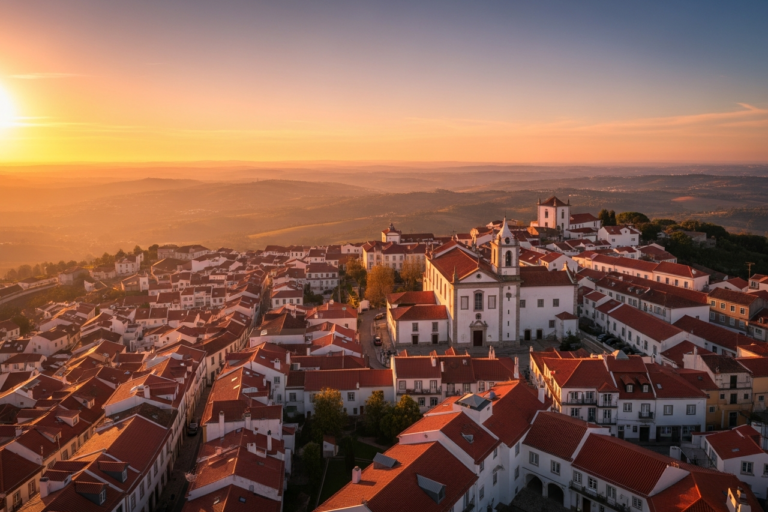
The influence of Catholicism is a big part of life in Portugal. It helps shape the way people live and what they believe. You can see this just by looking at towns and small villages all over the country. The most eye-catching building is often one of the beautiful village churches. You will find these churches right in the main square or sometimes on top of a hill.
The reach of the church does not stop with just where and how buildings are put up. Many ways to live, old customs, and day-to-day behaviour come from Catholic rules and ways. A lot of Portuguese people see their culture as tied to Catholicism, even if they are not high on church attendance. This link is clear in many parts of life:
-
Life Events: Some of the most important times like baptisms, weddings, and funerals all come from key Catholic traditions.
-
Festivals: Many big and small festivals (festas) come from church stories. They often honour saints or other important holy people.
-
Social Structure: Having godparents—known as padrinho and madrinha—is one tradition from baptisms that shapes how people live together.
Things in Portugal have changed as time has passed. For example, being in public schools no longer means you must take religion classes. Still, the culture and ways from the church are strong. You can see them all over the country.
Christianity as the Main Religion in Portugal
Christianity is by far the main religion in Portugal. Recent census numbers show that most of the total population sees themselves as Christian. Most of these people are Roman Catholic. In 2021, about 79.7% of people said they were Roman Catholic. This shows just how strong roman catholic and christianity are in Portugal.
But calling yourself Catholic does not always mean you go to church often. While many say they are Catholic, church attendance is much lower. Many people see being Catholic as part of their culture and who they are, not just a day-to-day practice. In the next part, we will look at catholicism and other types of Christianity in Portugal more closely.
Roman Catholicism: Dominant Faith and Traditions
Roman Catholicism is the main branch of Christianity in Portugal. Most people in Portugal belong to the catholic church. Like other Catholics around the world, Portuguese Catholics believe in the Holy Trinity and follow the authority of the Roman Catholic Church, led by the Pope. The traditional importance of catholicism is clear. You can see the influence in almost every part of their heritage.
A lot of the most-loved traditions in Portugal come from the roman catholic faith. Big life moments, like baptisms and weddings, are important events to families. The roman catholic church shapes the land, too. Stunning churches from the 16th century are still standing and are usually at the heart of village life. These churches are not just places to worship. They are also where annual village festivals and special celebrations happen.
Even though society is now more secular in many ways, the influence of the catholic church stays strong. For many Portuguese people, the connection to roman catholicism is cultural, not just religious. They may not go to Mass all the time, but they still take part in these catholic traditions. It shows how deep the link between Portugal’s national identity and catholicism is.
Protestant and Evangelical Communities
While Catholicism is the main religion in Portugal, there are also more people joining other Christian religious groups now. Evangelical Protestants and Protestants are getting more followers in the country. These religious groups give people a different way to be part of a Christian community and take part in worship if they want something different.
In many parts of Portugal, you can see different religious groups. For example, Evangelical Protestants have started a lot of new congregations. There are also groups such as Jehovah’s Witnesses and The Church of Jesus Christ of Latter-day Saints. These communities are not as big as the Catholic one, but they add to the mix of religions in Portugal. Now, these groups are growing and active across the country.
These religious groups show that many people in Portugal pick a Christian faith that is not Catholic. Their existence is a sign of religious freedom, which means there can be many beliefs living side by side in Portuguese life today. This makes the spiritual side of Portugal even richer and more open.
The Role of Orthodox Christianity
Orthodox Christianity is also part of the religious mix in Portugal. There are not many people who follow the Eastern Orthodox Church, but they still make up a small group. Many of them come from Eastern European countries and now live in Portugal. This denomination gives more depth to the Christian community there.
Most Orthodox Christians in Portugal are in big cities. It is easy to find a group in Lisbon. Their religious affiliation is with a faith that stands apart from both Catholicism and Protestantism. They have their own ways of worship, art, and beliefs.
Even though the Eastern Orthodox Church in Portugal is not big, it is a sign of how the country is growing more mixed. It is clear that Portugal welcomes Christians of different backgrounds and traditions. They all can use their new home to practice their faith inside a secular state.
Other Major Religions Practiced in Portugal
Beyond Christianity, Portugal has other religious groups too. There are Muslims, Jewish people, and Hindus. These groups make up only a small part of the total population. Still, their stories are part of what makes Portugal interesting and multicultural.
These religious groups may be small, but they matter in today’s Portugal. They show that the country has a history of being connected to the world. Now, it is a place where people with different faiths live together in peace. Let’s look more closely at these communities.
The Jewish Community and Its Heritage
The jewish community in portugal has been through many hard times. Long ago, before the 15th century, jewish people were a key part of society. But when the portuguese inquisition started, many were forced to change their faith or leave. This tough time almost wiped out the jewish presence in the country for many years.
Now, things are starting to change. There is a small but strong jewish community in portugal today. They work to keep their history and culture alive. You can see synagogues in cities like lisbon and porto. These places are important for both prayer and meeting other people.
More people want to learn and show respect for this old heritage. There is growing interest in the story of sephardic jews from portugal. Today, you can visit museums and historical places that share this history. This new focus helps people in portugal see how important jews and their stories are, both in the past and right now.
Islam in Contemporary Portugal
Islam has long roots in Portugal. This goes back to the time when the Moors lived on the Iberian Peninsula for many years. You can still find the impact of that time in Portuguese art, the buildings, some words, and the culture. Today, there is a small but rising Muslim community in Portugal.
Now, the Muslim community is made up of people from all over. Some have come from African and Asian countries. There are also people who grew up Portuguese and have become Muslim. In Lisbon, the Central Mosque is the main spot for many Muslims. It is a place where people pray, learn, and meet with others.
Even though their numbers are not high, Muslims are part of daily life in Portugal. They add to the many faiths found in the country. The story of Muslims in Portugal is both old and new. It goes back through the years to when Islam and Portugal met on the Iberian Peninsula, and it still shapes life today.
Hinduism, Sikhism, and Buddhism in Portugal
Beyond the main Abrahamic faiths, there are also people in Portugal who follow Eastern religions like Hinduism, Sikhism, and Buddhism. These groups are small. Many of them are immigrants from South Asia or their children. The Hindu group, for example, is made up mostly of people with Indian roots.
There are also Sikhs and Buddhists in Portugal. While their numbers are not high, they are quite active. They have set up places to pray and community centres. A few other faiths are present, too. The Baha’i Faith, for example, has a small group on the mainland and in the Azores.
These groups help make Portugal a place with many cultures and religions. Even if these groups are not large, they show that Portugal values freedom of religion. With groups like Sikhs and Baha followers, people can choose how they want to follow their own path.
The Rise of Secularism and Non-Religious Identities
Along with its strong religious past, Portugal is seeing more people turn away from religion. Many now say they are non-religious, agnostic, or atheist. This shows that not only the country but also much of Europe is moving away from big religious groups. People keep their religious beliefs private and do not want to be part of big institutions so much anymore.
You can see this change when you look at church attendance. Fewer people go to church. More are open about saying they do not follow religion or are agnostic, as shown by national surveys. The next sections will look at why people are becoming non-religious. They will cover laws that let people choose, and they will show how people feel about their non-religious neighbours in Portugal.
Current Trends in Irreligion and Agnosticism
Recent numbers show that more people in Portugal are moving away from religion and choosing agnosticism. From the 2021 census, about 14.5% of the Portuguese said they have no religion. This is much higher than what was seen in earlier years. It shows there be a clear shift in religious affiliation in Portugal.
This change is stronger in young people. Most younger people now say they are not religious, unlike their parents or grandparents. Because of this, it looks like the move to secular ideas will keep going as time passes. The country is getting more open to different beliefs.
More people being non-religious does not mean they are against faith. It often means that they want to decide for themselves. It also means that being part of a religion is not seen as the only way by all in Portugal now. The old idea that everyone should have a religious affiliation is not as strong as it used to be.
Legal Framework for Secularism in Portugal
Portugal puts a strong focus on secularism, which is set in its constitution and laws. These rules came after the 1974 revolution, with changes made to keep church and state apart. The laws in Portugal make sure every person has freedom of religion and freedom to follow their own ideas.
The Law on Religious Freedom gives more support to these rights. It lets all religious groups meet and follow their faith without restrictions. It also looks after people who do not follow any religion at all. The government in Portugal does not take sides in matters of faith. It will not push or act against any belief.
This legal setup is key in the way Portugal works today. It makes sure religious practices are up to each person and not forced. Every citizen, no matter what they believe, gets the same treatment under the law. This is what gives Portugal its secular character and helps make equality possible for all.
Societal Views Toward Non-Religious Citizens
Most people in Portuguese society are now more open to those who do not have religious beliefs. The idea of religious freedom in the constitution includes people with no religion. Social views have changed along with this. It is not seen as a big deal to be non-religious, especially in cities and among young people.
You can see this change in public places. In public schools, religious teaching is something you can choose to do, or not do. You will not feel forced to take part in religious events. Public areas are mainly not tied to any religion. People feel free to say they do not believe, and most accept this.
Still, in some rural or traditional spots, religion has a bigger place in life. But, the main trend in Portuguese life is more open thinking. Most think faith is a personal thing. People can pick what they want, no matter if they follow a religion or not.
Religion in Daily Portuguese Life
While church attendance has gone down, religion is still part of daily life for many Portuguese people. Some people see faith as something personal. They pray and join in religious services. Others connect to religion by following cultural traditions. They take part in community festivals and events, like those honouring patron saints or the Holy Spirit.
This mix of devotion and culture means religious practices are not all the same. Some people go to mass every Sunday. Others only join the yearly village festival. The next sections will look at how Portuguese people today engage with religious practices, church attendance, and take part in festivals and symbols like the Holy Spirit.
Participation in Religious Practices and Ceremonies
Participation in religious practices in Portugal now is a mixed picture. The traditional importance of Catholicism is still clear. But many people do not go to formal religious services as much, especially in cities like Lisbon. Church attendance is low in these places.
However, in the North and Central areas of Portugal, you can see more signs of religious life. People in these parts often get involved in their village churches every day or every week. For others, religious participation happens during big life moments or special traditions. These include:
-
Life Milestones: Things like baptisms, first communions, weddings, and funerals are still important events for many.
-
Pilgrimages: Many Catholics make trips to holy places such as Fátima as a big part of their faith.
-
Annual Festivals: People who do not go to church often will still join in their local ‘festa’.
-
Honouring Saints: Taking part in marches and festivals for patron saints is big in local communities.
This shows that while fewer people go to formal religious services, religious ceremonies and traditions are still an important part of life and culture in Portugal.
Significant Religious Festivals and Public Holidays
Portugal has many religious festivals and public holidays, and these are a big part of its culture. Many of them come from the Catholic Church and are celebrated with a lot of energy in every part of the country. The events show the faith, the old ways, and the spirit that brings people together.
One well-known religious event in Portugal is the trip made by pilgrims to Fátima. People say that the Virgin Mary was seen by three children here in 1917. Every year, hundreds of thousands of people go to the shrine, and the biggest groups come on the 13th of May and October. At that time, people join masses and walks through the streets. There are also national holidays, like Easter, Christmas, and Assumption Day, and all of them have deep ties to the church.
Besides those important days, there are many local pilgrimages, known as ‘romarias,’ and parties, called ‘festas,’ in the small towns and villages. These festivals are full of processions, music, food, and big fireworks. The community comes together, and everyone takes part in the fun.
Religious Symbols and Their Place in Public Spaces
Religious symbols from the Catholic Church are seen everywhere in Portugal. You will spot crosses, shrines, and statues of saints on hills, near roads, and in town squares. This lets you see how much history the Catholic Church has in the culture and look of Portugal.
Portugal is a secular country, but most people do not find these symbols to be a problem. Many see them as part of the country’s heritage, not just about faith. Public schools do not promote any religion. Still, you may see Catholic priests give blessings in state buildings or for town events. This shows the special way faith and public life come together in Portugal.
There are other religious groups here too, like The Church of Jesus Christ of Latter-day Saints. These groups have their own places, but what you mostly see in public is the Catholic style built over hundreds of years. These symbols show us how much religion, especially catholicism, is part of national identity. This is true even though not as many people go to church in Portugal today.
Protection of Religious Freedom in Portugal
Portugal stands as a strong example of a country that actively protects religious freedom through its laws and government policies. The Portuguese Constitution explicitly guarantees the right to freedom of religion, conscience, and worship. This means every individual is free to have, or not have, a religion, and to practice it publicly or privately without fear of persecution. The state maintains an official position of neutrality, ensuring no single religion is favoured over others. This commitment creates a tolerant environment where diverse beliefs can coexist.
The country’s legal framework, particularly the Law on Religious Freedom, provides clear guidelines for how these rights are protected. It addresses everything from the rights of religious groups to organize to tax benefits and the protection of holy days. Below is a summary of key protections.
|
Protection Area |
Details |
|---|---|
|
Constitutional Guarantee |
The right to religious freedom is a fundamental right enshrined in the Portuguese Constitution. |
|
State Neutrality |
The government is officially secular and cannot promote or discriminate against any religion. |
|
Freedom of Worship |
Individuals and groups are free to worship, teach, and practice their religion publicly and privately. |
|
Rights of Religious Groups |
Registered religious communities have legal status and are eligible for tax benefits similar to the Catholic Church. |
|
Conscientious Objection |
The law protects the right to object to certain civil duties on the grounds of religious conscience. |
Portuguese Laws and Government Policies on Religion
The key to religious freedom in Portugal is found in its laws. The Constitution made in 1976 set the church and state apart. It also made freedom of religion a basic right. Later, the 2001 Law on Religious Freedom added more rules to help make all faiths equal.
With this law, any religious group can register with the government. Once they are registered, they get legal status. This allows them some benefits, like not needing to pay certain taxes. They can also teach their own religion in public schools if enough people want it. This helps other beliefs be seen on the same level as the Catholic Church.
The setup of these laws keeps government policies neutral about religion. The law shields everyone’s rights. Some of these rights are choosing to have religious classes in public schools or not having to say your religion for the census. This strong system helps Portugal be open to different ideas and keeps society fair and varied.
Social Attitudes and Interfaith Relations
People in Portugal are, for the most part, open and show respect to different faiths. This helps build good ties between many religious groups. Over the years, the strong Catholic culture in Portugal has changed. Since the 1974 revolution, people in Portugal have become more accepting, and most now see faith as something personal.
Problems between religious groups do not happen often. The Catholic Church, the Jewish community, and the Muslim community, in Portugal, take part in many talks and sometimes work together to help each other understand and show respect. This teamwork also helps keep things peaceful.
There may still be small bits of bias, like you see in any country, but these are not common or built into how things work in Portugal. Most people in Portugal get along, even if they are not part of the same religious groups. Because of this, the Jewish community, the Catholic Church, the Muslim community, and other groups in Portugal can all practice their faith. They also add to the lively mix of the country’s culture, with little conflict.
Conclusion
To sum up, knowing about religion in Portugal helps Canadians understand local ways and life. Roman Catholicism is the main faith and has a big impact on many Portuguese traditions. But in Portugal, you also find people who follow Islam, Judaism, and other Eastern religions. The country has many beliefs. These days, more people in Portugal are choosing not to follow any religion. This change shows that old ways and new ideas are coming together.
Learning these things gives you a better look at Portuguese culture. It also helps you build good and respectful ties with others from different faiths. If you want to see how religion is part of daily Portuguese life, get a free consultation with our cultural experts!