Key Highlights
-
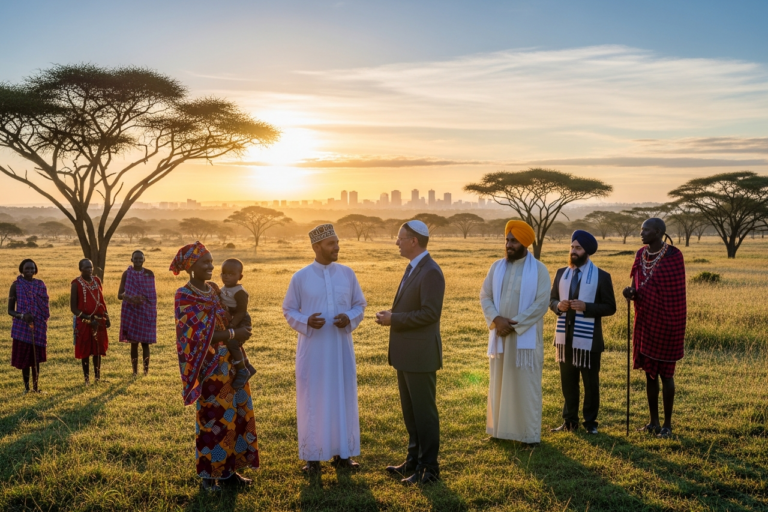
Kenya has many different religions. The biggest is Christianity. There is also a large Muslim population, and some people follow old beliefs from their ethnic groups.
-
The country’s constitution gives people freedom of religion. This lets many religious groups live together.
-
Most people belong to Christian denominations like Roman Catholics and Protestants.
-
Some of the old African religions still shape the culture and ways of life for ethnic groups. These beliefs often mix with Christianity or Islam.
-
People in Kenya value living in peace with other religions. But, there can be some problems and tensions between communities.
-
For many ethnic groups across the country, religion is a big part of education, daily life, and how society works.
Introduction
Welcome to Kenya. This country is full of life and has many different cultures and faiths. If you are coming from Canada and want to visit, it is good to know that religion is a big part of how people live. You will see that from busy cities to quiet towns, religious beliefs play a big role in the daily lives, social moments, and old ways of many people. Many folks in the total population are guided by what they believe. This guide will give you an easy way to learn about religion in Kenya. It will help you get closer to the people and understand what matters in their lives.
Overview of Religion in Kenya
Kenya is a country where faith plays a big part in people’s daily lives. There is not a state religion, but most people in the country follow some kind of religion. The main faiths in Kenya today are Christianity and Islam. There are also many traditional beliefs and indigenous faiths that have been there for many years.
You will see different faiths among the country’s many ethnic groups. Many people in Kenya combine their traditional beliefs with the practices of either Christianity or Islam. This mix makes a special spiritual way of life in the country. In this text, we look at how the different faiths grew, where they are found in the country, and what they mean for Kenyan society.
Historical Development of Faith Traditions
The story of religion in Kenya is very old. Islam started to grow along the coast many years ago, at least by the fourteenth century. Traders from the Arabian Peninsula brought it with them. They met with communities who spoke Swahili. Because of this long history, Islam is a big part of life in the coast areas.
When the colonial period came in the late nineteenth and early twentieth centuries, things changed a lot. Christian missionaries came when the railway opened up the inside of Kenya. These missionaries built churches, schools, and hospitals. Many people, especially from the Kikuyu, Luo, and Luhya ethnic groups, became Christians during this time.
Over time, new religious groups started. Many independent churches mixed Christian beliefs with local traditions. These new religious groups and churches have changed and grown. They made a way for a special Kenyan style of faith that is still changing. This story shows the way religious groups in Kenya always adapt to outside ideas and local customs.
The Current Religious Landscape
Today, most people in the country follow Christianity. Many identify with different christian denominations, like Protestant and Catholic. These churches are well-spread across the country. They are a big part of community life. They do more than give spiritual guidance. You will find they help with education and healthcare, too.
The muslim population in the country is the second biggest religious group. Most live along the coast, in places like Mombasa, and with ethnic somalis in the eastern areas. Islam has been in this region for a long time. It is still a strong part of how people see faith here.
In recent years, things have kept changing. Christianity and Islam are still the main faiths. But, you can also see traditional African religions being followed. There are smaller groups too, like Hindus, Sikhs, and Baháʼís, mostly among the Asian community. This mix makes it interesting to see so many ways people practice their beliefs in the country.
Impact of Religion on Kenyan Society
Religion in Kenya is not just about what people believe or what happens in places of worship. It is part of everyday life and shapes how people live together. In many local communities, religious institutions like churches and mosques, step up to help when the government does not have enough resources. They give people social support, help with education, and even offer healthcare. This builds a strong feeling of togetherness.
Faith is also important when it comes to big moments in life like birth, marriage, and death. Religious traditions show the way people do these events, guiding the ceremonies and what happens at each step. In family law, religion can even shape legal rules, like when Kadhis’ courts look after personal status issues for Muslims.
You can see religion meeting culture all over Kenya. Religious values show people how to act right and treat each other well. Spiritual leaders have a lot of say in both local matters and bigger, country-wide talks. Because of this mix, you can see that faith is at the heart of Kenya’s social and cultural life.
Main Religions Practiced in Kenya
Kenya has many faiths, but three main religious groups are most common. The main one is Christianity. Most people in Kenya belong to different christian denominations. After that, the muslim religion is also very important. It has deep roots, and you will find many people who follow it, especially in the coastal and eastern parts of the country.
Along with these, some people in Kenya follow other faiths. These include Hinduism, as well as smaller religions. Groups like the Hindu Council of Kenya often show the way for those in these religions. There are also people who still keep and practise their own local, Indigenous beliefs. Sometimes, people mix these old faiths with Christianity or Islam. Now, let us look even closer at these main religious groups.
Christianity in Kenya
Christianity is the main religion in Kenya. Around 70% of people in the country say they are Christian. This large group includes many types of churches. Each church has its own story and ways to worship in Kenya. Missionaries came to the country during the colonial period. They brought the Christian faith to many who lived there. Now, the faith is a big part of Kenyan culture.
The biggest groups are Protestants and those in the Roman Catholic Church. About 38% of Kenyans are Protestant. This group also has Anglican, evangelical Protestants, and others. Another 28% of people in the country belong to the Roman Catholic church. You can see these churches in almost every town. Cathedrals and parishes are found all over.
There are also independent churches in Kenya. These churches, like the Nomiya Luo Church, often mix the Christian faith with local African ways. This makes their worship style new and different, drawing many people. The many kinds of churches show how lively and full of options the country’s Christian life is.
Islam in Kenya
Islam is the second biggest religion in Kenya. It is practised by a large group of people but not most of the country. The muslim population is about 6% of the people, but some say it might be up to 10%. The Muslim community has been in the country for a long time. It started as early as the fourteenth century when Arab traders came to the East African coast.
Many in the muslim population are ethnic Somalis. They often live in the east part of the country. There are also Galla-speaking people and Swahili communities, mainly found on the coast. In these places, Islam affects much more than just faith. It shapes the culture, the law, and how people live every day.
The country’s constitution recognizes Islamic law, called Sharia. It lets Muslims use it for personal things, like marriage and inheritance. With this setup, the Muslim community can hold on to their traditions and religion while being part of Kenyan life. This shows how the country values having people of many faiths.
Hinduism and Minority Religions
Besides Christianity and Islam, the country of Kenya has other small religious groups. These groups make the culture special and more colourful. The Asian community has played a big part in this. They have brought in faiths like Hinduism, Sikhism, and Baha’ism. Even though their numbers are not big, these religious groups have set up the places of worship and cultural centres, mostly in the big cities.
The Hindu Council of Kenya is an important group for Hindus in the country. It helps keep their beliefs, holidays, and old ways alive. If you go to cities like Nairobi or Mombasa, you will see wonderful temples standing out as key places of worship and social centres for the Hindu community.
Besides these main minority religions, new religious groups sometimes show up too. They may not have a lot of people, but they are still important. Their presence shows that the country has a strong sense of religious tolerance and that many ways of thinking and believing can live together in Kenya.
Traditional African Religions and Beliefs
Before Christianity and Islam came, indigenous religions were the main spiritual base for many ethnic groups in Kenya. They had traditional beliefs that were different between tribes. But, there were often some ideas that many groups shared. One common belief was that there is one creator God who is far from people. Another was that people should honour their ancestors. Today, about 25% of Kenyans still follow these traditional beliefs or their own indigenous religions.
Even now, many people in Kenya who call themselves Christian or Muslim still hold on to parts of their traditional beliefs. These ways shape how they see the world and live their lives. This mix of new and old beliefs is something many Kenyans share. Next, we will look at the main values and the rituals that make these old indigenous religions special.
Core Values and Practices
The main values in traditional African religions in Kenya start with a strong bond to community, nature, and the spirit world. Many traditional religious groups believe in a main creator. This creator is thought to be very powerful and far away. For the Kikuyu people, this god is called Ngai. Ngai shows himself in things you see in nature, like the sun, the moon, and big fig trees. These fig trees are important places of worship.
People also think that spirits close to them are part of everyday life. These spirits can make good things happen when happy or bring trouble if upset. Because of this, people do different rituals and give offerings. They want to keep a good relationship with the spirit world.
Sorcery and witchcraft still mean a lot in these faiths. When there is sickness, death, or other bad things, these ideas are sometimes used to explain why. This is true even for people who switch to other beliefs. All of these practices and values show that the spiritual and physical worlds are very close in these religious groups, and one affects the other at all times.
Ancestral Worship and Community Rituals
Ancestral worship plays a big part in many indigenous religions in Kenya. People do not think ancestors are gone for good. They see them as spirits who stay around, watching over their families and helping them with their lives. Ancestors are respected and often asked for help. They act as go-betweens for people and the creator God.
Rituals with the whole community help honour ancestors and keep things in balance. These rituals usually happen during key times in life or in the farming year. They help bring everyone in the local communities closer. Many ethnic groups also believe that ghosts, who are different from ancestors, may come back to seek revenge if not shown respect.
Every community has its own rituals and beliefs about honouring ancestors. For example:
-
People put gifts at special places such as large fig trees to make the spirits happy.
-
Many think that ancestors talk to the living in dreams or visions.
-
There are rituals to calm spirits who are thought to be angry and might cause sickness or trouble.
-
People get advice from elders. Elders are seen as being closer to the ancestor world.
Regional and Ethnic Diversity in Religious Practice
In Kenya, religion is not the same for everyone. The way people follow their faith often depends on their ethnic group and where they live. Different ethnic groups in the country have their own ways of following their religious beliefs. This leads to many differences in how people practice their faith in different places. Because of this close link, knowing a person’s ethnic group can often tell you a lot about their religious beliefs.
The strong connection between ethnic groups and religion helps shape the country’s social life and politics. Now, we will see how some of the biggest ethnic groups in Kenya shape their faith, and also learn about the different religious beliefs people have in the country.
The Role of Ethnicity in Shaping Faith
Ethnic groups have a big impact on religious beliefs and practices in Kenya. In the past, certain Christian missions were set up in certain regions. Because of that, some ethnic groups are mainly part of certain religious groups. This made it easy for faith and ethnic identity to be linked together.
For example, when people from many ethnic groups in Kenya became Christian or Muslim, they did not leave all their old beliefs behind. Instead, they mixed new faiths with their cultural customs. In the way people in local communities mark religious holidays or special events, you can see this mix.
Because of this connection, for many people in Kenya, their ethnic background and their religion go hand in hand. The group you are born into usually shapes the faith you follow. This can affect how people set up their social lives and even their politics. The close bond between ethnicity and faith is a big part of life for local communities in Kenya.
Distinct Beliefs Among Major Kenyan Tribes
Different Kenyan tribes show many kinds of religious beliefs and ways of life. The Kikuyu people, the biggest group in Kenya, used to believe in a god called Ngai. They thought he lived on Mount Kenya. Now, most Kikuyu people are Christian, but the mountain is still very important in their culture.
In western Kenya, the Luo people have followed Christianity for a long time, and they have their own church called the Nomiya Luo Church. The Luo do not see circumcision as a main part of growing up. This is different from many other Kenyan tribes. On the other hand, some tribes like the Maasai, Samburu, and Turkana still hold onto their traditional beliefs. Not many people in these tribes have switched to Christianity.
Here are a few examples of how some other Kenyan tribes have their own beliefs:
-
The Embu live on the sides of Mount Kenya and also looked up to Ngai.
-
The Kalenjin people used to believe in a god named Asis, who was shown as the sun.
-
Most Kisii people are Christian, but many still worry about witchcraft.
-
The Luhya did not make girls go through circumcision, which made them different from some other nearby people.
These examples show how religious beliefs, traditional beliefs, and lives change from one group to another, in many places in Kenya like Mount Kenya and western Kenya.
Distribution of Religion Across Kenya
The religious map of Kenya shows different patterns in each area. While most of the total population in the country is Christian, you can see that the main religious groups are not spread out the same way everywhere. For example, there are many Muslims at the coast, while many other parts of Kenya have almost all Christians.
These differences in each region matter. They often match up with ethnic lines and stories from earlier years. If you want to know more, you should look at how people follow their religion in towns and villages. It is also good to see the regional differences in the country.
Urban Versus Rural Religious Patterns
There are clear differences in how people show their religion in cities and villages in Kenya. In places like Nairobi and Mombasa, the cities mix different cultures and faiths together. There are many places of worship, so you will see grand cathedrals, mosques, Hindu temples, and independent churches all close to each other. It’s easy to find these within just a few kilometres.
In the countryside, people in local communities mostly follow the same faith. Religion is a big part of daily life in these areas. There might only be one church or mosque that the whole village goes to. This one place acts as the centre for both spiritual life and social gatherings. Here, people also mix traditional beliefs with main religious groups, and you can see these customs clearly.
With so many people moving and talking in cities, the churches are now mixed. They are not made up of just one group as they often were a long time ago. But in rural areas, one ethnic group often stays with one denomination. This is because of how missionary groups once worked in these villages.
Regional Variations and Their Significance
The way religion spreads out in the country of Kenya has a lot to do with its history, where people live, and the ethnic groups there. The coast stands out because it has had trade with the Arabian Peninsula for a long time. This is why most of the people, like the Swahili and Bajun, are Muslim there. Their religion and culture are quite different from other parts in Kenya.
As you move away from the coast and go into the country, you see that Christianity is more common. In the central highlands, there are the Kikuyu people. In western Kenya, you find the Luo and Luhya. These parts were where a lot of missionaries came during the colonial times. Because of that, there are now many Christians there.
The country also shows some clear differences in religion depending on the area:
-
Coast: Here, most people are Muslim, and a lot of them speak Swahili.
-
Eastern: This area has many ethnic Somalis, and they are mostly Muslim.
-
Central and Western: Most people here are Christian. You will find both Protestant and Catholic churches.
-
Northern Rift Valley: In this area, tribes like the Turkana and Samburu live, and most still follow their own old-style faiths.
These ways that religious groups are spread out really matter. They shape who people feel close to, how they see political sides, and the way ethnic groups and others get along.
Statistics and Demographics of Religion
When you look at the religious makeup of the country, these numbers tell you a lot. The stats are taken from the total population. They usually get these numbers during big counts of people called national censuses. The Kenya National Bureau of Statistics, which is the country’s main bureau of statistics, gathers the data every few years.
If you know about these numbers, you get a better idea of all the religions people follow. You also understand how big and strong each group is in the country. In the next part, we can see the exact numbers for Christians, Muslims, and other groups. This includes how these numbers have changed and grown in the country over recent years.
Percentages of Christian, Muslim, and Other Groups
According to available data, a large majority of Kenyans identify as Christian. The Kenya National Bureau of Statistics provides figures that break down the population’s religious affiliations. Approximately 70% of the population is Christian, making it the most widespread faith in the nation.
Within the Christian community, there is a significant split between Protestant and Catholic denominations. Protestants make up about 38% of the population, while Roman Catholics account for 28%. The remaining 4% is composed of various other Christian groups, including independent and African-instituted churches.
The Muslim population constitutes the next largest of the religious groups, at around 6% of the total. Adherents of indigenous religions make up about 25%, though many may also identify with a major religion. Other faiths like Hinduism are practiced by smaller communities.
|
Religious Group |
Percentage of Population |
|---|---|
|
Protestant Christians |
38% |
|
Catholic Christians |
28% |
|
Indigenous Religions |
25% |
|
Muslim |
6% |
Trends and Changes Over Recent Years
In recent years, the religious landscape in the country has stayed much the same at its core, with Christianity still holding the top spot. But there have been small changes and trends that are interesting to see. One of the biggest is the steady rise and variety of independent churches and new religious groups.
These new religious groups often get people to join with a lively way of worship and a strong sense of community. They show how Kenyan Christianity can be dynamic and can change over time. Many of them mix modern ideas with what is traditional. This mix has led to a religious market that is full of energy and at times even competitive.
The Bureau of Statistics and other experts say that the new city populations are more mixed when it comes to religious groups. The main numbers for big faiths have not changed much, but as people move around and ideas spread, the way faith is lived and shown in the country keeps growing and shifting. This change has kept going on since the time of colonial rule.
Interaction Between Religion and Culture
In Kenya, religion and culture are tied together in a way that you can’t always say where one starts and the other stops. The way people do things for their faith is part of how they live, how they act with others, and how they celebrate big days. This mix makes life in the country very lively and interesting.
Holidays linked to faith are big for everyone, and family events are guided by what people believe. Let’s take a look at how these big days are marked, and how the things people do for their religion touch everything Kenyans do each day.
Religious Holidays and Festivals
Religious holidays are an important part of the national calendar in Kenya. They show the country’s many faith traditions. Christian holidays like Christmas and Easter are special times. People go to church services, gather with family, and have big meals. These days help bring communities together, and you can feel a happy mood all over the country.
Muslim holidays like Eid al-Fitr and Eid al-Adha are also public holidays. Muslim people go to places of worship to pray. They share meals with their families and friends. People also give to charity at this time. These holidays help people show their faith and bring their community closer.
The country uses these national celebrations to have interfaith dialogues and share experiences. People from different faiths often wish each other well during holidays. Some of the key holidays are:
-
Christmas
-
Easter
-
Eid al-Fitr
-
Diwali (celebrated by the Hindu community)
Rituals, Customs, and Daily Life
Religion touches all parts of daily life for many people in Kenya. It shapes how people do things from morning until night. Many start and end the day with prayer. On buses and in other transport, people will pray for safe travels. Many shops also begin the day with a prayer. This shows how faith is a big part of daily life in Kenyan society.
The big moments in life, like a birth, a marriage, or a funeral, always involve religious customs. People hold naming ceremonies, weddings, and funerals with prayers and faith at the heart. Each group or community has their own ways. These rites give meaning and order to life. They also help bring local communities closer together.
Even small things like how people greet each other include blessings from their faith. Most show strong respect for elders and try to keep peace in the community, because that is what many religions teach. Because of this, the presence of religion can be seen every day. It shows how closely daily life and faith go together in Kenya and in the many local communities.
Religious Freedom in Kenya
Kenya’s legal framework gives strong backing for religious freedom. The Constitution of Kenya makes it clear you have freedom of religion. You can choose what to believe, how to worship, and how to practice your faith. The government should not get in the way. This support for different beliefs is an important part of the country’s democratic system.
Because of this, many religious groups in the country can grow and live together. Still, like in any place, things can get tough when these rights are put into use or need new rules. Now, let’s see what the constitution says and how the government’s rules shape life for faith communities.
Constitutional Rights and Protections
The Constitution of Kenya is the main source for the protection of religious freedom in the country. It says that every person has the right to freedom of conscience, religion, thought, belief, and opinion. You have the right to show these beliefs through worship, practice, teaching, or observance. You can do this alone or with other people.
These rights are an important part of a promise to support human rights. They help shape the legal and social systems across the country. The constitution of Kenya makes sure there is no discrimination based on religion and treats all faiths equally in the eyes of the law. This gives a strong support for religious tolerance and keeping different faiths safe.
In addition, the constitution also keeps in place all political rights. It says that your religious affiliation will not stop you from joining in public life or trying to hold an office. These protections help to make a society where all different faiths can live together well and support the country as a whole.
Governmental Regulations Affecting Faith
Kenya does not have a state religion. The country gives people the right to religious freedom. But, the government has some rules that affect religious groups. For example, religious groups need to register with the government, or they cannot work legally. This step is usually simple. It helps these groups own things, open bank accounts, and avoid paying some taxes.
This legal framework is there to make sure that there is accountability. It also wants to stop people from using others through religion. In the past, a government task force talked about having stronger rules for religious institutions. This happened after some people worried about new religious groups that might be taking advantage of followers.
With these steps, the government wants to keep religious freedom safe. It also works to keep order and keep people safe from harm. The government tries to build a legal framework. This framework gives room for real religious practice. It also gives tools to stop any abuse from happening.
Societal Relations Among Religious Communities
For the most part, the country has people from different faiths who live and work together in peace. You see students from many backgrounds learning together, too. Religious leaders in the country like to work as a group on big problems that the nation faces. They join hands in interfaith dialogues and try to get people together. Their goal is to build respect and peace between all.
But it is not always perfect. The country does see some tension at times. There have been problems when it comes to safety and when people compete over resources. In the next part, we will look at how the country tries to build harmony and where some of these problems start.
Interfaith Harmony and Dialogue
In Kenya, you can see many efforts to make people of different faiths get along. Religious leaders who are Christian, Muslim, or from other faiths often come together for interfaith dialogues. They talk about the big problems that affect everyone. Together, they look for ways to live together peacefully. These meetings are important. You need trust and understanding to help people live side by side.
Religious institutions play a big part in this work. They set up community events and educational programs. They also organize charity projects together. These things help break down ideas people may have about others. They help the people in Kenya feel like one group, even if they have different faiths.
Local and international partners also give lots of help. Embassy officials and groups in the government get involved because they know that religious harmony keeps the country stable. By working hand in hand, all these groups lay down a strong base for peace between people of different faiths. Kenya shows a way that other places in the region can follow.
Challenges and Sources of Tension
Even though people mostly get along in Kenya, there are still problems that make it hard for religious groups to trust each other. Things get worse sometimes during counter-terrorism work, especially in places where there are lots of Muslims. Some people have said that these actions focus unfairly on certain groups.
Human rights groups have talked about cases from these security efforts that have upset many in the Muslim community. They have talked about arbitrary arrest, enforced disappearances, and even extrajudicial killings. All these things can build up anger and make people feel left out.
These problems do not just come from religion. The reasons are often tied to money, politics, and life in these areas. Some main sources of tension are:
-
Perceived collective punishment of communities in counter-terrorism efforts.
-
Economic and political marginalization of certain regions.
-
Competition for resources and political influence.
-
The spread of extremist ideologies that exploit existing grievances.
Religion and Education in Kenya
Religion has always had an important place in the country’s education system. Back in the colonial days, churches and other faith-based groups started many of the first schools in the country. Even now, many schools still have a link to a church or other faith organization. Also, religious education is part of what students learn as they go to school.
The strong ties between faith and learning shape how things work in the country’s schools. There is a big impact on the way people think about education and what they take from it. Now, let’s look at how religious education is taught in schools and how faith-based schools affect learning in the country.
Religious Studies in Schools
Religious education is a required subject in Kenyan primary and secondary schools. The country has a curriculum that aims to teach students about different faiths, support good moral values, and help build religious tolerance. Students in Kenya will take either Christian Religious Education (CRE) or Islamic Religious Education (IRE), based on what faith their family follows.
This way, young people learn about their own beliefs and also get to know what others in the country believe. The main idea is not to push anyone into a faith, but to give all students a full education with a focus on spiritual life and being honest.
There has been a lot of talk across the country about how religious education works. Sometimes, a government task force will check the content and how it is put together to be sure it matches Kenya’s learning and social targets. Keeping religious education in schools shows that people in the country put a high value on faith and good behaviour.
Faith-Based Schools and Their Influence
Faith-based schools have been around in the country for a very long time. They have had a big impact, too. Many of the top schools, known for being among the best, were started by Christian denominations like the Catholic and Anglican churches. This all began during the colonial period. Because of this, these schools helped shape many Kenyan leaders as the years went by.
These religious institutions still play a large role in education. People know them for good results, strong rules, and how they focus on moral and spiritual growth. Even though certain religious groups support these schools, they usually let in students from any faith.
What happens at faith-based schools is about more than classes and lessons. The schools also teach values, build a feeling of community, and help students be good and responsible people. Many families in Kenya keep choosing these schools, which shows that people trust and respect what they offer.
Monitoring and Advocacy for Religious Rights
The protection of religious rights in Kenya is about more than just the law. It needs people to watch what is happening and speak up about problems. There are local and global human rights groups that work to report the state of religious freedom. These groups also talk with government officials when something goes wrong.
These human rights organizations help make sure that the government does what it promised in the constitution. They keep the government in check and help protect these rights in real life. In the next section, we will look at some main groups working in this area. We will also talk about what recent reports say about religious freedom in Kenya.
Organizations Focused on Religious Freedom
Many organizations in Kenya work to watch and speak up for religious freedom. There are local human rights groups and big international organizations. They want to make sure that Kenya follows the rules in its own constitution and also the rules it has agreed to around the world, like the International Covenant on Civil and Political Rights.
In Kenya, you can find civil groups and faith-based groups working to help protect religious rights and build peace between different faiths. They write down any cases of unfair treatment or harm over religion. They also help people and communities that have been hurt.
Big international groups, like the U.S. Department of State, put out yearly reports on religious freedom all over the world, and that includes Kenya. These reports are a good way to learn about both the good steps and the problems happening in religious freedom. Important groups in this work are:
-
Local Kenyan human rights groups.
-
The Kenya National Commission on Human Rights.
-
International organizations like Human Rights Watch.
-
The U.S. Department of State.
Recent Reports and International Perspectives
In recent years, reports from other countries like the United States show that Kenya and its constitution respect religious freedom in principle. These reports say that the country has a lively and mixed religious scene. People try hard to work together and talk with those from other religions.
But there are still some concerns. Many reports talk about problems that come from counter-terrorism efforts and how these can hurt certain groups, especially Muslims. Some people and groups have made claims of profiling, being picked on, and other human rights abuses done by the police or security forces. This can make things tense between different religions.
The High Court and other courts have done some work to protect people’s religious rights. Still, there are problems when it comes to holding people accountable and fixing long-term issues. Many looking at this from outside feel a mix of hope and caution. They say Kenya has a strong legal framework for religious freedom, but it is still important to watch what happens and to take action to fix problems that stay.
Conclusion
To sum up, when you learn about religious beliefs in Kenya, you get a better look at the culture of the country. The history and new practices of Christianity, Islam, and traditional African religions all play a part in what makes the country what it is today. The way religion fits into daily life, along with the country’s focus on religious freedom, shows how important it is to respect and value the many beliefs people have.
If you are from Canada and you visit Kenya or want to know more about the country, being aware of these religious beliefs will make your time there better. It will also help you get closer to people. If you want to learn more, you can ask for a free consultation. This way, we can look deeper into how people’s faith and the culture of Kenya work together.
Frequently Asked Questions
What is the most common religion in Kenya?
Christianity is the most common religion in Kenya. Most of the total population follows different christian denominations. The largest religious groups are Protestant churches and the Roman Catholic Church. The muslim population makes up the second-biggest faith group in the country.
How do Canadians show respect for religious customs when visiting Kenya?
Canadians can show respect by wearing simple and neat clothes. This is important when they go to places of worship or are in conservative local communities. It is good to ask if you can take photos of people or at a religious event before you do it. If you ask first, it shows you care. When you talk with others, try to listen and learn. If you show you are open and want to understand more, this will help with religious tolerance.
Are there specific local customs Canadians should know about faith in Kenya?
Yes, you should know that people talk about religion a lot. It’s normal for people to ask about what you believe in. Saying hello usually comes with a blessing. It is also good to say yes if someone invites you to a religious ceremony. This shows that you respect their way of life and their beliefs.