Key Highlights
-
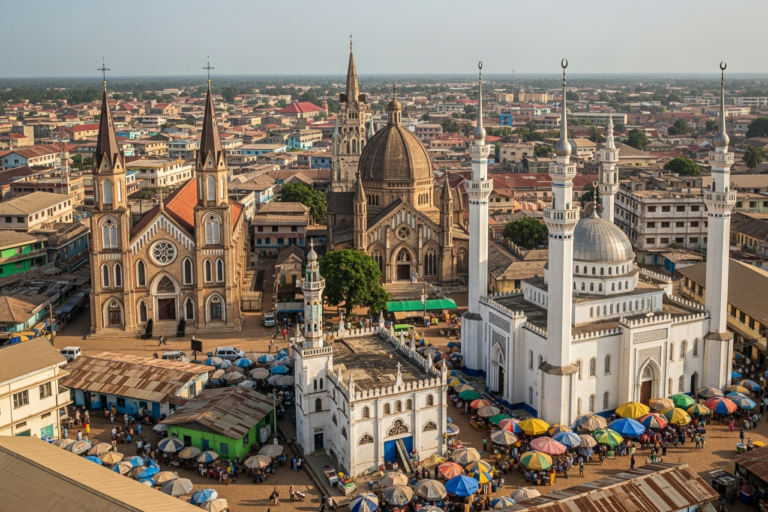
Ghana is home to many religious beliefs. People in the country practise Christianity, Islam, and indigenous beliefs side by side and get along well.
-
Most people in Ghana follow Christianity. There are many christian denominations, and you see them a lot in the southern parts of the country.
-
In the north, there is a big group of people who are Muslims. This group makes up the majority of muslims in Ghana.
-
People in Ghana show a lot of religious tolerance. Different faiths talk to and work with each other, and they often go about day-to-day life in harmony.
-
Ghana’s governmental framework helps to protect religious freedom. There is no state faith, and every person’s right to worship is kept safe.
Introduction
Welcome to a look at Ghana’s spiritual life. If you are a Canadian who wants to know more about this lively West African country, it is good to learn about its religious beliefs. In Ghana, people mix faith into daily life. You can see many christian denominations, Islamic ways, and strong indigenous beliefs. This mix makes a rich and special culture.
This guide will help you learn about the many ways people in Ghana believe and practise their faith. You will see how christian denominations and other faiths live side by side. You will also get to know more about Ghana’s welcoming spirit and what makes the country so warm to others.
Overview of Religion in Ghana
Ghana has a rich mix of different religious beliefs. The latest government census shows that over half of the people in Ghana say they are Christian. Islam is the next most common faith, with about one out of every five people in Ghana following it. There is also a smaller group that keeps to traditional religious beliefs from their culture. These traditional religious beliefs are still important for many.
Where you find yourself in Ghana can change what you see about religion. Christian churches are everywhere, but you see more of them in the south. In the northern regions and in big cities like Accra, Islam is more common. There are many different communities in Accra, and people come together from all over. In many rural areas, people still follow traditional religious beliefs, and these beliefs play a big part in daily life.
Historical Context of Ghana’s Religious Landscape
To understand faith in Ghana, you have to look back at how things have changed over time. Long ago, there were no big world religions here. People depended only on their own way of worship, built around nature and their ancestors. These old faiths are still passed down today, often spoken in local languages. Now, the main faiths you see in Ghana are Christianity, Islam, and traditional African religions.
Islam came a few hundred years ago. Traders brought it from the Middle East and North Africa. It got strong roots, mostly in the north, where the majority of Muslims live today. This early arrival of Islam shaped life and leaders in the north, even before Europeans arrived.
Much later, Europeans brought new ideas during colonial times, including elements of Christianity. Missionaries tried to spread the faith, and it grew, especially in the south, near the coast and forest, in the first half of the 1900s. If you look at those changes, you can see why people in Ghana believe what they do today. Sometimes they even mix Christian ways with old indigenous beliefs.
The Diversity and Coexistence of Faiths
One thing that stands out about Ghana is the strong level of religious tolerance in the country. People from many different religious groups live together in peace, from big cities to small rural areas. They respect each other, and this way of life is a big reason for the pride many people feel about their country. You can see the peaceful way they live side by side everywhere, even in the daily lives of neighbours who come from different faiths.
Faith leaders from both Christian and Muslim communities often work together on national issues. They help to build trust, peace, and respect between people. This team spirit is found in local neighbourhoods too. It is very common to see Ghanaians from different religious backgrounds celebrate each other’s festivals and important life moments. For a lot of people, being Ghanaian is just as important as their religious identity. This mix helps to bring everyone together as one country.
How do Christianity and Islam interact within Ghanaian communities?
-
Interfaith marriages are not uncommon, creating families that bridge religious divides.
-
People often attend community events, such as weddings and funerals, regardless of the religious affiliation of the hosts.
-
National holidays for both Christian and Muslim celebrations are observed by all Ghanaians.
Christianity in Ghana
Christianity is the main religion in Ghana. You can see it almost everywhere in the country. There are many Christian denominations. Some are very old like the Protestant and Catholic missions. Others are newer and include lots of charismatic churches. Faith is a big part of life for many people. It helps shape what they do every day and is a huge part of the values in their communities.
Christian communities have a big impact on the way people live and work together. Religious leaders often make a difference in decisions about what’s right or wrong in society. Big Christian holidays, like Christmas and Easter, are a big deal. These christian holidays are not only for church people; they are celebrated everywhere as national holidays. Everyone joins in the fun. Looking into this part of life in Ghana gives a good look at the heart of the country’s spirit.
Key Denominations and Their Influence
Ghana’s Christian landscape is incredibly varied. While official statistics from the government census show that over half the population is Christian, this group is not monolithic. It comprises numerous Christian denominations, each with its own traditions and influence. According to Britannica, more than 50% of Ghanaians are Christian, about 20% are Muslim, and a smaller segment follows traditional religions.
The more established Protestant and Roman Catholic churches have a long history in Ghana, often managing schools and hospitals. Organizations like the Christian Council of Ghana bring together these mainstream denominations to speak on national issues. In recent decades, however, there has been an explosion of Pentecostal and charismatic churches. These groups are known for their energetic worship styles and have become immensely popular, particularly in urban areas.
This diversity is a key feature of the church universal in Ghana. From quiet chapels to massive auditoriums, the expression of faith is multifaceted. Christian holidays are celebrated with great enthusiasm, uniting believers across these different denominations.
|
Denomination Type |
Key Characteristics |
|---|---|
|
mainline Protestant |
Includes Methodists, Presbyterians; historically influential in education and health. |
|
Roman Catholic |
A large, unified denomination with a strong hierarchical structure and social services. |
|
Pentecostal/Charismatic |
Fast-growing; known for lively worship, belief in spiritual gifts and speaking in tongues. |
|
Syncretistic Churches |
Blend elements of Christianity with traditional African beliefs and practices. |
Social and Cultural Roles of Christian Churches
In Ghana, religion is part of daily life. It is not just about Sunday service. Christian communities are a big part of the country and shape things such as education and what people talk about in public. The church is more than a place for worship. For many people, it is where they find help, advice, and feel part of a group.
Churches do a lot to help people. They run some schools, hospitals, and places where people learn new work skills. This help is a big part of how Ghana grows. Churches are also busy with educational activities and other programs. They reach out to local people, give support, and teach good values. The Christian Council of Ghana speaks for christian communities when something important is happening in the country.
There is also a strong cultural impact from Christianity.
-
Major christian holidays are a big deal. Everyone joins in the fun, not just those who go to church.
-
The country will build an interdenominational National Christian Cathedral in Accra. This shows how much religion means for Ghana’s way of life.
Islam in Ghana
Islam has been in Ghana for a long time. It was there long before Europeans came. Most Muslims live in the northern areas of Ghana. But you can see lively Muslim communities in cities and towns across the country. These people are a big part of Ghana’s many cultures and religions.
Muslim leaders help guide their people and they also join in talks about the country. They give much time to Islamic education. There are many schools to teach what the faith says along with other school topics. This helps make sure Islamic ways and values will be passed on to those who come next.
Major Islamic Communities and Practices
The main religions found in Ghana today include Islam. This faith is very strong in the northern regions and in Zongo communities in big cities. Ghanaian Muslim communities are well-organized, with many mosques and Islamic schools that serve the people there. These Muslim communities are different in some ways, as there are many schools of Islamic thought, but their main beliefs stay the same.
There are different Muslim organizations that help these communities. They give social welfare, education, and spiritual advice. In the north, the heads of major chieftaincies often work together with religious leaders. These religious leaders have a lot of respect and power in the group. They help with matters about faith and also day-to-day life, a tradition that has lasted for hundreds of years.
In many rural areas, and also in urban Zongos, the local imam is a very important person. He leads the prayers, gives guidance, and helps with special days such as weddings and funerals. The strong way these communities work together helps keep Islamic traditions alive and lets them become a good part of Ghanaian society.
Festivals and Social Contributions of Islam
The social and cultural contributions of Islam in Ghana are easy to see. The religion is part of the daily lives of many people. Islamic festivals are an important part of this. These celebrations are often national public holidays. People in Ghana, from all religious groups, celebrate them together. For example, Eid al-Fitr is when people mark the end of Ramadan. Eid al-Adha is called the festival of sacrifice. During both, there are prayers, big meals, and people give charity.
Muslim leaders and groups also do a lot for social growth. They follow the idea of Zakat, which means giving to others who need help. Many Muslim groups have started projects in the northern regions and city areas like Accra. They help by giving out food, paying for school, and offering health care to the poor.
Islam has done many things for Ghanaian society. These include:
-
Providing a strong moral and ethical guide for the majority of Muslims.
-
Helping to build a sense of community and support between followers.
-
Creating chances for interfaith talks with other religious groups, so the country can have peace and unity.
Indigenous and Traditional Ghanaian Beliefs
Long before Christianity and Islam came to Ghana, the land was already full of rich indigenous beliefs. These traditional beliefs are tied to the land, the ancestors, and the natural world. Many people in Ghana now follow Christianity or Islam, but these old traditions still mean a lot to many. In rural areas, they remain strong and influence how people live every day.
People who are followers of traditional religious beliefs have a spiritual system that is spoken, not written. This system is usually shared in local languages with others and passed from person to person. Their beliefs include faith in a supreme being, many other smaller gods, and the spirits of their ancestors. The followers think that these spirits are still a part of their daily lives, and they play an important role in what happens to people.
Core Values and Practices of Traditional Religions
The indigenous beliefs in Ghana show deep respect for community, nature, and the spirit world. One big idea in the beliefs is that there is a supreme, all-powerful creator. But many people think this being stays far away. So, the people often pray and do rituals for smaller gods and ancestral spirits. These spirits are seen as a way to reach the creator, and people think they live in things like rivers, forests, and mountains.
Ancestors are a significant link between the living and the spiritual world. People do not just remember their ancestors. They think the ancestors stay with the family and community, giving help, keeping them safe, or even punishing them if needed. This idea makes family and respect for elders very important. The traditions are shared through stories and ceremonies, using local languages. This happens the most in rural areas.
People do things like pouring drinks for their ancestors and gods in a ritual called libation. They also talk with traditional priests or priestesses for healing or to find answers. All these practices show how the spiritual world and the world we live in are connected for the people of Ghana. These beliefs touch every part of life.
Impact on Modern Ghanaian Culture and Identity
Traditional indigenous beliefs have a strong effect on the people of Ghana. These beliefs help shape the culture and identity, and you can still see them around today. Even though many people now follow Christianity and Islam, the ideas and way of seeing the world from old religions have stayed. In Ghana, many important roles like chiefs and elders come from these early systems.
You can notice how these old traditions are still part of life now. National events and festivals in Ghana often use older customs, like pouring a drink to thank their ancestors. Some churches also mix elements of Christianity with the healing and spiritual ways found in traditional beliefs. This mix gives people a different kind of religious identity which is both old and new.
Even in busy town and cities, not just in rural areas, these beliefs guide people in the way they act and treat others. They play a part in important life moments, like naming a child, getting married, or saying goodbye at a funeral. This ongoing influence explains how the layer of traditional beliefs sits under all of the country’s culture.
Interfaith Relationships and Religious Harmony
Ghana is known in West Africa for its strong religious tolerance and peaceful ties between people of different faiths. Christians, Muslims, and people who follow traditional beliefs live side by side in peace. This shows the culture values respect and unity. Living together peacefully is an important part of Ghana’s national feeling.
Faith leaders and groups play a big role in this. Organizations like the National Peace Council, which has people from all the big religious groups, work hard to settle problems and help people understand each other. Their teamwork creates a spirit of respect across the country.
Daily Life: How Religions Interact in Ghana
In Ghana, people do not just talk about interfaith relationships. They live them every day. You might wonder how Christianity and Islam work together in real life. The truth is, they mix quite well. It is easy to see friends, neighbours, and people you work with, who are from different faiths, sit down for meals together. They share in holidays. They help each other out when life gets tough.
You can see this feeling of religious tolerance everywhere. It is not just in Accra or other busy cities but in rural areas, too. Many families have members from more than one religion. It is very normal for people to join their friends’ big events, like weddings, funerals, and naming ceremonies, no matter what faith the friend has. They do this to show respect and stand with each other.
Different groups and places do their part as well. For example:
-
Many workplaces and schools have both Christians and Muslims together. They work and learn without any problems.
-
The efforts of the West Africa Center for Peace Foundation, and other groups, include workshops to help different faiths talk to each other.
-
The whole country celebrates public holidays for both Christian and Muslim festivals.
All of this helps to make people accept and support each other.
Unique or Minority Religious Groups in Ghana
Ghana has many kinds of religious groups, not just the big ones like Christians and Muslims. There are small communities that also have their own ways to worship. For example, Jehovah’s Witnesses and the Eastern Orthodox church are part of big world religious groups.
Some groups are special to Ghana. They show new ways to mix faith and local culture. The syncretistic Christian groups mix ideas from the Bible with African customs and ways of life. If you wonder if there are more of these unique groups in Ghana, the answer is yes. They really stand out.
-
The Musama Disco Christo Church (MDCC) started in Africa. It uses old Ghanaian ways in its church practices.
-
The Kristo Asafo Mission began with an Apostle. It is known for its faith, but also for new ideas in technology and farming.
There are other small groups too, like the Society of Friends (Quakers) and many spiritual churches. All these help to make Ghana’s religious life rich and different.
The Legal Framework for Religion in Ghana
Ghana’s constitution gives people a strong set of laws that protect religious freedom for everyone in the country. The country is officially a secular state. That means there is no government religion, and the government must stay neutral about faith. This kind of governmental framework is important because it lets different religions live together in peace.
The idea is to make sure that individual religious rights are safe under the law. If someone or a group feels that their freedom to worship is being taken away, they can go to the legal system and even reach the High Court. Government officials have to make sure these rules are followed, so there is always religious freedom in the country.
Religious Freedom and Secularism
Yes, Ghana is known as a secular state. It does not have an official religion. The constitution of Ghana gives everyone religious freedom. This is something people in Ghana accept and follow. The government’s role is to make sure people can believe and worship in peace. It does not give any religion special treatment. People can practice their faith as long as they do not harm the rights of others.
So, how does religious freedom work in Ghana? It is based on the law and on people getting along. The constitution says everyone can pick, change, or show their religion openly. Ghana agrees with the world about human rights, and this includes religious freedom. If someone feels their right is taken away, they can take the issue to the high court.
Ghana is official about being secular, but religion is a strong part of public life. The government works with religious leaders and values faith. This shows the government wants to stay neutral but knows that religion is important for many people. Religion is present in daily life and is respected all over Ghana.
Government Policy on Religious Diversity
The government of Ghana takes steps to handle religious diversity by being open and showing respect to all. The governmental framework is set up to manage and celebrate how the country is made up of many different faiths. Government officials, like the president and others, often meet leaders of all the main religions. They also take part in events of different faiths to show support.
One important way the government builds understanding is with the education system. The government curriculum at the national level includes religious and moral education. This teaches students about all the main faiths found in Ghana and helps build respect from the start. Embassy representatives from other countries often say that Ghana’s religious peace is something other nations in the region can look up to.
This way of doing things helps everyone see religious difference as a strength, not something that causes problems. The government creates organizations like the National Peace Council. It also makes sure that every group gets heard. This helps keep the balance that lets all faiths grow next to each other in Ghana.
Religion and Social Change in Ghana
Religion in Ghana is not something that stays the same. It is always changing and acts as a strong force for social change. Religious groups play an important part in how the country grows. They have a big effect on education, healthcare, public values, and what the government does. These groups help guide talks about Ghana’s future.
As different people join new spiritual movements, there are more new ideas and more energy in public life. Religious groups use educational activities, reach out to the community, and speak up about issues. All this helps shape the way the country moves ahead. They answer the changing needs of people and help the country grow in a good way.
Shifts in Religious Demographics and New Trends
Yes, there have been noticeable changes in Ghana’s religious demographics over the past few decades. While Christianity remains dominant, the internal composition of the Christian population has seen significant shifts. Government census data shows a massive growth in Pentecostal and charismatic churches, which have attracted followers from more traditional denominations, especially in urban centres of Accra.
This trend is one of the most significant new trends in Ghana’s religious landscape. These newer churches appeal to many with their vibrant services, promises of personal prosperity, and strong community networks. At the same time, Islam has continued to grow steadily, not just in its traditional northern strongholds but also in cities across the south.
Meanwhile, adherence to traditional religions as a primary faith has declined in official numbers, though its cultural influence remains strong. These shifts reflect broader social changes, including urbanization and globalization, which continue to shape the spiritual lives of Ghanaians.
|
Religious Trend |
Description |
|---|---|
|
Growth of Charismatic Churches |
A rapid increase in the number of Pentecostal/Charismatic followers, particularly in urban areas. |
|
Steady Growth of Islam |
A consistent increase in the Muslim population, expanding beyond traditional northern regions. |
|
Decline in Traditional Adherence |
Fewer people identify solely with traditional religions in censuses, though practices are often blended with other faiths. |
The Role of Religion in Education and Public Life
Religion is a big part of education and public life in Ghana. You can see this in the day-to-day life of many Ghanaians. Long ago, religious groups were the first to set up formal schools in the country. Their work is still seen today. Many of the top secondary schools are run by or linked to Christian denominations.
The Ministry of Education works with these faith-based schools. They are an important part of the national education system. The national public education curriculum has a class called Religious and Moral Education. All students need to take this class at the basic level. This subject covers the main beliefs of the major faiths in Ghana. It works to help moral education and understanding between different religions.
Here’s how religion connects with public life and learning:
-
Public events and government meetings often start with Christian and Muslim prayers.
-
Religious leaders are public figures. People listen to what they say about social and political matters.
-
Even in private and international schools, you will see a focus on faith and good morals.
This shows how strong the links are between christian denominations, secondary schools, religious leaders, the national public education curriculum, and the work done by the Ministry of Education—even in international schools. Ideas of moral education come up every day, both at school and in the wider world.
Conclusion
To sum up, it is important to know about the religious life in Ghana, especially for Canadians who want to connect with its many cultures. In Ghana, you will find Christianity, Islam, and traditional beliefs all living side by side. This mix has a big effect on daily life and shapes what people value in their communities. If you learn to accept and understand these different ways of life, you help build respect and good relationships between people of different faiths. While you get to know Ghana, being aware of traditional beliefs and what they mean will help you enjoy your time there and have better talks with the people you meet. If you are planning a visit or want to know more, feel free to ask for more details about the interesting world of religion in Ghana.
Frequently Asked Questions
Is Ghana a religiously free country for all faiths?
Yes, Ghana lets people be free about their religion. The country’s constitution sets up the state so that it does not favour any one religion. It also has laws that look after individual religious rights for everyone. This governmental framework makes sure that all people can choose and follow any religion they want. The government does not try to stop or control this. This helps build a way for people to be more open and respect each other.
How much do traditional beliefs continue to shape daily life?
Traditional beliefs still have a big effect on daily life in Ghana, even for people who say they are Christian or Muslim. In rural areas, these traditional beliefs help shape things like roles in culture, family values, and community events. Indigenous beliefs give a strong and significant link to the people’s past. They are closely tied to the nation’s culture and who they are.
Are there specific customs Canadians should know about when visiting religious sites?
Yes. When you go to religious places, it is good to dress in a way that covers your shoulders and knees. For mosques, women might need to wear a headscarf. Always ask before you take pictures of people or events. When you meet religious leaders, like pastors in christian communities or imams with muslim leaders, greet them to show respect.