Key Highlights
-
Ethiopia has a long religious past. The Ethiopian Orthodox Church is one of the oldest Christian groups in the world.
-
The biggest religious groups are Orthodox Christians, Muslims, and Protestants. All of them make up a large part of the people who live there.
-
People know Ethiopia for being good at interfaith respect, mostly between the Muslim community and Orthodox Christians. But in the last few years, tension has grown.
-
The law protects religious freedom. This makes Ethiopia a secular state. But there are some hard things that come with this in real life.
-
Along with the biggest faiths, there are groups such as the Ethiopian Jews (also called Beta Israel) and people who follow local traditions. They add to all the religious groups in Ethiopia.
-
Religion shapes everyday life in Ethiopia. It shows up in festivals, art, the way people act with each other, and what people do together as a community.
Introduction
Are you planning a trip to Ethiopia or are you just interested in this country? If you want to get a real feel for the culture and history, you should know about the religion of Ethiopia. It is clear that faith shapes life here. You will see ancient churches cut right out of stone and colorful mosques in the city of Addis Ababa. In Ethiopia, religion is a big part of daily life.
This guide helps you explore the different religious communities found in the country. You will learn about how they started and what their role is in the nation’s story. By the end, you will know more about the Religion of Ethiopia and see how these beliefs shape the people and their way of life.
Overview of Religion in Ethiopia
Religion is a big part of life in Ethiopia. For a long time, the Ethiopian Orthodox Church was linked to the government. Now, the country is a secular nation, with no state religion in its law. This change has made room for a larger group of religious groups to grow.
The total population includes many Orthodox Christians, Muslims, and more people who follow the Protestant faith. Because of this mix, Ethiopian culture is very rich. If you want to know more about Ethiopia, it helps to learn about each of the main religious groups and how they are different.
The orthodox church, Ethiopian Orthodox, Orthodox Christians, and Ethiopian Orthodox Church are very important to the history and way people live in Ethiopia. The idea of state religion has changed, bringing many groups together, making up the total population.
Major Religious Groups and Their Followers
Ethiopia’s religious landscape is dominated by three main groups. The Ethiopian Orthodox Church has the largest number of followers, followed closely by the Sunni Muslim community. In recent decades, various Protestant churches have expanded significantly, becoming the third-largest religious group.
Smaller communities also contribute to the nation’s religious fabric. These include Roman Catholics and the ancient Jewish community, known as Beta Israel. While their numbers are smaller compared to the major faiths, their presence adds to the rich diversity of religious communities across the country.
Here is a breakdown of the major religious groups in Ethiopia by their estimated share of the total population:
|
Religious Group |
Approximate Percentage of Population |
|---|---|
|
Orthodox Christians |
43% |
|
Muslims |
33% |
|
Protestants |
20% |
Unique Features of Ethiopian Religious Life
Ethiopian religious life has some special things that make it different. The Ethiopian Orthodox Tewahedo Church brings in ways of worship that come from Judaism. This mix is a big part of the main group of Christians in the country. Orthodox Christians in Ethiopia are known to be very faithful in how they follow their religion.
Next to the big Abrahamic religions, you will find indigenous African religions and old beliefs that still matter. These often blend together with what people do in Christian or Islamic practices. The coming together of these is a sign of religious tolerance and the way people have learned to adapt over time.
Some unique features include:
-
Ethiopian Orthodox Christians keep the Jewish Sabbath.
-
Many still believe in ideas like the “evil eye,” even if they are part of bigger religions.
-
People add old rituals and beliefs from their ancestors into everyday life, especially in rural areas.
The History of Religion in Ethiopia
Ethiopia has one of the oldest religious stories in the world. The country’s ties to the main Abrahamic faiths go way back in time. Many tales talk about the Queen of Sheba and King Solomon. This connection is a big part of the Solomonic dynasty. The Solomonic dynasty ruled Ethiopia for a long time. It helped the Ethiopian Orthodox Church grow strong roots in the country. The Ethiopian Orthodox Church became a big part of life, and Christianity became the official faith in the fourth century when King Ezana ruled.
But besides this Christian story, there was also a strong Islamic influence. Islam came early, and it became an important piece of Ethiopia’s history. The story of faith in Ethiopia started long ago. It is a story of kings, strong support, and major world faiths living side by side. Let’s look more at how Christianity began and how Islam spread its roots there.
Origins and Spread of Christianity
Christianity in Ethiopia goes back a long way. The Christian religion was made the state religion by the Kingdom of Aksum in the fourth century. King Ezana was the one who made this call. He got help making this choice from Frumentius. Frumentius was a Christian from Tyre who was taken and then became the first bishop of Aksum. He helped start what would later be known as the Ethiopian Orthodox Church.
Because the Ethiopian Orthodox Church was started so early, Ethiopia is seen as one of the first countries to accept Christianity. Many Orthodox Christians in the country look to the Solomonic dynasty as a big part of their story. The Solomonic dynasty says that it comes from King Solomon and the Queen of Sheba’s son. This had the effect of keeping the church and the state close together for a long time.
A big belief for many Ethiopian Orthodox Christians is about the Ark of the Covenant. They say Menelik I, who was Solomon and Sheba’s son, brought the Ark to Ethiopia. A lot of people think it is still in a church in Axum now. This makes Ethiopia a very special place for followers of the Ethiopian Orthodox Church.
Islamic Influence Through the Ages
Islam began in Ethiopia a long time ago, soon after it started. The first people to follow Prophet Muhammad came to the Aksumite Kingdom to escape harm. They were protected by a Christian king. This meeting was peaceful. It led to a long history of Muslims and Christians living side by side in respect.
As years went by, Islam became more important, mostly because of trade that passed through the area. Today, Sunni Muslims are the second biggest religion in the country. Ethiopia did not become a Muslim state, but the religion is still strong and can be found all over, from the east to places like the Gambella region.
In Ethiopia today, the Muslim community is deeply connected to everyday life and to how things work, both in society and in government. Many religious organizations help bring Muslims together. The community is now easy to see in public. This shows their big part in a country that once had a state religion but now welcomes many different beliefs.
Ethiopian Orthodox Christianity
The Ethiopian Orthodox Tewahedo Church is a big part of what makes Ethiopia special. This orthodox church is not new—it goes back to the 4th century. It is one of the oldest groups of Christians in the world. The Ethiopian Orthodox Tewahedo Church belongs to the Oriental Orthodox Church family. It is in the same group as the Coptic and Armenian orthodox churches, and some others too. Orthodox Christians who live in Ethiopia are known for being strong in their faith and church life.
This church still plays an important role in life in Ethiopia today, guided by religious leaders. The head of the church right now is Abune Henok. He helps lead many people in the faith. If you want to know about Ethiopia and its people, it’s good to learn about the orthodox church, what they believe, and the many lively festivals they have. It shows you who they are and why their culture is so rich.
Core Beliefs and Religious Practices
The belief system of the Ethiopian Orthodox Tewahedo Church comes from very old ways. The orthodox church is part of the Oriental Orthodox Church. It has its own strong beliefs and ways of worship. One key part of the Ethiopian Orthodox faith is the belief that the Ark of the Covenant is kept in Ethiopia. This shapes what they do and makes many places holy for the people.
Orthodox Christians in Ethiopia take their faith very seriously. They pray every day. They go to church often. Fasting is also something many of them do. For them, the Ethiopian Orthodox faith is not just for Sunday. It leads the way they act each day and how they are with other people.
Some important religious practices include:
-
Tithing a part of their money to the church.
-
Fasting for many days, especially during Lent.
-
Traveling to holy sites across the country.
-
Showing respect to icons and religious things in their homes and churches.
Festivals and Important Holy Sites
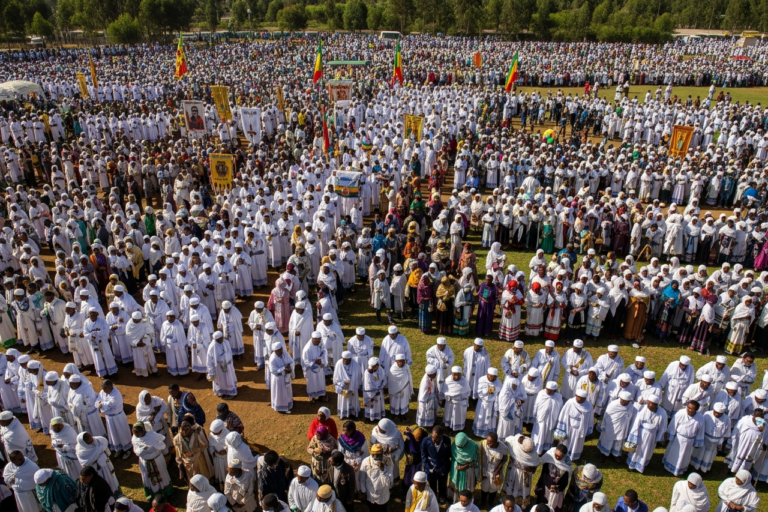
Ethiopia has a rich calendar with many lively religious festivals. These bright events show the deep faith and culture of the people. They are very important to the traditions of the Ethiopian Orthodox Tewahedo Church. Each year, these festivals bring huge crowds of worshippers and many tourists. Big celebrations like Meskel, which means the finding of the True Cross, and Timkat, which is Epiphany, feature colourful marches, singing, and old customs.
The country is also full of holy places. These sites are special spots for people who travel in faith. You can see the rock-hewn churches of Lalibela, and also the old city of Axum with its many important monasteries. These are all seen as sacred places by followers of the Ethiopian Orthodox faith. Many people think that Axum is so important because it is believed to hold the Ark of the Covenant.
Here are some festivals and holy places people often visit:
-
Meskel: This is a festival where the people light big fires. They do this to remember when the cross, which Jesus was on, was found.
-
Timkat: This is Ethiopia’s Epiphany festival. It is famous for its water ritual that blesses and sprinkles all the people taking part.
-
Lalibela: This is an important UNESCO World Heritage site with 11 old cave churches carved from rock.
Ethiopian Orthodox traditions run deep in these festivals and places, reminding us how the faith and history are one
Islam in Ethiopian Society
The Muslim community in Ethiopia is one of the largest and most old in sub-Saharan Africa. Most are Sunni Muslims. They make up a big part of the people in the country. Their history is mixed in with the nation’s Christian past. Back then, when Islam came to the area, there was much shelter and kindness. This started years of Muslims and Christians living side by side.
In Ethiopia today, the Muslim community is a lively and present group. The law gives all groups, Christians and Muslims, the right to practice what they believe. Muslims can live and show their faith in the open. They help make the country full of many religious communities. Now, we will talk about the history of Islam here and customs in Ethiopia today.
Keywords: religious communities, religious freedom, muslim community, ethiopia today
Historical Significance of Islam
The link between Islam and Ethiopia goes back many years. The story starts when the Prophet Muhammad was still alive. When his early followers were being treated badly, he sent them to the Christian kingdom of Aksum in Ethiopia. He said this place was fair and good to people. People called this trip the First Hijra. Because of this, the idea of religious tolerance in Ethiopia began.
For a long time, the Sunni Muslim people lived side by side with the Ethiopian Orthodox Church. Most of the time, life was peaceful, even though there were sometimes problems. The main story is about living together and sharing space. You can see this past in cities like Harar, which many people say is the fourth holiest city in Islam. You can also see it in many mosques in the country, even in the capital city, Addis Ababa.
This long history helped build a special Ethiopian way to practise Islam. It also became part of how the country sees itself and the way people live and get along. The orthodox church, the Ethiopian Orthodox Church, Sunni Muslims, and even the city of Addis Ababa all play a part in this story of religious tolerance.
Key Customs and Modern-Day Practices
The Muslim community in Ethiopia today is very active and easy to see. The belief system matches what most Sunni Muslims follow. Still, people add their own customs and local ways to it. After 1991, the country started to allow more religious freedom. Because of this, you can now see people showing their faith openly. More mosques have been built, and there are new religious schools as well.
People now practice their religion in a more open and organized way. Many religious organizations try to make the Muslim identity stronger and help people with different needs. You may notice there are more women who wear veils. Big celebrations of religious holidays out in public are also much more common in Ethiopia today.
Some key parts of how the Muslim community practices faith now include:
-
Taking part in social and political life more than before.
-
Setting up many religious schools (madrasas) for kids and adults to learn about Islam.
-
Making Islamic holidays like Eid al-Fitr and Eid al-Adha days to celebrate out in the open.
-
Becoming more active in the news and when people talk about public topics.
Other Abrahamic Faiths in Ethiopia
Beyond the main Orthodox Christian and Muslim groups, Ethiopia has other Abrahamic religions that add to its rich mix. The best known is the old group of Ethiopian Jews, called Beta Israel. Their story here is special and goes back a long way. Protestant churches have grown very fast in recent years. They are now one of the biggest religious groups.
Smaller groups are here too, such as the Roman Catholic Church, the Baháʼí Faith, and a Rastafarian community that sees Ethiopia as a home for the spirit. This part looks at the history and today’s life of the jewish community and the Baháʼí Faith in Ethiopia.
Judaism—Roots and Current Communities
The Beta Israel, also called the Ethiopian Jews, show one of the most interesting parts of the Jewish diaspora. No one is sure where they first came from. Their stories say they go back to the lost tribe of Israel. For many years, this jewish community lived in the north of Ethiopia. They were apart from other Jewish groups and made their own way of thinking about and seeing faith. All of it is based on the Torah.
In the late 1900s, something big happened for them. The Israeli government saw the Beta Israel as a true jewish community. They set up huge flights to bring them to Israel. These moves, called Operation Moses and Operation Solomon, brought most of the Ethiopian jewish community to Israel.
These days, there are only a few jewish people left in Ethiopia. You can still find them in Addis Ababa, around Gondar, and a bit in Gambella. A lot of them hope to join their loved ones in Israel. This keeps going the story of the Ethiopian Jews, which has been long and full of changes.
Baháʼí Faith and Its Development in Ethiopia
The Baháʼí Faith came to Ethiopia in the 1930s. Today, it is a small, but stable, religious community. This faith teaches that all people are spiritually united. It goes well with values like tolerance and living together, which you see in Ethiopian society. Growth has been slow, with the community putting a focus on service and being united.
Baháʼís in Ethiopia, like other religious communities, have local spiritual assemblies. These assemblies guide the group’s activities. The community works hard to support education and helps people in society, which matches their main beliefs. They are one of the many smaller religious organizations that add to Ethiopia’s diversity.
The Baháʼí group is not as big as other major faiths. Still, they keep a presence, and often use social media to connect with each other and share what they believe. They are part of the wide mix of religious communities found in Ethiopia.
Indigenous and Traditional Beliefs
In Ethiopia, there are still many people in rural areas who follow indigenous African religions. These beliefs go back a long time. People often focus on their ancestors, local spirits, and a strong link to nature. This belief system is not as formal as big religions like Christianity or Islam, but it is still part of daily life for many communities. You can see this in the southern and western parts of the country, including the Gambella region.
What is interesting is that these traditional beliefs do not fight with other main religions. Many people mix their older ways with the orthodox church and Islam. They hold on to both, showing how the Ethiopian Orthodox Church and the belief system of their ancestors can come together. In this way, their faith is both old and new at the same time.
Role of Ancestral Spirits and Local Deities
In many parts of Ethiopia, and especially in rural areas, the belief system is more than just what the church or mosque teaches. Indigenous African religions play a big part too. They give a lot of importance to ancestral spirits and local gods. People think these spirits are between people and a higher power. These spirits have the power to change health, luck, and everyday life.
This view of the world is part of traditional religions. It helps people respect older members and their family’s roots. These beliefs do not stand alone as a different faith. Instead, the spiritual side works along with the religion people follow.
Key elements of these beliefs include:
-
Honouring ancestral spirits through rituals and offerings.
-
Belief in local deities who handle parts of nature like rivers or mountains.
-
Asking traditional healers or spiritual leaders for help.
-
The idea that spirits can bring good things or trouble.
Integration with Mainstream Religions
One thing that stands out about faith in Ethiopia is how people join together traditional religions with more widely followed ones. Many people in Ethiopia do not see any problem with being Christian or Muslim, while still keeping some parts of their old beliefs. This mix is a big part of the spiritual life in the country.
For example, someone in the Ethiopian Orthodox Church may go to mass and also join a special ceremony to show respect to the spirits of their family’s past. In the Muslim community, it is common to see local ways and old beliefs show up in everyday life and other rituals. This mix shows a way of thinking about spirituality that is easy and makes sense.
Many who do this do not think their faith is less because of it. They feel that mixing helps them to have a deeper spiritual life and to keep their tie to their culture. This way of mixing faith lets different religious groups be part of their traditional religions, even those that have been there since before the Ethiopian Orthodox Church, Christianity, and Islam came into the picture.
Regional Diversity in Religious Demographics
Ethiopia does not have one religious identity across the whole country. The mix of religious groups changes a lot from place to place. The religion that most people follow in each area often matches its ethnic history and background. Some religious groups can be most of the people in one part, but be few in another.
For example, in the Amhara and Tigray regions up north, most of the people are Orthodox Christians. The Oromia region is different. In this area, you will find Muslims, Orthodox Christians, and Protestants, so it is a mix. In the Southern Nations and in the Gambella region, there is also a big mix. You find many Protestant Christians there, and also people who follow traditional religions.
This difference from one region to the next is important. It helps us understand the social life of Ethiopia and the people in it.
Northern Ethiopia and Religion
Northern Ethiopia is where Orthodox Christianity has its roots. The Amhara and Tigray regions are the home of the Ethiopian Orthodox Church. The faith is a big part of life and shapes how people in that area see themselves. Long ago, the old kingdom of Aksum in the north made Christianity its main religion in the 4th century. Since then, the Ethiopian Orthodox Church has had a strong influence.
The link to the Solomonic dynasty, based in this area, added to the orthodox church’s power. There are many old churches and monasteries spread across northern Ethiopia. These places are important for worship and for people who travel to them to pray. Religious leaders from here have always had a lot of influence.
For a long time, to be Ethiopian often meant to be Orthodox Christian from the north. The country has grown more mixed now. Still, this part of Ethiopia is the centre for the ethiopian orthodox church, and orthodox christianity shapes much of everyday life.
Southern and Western Religious Traditions
The southern and western parts of Ethiopia have a very different religious life than the north. In the Southern Nations, Nationalities, and Peoples’ Region, and in the Gambella region, you will find great religious diversity. These places have people who still follow many indigenous African religions and other traditional religions.
Many in rural areas keep these traditional beliefs alive. But in the 20th century, things began to change fast. Protestant Christianity grew quickly when missionaries came, and now, you can see Protestantism as one of the big religious groups in the south. Traditional faiths are still important too.
You can notice different religious groups living together here. It is not rare to see families with people who follow different faiths. Many Christian practices use old, local customs. This part of Ethiopia shows how religion can be changing and have many sides in people’s lives today.
Religion and Ethiopian Culture
In Ethiopia, religion and culture go hand in hand. They are closely tied together. The faith of the people is a big part of how they live every day. You can see this in the way they make art, enjoy music, cook food, follow rules in social life, and come together as a group. The ancient ways of the Ethiopian Orthodox Church are very important here. They have a strong effect on all parts of life and culture in the country.
If you want to know about Ethiopian culture, you need to know about what people believe. Their faith and their culture are linked. The next parts will show how faith and the orthodox church have shaped art and the way people relate to each other. This includes many things, from paintings to reggae music.
Influence on Art, Music, and Cuisine
The Ethiopian Orthodox Church has shaped art, music, and food in Ethiopia. You can see this in every part of life there. For many years, the Ethiopian Orthodox Church was the main support for art. That is why the art in churches uses bright colours and shows its own style. You will find this art on walls in many churches and homes.
Music and church life go hand in hand. The chanting found in the Orthodox Church is old and sounds like nothing else in the world. In more recent times, the connection between the Rastafarian movement and the Ethiopian Orthodox Church has made reggae music part of Ethiopia’s music scene too.
Food in Ethiopia is often shaped by religious practices, such as those found in the Orthodox Church. There are many fasting days when people do not eat animal foods. So, you will find a lot of good vegan dishes in the country.
-
Art: The style that stands out comes from the Ethiopian Orthodox Church.
-
Music: Mixes old chants from the church and also gets some influence from reggae music.
-
Cuisine: Offers many vegan dishes made to follow fasting times set by the Orthodox Church.
Impact on Community Life and Social Norms
Religion plays a big part in community life and shapes social norms in Ethiopia. The local church or mosque is not just a place where people go to worship. It is also where much of the community meets, where people help each other, and where they gather for important events like weddings and funerals. These religious communities give people a strong feeling of belonging and identity.
What a person believes will guide how they act every day. How people show respect to elders, care for family, and welcome others all come from what the country’s main religious groups teach. These ideas are important. They help keep people working together and close, even when there are many different backgrounds and beliefs.
Over the years, strong connections in the community, made through religious institutions, have helped keep things steady. There can be problems sometimes, but the main role of religion in how people live has helped everyone live peacefully and support each other, even if their religious groups are different.
Religious Freedom and Legal Framework
Ethiopia’s constitution says that the country is a secular state. This is a big change from its past when the church and the state were linked. This legal setup gives every citizen the right to religious freedom. Separation of state and religion means that government officials should not get involved in religious matters. It also means that religion should not control politics in the country.
But putting these rules about religious freedom into practice can be hard. The law offers strong rights, but dealing with how different religious groups and the government work together can be tricky. The next sections will talk more about what the constitution says and how religious freedom works today.
Constitutional Rights and Guarantees
The 1995 Constitution of Ethiopia set a clear legal base for religious freedom. It says that Ethiopia is a secular state. This means the state and religion must be separate. Before this, the Orthodox Church was the state religion for many years. Now, all faiths can have a fair chance.
These rights allow every Ethiopian to pick their religion, practice it, or change it if they want. You can worship alone or with others, in public or at home. The government cannot make any religion the state religion or get involved with religious groups.
Key points in the constitution are:
-
Ethiopia is a secular state.
-
People have the right to freedom of thought and religion.
-
The state must stay out of religious matters.
-
All citizens have equal political rights no matter their faith.
Status of Religious Freedom Today
Ethiopia’s constitution supports religious freedom, but things can be tough. Groups that check on human rights, like the U.S. Department of State, say most people can practise their faith without problems. Still, there are some ongoing issues. Tension between religious groups is there, and this can get worse because of political or ethnic problems. This tension sometimes leads to violence.
Sometimes, the government puts limits on religious activities. They often say the rules are for public safety or to protect the secular state. There have been arguments about building new places of worship in some spots or stopping religious events in public. More people use social media now, and that also sometimes causes more problems. People can use these platforms to spread angry messages and that can make things worse between religious groups.
Still, the main idea of religious freedom is kept. The government and religious leaders try to help whenever there is a fight, and they often work on teaching tolerance. But, finding the right balance between freedom, public safety, and peace among different religious groups is always a hard job for the country.
Interfaith Relations and Coexistence
Ethiopia is known for being a good place for different religious communities to live together. Many people say that its history shows strong religious tolerance. For a long time, Christians and Muslims have been neighbours and friends in this country. People in Ethiopia feel proud of this because how well they get along. The way these groups have worked together over the years has helped the country be a place where meeting as different faiths is normal in daily life.
But, it is not always easy. There have been problems between the groups, especially now. In the last few years, tension has gone up. Because of this, people want more talk and action to keep peace. Religious leaders and many groups are starting new programs to help keep people together. The next parts will look at the old ways people in Ethiopia worked with each other and the steps taken today to help bring peace.
Historical Collaboration and Challenges
The story of how people of different faiths get along in Ethiopia is mostly a story of peace. Long ago, the king of Aksum, who was Christian, took in the first Muslims when they needed help. This important moment in the past helped start a sense of religious tolerance that has lasted for many years. Over time, the Ethiopian Orthodox Church and the Muslim community have lived next to each other as neighbours.
But, that does not mean there has never been trouble. Sometimes there were fights or hard times, but these were usually about power or politics, not just religion. Still, most of their history shows that people found ways to get along and share their lives together.
Religious leaders from the two faith groups have often worked hard to help when problems came up. They have tried to keep peace and make sure people live well with one another. This long habit of living side by side is now a key part of what it means to be Ethiopian. The orthodox church and the muslim community know this history well. As things change in the world today, the spirit of the ethiopian orthodox church, religious tolerance, and wise religious leaders continues to help if new things come up.
Modern-Day Dialogue and Initiatives
There is a big push now in Ethiopia for new ways to talk and work together across different faiths. This is because the tension in the country has grown. Religious organizations, community leaders, and the government all see that people need to help and enjoy peace. They want everyone to understand each other and live together without problems about faith. Their work tries to use the good parts of their history, where people got along well, and also to fix what has been causing the recent trouble.
Many projects bring religious leaders from all faiths together. These leaders talk about problems they all face and try to find ways to fix them without fighting. These meetings help people trust each other and work together. Education also matters a lot. Some speak up and say religious schools should teach kids to respect other people’s faiths too.
Here are some ways people try to help:
-
The start of inter-religious councils at both the big government level and in local towns.
-
Times when faith groups celebrate holidays as one or do service work together.
-
Public talks from religious leaders who ask their followers for peace and unity.
-
Workshops and meetings where people practice talking and listening to each other’s faiths.
Conclusion
To sum up, knowing about the mix of religion in Ethiopia is important for Canadians who want to better understand this country. The everyday life of the people is closely tied to different faiths, such as Ethiopian Orthodox Christianity, Islam, and other local religions. By learning about the history and present-day beliefs of these religious groups, you will build more respect for and understanding of Ethiopian culture. When you talk with others about faith or join in on special events, knowing about orthodox Christianity and other beliefs will make those experiences better. If you want to know more about Ethiopian culture and its people, feel free to ask for help or more information.
Frequently Asked Questions
How do Ethiopian Orthodox Christians express their religion?
Ethiopian Orthodox Christians show their faith by being very active in the church. They go to church often. They pray every day. They also keep long fasts. You can see their strong belief in how they celebrate their bright and lively religious festivals like Meskel and Timkat. Many people travel to holy places, and they respect sacred icons, too. All of these things are an important part of the Ethiopian Orthodox Church, and its traditions hold a special place in the lives of orthodox Christians. The orthodox church and the Ethiopian Orthodox faith bring people together in these ways.
Are there significant religious tensions in Ethiopia?
Yes, for many years, there was peace among religious groups in Ethiopia. In the last few decades, things have changed. The tension between these groups has become worse. There have been times when people used violence. Many of these problems also link to ethnic and political fights. The government led by Prime Minister Abiy Ahmed has seen these challenges. It has been hard for the prime minister and those in charge of state affairs to keep the peace and make sure there is religious freedom for all.
What traditional beliefs are still practiced alongside main religions?
In many places of Ethiopia, you will find that traditional religions are still strong, especially in the countryside. People there often mix indigenous African religions with other main faiths. They show respect to the spirits of their ancestors and to the gods that are important to their area. Many also believe in the “evil eye.” This kind of way shows the religious tolerance that is there. The old religions are part of daily life in these rural areas.