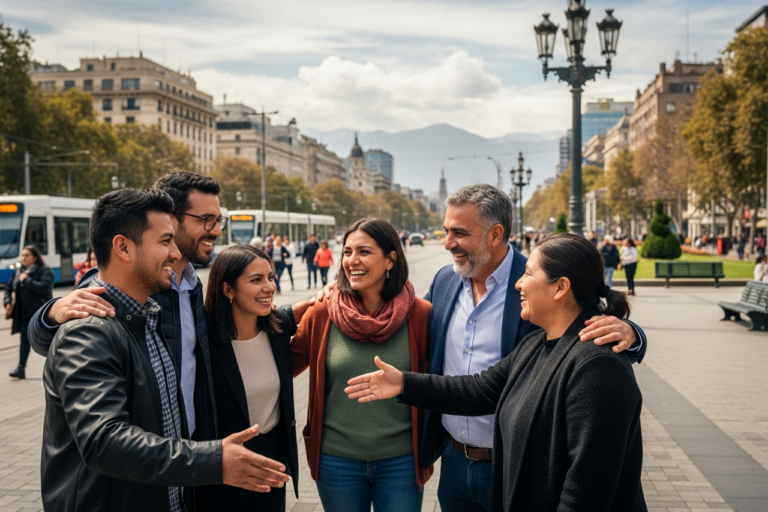
Key Highlights
-
In Chile, the most common greeting uses some kind of physical contact. People usually give a firm handshake or a kiss on the right cheek.
-
With friends and family, people often use the “abrazo.” That is a hug mixed with a handshake. It is a warm way to greet.
-
It is important to make direct eye contact when you greet someone. This shows that you are honest and have respect.
-
At a social gathering, you should greet and say goodbye to each person one by one.
-
When greetings are more formal, people use titles like “Señor” or “Señora.” They save first names for people they know well.
Introduction
Are you getting ready to go to Chile? If you are, you will have a great time. When you meet people in Chile, knowing a common greeting can help you feel more comfortable. The way people greet each other shows respect and kindness. Your trip will be better when you know the right greetings for Chile. This guide will show you the basics of greetings in Chile for your journey.
Greeting Customs in Chile: An Overview for Canadians
When you meet someone in Chile for the first time, you will see that a handshake is what most people use. It is safe and works in both formal and casual greetings. In chile, people touch more when they greet, unlike in Canada, so you might notice people stand close to you.
People in Chile care a lot about making a personal connection. This comes across in the way they say hello. While it is good to start with a handshake, over time, greetings with them can feel more friendly. It can even move to using first names. Knowing this about greetings in chile can help you feel more sure of yourself during social times.
Typical Verbal Greetings in Different Situations (Formal, Casual, Business)
Beyond a simple “hola,” the time of day often dictates the common greeting. Using the right phrase shows you’re making an effort to be polite and aware of local customs. For instance, “buenos días” is used in the morning, while “buenas tardes” is appropriate for the afternoon.
In a business setting or when meeting someone for the first time, it’s best to use formal titles. Address them as “Señor” (Mr.) or “Señora” (Mrs.) followed by their last name. It’s polite to wait until you are invited to use their first name. For older individuals with whom you have a closer relationship, “don” or “doña” followed by their first name is a sign of respect.
Here’s a quick guide to verbal greetings:
|
Situation |
Greeting Phrase |
Translation |
|---|---|---|
|
Morning |
Buenos días |
Good morning |
|
Afternoon |
Buenas tardes |
Good afternoon |
|
Evening/Night |
Buenas noches |
Good evening/night |
Common Physical Gestures and Regional Variations
Physical touch is a big part of greetings in Chile. People often use a handshake, especially between men or when things are more formal. Still, don’t be surprised if you see gestures that are closer. It’s very usual for women to greet men and women with a kiss on the right cheek. Men do this with their female friends and family too.
For close friends and family, the abrazo is common. This is a handshake that becomes a hug with a friendly pat on the back. No matter the gesture, direct eye contact is important. It shows you are sincere and have respect.
These customs are found in many places, but there may be some changes in different parts. For example, in southern Chile, young people often call their friends’ parents tío or tía. This means uncle or aunt. It’s good to pay attention and do what people around you do.
Navigating Social Interactions: Tips and Etiquette
When you go to a social gathering in Chile, you need to greet each person by themselves. You should say hello to every person when you come, and you need to say goodbye to each person before you leave. Doing this shows good manners.
If you are a tourist, being friendly and showing respect is important. Give a nice smile and say “hola” when you meet someone. This shows you care about their culture. Knowing what you should and shouldn’t do helps you feel better and shows others you respect them.
Let’s talk about how to greet strangers and how to greet people you know at a social gathering in Chile.
Appropriate Greetings With Strangers and Locals
When you meet someone for the first time, mostly in a formal or work setting, giving a handshake is the best way to say hello. The handshake is seen as a neutral and respectful way to greet someone. If you are a man who is meeting a woman, it is good manners for you to wait until she puts out her hand first. It is always nice to make direct eye contact that feels real and not fake.
When you greet friends and family, the meeting often feels warmer and has more touch than with new people. The common greeting with these people is a kiss on the right cheek or a strong abrazo. The main thing is to show you really care and that you feel close with them.
Here are some quick tips on how to greet different people:
-
New Acquaintances: Start with a firm handshake and direct eye contact.
-
Friends and Family: An “abrazo” or a kiss on the right cheek is standard.
-
Elders/Seniors: Greet the most senior person first as a sign of respect, using formal titles until invited to do otherwise.
-
Strangers on the Street: It’s not typical to greet every stranger on the street, but a polite nod or smile is fine if you make eye contact.
Dos and Don’ts: What to Avoid When Greeting in Chile
To make a good impression in Chile, you need to know what not to do. The dos and don’ts of Chilean greetings are easy to follow. If you know these, you can avoid awkward moments. You will see that people expect some kind of physical contact, like a handshake or a kiss on the right cheek. If you pull back from this, people can see you as cold or not friendly.
A common greeting mistake is being too careful or too reserved. People in Canada might want more personal space, but in Chile, people can be much more open. The best way is to join in and be warm with them. For example, at a social gathering, you are expected to say goodbye to each person before you leave. Going out quietly is seen as rude.
Here are some tips to help you get your greetings right:
-
Do: Greet each person one by one in a group.
-
Don’t: Skip eye contact. People might think you are not honest if you do not look them in the eye.
-
Do: Kiss on the right cheek. Kissing the left cheek can feel awkward.
-
Don’t: Use a first name in a formal place before you are asked.
Use these tips about greetings, right cheek kissing, and using a first name to fit in well. Knowing the common greeting can help you make new friends faster at any social gathering.
Conclusion
In the end, it is good to know the greeting customs in Chile, especially if you are from Canada. This helps you meet people and get along well. It does not matter if you are in a work setting or just relaxing with friends. If you know the right words and ways to say hello, people in Chile will think well of you. Learning these customs shows respect and also helps you make strong bonds with others. When you travel to Chile, try to remember these tips about greetings and how to act. It will make your time better, and you will likely meet new friends along the way. Have a great trip to Chile and enjoy the greetings you get in this lively place!
Frequently Asked Questions
Is it common to greet strangers on the street in Chile?
In Chile, people do not greet everyone they see on the street with a handshake or words. Instead, if there is direct eye contact, a simple nod or smile is seen as a common greeting. These greetings with a handshake are usually for social events or when people are introduced.
How do Chileans greet friends versus colleagues?
Chileans like to greet friends in a warm way. They often give an “abrazo” or a kiss on the cheek. People call each other by their first name too. With workmates, the greetings are more business-like at first. People usually start with a handshake. The contact can get less formal over time as you get to know each other, but it’s good to begin with a formal handshake or greeting.
Are there unique greeting phrases beyond “hola” that Canadians should know?
In Chile, people don’t just say “hola” to greet each other. It’s also common to use different greetings at different times of the day. You can say “buenos días” in the morning. In the afternoon, people use “buenas tardes.” At night, you say “buenas noches.” Using these common greeting phrases in Chile helps show that you are polite and that you understand local customs about greetings.