Key Highlights
Here are the key points you need to know about Peruvian greetings:
-
It is important to know basic greetings in Peruvian Spanish, like “good morning,” because this helps you make a good first impression.
-
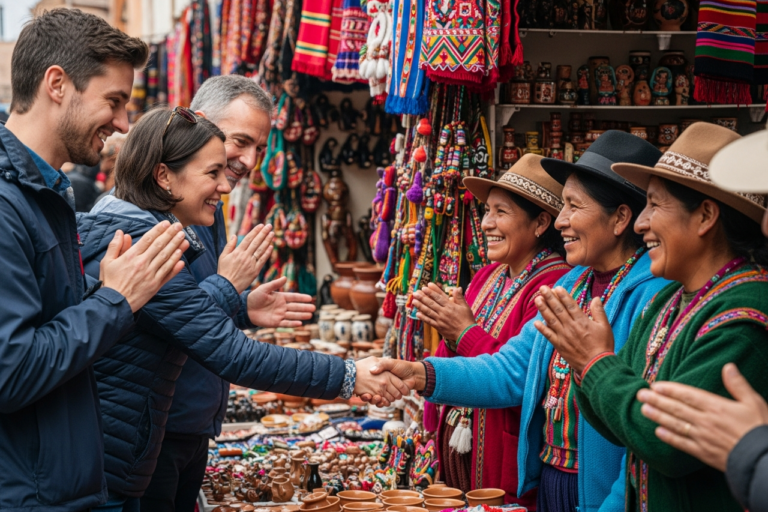
When it comes to Peruvian greetings, people often add some physical contact. That may be a firm handshake or even a single kiss on the cheek.
-
People use formal greetings with elders, professionals, or when they meet someone new.
-
Informal greetings are used among friends and in more casual places. A hug can be part of this.
-
Saying “hola” is fine and used by many, but using time-of-day greetings such as buenos días will show more respect.
Introduction
Are you getting ready for a trip to Peru? If you are from Canada, you know that being nice to people can go a long way. It is a good idea to learn some local customs before you go. When you travel, a big part of your experience comes from talking with the people you meet there. Knowing the right greetings in Spanish can help you a lot in Peru. If you learn a few words of Peruvian Spanish, and know the right way to use them, you will have a better time on your trip. You will also find it easier to connect with the friendly people of Peru. Knowing the right etiquette can make your travel experience even better.
Essential Greetings in Peruvian Spanish for Canadians
Learning a few basic phrases in Peruvian Spanish is not hard. Start with simple words like “hola,” which means hello, “gracias” for thank you, and “chau” for goodbye. You can also greet someone based on the time of day. Say “buenos días” to mean good morning, and “buenas tardes” to say good afternoon.
Knowing these greetings can help you feel good in social interactions. Use the basic phrases in Spanish, and you will find it is easier to talk with Peruvians. They will notice your effort. Saying these words can make your day go well and make every talk more smooth and friendly. You can build your vocabulary in time of day words like “tardes” and use them in other greetings you learn.
Basic Ways to Say Hello and Goodbye in Peru
When you want to say hello in Peru, you can use “hola.” It is a friendly and standard greeting. People use it with friends or when they are just hanging out. If you want to greet someone with a little more respect, it helps to use options based on the time of day.
For saying goodbye, most people say “chau.” You will hear it in many places, like when you leave a shop or meet someone new. Like “hola,” it’s a common and easy way to say goodbye.
Here are some key greetings and phrases to keep in mind:
-
Buenos días: Good morning (use it until noon)
-
Buenas tardes: Good afternoon (use this from noon until it starts to get dark)
-
Buenas noches: Good evening or good night (use this as a greeting or when you say bye after it gets dark)
-
Hola: This is the informal and standard hello in Spanish.
-
Chau: This is a common and casual way to say goodbye.
Polite Phrases for First Impressions
Making a good first impression in Peru comes down to politeness. When you meet someone for the first time, you should use words that show respect and kindness. The extra politeness goes a long way in Peru.
After saying “hola” or “buenas tardes,” add a phrase that shows it’s nice to meet them. This is a normal thing to do in both formal and casual meetings. People in Peru always like to hear this. Don’t forget to use “por favor” and “gracias” in your conversations as well.
For a good first meeting, use these phrases:
-
Mucho gusto: “It’s a pleasure to meet you.” You should say this at introductions.
-
¿Cómo está usted?: This is how you ask “How are you?” in a formal way.
-
Buenas noches: Use this as a polite hello in the evening.
Formal vs Informal Greetings: What Canadians Need to Know
Knowing when to use formal greetings or informal greetings is important for Peruvian etiquette. You use formal greetings in formal situations like business meetings or when you talk to older people. This shows respect and politeness. When you are with friends or people the same age as you, you can use informal greetings. That is more relaxed language.
For Canadians, it is a good idea to start with formal greetings if you are not sure. It is better to be polite at first than to be too relaxed right away. People in Peru will often let you know when you can start using informal greetings. Now, let’s talk more about when you need to use formal titles and language.
When to Use Formal Titles and Language
Using formal titles and language is crucial in specific contexts in Peru. You should always opt for formality in professional or formal situations, such as when dealing with officials, in business meetings, or when speaking to someone you don’t know. This demonstrates respect and an understanding of cultural norms.
Adding titles like Señor (Mr.), Señora (Mrs.), or Señorita (Miss) before a person’s last name adds an extra layer of politeness. You should also use the formal “you” (usted) instead of the informal “you” (tú). This distinction is very important in formal settings and is a clear sign of respect.
Here’s a quick guide on when to use formal language:
|
Title |
When to Use |
Example |
|---|---|---|
|
Señor |
When addressing any adult male. |
Buenos días, Señor Quispe. |
|
Señora |
When addressing a married or older woman. |
Buenas tardes, Señora Peralta. |
|
Usted |
The formal “you,” used with elders, strangers, and in professional settings. |
¿Cómo está usted? (How are you?) |
Greeting Elders, Professionals, and New Acquaintances
When you meet someone for the first time in Peru, you need to greet them in a formal way. This is very important, especially when talking to older people or professionals. People in Peru respect their elders a lot. So, you should use formal greetings, like usted, and call people Señor or Señora. By doing this, you show good manners and know about their culture.
The same idea is true when you talk to professionals. This includes police officers, doctors, or your business contacts. It is a good idea to start social interactions by being formal. If you have to choose, it is better to be too formal than to sound too casual and risk making someone upset.
Here’s how to do these introductions:
-
Always use usted when speaking to older people.
-
Address professionals with their title and last name.
-
Wait for them to invite you to use informal language.
-
A firm handshake is an appropriate physical gesture.
Physical Gestures: Handshakes, Hugs, and Kisses on the Cheek
Greetings in Peru can include physical gestures that may not be the same as what you see in Canada. In Canada, people like to have their personal space. But in Peru, Peruvians use more physical gestures when they greet others. The standard greeting could be a firm handshake, a quick hug, or a single kiss on the right cheek.
You should not be too shocked if someone you just meet gives you a kiss. This is a common way to say hello between women, or between men and women in Peru. People give one light kiss on the right cheek. Men mostly use a handshake when greeting other men. There can be some changes in these greetings, as people in cities and the countryside go about them in different ways.
Typical Greeting Customs in Cities and Urban Areas
In Peruvian cities like Lima or Cusco, there are set ways people greet each other. When you meet someone, it is good to look at their eyes. This shows you are honest and feel sure of yourself. The standard greeting in these places often needs you to touch the other person. That touch is an important part of Peruvian greetings.
When two men greet, they do a firm handshake. This is common when meeting for the first time or for work. If a woman meets a man, or if two women meet, they usually give one light kiss on the right cheek, even if it is the first time they meet. It’s a soft kiss in the air and is meant to be warm and kind.
Here are some usual customs in places like Lima and Cusco:
-
Men greeting men: A firm handshake is the standard greeting.
-
Women greeting women: Give a single kiss on the right cheek.
-
Men and women greeting: A single kiss on the right cheek is common.
-
Always keep eye contact when you greet someone.
Greeting Traditions in Rural Communities
Greeting traditions can change a lot when you visit rural communities in Peru, especially up in the highlands or near Lake Titicaca. Most people use Spanish, but you can also hear Quechua and Aymara. The people in these rural areas are usually more quiet than those in the cities.
A handshake is still normal, but people do not often do a cheek kiss, especially if they do not know you. Most of the time, a simple hello and a nod will be enough. If you learn a greeting in Quechua, like “Allillanchu?” which means “How are you?” it will show you have respect for their way of life.
When you are in these rural areas, these tips can help you:
-
First, watch how the local people greet each other before you go ahead.
-
Start with a spoken greeting. This is always a good and respectful way.
-
The people may not talk a lot, and you will not see the cheek kiss much.
-
If you know a word or two in Quechua or Aymara, people will really see your effort.
Keep these tips in mind as you travel rural communities of Peru’s highlands and around Lake Titicaca.
Common Canadian Mistakes and How to Avoid Them When Greeting in Peru
To make sure your social situations in Peru go well, it’s good to know the common mistakes that many people make. One big mistake is getting too informal too fast. In Canada, people can be quite relaxed, but in Peru, it’s smart to use formal greetings, especially when you meet elders or are in a business place. Another thing is how you think about physical greetings. A kiss on the cheek might feel close or personal to you, but in Peru, it is just a normal, friendly way to greet someone.
You also need to be careful when it comes to Peruvian slang. When you use slang, it can help you feel part of the group. Still, if you use it at the wrong time or with the wrong person, some might see it as rude. It is always safest to talk in standard Spanish. If you learn these local customs and follow basic etiquette, your meetings will be easy and you will make a good impression.
-
Do not act too casual when you meet new acquaintances or elders.
-
Try the cheek kiss; this greeting is friendly and normal.
-
Be careful if you use slang.
-
Use formal titles in any business or important situations.
Conclusion
To sum up, knowing how greetings work in Peru can really help you as a visitor. When you use the right words and gestures for social interactions, you can get closer to people there and show that you value their way of life. If you learn how to act in both formal and casual situations, you will avoid mistakes in Peru. You will also make friends and feel more welcome.
As you get ready for your trip, remember these simple tips about greetings. This will help you have a good time talking with others on your way. If you want to learn more about Peruvian culture or how to do well in social interactions, reach out for advice so you get the most out of your experience.
Frequently Asked Questions
Are handshakes or cheek kisses more common in Peru?
In Peru, people use many physical gestures to greet each other. A handshake is usual for men. Women often give a single kiss on the cheek when they meet another woman or a man. In the cities, people greet with a cheek kiss often, even if they just met. These greetings help people in Peru feel close, even with new acquaintances.
Should I greet colleagues differently in a business setting?
In a business setting, you should use formal greetings. When you meet someone for the first time, a firm handshake is the right way to say hello. It is good to call people by their titles and last names. Wait until they ask you to use their first name. This kind of etiquette looks professional and gives a good impression.
What farewell phrases are appropriate for travellers in Peru?
For people who travel, the best and easiest way to say goodbye in Spanish is “chau.” This word is friendly, and people use it all the time. There are also other ways you can say goodbye. If you want to be more formal, you can say buenas tardes if it is good afternoon, or buenas noches for good evening or good night. These phrases work well in many Spanish settings. That way, you can use the right words at the right time.