Key Highlights
-
Colombian greetings are warm, and they are a big part of the local culture. There is often more than just words to them.
-
People use greetings like “Hola,” “¿Cómo estás?” and the very Colombian “Qué más?”.
-
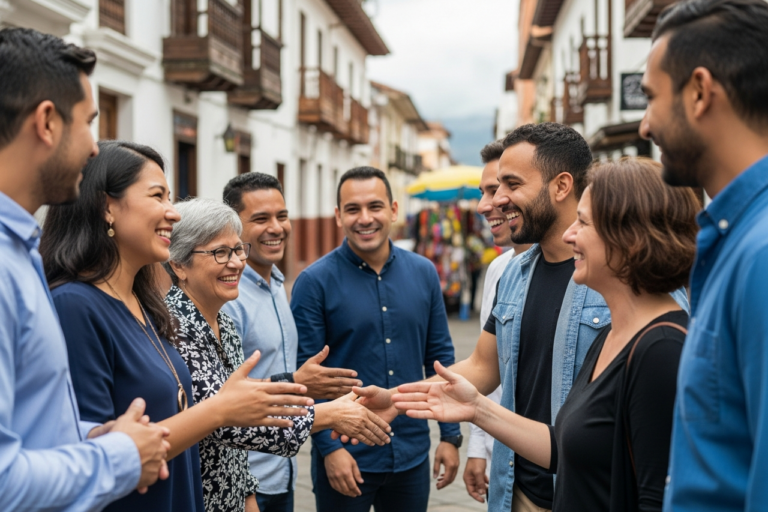
The way you use your body matters a lot. In many social situations, women get a kiss on the right cheek. Men often use a firm handshake.
-
How you greet people can change in each region. Bogotá is more formal, while the coast is more laid back.
-
It is important to know when to use formal words like “usted” and when to use informal words like “tú”. This shows you have respect for people.
-
Learning some Colombian slang is a good and friendly way to connect with locals. Using the right slang or handshake makes you fit in better.
Introduction
Welcome to Colombia! If you are a Canadian planning a trip, you should know how people greet each other here. Colombian culture is full of warmth and friendliness. You can feel this right away when they say hello. Greeting someone in Colombia is more than a wave. It tells you a lot about the people and how they live. This guide shows you how to handle these moments with ease. You will enjoy your trip more and remember it longer.
Greetings in Colombia: What Canadians Can Expect When Meeting Locals
When you get to Colombia, you will see right away that people like to talk and spend time together. The colombian way of greeting is very warm. Most people use their feelings and show they care. This is because they are so friendly in Colombia. It is normal to hear lots of colombian expressions or local slang when someone says hello to you.
If you are from Canada, the way people speak here may feel a bit different than what you know. Still, trying these customs is a good way to join in and learn about the local culture. Now, we can look at the most common greetings you will hear. These may be simple words or special colombian sayings that help you meet new people through social interactions.
1. Saying “Hola” – The Ubiquitous Colombian Hello
The most common greeting in the Spanish-speaking world is “Hola.” In Colombia, this is the word you use the most. It is easy. The vibe is friendly. You will hear it everywhere. It works in both big cities and small towns. When you walk into a shop, meet someone for the first time, or just walk by, a simple “Hola” is always the right greeting.
If you talk to native speakers, “Hola” is only the start. People will then ask how you are. This is their way to show they care about your well-being. “Hola” is at the heart of colombian greetings and it is an important part of speaking spanish.
When you travel in Colombia and use “Hola,” it shows you want to use their language. People like when you make this effort. “Hola” is a good way to start a chat. It is also a friendly way to talk to anyone around you.
2. “¿Cómo estás?” and “¿Bien o qué?” – Asking How Someone Is
After you say “Hola,” it is usual to ask how the other person is. The most common way to say this in Spanish is, “¿Cómo estás?” which means “How are you?”. You will hear this a lot in both formal and casual talks. Many people answer with “Todo bien,” which means “All good.”
You may hear a more casual way to ask, especially from young people or good friends. They will say, “¿Bien o qué?”. This is a friendly and very Colombian way to start a talk. It is their way to check in on someone in a fast and easy way. It means “All good or what?”.
These little talks are not just for show. They really help get the conversation going. Colombians like it when you ask how their day is going. If you want to keep the conversation going, you can reply with “Bien, gracias, ¿y tú?” which means “Good, thank you, and you?”. This is a nice way to show you care.
3. “¿Qué más?” – A Distinctively Colombian Greeting
One of the best-known parts of colombian slang you will hear is the greeting “¿Qué más?”. While people may think its literal translation is “What else?”, in colombian spanish, folks use it to mean “What’s up?” or “How’s it going?”. This versatile phrase pops up all the time in day-to-day talk.
You can use “¿Qué más?” in a variety of ways. It works as a simple greeting or mixed with other questions. It can even be a filler like the way some Canadians use “so” or “well.” It’s a friendly and easy way to connect with people.
Here are some ways you might hear it:
-
As a simple greeting: “Hola, ¿qué más?”
-
Combined with another question: “¿Qué más? ¿Todo bien?”
-
As a starter for a story: “Qué más, te cuento que…” (So, I’ll tell you that…)
Learning to use this phrase will show people that you’re getting to know colombian slang and colombian culture. It will also help you sound more like a local.
4. Formal vs. Informal Language: When to Use “Usted” or “Tú”
Navigating formal and informal greetings is an important part of your language skills in Colombia. The Spanish language has two ways to say “you”: the informal “tú” and the formal “usted.” Knowing when to use each is key to showing respect in different social situations.
Generally, “tú” is used with friends, family, and people your own age. On the other hand, “usted” is used for formal greetings when addressing elders, authority figures, or people you’ve just met. Using “usted” is a sign of respect and politeness. Interestingly, in some regions of Colombia, like Bogotá, “usted” is used very frequently, even among friends and family.
If you are ever in doubt, it is always safest to start with “usted.” The other person will let you know if you can switch to the more informal “tú.” This is a topic often covered in a Spanish school, but here is a quick guide:
|
Pronoun |
When to Use It |
Example Greeting |
|---|---|---|
|
Tú |
With friends, family, peers, and people younger than you. |
“¿Cómo estás?” (How are you?) |
|
Usted |
With elders, authority figures, strangers, and in professional settings. |
“¿Cómo está usted?” (How are you?) |
5. Common Farewells: “Chao”, “Nos vemos”, and More
Saying goodbye is just as important as saying hello. In Colombian culture, it is key to end a talk in a polite way. One of the most common and friendly ways to say bye is “Chao.” People in Colombia use it everywhere. It is a simple word with a warm touch. You can use it in almost any place or time.
“Nos vemos” is another well-known phrase. It means “we’ll see each other” in English. People also use it to mean “See you later.” If you want, you can say a time-specific goodbye. You could use “Buenas tardes” for “Good afternoon” or “Buenas noches” for “Good evening” or “Good night.” These can be for meeting or for leaving, based on what is going on.
Here are a few common phrases for saying goodbye:
-
Chao: The all-purpose, friendly “bye.”
-
Nos vemos: A casual “see you later.”
-
Hasta luego: A bit more formal way to say “see you later.”
When you use these common phrases from Colombia, you end things in a nice, polite way. This will give a great look to your interactions and show good manners in Colombian culture.
Regional Variations in Colombian Greetings
Colombia is a South American country with a lot of variety. The colombian way of greeting changes from place to place. If you go from the mountains to the sea, you will see that the way of greeting is not the same. Social interactions in Bogotá, which is in the Andean region, are often more formal than those on the busy coast of Colombia.
Knowing about these small changes will make your trip better. It also helps you get to know people in each place. It does not matter if you are in the cool highlands or warm lowlands. If you understand the regional way of greeting, people see that you are showing respect and care about their way of life. Now, let’s look at how greeting is different in the main regions in Colombia.
Bogotá and the Andean Regions: Politeness and Formality
In Bogotá and in other Andean highland cities, people value being polite and a bit formal in social interactions. You can see this in the way people use Colombian Spanish. The word “usted” gets used a lot here. While in other places people use “usted” only with elders or with people they don’t know well, in Bogotá, friends, family, and coworkers are all likely to hear it, too.
People like using “usted” because it shows respect. So, when you first meet someone in Bogotá, go with formal greetings. A simple “¿Cómo está usted?” is what people will want to hear, more than the informal “¿Cómo estás?”. This is an important part of the culture that you may discover in spanish classes about Colombian Spanish.
Bogotanos are friendly, but they can seem a bit more reserved at first than people from other places. When you use a more formal tone in how you say hello, this is a good way to show respect and blend in with the city’s customs.
This focus on formal greetings is just one small thing that shows the special way Colombian Spanish works in social interactions.
Coastal Cities: Warmth and Informality in Greetings
When you land on the coast of Colombia, you see the change right away. The air feels warm, and the people match that with their friendly ways. Cities on the coast, like Cartagena and Barranquilla, are open and relaxed. Most people use casual greetings, and you feel the kindness everywhere.
The people here, called “Costeños,” act more free and easy. You will often hear someone say “¿Qué más?” or “¿Todo bien?” to start a chat. The formal word “usted” is not common. Instead, folks use “tú” to speak to both friends and new acquaintances.
Here are a few facts about greetings used on the coast of Colombia:
-
Informality: the word “tú” is used much more and “usted” not so much.
-
Expressiveness: people greet each other with big smiles and touch, like a pat or hug.
-
Local Slang: you can hear colombian slang that is special to this part of Colombia.
Try the chill and welcoming way people greet here. It lets you feel connected to the coast of Colombia right away. When you use their colombian slang or say “todo bien,” locals see your effort and friendliness. This style makes every conversation with acquaintances feel easy and good.
Medellín and the Paisa Region: Unique Local Phrases
The people who live in Medellín and near Antioquia are called “Paisas.” They talk in a friendly way. They use different Colombian expressions. Paisas say simple greetings. But, they also have their own slang words when they speak.
One of the main greetings Paisas use is “¿Quiubo?”. This word comes from “¿Qué hubo?” and means “What’s been up?”. It is very informal. People use it a lot when talking with friends or in casual places in Medellín. Paisas are famous for their friendliness, and you can get closer to them when you use their local slang.
Here are some Paisa greetings you will hear:
-
¿Quiubo?: The usual Paisa word for “What’s up?”.
-
¿Entonces qué, parce?: A relaxed way of saying “So what’s up, mate?”. “Parce” is a slang term for “friend.”
-
¿Bien o qué?: This is also popular in this area and is used to ask “You good or what?” in a friendly way.
If you learn and use a few of these phrases, you will get smiles, and your time with the Paisas will be more fun.
Etiquette and Body Language in Colombian Greetings
In Colombia, greetings are not just things you say. What you do with your body and how you act is a big part of it. When you meet people, there is the handshake, and sometimes, a soft kiss on the right cheek. These ways of greeting others can help you make a good first impression and show that you have respect for them.
Keeping good eye contact is important too. It shows that you are honest and sure of yourself. If you know the non-verbal rules for colombian greetings, you will get through social situations more easily and not run into awkward times. Next, let’s talk about the gestures and etiquette that come with handshake and greeting someone in Colombia.
Shaking Hands, Kissing on the Cheek, and Other Gestures
The way people greet each other in Colombia can change based on if you are a man or a woman and how well you know the other person. Knowing the right body language helps you greet people with more confidence. A firm handshake and good eye contact is the normal way for men to greet each other. This also works for both men and women if the meeting is formal or at work.
When two women greet each other, or when a man greets a woman he knows a bit, it’s common to do a right cheek kiss. This kiss is not real but more like an air kiss, where your cheeks just touch for a second. This type of greeting shows warmth and friendliness. You see it a lot in day-to-day life.
Here’s a quick look at how people usually greet:
-
Man greeting a man: A firm handshake is normal. Good friends might also give a pat on the back or a hug.
-
Woman greeting a woman: They use a light kiss on the right cheek.
-
Man greeting a woman: A light kiss on the right cheek is used when people know each other or are friends. If you meet someone for the first time or the meeting is formal, a handshake is a better choice.
eye contact, firm handshake, right cheek, greeting, colombia, handshake, friendliness, acquaintances
Greeting Elders and Authority Figures Respectfully
Showing respect to older people and those in authority is a big part of Colombian culture. When you greet older people, be sure to use formal greetings and show respect in how you act. In Colombia, this is seen as good manners and is very important to people there.
You should always use “usted” with older people instead of “tú.” This will be the most important thing to remember. Use polite words like “Buenos días” (Good morning) or “Buenas tardes” (Good afternoon). Also, call them “Señor” for men or “Señora” for women. So you might say, “Buenos días, Señora, ¿cómo está usted?”.
A light handshake is the right way to greet an older person you just met. Do not go for a quick hug or act too relaxed unless they go first. You can take a spanish course so you get used to these formal greetings. But what matters most is that you always show older people respect and act with care towards them.
Things Canadians Should Avoid When Greeting Colombians
To make sure you have good experiences in colombian culture, it helps to know what not to do. Some ways of acting that might be normal at home can be seen in a different way in Colombia. There is a well known saying there: “no dar papaya,” or “don’t give papaya.” This means you should not put yourself in a difficult situation that someone else can use against you. This saying is used for daily life but also matters when you are talking with people.
It is best to pay attention to their customs so you do not make things hard for yourself. For example, if you stand far away from people or walk in a room without giving a greeting, that can seem rude in colombian culture. Also, if you say hello too fast and don’t make eye contact at greeting, people may not feel that you are being real. Colombians like warmth and want to connect in a good way.
Here are a few things to stay away from:
-
A weak handshake: Always give a firm handshake to show eye contact, confidence, and that you are honest.
-
Shaking a woman’s hand when you should give a cheek kiss: In everyday life between acquaintances, a cheek kiss is what is usually done. You should let the other person lead.
-
Not using “usted”: If you are with people who are older or in a formal space, not saying “usted” might be seen as you do not respect them.
Conclusion
When you understand how people greet each other in Colombia, it can really help you connect with them. In Colombia, a simple “Hola” can be the start of something good. There are different ways people say hello in different parts of the country. Each greeting shows the warm side of Colombian culture. If you use the right body language and stick to good manners, you will fit in well and make a great impression. When you get ready to visit Colombia, try to follow the local ways. Just one greeting can help you make real connections with the people there. If you want to learn more about Colombian culture, you can get a free consultation.
Frequently Asked Questions
What makes Colombian greetings different from other Spanish-speaking countries?
Colombian greetings are different because there is a lot of variety from one region to another. People use special colombian slang like “¿Qué más?” or “¿Quiubo?”. The spanish language is the base for all these greetings. In some areas, like Bogotá, people put a lot of focus on saying “usted”. Also, people in Colombia usually give a single cheek kiss, not two like in some other latin american countries. This shows how colombian culture has its own ways of greeting others.
Should Canadians use formal or informal greetings with strangers in Colombia?
When you meet strangers or new acquaintances in Colombia, it is a good idea for Canadians to start with formal greetings. In Colombian Spanish, use “usted” to be polite with people you do not know well. Later, you may use “tú” and less formal greetings if the other person asks you to, or when you both get to know each other better.
Are there specific gestures Canadians should know when greeting someone in Colombia?
In the Colombian way of greeting, gestures matter a lot. Men often use a firm handshake and make eye contact when they greet. If a man wants to greet a woman, or two women meet, there will be a light kiss on the right cheek. This kind of body language shows warmth and friendliness.