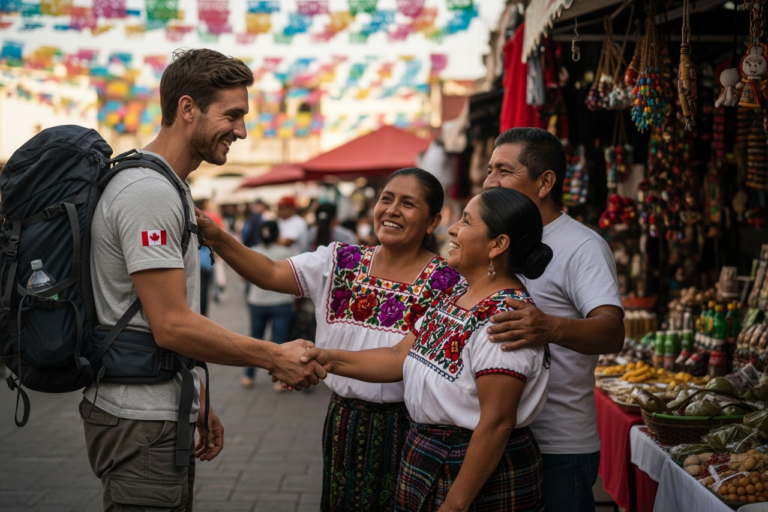
Key Highlights
Here are the main things you should know from our guide on Mexican greetings for Canadians:
-
Greetings are a big part of Mexican culture. People use greetings to show respect and kindness every day.
-
“Hola” is a way to say hello to anyone, at any time. But people often say “Buenos días” for “good morning” when it is early in the day.
-
When you talk to older people or someone you do not know, use formal greetings like “usted” or “Señor/Señora.” With friends and family, use the informal “tú.”
-
People in Mexico often touch when they greet you. Give a handshake, hug your close friends, or give an air kiss on the right cheek.
-
Do not forget to be polite when you say goodbye. People say “Adiós” or “Hasta luego” in different situations.
These tips will help you get along with others and understand mexican greetings better.
Introduction
Are you getting ready for a trip to Mexico? If you want to feel close to mexican culture, it is a good idea to know how to say greetings in mexican spanish. In Mexico, people put a lot of value on greetings. People do not just give a quick nod, like some do in Canada. Saying “hello” or using other greetings means a lot in Mexico. This guide will help you learn how people say hello, what you should say, and how to use simple gestures too. When you know more about these mexican customs, you will fit in better, feel good about what you do, and also show respect for mexican culture.
The Importance of Greetings in Mexican Culture
In Mexico, when you greet someone, it is more than a quick hello. People see it as a sign of respect and being polite. Taking the time to say hello the right way is a key part of every day in Mexico. You do this whether you walk into a store, visit the doctor, or meet someone new.
This small act can change how people see you. If you are from Canada and you visit Mexico, learning these greetings can help you fit in better. You will look like a polite traveller, not just another tourist. Let’s talk about why greetings matter so much in Mexico and how showing respect is important there.
Why greetings matter in Mexico for Canadians
As a Canadian in Mexico, the first thing you notice is how important it is to say hello when you go into a store. In many towns and smaller cities, people expect you to greet the workers. Saying something like “Buenos días” (good morning) is normal and people like it. If you do not do this, it can seem rude, even if you do not mean it.
Picture the person who owns the shop. The shopkeeper gets a friendly hello from ten locals. When a tourist comes in and just grabs what they want, pays, and leaves without saying anything, it leaves a bad feeling. Learning how to greet people in mexican spanish matters because it lets people know that you care and want to fit in.
You do not have to speak spanish well for this to make a difference. Even a small greeting helps. Saying hello to family members or people you meet in stores or at a friend’s house shows you know about mexican culture and that you respect it. So take this quick step to build good relationships with their people, as you spend time in mexico.
The role of respect and courtesy in everyday interactions
Respect and being polite are a big part of Mexican culture. You can see this in the way people greet each other. There are clear rules for informal greetings and when to be more formal. It depends on who you talk to. The way you speak to others is important to show respect.
When you meet older people, teachers, doctors, or anyone you don’t know yet, you should use formal language. You say “usted” and not “tú” for “you.” You also call people “Señor” or “Señora” and use their last name. A handshake is normal for a formal situation.
On the other hand, you use informal greetings for your friends, family, and people the same age as you. This difference shows that there is value in being polite and knowing the order in Mexican culture. For Canadians, learning about these greetings is good because it helps you know how to handle everyday social times better.
Common Ways to Say Hello in Mexican Spanish
Learning to say “hello” is the first thing you need to do for any chat. While “Hola” is known by everyone, there are more phrases in Mexican Spanish. These change with the time of day. If you use them, it will show you care to know the language better.
For example, in the morning, people say “Buenos días.” It is a nice way to greet someone you may meet, like a shop worker or someone new. In Mexico, these greetings change with the time of day. People use them a lot in daily life. Below, you will find some of the common phrases and what makes each one stand out.
Most popular phrases for greeting someone
When you are in Mexico, you will hear a lot of common greetings used all through the day. The one people use the most is “Hola.” This word is simple and can be used in about any place or time, even if you are with friends or someone you just met. “Hola” means “hello” or “hi” in English. It is an easy way to start to talk to someone and good for anyone who wants to learn more.
But if you want to sound more like you live there, it helps to use other greetings that fit the time of day. People in Mexico use these often, whether they walk into a room, start to talk, or walk by someone. These greetings are polite, show respect, and most people use them to be friendly.
Here are some of the most common greetings to know:
-
Buenos días: Good morning (this is used until noon)
-
Buenas tardes: Good afternoon (this is used from noon to when the sun goes down)
-
Buenas noches: Good evening / Good night (this is used after the sun is down)
-
Buen día: Good day (you can use this for many things instead of “Buenos días”)
Differences between “Hola”, “Buenos días”, and other greetings
While “Hola” is a great all-purpose greeting, knowing when to use “Buenos días,” “Buenas tardes,” and “Buenas noches” will make your Spanish sound more natural. The key difference lies in the time of day. These phrases are not just polite; they are an expected part of daily exchanges in many social settings.
“Hola” can be used anytime, anywhere, with anyone. It’s a neutral and friendly greeting. In contrast, the others are time-specific. For example, you would use “Buenos días” when you walk into a bakery in the morning, but switch to “Buenas tardes” if you visit that same bakery after lunch. “Buenas noches” is used both as a “good evening” greeting and a “good night” farewell.
Here is a simple breakdown of the vocabulary and when to use each greeting:
|
Greeting |
English Translation |
When to Use |
|---|---|---|
|
Hola |
Hello / Hi |
Any time of day, formal or informal. |
|
Buenos días |
Good morning |
From early morning until noon. |
|
Buenas tardes |
Good afternoon |
From noon until sunset. |
|
Buenas noches |
Good evening / Good night |
After sunset, for both greeting and leaving. |
Formal vs Informal Greetings in Mexico
Knowing when to use formal or informal greetings in Mexico is very important. The way you greet someone will be different based on your relationship, their age, and the social setting. If you use the wrong greeting, it can look rude or too serious.
Formal greetings are used with older people, those in charge, or someone new to you. Informal greetings are used with friends, close family, or people your own age. You can follow these tips to use the right greeting in each situation and make sure people feel welcome.
How to greet strangers and elders politely
When you meet strangers, older people, or people who have power in Mexico, you need to use formal greetings. It is best to call someone “usted” to show respect. For example, if you want to ask “How are you?” to someone you don’t know well or someone older, you will say “¿Cómo está usted?” not “¿Cómo estás?”
When you are in a formal situation, like meeting at a doctor’s office or in a work meeting, use people’s titles and their last names. Say “Señor” for a man. Say “Señora” for a woman who is married. Say “Señorita” for a woman who is young or not married. If you know what they do, like “Profesor” or “Doctora,” use that instead.
Giving a firm handshake is the main way to say hello in these greetings. When you meet someone, look into their eyes, smile, and give a handshake. The same goes for when you say goodbye. This is a common greeting in Mexico, and it shows you respect them in the right way.
Greeting friends, family, and peers in casual situations
With friends, family members, or people that are your own age, you can use informal greetings. In these informal contexts, you use the informal “you,” which is “tú.” This shows that you have a closer and more familiar relationship. So, rather than saying the formal “¿Cómo está usted?”, you ask, “¿Cómo estás?”
When you greet people, there is often some physical touch between friends and family. Men usually shake hands with each other. If they are close, they might hug. If a man greets a woman, or two women greet each other, they give a light air kiss on the right cheek. These ways of greeting are a key part of a friendly greeting.
You will notice a lot of slang and informal phrases when you are with friends. For example, “¿Qué onda?” means “What’s up?” and is common in informal settings. These types of greetings help set a relaxed and friendly mood, which is usual in Mexican social life.
Traditional Gestures and Body Language
Greetings in Mexico are about more than just what you say. People use their bodies and hands a lot. In mexican culture, you will see all kinds of gestures. A handshake or a hug is one way people show warmth. mexican culture mixes these things while meeting friends or new people. So, knowing about these greetings can help you avoid any funny or awkward moments.
If you come from Canada, you may notice that people in mexico stand closer to each other. The space feels smaller. It is normal. If someone gives you a firm handshake, or goes in for a hug, this is all part of fitting in. You will make a good impression if you try these greetings too.
Now, let’s look at some handshakes and other gestures people use in mexico. We will see what each one means.
Shaking hands, air kisses, and hugging customs
Physical contact is a regular and expected part of greetings in Mexico. The gesture you use depends on your relationship with the person and their gender. A firm handshake is the most common way to greet someone in both formal and many casual situations. This handshake shows confidence and respect.
With closer relationships, you may use other gestures. An air kiss on the right cheek is usual when men greet women or when women greet each other, even if they first meet in some social settings. Hugging is also normal, especially between family members and close friends. Often, people will hug after a handshake or an air kiss.
Here’s a quick guide to these customs:
-
Handshake: Used in formal introductions and when men greet each other in most situations. Always shake hands when meeting or leaving a group.
-
Air Kiss (Besito): A single air kiss on the right cheek is common between women and between men and women.
-
Hug (Abrazo): Given to close friends and family members. It often follows a handshake for men or goes with an air kiss.
Personal space and cultural nuances Canadians should know
One of the first things you may notice about life in Mexico is how people act with personal space. People in Mexico, including Mexico City, often stand closer to each other during conversations than people do in Canada. This does not mean they are being rude or trying to be in your space. It is a way for Mexicans to show they are warm and care about the talk. If you step back, some may think you are not friendly or you want to be alone.
You can see this, especially in busy city spots like Mexico City, where many people have to share tight areas. In these social settings, people in Mexico might touch your arm or shoulder as you talk. This is just their way of showing they are interested. It is normal in Mexico and shows they are open and want to connect.
It helps to know and watch these signs, as they are a big part of talking in Mexico. When you understand these habits, you can fit in better during your time in Mexico. Taking in these small changes will help you get along with people and have a good time in Mexico.
Saying Goodbye in Mexican Spanish
Just like it is important to know greetings, it is also important to know how to say goodbye in mexican spanish. Saying the right goodbye letter makes a good, lasting impression. People use many phrases, from the formal “Adiós” to the more casual “Hasta luego.” You can pick which one to use based on the situation.
It does not matter if you are leaving a store, or saying bye to friends. People expect you to say a simple goodbye. Words like “Buenas noches” can also be used when you want to say good night to someone as you go in the evening. Now, let’s see the different ways to say goodbye in spanish.
Polite farewells and casual ways to part
Saying goodbye in Mexico can be quick or can take some time, just like saying hello. There are different ways to say it. The words you use may change depending on the moment or who you are talking to. A nice way to say farewell is liked by people, even when you leave a shop.
In formal times, or when you think you will not see the person again soon, a plain “Adiós” works well. But, with friends or when the mood is light, there are more choices. These show that you want to see the person again, which is common in Mexican culture and the way people connect in Mexico.
These are some well-known and friendly ways to say goodbye:
-
Adiós: This is the most basic way to say “goodbye.”
-
Hasta luego: You say “See you later” with this when you think you may meet again, but not right away.
-
Nos vemos: “See you.” This is very popular and easy to use with friends.
-
Cuídate: “Take care.” This shows you care when you say so long.
-
Que te vaya bien: You can say this as “Have a good day” or “Hope all goes well for you.”
mexican culture is about staying friendly. In Mexico, it matters to show good feeling when you leave.
When to use “Adiós” versus “Hasta luego”
Choosing when to say “Adiós” or “Hasta luego” can be hard for learners, but it is not that hard to know the difference. “Adiós” is something you say when you want to give a clear and formal goodbye. You will use it when you are leaving for a long time or if there is no plan to meet the person again. This word can feel pretty final. Because of this, people do not use it much in most day-to-day talks.
“’Hasta luego,” which means “see you later,” is what people say more often. It is good in informal contexts or formal ones where you think you might see the person again, even if you do not know the time of day or if it will be soon. For example, you might say it to a friend after work or a shop owner you see a lot.
If you want to keep it very friendly and you are with people you know well, saying “Nos vemos” (“see you”) works best. In most cases, “Hasta luego” is a polite and safe phrase for learners to use, and “Adiós” is better when you will be gone for a long time. The time of day does not matter when you pick between these words.
Basic Phrases for Introductions in Mexico
After you say hello, you usually talk about who you are. It’s good to know some simple ways to say your name and ask for theirs. In Mexico, people are open and friendly. So, it’s okay to start a talk with someone.
When you meet someone new or want to start talking, having easy phrases ready helps a lot. Here are basic phrases for you to use when you want to let others know who you are in Mexico.
Introducing yourself and asking names
Introducing yourself in Spanish is easy. The most used way is to say “Me llamo…” which is the same as “My name is…” For example, you can say, “Hola, me llamo John.” You may also use “Mi nombre es John” (My name is John), or just say “Soy John” (I’m John). All of these ways are simple and are good for learners.
If you want to ask for someone’s name, use “¿Cómo te llamas?” in an informal situation. You can use this with people your age or with acquaintances. If you talk to someone older, or if you are in a place where you should show respect, say “¿Cómo se llama usted?” This is a nice and good way to show that you care about who you are speaking to.
After you both say your names, you can say “Mucho gusto” or “Encantado/a.” Both mean “Nice to meet you.” The other person might reply with “Igualmente,” which is the same as “Likewise.” These words help people get to know each other and are often used when a new friendship is beginning.
Common conversational openers for Canadians
When you have said your greetings, you may not know what to say next. It helps to have some simple conversational openers ready. These can help you go past saying hello, and start a real talk. These phrases are quick to learn. You can use them in many places. They show that you want to get to know the other person.
Asking about how someone is doing is a common follow-up. You most likely know the formal “¿Cómo está?” and the informal “¿Cómo estás?”. You can also ask about their day, or where they are from. Many Mexicans feel proud about the place they come from. They often like to talk about it.
Here are some useful ways to open a conversation for your trip to Mexico:
-
¿De dónde eres? (Where are you from? – informal) / ¿De dónde es usted? (formal)
-
¿Qué tal tu día? (How’s your day going? – informal)
-
¿Hablas inglés? (Do you speak English? – informal)
-
¡Qué gusto conocerte! (It’s a pleasure to meet you! – informal)
-
¿Qué hay de nuevo? (What’s new?)
Greetings to Avoid or Use With Caution
While it is good to learn common greetings, it is also important to know which ones to avoid or be careful about. Some greetings, like slang words, are not right for a formal situation. People may not understand these if they are not used in their area or in their group.
If you use slang, you might sound more like a local. But it can be easy to get things wrong and cause confusion. As a visitor, you should use standard greetings at first, until you know more about the local style and the language. Here, we talk about some greetings that you should use carefully.
Phrases that may not be appropriate for all situations
It can be fun to use slang you hear in movies or on TV, but some phrases should only be used when you know what they mean. What is cool between close friends can sound rude to a stranger or an older person. You have to know who you are talking to.
Informal greetings like “¿Qué onda?” (What’s up?) are very popular among young people and friends. But you shouldn’t use them with your hotel manager or someone older. If you use informal language in a formal place, people may see it as rude. It’s safer to stick with “Buenos días” or “Hola.”
Here are some phrases you should use carefully or skip in formal settings:
-
¿Qué onda?: This is very informal slang for “What’s up?”. You should use it with close friends only.
-
¿Qué tranza?: This is even more informal and can mean something bad. Learners should stay away from this one.
-
Güey: This word is like “dude.” Friends say it all the time, but it can bother strangers.
-
Carnal: Means “brother” and is used with very close male friends.
Regional slang Canadians should know about
Mexican Spanish has a lot of local slang. What you hear in one part of Mexico may be new or strange in another part. You don’t have to know all the slang, but knowing about it can help you follow local conversations better. The word “onda” is in many common slang phrases in Mexico.
You may already know “¿Qué onda?” It means “What’s up?” and is one of the most popular slang greetings. You will also hear “¡Qué buena onda!” This means “That’s so cool!” And “¡Qué mala onda!” means “What a bummer!” The word “onda” is used to talk about the vibe or mood.
If you are visiting from Canada, it’s best to listen and learn at first. Try not to use slang until you get used to it. Stick to simple informal greetings to avoid awkward moments. After spending some time in one area, you will get used to the regional expressions. You can then add them to your spanish vocabulary if you want.
Comparing Mexican Greetings with Spain and Other Cultures
If you have studied Spanish before, you may know the type spoken in Spain. The language can be understood both ways, but there are some clear ways it is not the same. For example, there are changes in greetings, words, and how people say them. Mexican Spanish has its own feel, and that makes it stand out.
To know these differences helps anyone who wants to learn Spanish. If you look at mexican greetings beside the ones used in Spain or other Latin American places, you will see lots of ways people use greetings. You will also see how rich the spanish-speaking world can be. Here are some things you will come across when you check mexican spanish vocabulary and greetings.
Key differences between Mexican and Spanish greetings
One of the most significant differences between Mexican and Spanish greetings lies in the use of formal and informal pronouns. In Spain, “vosotros” is commonly used as the informal plural “you,” while in Mexico (and most of Latin America), “ustedes” is used for both formal and informal plural “you.” This simplifies things for learners visiting Mexico.
Another key difference is in physical greetings. While an air kiss is common in Mexico, in Spain it’s customary to give two kisses, one on each cheek, when greeting women. The vocabulary for some greetings can also vary slightly, though common phrases like “Hola” and “Buenos días” are universal.
Slang is also highly regional. The informal greeting “¿Qué pasa?” is very common in Spain, whereas in Mexico, “¿Qué onda?” is far more popular.
|
Feature |
Mexico |
Spain |
|---|---|---|
|
Informal Plural “You” |
Ustedes |
Vosotros |
|
Kissing Greeting |
One air kiss on the right cheek |
Two air kisses, one on each cheek |
|
Common Informal “What’s up?” |
¿Qué onda? |
¿Qué pasa? |
|
Formality |
“Usted” is widely used for respect. |
“Usted” is also used, but perhaps less frequently in some contexts. |
Similarities and distinctions from other Latin American countries
Mexican Spanish has its own style, but it is a lot like spanish in other Latin American countries. People use greetings such as “Hola,” “Buenos días,” and “Hasta luego” everywhere in the region. Everyone also uses “ustedes” instead of “vosotros.”
But, every country brings its own vocabulary and slang. In Argentina and Uruguay, people use “vos” instead of “tú” when they talk to someone informally. This changes how the verbs are used. In Colombia, they often use “usted” with friends or family to show respect.
These things show how the spanish language is filled with colour and variety. You can use basic greetings like “Hola” almost anywhere, but that, hearing how locals talk in their own way, makes travelling in Latin America extra fun. Each country puts its own mark on spanish in a new way.
Conclusion
To sum up, learning how people greet each other in Mexico can really help you enjoy your time there. Greetings mean a lot in Mexican culture. They show respect and kindness, and this helps people from Canada and Mexico get along better. When you say “Hola” in a friendly way, or when you use more formal greetings at the right time, you connect better with others. It also shows you value their local customs. If you pay attention to every gesture and the small differences in each area, you will feel more at home in any social setting. Try these greeting ways to make your time in Mexico better and to build good memories. If you want to know more, you can book a free consultation with our cultural experts!
Frequently Asked Questions
Is it common to hug or kiss when greeting someone in Mexico?
Yes, this is very common in Mexico. Women often give a single air kiss on the right cheek when they greet each other and when they meet men. Men most often shake hands, but close friends and family members sometimes give a hug. These greetings are a normal part of life in Mexico.
What greeting should Canadians use in formal settings?
In Mexico, when you are in a formal situation, it is good to use greetings like “Buenos días” or “Buenas tardes.” These greetings are polite and fit the time of day. When speaking to older people or someone in charge, use the word “usted.” You should also call them “Señor” or “Señora.” In a formal situation, like meeting at a doctor’s office, give a firm handshake. Handshakes are the right way to greet someone in mexico.
How do Mexicans greet close friends compared to strangers?
Mexicans say informal greetings like “¿Cómo estás?” when talking to good friends. They might also use some slang, such as “¿Qué onda?”. People often give hugs or air kisses at these times. But when they meet someone new, they greet with a firm handshake. They use greetings like “Hola” or “Buenos días” and speak in a way that shows respect, using “usted”.