Key Highlights
Here is a quick look at what you will learn about Brazilian Portuguese greetings:
-
The most common Portuguese greetings change with the time of day. For example, people say “bom dia” to mean “good morning”.
-
The Portuguese language in Brazil uses both formal greetings and informal greetings. It depends on the situation.
-
In Brazil, greetings can be very warm. They can have hugs or kisses, even when people are in informal situations.
-
People in Brazil may greet each other in different ways depending on the place. There can be another way to greet others in Rio de Janeiro than in São Paulo.
-
If you learn some basic slang, you will sound more natural with friends during informal situations.
Introduction
Are you getting ready for a trip from Canada to Brazil, or do you just want to know more about its bright culture? One of the main things to learn is how to say hello to people in the right way. Portuguese greetings in Brazil say a lot about the people, and they show how friendly and open Brazilians can be. In this guide, you will find simple phrases, some common gestures, and a few things you need to know, so you can meet Brazilians with more ease and make a good first meeting. Let’s begin your path to knowing more about Brazilian greetings.
Common Ways Brazilians Greet Each Other
When you meet someone in Brazil, people greet each other in different ways based on what time of day it is. The most common greeting for the morning is “bom dia,” which means “good morning.” In the afternoon, Brazilians say “boa tarde” for “good afternoon.” At night, people use “boa noite,” which can mean “good evening” or “good night.” The word “bom” is used for some greetings, and “boa” is used for others, and that choice comes from the gender of the word that follows in the portuguese language.
Right after this greeting, people in brazil often ask, “Tudo bem?” This means “All good?” or “How are you?” This is a friendly start for a conversation in brazilian portuguese, in both informal situations and formal situations. You will hear this basic question all the time when people are greeting each other. So, these are some words and phrases that you will find useful when you want to talk to others in brazil. Let’s take a closer look at some of these ways to say hello.
Essential Portuguese Phrases You Need to Know
To say hello to people in Brazil, it can be good to learn a few basic Portuguese greetings. If you use these, Brazilians will notice and be glad, even if how you say them is not perfect.
The main greetings to know change with the time of day. If you use the right one, it will help you a lot when you talk to people. Here are the most important Portuguese greetings:
-
Bom dia: Say this for “good morning.” People use it until noon.
-
Boa tarde: This is for “good afternoon” and you use it from noon until you see the sunset.
-
Boa noite: You can say this for “good evening” and “good night.”
After you say hi, it is normal to ask how someone is. The common way is, “Tudo bem?” and most times, people answer with “Tudo bem” too. You may also hear, “Como você está?” which means “How are you?” If you learn these common Portuguese greetings, it will be much easier for you to chat with people in Brazil and have a good time.
Contexts Where These Greetings Work Best
Knowing when to say certain greetings is to know how to use the right words at the right time. The time of day helps you pick between “bom dia” (good morning), “boa tarde” (good afternoon), and “boa noite” (good night). You can use these in most formal situations and informal situations. If you walk into a store or go to a meeting at work, these greetings are always a good pick. They will make you sound polite.
When you be in professional settings or business situations, using these time of day greetings shows respect. They help set a nice tone right from the start. You can use them with anyone. It could be a CEO or someone at the hotel desk. Either way, you will sound friendly and respectful.
With friends or people your age, you might hear just “Oi” (Hi). You will notice this is used a lot in brazil. But even in casual or informal situations, you can still say “bom dia” or “boa tarde.” Some people mix both and say, “Oi, bom dia!” This mix of formal and informal fits well and shows it is very easy-going and friendly to talk to people in brazil using greetings.
Greeting Foreigners and Strangers in Brazil
Brazilians are very warm and open, especially with new people. If this is your first time in the country, you will see that people be friendly right away. It is common for them to talk with you and make you feel good. In both formal situations and informal situations, people give a smile and say hello. Do not feel surprised if someone comes up just to chat because they are curious.
This kindness helps a lot when you try brazilian portuguese greetings. Even if you say something wrong, people in Brazil usually do not mind. They are happy that you want to speak portuguese. Now, let’s talk about what brazilians do when they meet new people and how you can feel better when you talk with them.
How Brazilians Approach New Faces
When you meet new people in Brazil, you will see that Brazilians are friendly and curious. They often start a greeting and will be happy to help if you look lost. Many people in big cities and in places with lots of tourists can speak some English. They sometimes use it to make things easier for you.
In a professional setting, or when things are more formal, a Brazilian may call you “Senhor” if you are a man or “Senhora” if you are a woman, and add your last name. They usually greet you with “Bom dia” and might ask “Como vai?” This is more formal than “Tudo bem?” but means “How are you?”
If you do not know the answer, you can just smile and say “Bom dia.” People in Brazil like it when you try to speak Portuguese. It shows that you are making an effort, and that often helps you connect with them and make a good first impression.
Tips for Canadians to Feel Welcomed
As a Canadian in Brazil, trying a little with the language can go a long way in how people see you. Brazilians are friendly by nature, but using the right greeting such as “Bom dia” or “Tudo bem?” shows respect for their culture. This small step can help you make better connections. Don’t worry about getting perfect pronunciation right away; what matters most is that you make an effort.
Learning a new language can feel tough at first, but starting with a few simple phrases is a good way to begin. Here are a few tips to help you get a bit more at ease:
-
Practice pronunciation: Listen to native speakers and pay attention to how they say things. Notice the intonation in Portuguese, as it matters a lot.
-
Start simple: Use easy greetings like “Bom dia” and “Tudo bem?” When you feel ready, you can add more words.
-
Smile and be open: Giving a smile works everywhere. Other people will respond well to your good attitude.
By trying these simple ideas, you’ll show you want to connect, and people in Brazil will see that. Brazilians are usually kind and ready to help if you’re learning Portuguese, so take your time and enjoy finding new ways to talk with others.
Formal vs Informal Greetings in Brazilian Culture
Knowing when to use formal or informal greetings helps you fit in better. In Brazil, the way you greet someone depends on the situation. In business situations or when you talk to someone older or with more power, it’s good to start with a formal greeting. When you are with friends or others your age, social situations and greetings are more relaxed.
The general rule is to start with a formal greeting. If the other person speaks in a casual way, you can switch, too. This shows you have respect but are also open to a friendly chat. Next, we will look at when to use polite words, when you can be more casual, and talk about slang you might hear in Brazil.
When to Use Polite Versus Casual Language
Knowing when to use polite or casual language is important in Brazilian culture. In formal situations, like in professional settings or when you speak to someone you do not know—especially if they are older—you are expected to use polite language. This means you should use titles like “Senhor” for men and “Senhora” for women. You could say, “Bom dia, Senhor Silva.” This is a good and polite way to start talking.
When you are with close friends or people who are your age, you can use casual language. There’s no need to use the titles. More relaxed greetings are common here. These are the social situations where you see the warm side of Brazilian culture, and things do not feel so strict or formal.
It is common for the conversation to move quickly from formal to casual. Someone may ask you to stop using “Senhor” or “Senhora” and start using their first name instead. When this happens, you know things are getting more friendly. If you watch for these signs, it will be easy for you to know which kind of language to use.
Recognizing Brazilian Slang for Everyday Greetings
If you want to sound like locals in these informal situations, it helps to know some Brazilian slang. People in Brazil call slang “gíria.” Most Brazilians use these simple words all the time for greetings with close friends. Of course, “Oi” is a basic and friendly “hi,” but there are other slang greetings too. They help you talk in a way that people feel is more natural. They also help you be closer with others and make it easy to connect.
When you use slang in the right way, people see that you get more about the culture. Here are some popular slang greetings Brazilians use:
-
E aí?: This one is used a lot, and it means “What’s up?”
-
Beleza?: The word means “beauty.” People use it to ask “All good?” or “Okay?” Often, the answer is also “Beleza.”
-
Fala: This word means “speak.” Among close friends though, it is a cool and short way to say “Hey” or “Yo.”
When you say bye, you do not need to use the formal “Adeus.” Brazilians almost always use “Tchau.” This comes from the Italian word “ciao.” You can also try the slang “Falou” as a way to say bye to close friends. These words are best when you use them with the people who are your peers and close friends who feel close to you.
Physical Gestures: Handshakes, Hugs, and Kisses
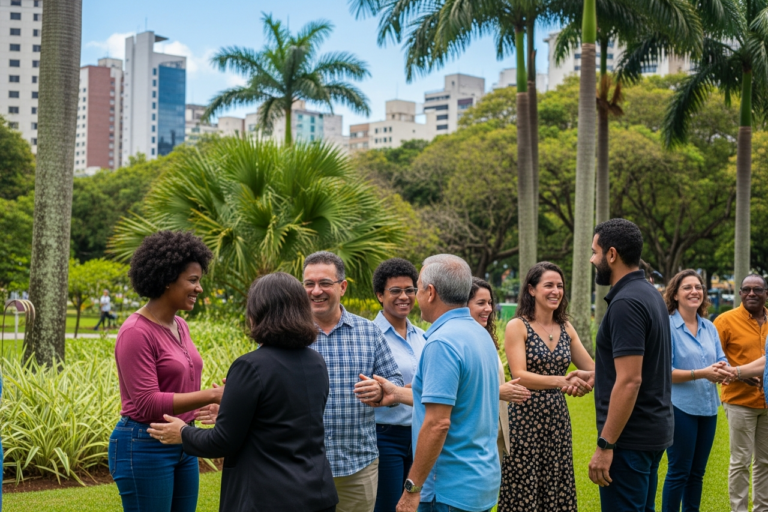
In Brazil, people greet each other in ways that are not just about saying hello. The greeting often involves a handshake, a hug, or a kiss on the cheek. This depends on who you are talking to and where you are.
Brazilian culture uses this kind of closeness to show warmth. For Canadians, it might be new, but for them, it feels normal. You do not need to worry about these gestures. They show that people want to be friendly and welcoming.
Knowing which gesture to use for a greeting will make you feel better and help you get along with others. Next, we will talk about how to pick the best way to greet someone and what you should not do.
Choosing the Right Gesture
Picking the right greeting in Brazil is very important. The way you say hello depends on the type of meeting and who you are with. When you are in professional settings and meet someone for the first time, a firm handshake is the best way. It shows you are confident and that you respect the other person.
In more relaxed social situations, people greet each other with more affection. Friends often hug and sometimes give a kiss on the cheek. The number of kisses can change from place to place. Women give each other kisses when saying hello. Men and women also exchange kisses on the cheek. Men usually do not kiss each other, but they will hug and give a pat on the back.
Here’s a simple guide to help you pick the right greeting in Brazil:
-
Handshake: Use this for the first time meeting someone, right greeting in professional settings, or in formal situations.
-
Hug: Good for social situations and common between friends. Men in brazil like a strong hug with a pat on the back.
-
Kiss on the cheek: Often happens in social situations between women, or between a man and a woman.
What to Avoid During Brazilian Greetings
Brazilians are often very warm and friendly. But there are some things you should watch out for when you greet someone. If you want your greeting to be polite and go well, make sure you respect their way of showing personal space. Brazilians like greetings that are more physical, but you should not get too close too soon. This is very true if the meeting is formal. Wait and let the other person show if a hug or kiss is okay.
If you act too quiet or keep your distance, people might think you are not interested or that you are cold. When you greet a Brazilian, don’t use a limp handshake or look away. Try to give a good handshake, look at the person, and smile. This makes you seem open and ready to talk.
Sometimes, visitors think the friendly way Brazilians act, or the physical touch during a greeting, means more. But in Brazil, this warmth is just a normal, friendly way to say hi. It is not a romantic message. Knowing this will help you stay away from awkward times.
If you keep these things in mind, you will feel good about greetings in Brazil. You will use your handshake, smile, and warmth in the right way with Brazilians and skip the usual mistakes.
Regional Differences in Brazilian Greetings
Brazil is a very big country, and greeting people can be different depending on where you are. The words used to say hello or goodbye stay mostly the same everywhere, but the way people use gestures, like the number of kisses, can change a lot from one place to another. For example, what people do in Rio de Janeiro can be different from how they greet in São Paulo.
These local ways of greeting are part of what makes travelling in brazil so fun and interesting. Knowing about these differences shows you care and want to respect the local way of life. Let’s see how greetings work in two big cities, rio de janeiro and São Paulo, and talk about some other special traditions found across brazil.
Greeting Styles in Rio de Janeiro vs São Paulo
The greeting styles in Rio de Janeiro and São Paulo offer a clear example of regional differences in Brazil. In Rio, known for its relaxed and beach-centric culture, greetings are typically warmer and more effusive. In contrast, São Paulo is the country’s business hub, and its traditions can feel slightly more reserved, though still friendly.
The most notable difference is in the customary kiss on the cheek. People from Rio (known as “Cariocas”) almost always greet with two kisses, one on each cheek. In São Paulo, however, a single kiss on the right cheek is the norm. A handshake is common in business settings in both cities, but a social greeting in Rio is more likely to involve more physical contact.
Understanding these subtle traditions can help you feel more like a local. Here is a simple breakdown of the main differences:
|
Greeting Aspect |
Rio de Janeiro |
São Paulo |
|---|---|---|
|
Kisses |
Two (one on each cheek) |
One (on the right cheek) |
|
General Vibe |
More relaxed and physically expressive |
Slightly more reserved, especially initially |
|
Handshake |
Used in business, but often followed by a hug |
The standard for business and initial meetings |
Distinctive Traditions Across Brazil
Beyond the large cities of Rio and São Paulo, Brazil shows its regional diversity in how people greet each other. In some places, like the south, people give three kisses as the norm. But in other areas, a single kiss or just a hug is what you will see most often. There is no set rule, and what people do can change based on family and their group of friends.
For instance, in the state of Minas Gerais, people usually give two kisses, just like in Rio. Yet, in some parts of the Northeast, the number might change. These customs say a lot about the local culture. When you travel in Brazil, watching how folks greet each other in different social situations will help you learn what works in each area.
Don’t stress about doing it wrong. If you are new to the country, people understand you might not know all the details. Just a nice smile and a greeting that fits the time of day will be a good start. If you are with close friends, they will show you their way of greeting.
Comparing Greetings in Brazil and Portugal
Brazil and Portugal speak the same language, but their culture is not the same, and this shows in how they greet each other. The Portuguese language has grown to be different in both countries. Now, we call it Brazilian Portuguese in Brazil and European Portuguese in Portugal. The differences are not only in pronunciation and words, but also in how people act during greetings. People in Brazil use the portuguese language in a way that is friendlier and more relaxed. They often use more touch when saying hello than people in Portugal.
In Portugal, greetings are more quiet and careful, especially in business or formal places. In those situations, the handshake is common. Kisses are something people save for close friends or family members. If you want to visit Brazil or Portugal, it is good to know these things. Let’s see the role that brazilian portuguese and portuguese language play in shaping these greetings.
Key Differences Between Brazilian and European Portuguese
One of the first things people notice about Brazilian Portuguese and European Portuguese is how they sound. Brazilians speak in a way that uses open vowel sounds. This makes the brazilian portuguese sound smooth and almost like a song. In portugal, the portuguese language is spoken with closed sounds. This makes it sound quicker, and sometimes you can barely hear some vowels. It can be tough for you to understand portuguese speakers from portugal at first.
You will also find differences in their words and grammar. For saying hello, brazilians say “Oi” a lot. In portugal, people use “Olá” more often for a greeting. The way people use verbs also changes. In brazil, brazilians use the word “você” when talking to others. They use this for both formal and informal chats. In portugal, people often say “tu” if they want to be informal.
These things show that the portuguese language can change, depending on where you learn it. Even a greeting like “Oi” or “Olá” can tell someone if you learned it in rio or lisbon. People who speak brazilian portuguese and portuguese from portugal can understand each other. But if you know these important differences, you will fit in better and find it easier to talk with everyone.
How Cultural Context Affects Greeting Etiquette
Culture is what makes greeting rules different in Brazil and Portugal. People in Brazil are known to be warm and friendly. They like to add a personal touch and often act in an informal way. You can see this in how they greet each other. Greetings in Brazil often use hugs and kisses, even at work as people get to know each other. The line between formal and informal situations can go away fast.
On the other hand, people in Portugal act in a more reserved and old-style way. They keep things more traditional. There is a much clearer line between professional settings and personal social situations. In business, people in Portugal usually start with a handshake and speak in a formal way. They will do this for a long time as they work together. Close friends and family may give hugs or kisses, but this kind of greeting is not common in other situations. This makes their greeting customs seem more structured than in Brazil.
In the end, greeting habits come from deeper culture values. Brazil’s history as a mix of people from many places has made it an open and expressive country. Portugal has a long European history and keeps its meetings more formal. It helps to know the cultural context to use the right greeting in Brazil or Portugal.
Common Mistakes Canadians Make When Greeting Brazilians
When you visit Brazil, there are times when Canadians get the greeting a bit wrong. This can make things a little uncomfortable. This often happens because the way people act in Canada is not the same as in Brazil. In Canada, you may be a bit more formal or keep your distance. But, this can look unfriendly or rude to people in Brazil. Getting the right greeting matters. You want to be somewhere in the middle.
Sometimes, you might say the wrong Portuguese greetings or not get the words right for the moment. This may make people confused. Still, most Brazilians understand and like it when you try. They know you want to connect. The best way to get along is to keep learning. We will talk about some impolite phrases to stay away from and also tell you about the local do’s and don’ts with greeting.
Remember, using the right greeting in Portuguese is a good way to show respect. It helps you meet new people and have a good time in Brazil with Brazilians.
Avoiding Impolite Phrases
Brazilians are easygoing, but there are some things you need to watch out for when speaking. Certain English words, if you use them, may not sound nice in portuguese and can seem too blunt. If you get right down to business without saying hello, it often feels rude in brazil. Start the talk with “Bom dia” or ask “Tudo bem?” before you get to the main topic.
How you say things matters, too. You do not need perfect pronunciation, but try your best. Sometimes, its not the word that is wrong. It’s how you say it. Talking too loud or using a harsh tone is not liked. You should use a calm and friendly voice.
Here are some tips for avoiding rude words or habits:
-
Don’t use slang too early: Say portuguese greetings first. Only use slang when you know people better.
-
Avoid straight commands: Giving orders in english can sound rough in portuguese. Make your request softer.
-
Don’t use just “Olá”: While right, “Oi” is better for “hi” in brazil. Using words like “Bom dia” or other greetings based on time is nicer.
When you visit brazil, simple portuguese greetings like “bom dia,” “tudo bem,” and “oi” help you get on well with people. Take time to learn some phrases, watch how others greet, and use a relaxed way of speaking. If you keep these in mind, you will sound
Understanding Local Do’s and Don’ts
To make a good impression in Brazil, it helps to know the local rules for greetings. When you go into a room or join a small group, say hello to everyone. A simple “Bom dia” to the whole room is nice and people look for it. If you ignore people, that can be seen as very rude.
There are things you should not do, too. Don’t be scared of touches or close greetings. The other person will usually start, but pulling away from a hug or a kiss on the cheek can feel like you are saying no to their welcome. Get used to the warm way people greet each other in Brazil. You should not greet in a hurry. Take a bit of time to ask how someone is doing and talk for a short while. This is important for people there.
In the end, the local way in Brazil is about being warm and kind. Make eye contact and give a smile. Use the other person’s name if you know it. Don’t stand too far when you talk, as that makes people feel far from you. If you use these simple tips, you will do well in new social situations and feel more sure of yourself.
These easy habits, a real “bom dia”, and being friendly will help you make friends in Brazil.
Conclusion
To end, knowing how people greet each other in Brazil will help you have better talks with them. It makes your time with locals more pleasant and respectful. There is “oi” for a casual greeting and “bom dia” when you want to be more formal. Using these greetings goes a long way. It breaks down the cultural walls and helps you create a friendly space with others.
There are some differences in how people in Brazil greet in different parts, and they often use gestures like handshakes or hugs. It is good to be ready for this warm welcome. If you learn their greeting ways like “bom” or “dia,” you show you want to respect their culture. You give yourself a chance to make real links with them.
Take part in these moments when you travel to Brazil. You will see that simple ways to greet, like “bom dia” or “oi,” can do a lot to bring people closer. If you want to know more, you can ask for a free consultation!
Frequently Asked Questions
Are greetings more formal in business or at home in Brazil?
In Brazil, people greet each other in a formal way during business situations and in professional settings. They speak polite Portuguese, and often say “Senhor” or “Senhora.” At home or during other social situations, greetings are not so formal. People become friendly fast, and act with more warmth. Formal situations turn easy and relaxed when you are not in business or professional settings in Brazil.
What are some impolite greeting phrases to avoid?
You should not use very direct english phrases because they may not sound right in other cultures. When speaking in portuguese, do not use slang if you have just met someone or if you are talking with older people. It is better to use standard greetings at first. This shows respect and helps you not seem rude until you know the person better.
Can I use Brazilian slang as a foreign visitor?
Yes, if you are a foreigner from Canada, you can use Brazilian slang. It works best in informal situations, like when you are with close friends or people your age. When you use slang words such as “beleza” or “e aí,” you might sound more like a local. But remember, if you use slang at the wrong time, it can seem out of place.