Key Highlights
Are you planning a trip to the United States? Here is what you should know about the visa application process. This easy guide will help you understand every step so you can get ready for your journey.
-
If you are from Canada, you will not need a visa for most tourism or short business trips in the United States. There are some exceptions, so always check if this applies to you.
-
The Visa Waiver Program (VWP) lets nationals of certain countries come to the United States without a visa for up to 90 days.
-
The main types of visas to know are visitor visas (B1/B2) for tourism and business, and special visas for work or study while in the United States.
-
The application process normally asks you to fill out the DS-160 online form. An interview might also be needed as part of this process.
-
The purpose of travel and period of stay are the main things that help decide which type of visa you will need, or if you do not need one.
-
Get updates from the Department of State because this is important for all visa applicants.
This information should help you plan and get ready for your time in the United States.
Introduction
Are you planning to go to the United States? The first thing you need to know is the visa rules. For many Canadians, you can visit the United States for a short time without a visa. But in some cases, you may need one. The Department of State gives lots of details for visa applicants. You will find info about forms and the interview you need to do. Make sure to check the latest travel news, so you have all the papers you need and follow what’s needed to cross the border.
Overview of U.S. Visas for Canadians
For most people in Canada, going to the United States for a trip or for business is simple and you do not need a visa. This is a big help compared to people from some other places, as nationals of certain countries have to go through a much harder process to get into the United States. But, there are some limits to this way of travelling without a visa, especially when it comes to how long you stay or why you go.
If you want to stay in the United States for more than just a short trip, like if you want to work or go to school, you will need to apply for one of the nonimmigrant visas. The Department of Homeland Security decides the time you can stay, and you must follow these rules during your period of stay. In this guide, we will look at what the visa waiver policy means and other things that could change your plans to travel.
The Visa Waiver Policy and U.S. Entry Requirements
The Visa Waiver Program lets people from certain countries go to the United States for business or a holiday. It is managed by the Department of Homeland Security. If you qualify for this program, you can travel to United States without getting a visa. Your trip must be for 90 days or less. People from Canada are not officially part of the Visa Waiver Program, but they have about the same freedom and usually do not need a visa to enter the United States.
If you use the visa waiver program, you have to get travel authorization before you go. You get this permission by applying online using the Electronic System for Travel Authorization, or ESTA. The electronic system checks the details you give as an applicant.
The main things you need for using the VWP are:
-
Your passport must be from one of the countries that is part of the visa waiver program.
-
You need approved travel authorization through the electronic system called ESTA.
-
You must be going for business reasons or for a holiday, and your trip must be for less than 90 days.
You should always check if you can join this program. Make sure you fill out all steps as the united states Department of Homeland Security needs. Do that before you plan or book your trip.
Factors Impacting Canadian Travelers’ Need for a Visa
While most travel for Canadians to the U.S. is visa-free, several factors can change this. Your individual case and the specifics of your trip determine whether an application is necessary. The primary consideration is your purpose of travel; activities like long-term study or employment require specific types of visas.
Your intended period of stay is another critical factor. Short trips for tourism are usually fine, but longer stays may require official approval. Age can also play a role, as applicants between 14 and 79 might have different interview requirements.
Ultimately, each applicant must assess their situation to see if a visa is needed. Here are some common scenarios:
|
Purpose of Travel |
Visa Generally Required? |
|---|---|
|
Short-term tourism |
No |
|
Business meetings |
No |
|
Temporary work |
Yes |
|
University studies |
Yes |
Main Types of U.S. Visas Available to Canadians
When you need a visa, it’s good to know about the different types of visas. The U.S. Department of State puts these into two main groups. There are nonimmigrant visas for people who stay for a short time. There are also immigrant visas for those who plan to live there for good. Most Canadians will look at the nonimmigrant visas.
These visas let people do many things. You can use them for travel, work, business, or school. Every type of visa has its own rules and ways to apply. You will need to go through a U.S. embassy or consulate for this. Now let’s take a closer look at visitor visas and some other types of visas that are more special.
Visitor Visas (B1/B2) for Tourism and Business
If you want to go to the U.S. for tourism or a short trip for work, the most used visitor visas are the B-1 and B-2. The B-1 is for things like going to a business meeting or working on a contract. The B-2 is if you want to travel for fun, see family, or get some medical help. Sometimes, both are put together and called a B-1/B-2 visa.
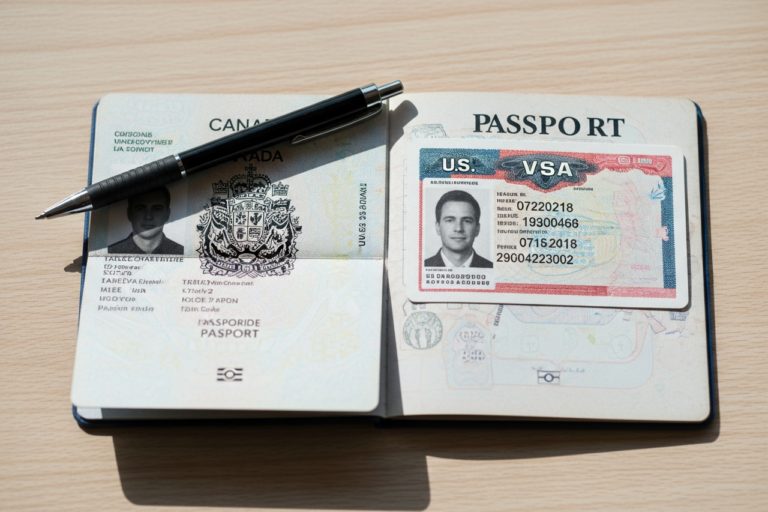
The application process starts when you fill out the DS-160 application form online. This is an official document where you give your details and share what your purpose of travel is. It is important to make sure all the information you put down is right and matches why you want to go.
When you turn in your application form, you may need to go to a U.S. consulate for an interview. A person from the Department of Homeland Security will check what you wrote and see if you qualify for the visa. If you have all your papers ready, you will get through the process more easily.
Work, Study, and Specialized Visa Categories
Outside of tourism and short business trips, the United States has some special visa types for Canadians. If you want to work in the United States, you need a visa for temporary workers. The H-1B or L-1 visa applies, depending on your job and your situation. This type of visa is not the same as getting a green card, which lets you live there for good.
If you want to study, the United States gives student visas like F-1 or M-1. For people joining cultural or work programs, you may need a J-1 visa for exchange visitors. When you want to move and live in the U.S. for good, immigrant visa processing is a much longer and harder process.
Some common types of specialized visitor visas include:
-
Work Visas: For temporary workers who are hired in many different fields.
-
Student Visas: For people going after academic or job training in schools.
-
Exchange Visitor Visas: For those taking part in agreed upon programs.
These visas are open to nationals of certain countries. You must meet their own special rules to get one.
Applying for a U.S. Visa from Canada
If you know that you need a U.S. visa, the next thing to do is start the application process. If you are one of the visa applicants in Canada, you can find everything you need on the official U.S. embassy and consulate websites. The application process has a clear path. It will help you go from your first form all the way to your visa interview.
You need to follow every step the right way, so you don’t get slowed down. From the time you book your appointment to when you meet with a consular officer, it’s important that you stay organized. If you get ready the right way, you will meet all the rules that U.S. border protection has. Now, let’s talk about the steps you need to take for your application process and what documents you have to bring.
Step-by-Step Visa Application Process and Scheduling an Interview
Starting your U.S. visa application process is simple because of the online system. The first and most important step is to fill out the DS-160 Online Nonimmigrant Visa Application form. You need to put your personal details and passport information into this electronic system. After you submit it, you will get a confirmation number. You must keep this number because you need it for the next steps.
When you get your DS-160 confirmation, make an account on the U.S. nonimmigrant visa applicant website for Canada. You will use this account to pay the application fee and to schedule your visa interview at a U.S. consulate. You should book your appointment as soon as you can. There can be long wait times, sometimes weeks or months.
Key steps in the application process include:
-
Filling out the DS-160 application form online.
-
Creating a user account to pay fees and schedule an appointment.
-
Attending the scheduled visa interview, unless you are exempt.
Some people, like kids under 14 or adults over 79, may not need to go to the interview. This makes the process faster for them.
Essential Documents Required for Visa Applications
When you apply for a visa to the United States, the right paperwork helps things go well. You should have a full and neat set of documents. This will make your application and interview smoother. The most important travel document you need is your passport, and it should be good for all the time you plan to stay in the United States.
You will also need to bring the confirmation page for your DS-160 application form. Your visa application fee receipt is needed too. Along with these main papers, you may want to show some supporting documents. These can prove why you want to go to the United States. The Department of State in the United States has a list of documents they suggest, but what you need may change for each person.
Essential documents usually include:
-
A passport that is valid.
-
The confirmation page from the DS-160 application form.
-
Proof that you paid your visa fee.
Other useful official papers can be proof that you have enough money, a letter from work, or papers that show you have strong ties to Canada. These things can help show you plan to go back to Canada after your time in the United States.
Conclusion
To sum up, moving through the steps of getting a U.S. visa can seem like a lot. But it is important for Canadians who want to visit or work in the United States. If you know the different types of visas and how the application process works, you can make things easier for yourself and skip common problems. Be sure to get all the documents you need and be ready for your interview. This will help make the whole thing go more smoothly. No matter if you are going for business or just to relax, having the right information lets you enjoy your trip to the United States. If you have questions or need help with your application process, feel free to ask!