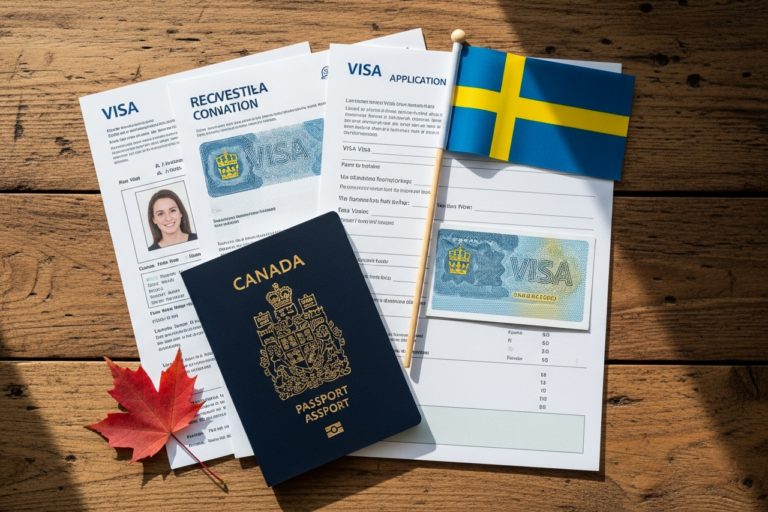
Key Highlights
-
Canadians do not need a visa to be in Sweden if the stay is less than 90 days. For trips over 90 days, you might need a Schengen visa.
-
The top visa types are the short-stay tourist visa, a work permit for jobs, and a residence permit for students.
-
Main visa requirements are a filled application form, a valid passport, and proof that you have enough money.
-
You can send in your visa application at a visa application centre, like VFS Global.
-
Visa fees and how long it takes depends on the visa type, for example, if it is a Schengen visa or work permit.
Introduction
Are you planning a trip to Sweden? If you are excited about seeing the busy streets of Stockholm or want to relax in the calm Nordic lands, you need to know about the Sweden visa process first. Canadians often find visiting countries in the Schengen Area for a short time to be easy. But if you want to stay longer, work, or study, you will need more details.
This guide will help you understand all you need to know about the Sweden visa. It will cover the visa application steps and all the main requirements. This way, your trip to this beautiful Scandinavian country can be as smooth as possible.
Understanding Sweden’s Visa System for Canadians
Figuring out the visa system for Sweden, which is a member state of the European Union, might look hard at first. But it is set up in a clear way. The visa rules mostly change based on how long you plan to stay and why you are travelling. Since Sweden is one of the Schengen countries, it goes by the same visa rules as the other members when it comes to short stays.
If you want to stay in Sweden for a longer time, there are some rules that are special to this country. Every visa category comes with its own visa application form and a list of what you need to do for your visa application. Here, you will find out why you might need a visa and how the main types are not the same.
Why Canadians May Need a Visa for Sweden
If you are a Canadian citizen, you can visit Sweden or any country in the Schengen Area for up to 90 days without a visa. This rule covers trips for tourism or business. It helps to make these short visits simple and easy.
If you want to stay for more than 90 days, or if your purpose of travel is for work or study, you will need an entry visa or permit. The visa requirements change based on why you want to go—like work, study, or joining a family member.
If you need to stay longer, reach out to Swedish authorities or Swedish embassies to get the right paperwork before you travel. They also may use service providers to help you get everything you need.
Key Differences Between Tourist, Schengen, and Long-Stay Visas
It’s good to know the differences between each visa type because each one has its own use. A tourist visa, for people who need it, is a kind of Schengen visa. This lets you make short stays in the Schengen states.
If you are Canadian, the biggest difference is between short stays and long stays. You do not need a tourist visa if you are visiting for less than 90 days. But if you are staying longer, you will need a special permit. People call this a residence permit or a long-stay visa.
Here’s a quick look at how each visa type is different:
-
Tourist Visa (Schengen Visa): This is for stays up to 90 days within a 180-day period in the Schengen zone.
-
Long-Stay Visa/Residence Permit: You have to get this if your stay will be over 90 days, maybe for work or study.
-
Purpose: The Schengen visa lets you go for tourism, short business visits, or seeing family, but a residence permit is what you need if you plan to live long-term.
Main Visa Types Available for Visiting Sweden
Sweden has different visa types, each made for a different reason. If you want to visit for a short time, the Schengen visa is what most people use. This visa lets you travel through the whole Schengen zone. But, if you are Canadian, you usually do not need the Schengen visa for a stay under 90 days.
If you want or need to be in Sweden for more time, you have to think about a national visa or other permits. The main visa types for long stays are the work permit, if you have a job offer, and the residence permit for students who get into a school in Sweden. Each visa type comes with its own rules and steps for how to apply.
Short-Stay Visas (Schengen Visa) for Tourism and Family Visits
Most Canadians do not need a Schengen visa for short stays. Still, it is good to know how the process works. You may travel with people who need one, or you could have other reasons to learn about it. With a Schengen visa, you can go to and travel around the whole Schengen Area for up to 90 days.
To apply for this tourist visa, you need to fill out an application form. Then, you send it to the embassy or visa centre for the main country you want to visit. You must also give the required documents. These papers show the plans for your trip, where you will stay, your money, and more.
When you get ready, have proof of your travel, proof of where you will stay, and show your money plans. The embassy wants to see you know about the 90-day time limit. They want to see you will follow the rules, and that you have a plan for your trip to the Schengen Area.
Work Permits and Employment Visa Options
If you get a job in Sweden, you need to apply for a work permit before you can start work. The purpose of your visit is work, and the application process goes through the Swedish Migration Agency.
You must have a formal job offer from a Swedish employer. The employer has to let people in the EU/EEA know about the job and give you terms that match Swedish collective agreements. You need to include this contract in your visa application.
From sending your application to getting a decision, everything is done by Sweden’s migration operations. It’s important to have all your paperwork ready so you can get your work permit without trouble.
Study Visas and Residence Permits for Students
If you want to study in Sweden for more than three months, you need a residence permit for studies. People often call this a student visa. This permit lets you live in Sweden while you finish your program.
You have to apply for a study visa through the Swedish Migration Agency. To start, you must first get accepted into a full-time program at a school or university in Sweden that the country has approved. You have to show proof of your enrolment. This is one of the most important papers you will need.
Your reason, or purpose of travel, must be for education only. You also need to prove you have enough, or sufficient funds. This is to show you can support yourself while you study. You also need to have the right health insurance. After you get approved, your residence permit lets you give your attention to studying in Sweden.
Sweden Visa Requirements for Canadian Citizens
While people in Canada can travel to Sweden without a visa for short stays, it is important to understand the Sweden visa requirements if you want to visit for a longer time. The same goes if you need a visa for work or to study there. When you start your visa application, you need to give the right required documents.
Each visa type has its own list of papers you have to give. But there are some things that are always needed. You have to fill in the visa application form and share details like proof of accommodation. Below, we will talk about which documents you need for each different visa type.
Required Documents for Tourist and Schengen Visa Applications
Even though people from Canada often do not need a Schengen visa, it is still smart to know the required documents. This can help if you travel with someone who does have to get a visa or if the rules change at any time. If you want to have a good chance with your Schengen visa application, you must have all the right paperwork.
The most important document is your valid passport. It has to be good for at least three months after you leave the Schengen Area. Your passport must also have two blank pages. You need to have the right travel and medical insurance, too.
Here is a list of the most common required documents:
-
A completed and signed Schengen visa application form.
-
Your valid passport, which must not be over 10 years old.
-
Two photos taken recently like for passports.
-
Proof of travel and medical insurance. It must have a minimum coverage of €30,000.
-
A cover letter where you explain your travel plans and why you are going.
-
Proof of accommodation, such as bookings for hotels.
-
Proof that you have enough money for your stay.
If you want to go into the Schengen Area, having all these documents will help your visa application.
Documents Needed for Work and Student Visas
If you want to get a work permit or a student visa, you will need some extra paperwork. These extra documents help show why you have to stay in Sweden for a longer time.
To get a work permit, the most important thing you must have is the job offer from your Swedish employer. If you want a student visa, you need an invitation letter or acceptance letter from your school in Sweden. You also have to show proof that you have medical insurance for your stay.
You will also need these required documents:
-
Copies of your passport.
-
The employment contract or invitation letter or acceptance letter.
-
Proof of your qualifications and work experience if you apply for a work permit.
-
Proof that you have enough money to support yourself.
-
They might ask for a copy of your birth certificate.
-
Proof that you have the right medical insurance.
-
The application form you filled out for your residence permit.
Step-by-Step Guide to the Sweden Visa Application Process
Are you ready to start your visa application? The process has a few steps. First, you should find out which visa type you need for your trip. After that, you will gather the documents you need and fill out the right application form.
For most people, the next step is to go to a visa application centre. You will hand in your papers there and give your biometric data. This can be for a schengen visa, a schengen visa application, or a migration assignment for a residence permit. If you follow these steps, your visa application should go well.
Where to Submit Your Application in Canada
In Canada, you do not give your visa application straight to the Embassy of Sweden. Instead, Sweden has picked a third-party company to help with this. VFS Global is the main visa partner that handles Swedish visas in many places, like Canada.
You need to find the VFS Global visa application centre that is near you in your country of residence. You have to book your visit online before you go there. The Embassy of Sweden in Ottawa will be the one to make the final decision on your application, but VFS Global takes care of the paperwork and other parts.
Keep in mind, some visa applications and residence permit cases can be sent to other Swedish missions. For example, for people in Canada, the website says cases for residence permits are handled by the Swedish Embassy in Tel Aviv, Israel. So, always read the latest updates on the official websites.
Filling Out Visa Forms and Biometric Procedures
Filling out the visa application form the right way is a key step. All your details need to be correct and must match what is on your other papers. It does not matter if you fill in the visa application form online or with a pen. Before you hand it in, double-check everything to make sure there are no mistakes. This will help you avoid delays with your application process.
When you send in your application form, you will have to give a new passport photo, too. The passport photo has to meet some rules, like being taken on a plain white background. When you go to your meeting at the visa centre, you will do some biometric steps as well. These steps include taking your fingerprints and a digital photo.
The biometric data from you will be kept to check who you are. This is normal for most migration cases and is something you must do for Schengen and long-stay visas in the application process.
Sweden Visa Fees, Processing Times, and Special Conditions
When you get ready for your visa application, you need to think about both cost and timing. Each visa application needs you to pay an application fee, and you do not get this money back. The visa fee changes based on the type of visa you plan to get and how old you are.
The processing time is not the same for every visa. If you want a short-stay visa, you can get it in maybe two weeks. If you ask for a residence permit, it could take a few months. You should also look at any extra steps or rules for your visa application, since they can change at any time.
Current Costs for Different Visa Categories
The visa fee for your Swedish visa depends on the category you are applying for. The application fee for a Schengen visa, for example, is standardized across the member countries.
Fees for national visas, like a work visa or student visa (residence permit), are set by the Swedish government and can be higher. Keep in mind that these fees are typically paid in local currency at the time of your application and are subject to change.
Here’s an approximate breakdown of the main visa fees, though you should always verify the exact amount on the official Swedish Migration Agency website:
|
Visa Type |
Applicant |
Approximate Fee |
|---|---|---|
|
Schengen Visa |
Adult |
€80 |
|
Schengen Visa |
Child (6-12 years) |
€40 |
|
Work Permit |
Adult |
SEK 2,200 |
|
Residence Permit for Studies |
Adult |
SEK 1,500 |
Application Processing Timeframes and Status Tracking
The processing time for your Swedish visa can change a lot. If you are applying for a schengen visa, the usual processing time is around 15 days. In some cases that are more complex, it can take up to 60 days. So, you should apply ahead of your travel dates to make sure you get your visa on time.
If you are getting a long-stay permit for work or study, the processing time will be longer. The Swedish Migration Agency takes care of these migration operations. It might take a few months to finish, depending on the migration assignment and how many people have applied.
You can check the progress of your Swedish visa application with a status tracking service. This can be done on the Swedish Migration Agency website or by using the VFS Global portal. You will be able to see when a decision is made about your case.
Conclusion
Navigating the visa process in Sweden can seem tricky for Canadians, but it can also be a good experience. You need to know about the different types of visas, what the requirements are, and how the application process works. There are a few types, like tourist visas, Schengen visas, work permits, and student residency. Each type has its own guide and steps to follow, so you can pick what is right for you.
When you get ready for your travel, remember to collect all the necessary documents you will need. It’s also a good idea to check for any changes in visa rules. Knowing about the application process and the rules can help you a lot. It will make things go smoother and make your time in Sweden better. If you have any questions or want more help, you can always reach out!
Frequently Asked Questions
Are there any special requirements for visas to Sweden right now?
It is a good idea to look at the main websites of the Swedish authorities or the Embassy of Sweden to get the most up-to-date information. There may be new rules about health, security, or other things. So, be sure to check the latest visa requirements before you ask for your entry visa.
Can I extend my Sweden visa if needed?
Extending a short-stay Schengen visa is usually not possible. The only exception is if you have serious personal reasons. To extend a long-stay permit, you may be able to get more time. You have to begin the application process with the Swedish Migration Agency before your current permit runs out. When you apply, explain the purpose of travel and why you need to stay longer. This will help the agency know why the extra time is needed for your schengen visa.
How long does it take to process a Sweden visa for Canadians?
The processing time for your visa depends on the visa type. A Schengen visa application usually takes about 15 days. If you need a long-stay permit, like for work or study, those are migration cases. They can take a few months. You should always go to the Swedish Migration Agency’s website to see the latest processing time for any visa type.