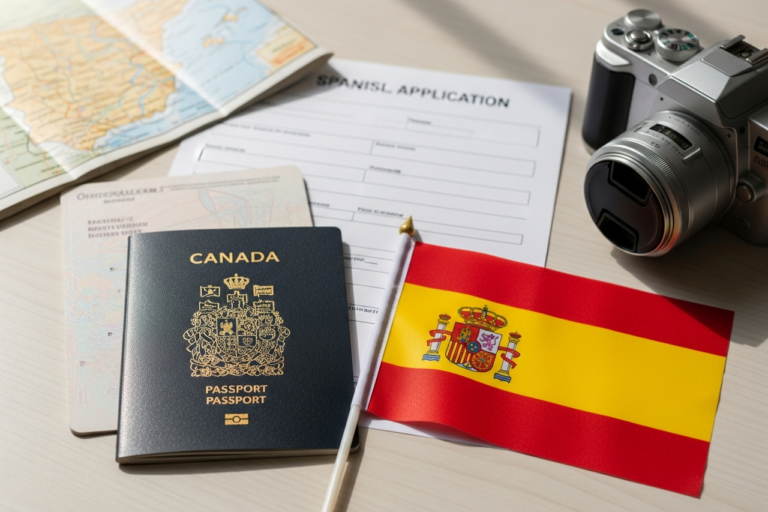
Key Highlights
Are you planning a trip to Spain from Canada? Here is what you need to know about the Spanish visa process.
-
Canadians can go to Spain and other Schengen countries for up to 90 days without a visa.
-
If you want to stay for more than 90 days, you have to get a long-stay national visa.
-
There are different visa options. You can choose one for work, studying, retirement, or if you are a digital nomad.
-
You need a valid passport, proof of funds, and health insurance.
-
You must give the visa application form to the Spanish consulate in Canada.
Introduction
Spain is full of life, has sunny beaches, and a long history. These things make it a great spot for people from Canada. If you want to go for a short trip, spend a full year to study, or move for good, you need to know about the visa rules set by the Spanish government. The rules for people who are not from the EU can seem hard to get through. This guide will help you with each step. It will show you how to check if you need a visa and how to give your paperwork at the Spanish consulate. That way, your trip to Spain can be easy and stress-free.
When Do Canadians Need a Visa for Spain?
If you are from Canada, you may need a visa depending on how long you want to be in Spain. The Spanish authorities look at your entry requirements based on your stay and the reason for your trip. It is a good idea to check for travel advisories before you go.
For short visits, the rules are easy to follow. But, if you want to live, work, or study there, you must get the right permission from the Spanish authorities before you travel. Your country of origin and a valid passport play a big part in this. Now, let’s look at what you need for both short and long visits.
Short-Term Stays: Tourism and Business Visits
Good news for people from Canada who are going to Spain! If you want to visit Spain for tourism or business for up to 90 days in a 180-day period, you do not need a tourist visa. Canada is part of the visa-waiver program for the Schengen Area, which has Spain in it. All you need is a valid passport to get in.
You can travel in Spain and also go to the other 26 Schengen countries with this visa-free access. But, even if you do not need a Schengen visa, you still need to follow the usual rules for entry. You need to have things like your return ticket and enough money to pay for your stay.
If you are from a country that needs a visa, you must apply for a Schengen visa at the Spanish consulate in your home country. Some things you will need are a completed application form, your passport, proof of your travel insurance, and your travel plans. If you go for business, you may also have to give your business plan or an invitation letter.
Long-Term Stays: Residency and Extended Programs
If you want to stay in Spain for more than 90 days, you have to apply for a long-stay national visa. This national visa is the first step for getting your residence permit, which can give you legal residence in Spain. You get to choose the visa type that fits you, whether you want to work, study, or just enjoy life without working there.
Here are the main options. If you want to work, you will need a work visa and a job offer from a Spanish employer. If you plan to study, the student visa will let you sign up for a school or university. There are also non-lucrative visas for those who have enough money to support themselves and do not want to work while they stay in Spain. Each visa has a different application process and its own rules.
After you arrive in Spain, you might be able to stay longer or change your permit, depending on your visa type. For example, with the student visa, a student may switch to a work permit after they graduate. The application form for this must be sent from Canada. Filling this out is your first step for a longer stay in Spain.
Main Types of Spanish Visas for Canadians
Picking the right Spanish visa is very important if you want your application to go well. There are a few types of visas, and they are split by how long you will be in Spain and why you are there. If you know the difference between a short-stay and a long-stay visa, it will be much easier to figure out the right visa type for your trip.
Each type of visa comes with its own rules. Some can even let you stay in Spain for a long time. After living in Spain for a while, you may be able to get permanent residency or Spanish citizenship. Below, you will see the main kinds of short-term and long-term visas. This will help you find the types of visas that match your plans in Spain.
Schengen (Short-Stay) Visa Options
Canadians do not need a Schengen visa when they stay in Spain or other Schengen states for up to 90 days. But, if you are from a place where you do need a Schengen visa, this permit lets you visit Spain or other Schengen states for a short time. You can use it for tourism, to see family, for business, or to visit friends.
The application process for a Schengen visa has a few steps. You have to send your documents to the Spanish consulate. This list can change a bit, but these are the basic things they ask for.
Common requirements include:
-
A completed visa application form.
-
A valid passport, which must have at least three months left after you leave.
-
Proof of accommodation, like hotel confirmation or a letter from where you are staying.
-
Flight plans and proof that you have travel medical insurance.
When you want to go to Spain for business, you may also need to give a full business plan or a letter of invitation from a Spanish company. The process is there to make sure you have the right reason to visit and the money to take care of yourself in the country.
Long-Stay Visas: National Visa Categories
For stays exceeding 90 days, you must apply for a national visa, which functions as your initial residence permit. Spain offers several national visa categories tailored to different purposes, from working and studying to investing or retiring. These visas are your gateway to living legally in the country long-term.
Popular long-stay visa categories include the student visa for academic pursuits, the work visa for employment, the non-lucrative visa for retirees, and the digital nomad visa for remote workers. Other options, like the entrepreneur visa or golden visa (an investor visa), cater to those looking to start a business or make a significant investment in Spanish real estate.
Here is a quick overview of some popular long-stay visa options:
|
Visa Type |
Primary Purpose |
Key Feature |
|---|---|---|
|
Student Visa |
Studying in Spain |
Allows part-time work (up to 30 hours/week). |
|
Work Visa |
Working for a Spanish employer |
Requires a job offer before applying. |
|
Non-Lucrative Visa |
Retiring or living without working |
Requires proof of sufficient passive income. |
|
Digital Nomad Visa |
Working remotely from Spain |
Designed for freelancers and remote employees. |
|
Entrepreneur Visa |
Starting an innovative business |
Requires a strong business plan. |
Choosing the Right Spanish Visa for Your Needs
There are many visa options you can choose from. Picking the right visa for your needs is one of the most important things you will do. The type of visa you get will shape what you can and can’t do in Spain. That’s why it’s so important to choose well at the start.
Think about your goals for the long-term. Do you want to work, study, or just experience life in Spain? Your answers to these questions will help you pick the right visa. If you do not know which visa to go for, it can be good to get legal advice. Now, let’s look at what different people might need to think about when looking at visa options.
Factors for Students, Workers, and Retirees
The goals you have, both personal and work-related, will help you know which visa you need. If you are a student, your main goal is to learn, so you should get a student visa. This visa lets you study in Spain, and most of the time you can also work part-time.
If you want to work in Spain, you will need a work visa. You get this by having a job offer from a spanish company. If you are retired, you may do better with a non-lucrative visa. This visa lets you live in Spain as long as you do not work and have enough money saved up or you get passive income.
Here are some things you will need to think about for each group:
-
Students: You need an acceptance letter from a school in Spain.
-
Workers: You have to get an employment contract from a spanish employer.
-
Retirees: You must show proof of financial means. This could be savings or passive income.
-
All applicants: You need proof of private health insurance and a clean criminal record.
Considerations for Digital Nomads and Entrepreneurs
Spain now has new visas for today’s workers like digital nomads and entrepreneurs. If you have a job with a company outside Spain or you are a freelancer, the digital nomad visa may be for you. With this visa, you can live in Spain and keep doing your remote work.
If you want to start your own business in Spain, you may want to try for the entrepreneur visa. For this visa, you need to give a business plan. It should show why your project is new and how it will help the Spanish economy. The Spanish authorities have to check and approve it.
Here are some things you need to know if you want to get one of these visas:
-
Digital Nomads: Give proof that you do remote work and show you have enough money.
-
Entrepreneurs: Turn in a business plan that the right Spanish authorities look at and accept.
-
Both visas can help you and your family get residency.
-
These visas let you have more choices and help as you build your work life in Spain.
Key Requirements for Spanish Visa Applications
No matter which visa you want, there are some basic visa requirements you need to follow. The Spanish government needs to know you have good character, enough money, and good health. They also want to make sure you will not depend on their public health system. So, you will need to have all the required documents ready.
You will need a clean criminal record, private health insurance that covers everything, and proof of funds to show you can pay for your living costs. Knowing these important steps and what the Spanish government wants is the first step. This will help make your application stronger. Now, let’s talk about the main documents you should get ready.
Essential Documents to Prepare
When you want to get a Spanish visa, you need to bring a group of key papers. The main one for this application is your valid passport. It should be in good shape, and you want it to last as long as your travel plans.
You must fill out the official visa application form. Make sure you do it in a truthful and careful way. This form will ask about you and your trip. Based on your visa type, you may also show proof of accommodation, for example, a hotel booking or maybe a rental contract.
You will usually need the following documents, too:
-
Passport-sized photos that fit certain rules.
-
A medical certificate that shows you do not have any catching sickness.
-
Proof of your link with any family members who are also applying with you.
-
Be ready for the consulate to ask for more papers if they want extra details.
Make sure you double-check all your papers. Give the right visa application form and other details, like your proof of accommodation and any extra documents, based on your Spanish visa and your case with family members.
Financial, Health, and Insurance Criteria
Showing the Spanish authorities you have enough money is an important part of getting a long-stay visa. You need to prove that you can take care of yourself and your family while you are in Spain. You must not need help from public money during your stay. Most of the time, you do this by sending proof of sufficient funds, like bank statements or documents that show your income.
You will also need to have private health insurance. The health insurance must be from a company that is allowed to operate in Spain. Your health insurance policy should cover everything, and there should not be any extra co-payments. This makes sure you can see a doctor or get help if you get sick.
Be sure to follow these important rules:
-
Proof of sufficient funds: How much you need to show will change based on your visa type. It is usually a set amount that matches Spain’s IPREM indicator.
-
Private health insurance: Your health insurance must last as long as you plan to stay.
-
Medical certificate: You need a note from a doctor that says you are in good health.
-
Meeting these rules helps show you are ready to live in Spain.
Application Process for Spanish Visas from Canada
The application process for a Spanish visa needs to be done step by step. If you live in Canada, you have to send your application to the Spanish consulate in Canada. Start the process early before the time you plan to go.
You must fill out the correct application form, collect all the needed papers, and set up an appointment. The Spanish Ministry of Foreign Affairs gives the rules, and the consulate follows them. The next parts will show you each part of the procedure and tell you where to send your application.
Step-by-Step Visa Application Procedures
The first step when you want to apply for a visa is to find out which visa you need. After that, get all the required documents ready. Once you have everything, fill out the visa application form. Make sure your application form is complete and correct.
Next, you need to book a meeting at the Spanish consulate. The appointments often fill up fast, so it is good to book early. Most people can start their applications up to six months before they plan to travel.
Here is what you should do:
-
Get all your required documents, and if any need to be legalized or translated, make sure that is done.
-
Book your appointment online at the official Spanish consulate portal.
-
Go to your meeting in person with your documents and give your biometrics at the consulate.
-
Pay your visa processing fee while you are at your appointment.
Where and How to Submit Your Application
You have to submit your visa application in person at the Spanish consulate that covers the area where you live in Canada. You will need to show something to prove where you live. This could be a driver’s license or a utility bill. This is how they check you are at the right place to apply.
You can’t apply for a long-stay visa while you are in Spain as a tourist. You must do it from your home country. The Spanish authorities are strict about this rule. You usually make your application during a set appointment. At that time, a consular officer will look over all your documents.
Key points to remember when sending in your application:
-
Find the right Spanish consulate for your address, such as Toronto, Montreal, or Ottawa.
-
Make an appointment online, as most of the time walk-ins are not taken for visa requests.
-
Hand in all original documents and give photocopies as well.
-
You will get a receipt with a tracking number on it so you can check your application status online.
Conclusion
Travelling to Spain can be easy for Canadians if you have the right information. The visa process seems hard at first, but knowing what you need helps a lot. There are different types of visas, and it’s good to learn about each one. You should also know what you need to bring and follow the application process step by step.
Getting your documents ready will help your trip go well. If you check for any news about visa changes, you will stay up to date. If you want help with your plan or need tips, you can ask for advice for your needs. The right help will make your Spanish trip simple and fun.
Frequently Asked Questions
How long does it take to process a Spanish visa for Canadians?
The time it takes to get a Spanish visa is not always the same. If you are applying for a Schengen visa, you usually get a decision in about 15 working days. But, if you ask for a long-stay national visa, it can take from one month up to three months. This is because the Ministry of Foreign Affairs and other offices in Spain could need to approve your national visa application.
What are the fees and costs involved for Canadian applicants?
Visa fees are decided by the Spanish authorities. You have to pay them when you give your application. The amount you pay depends on the type of visa you get. It can be a Schengen visa or a national visa. You also need to plan for other costs. This can be things like document translation, making your documents official, and getting private health insurance. Health insurance is important when you go to Spain.
Can you extend or change your Spanish visa type while in Spain?
Yes, in many cases, you can change or make your residence permit longer while you are in Spain. For example, you can make your current permit last longer if you still meet the rules. You also have the choice to ask to change your visa type, like going from a student permit to a work permit, before your current one runs out.