Key Highlights
Here’s what you need to know about your trip to Peru:
-
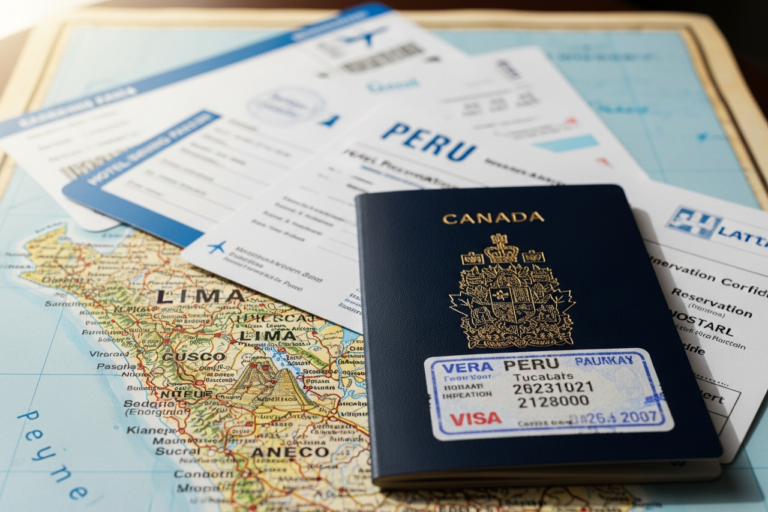
Canadian passport holders do not usually need a tourist visa for short visits for fun or rest.
-
You need to have a passport that will be good for at least six more months after you leave Peru.
-
Immigration officers will usually let you stay with no visa for up to 90 days when you get to Peru.
-
If your trip is not for tourism, like for work or study, you will need to apply for a different visa.
-
Make sure you always have your ID. Be ready to show proof you have plans to leave Peru, and that you have enough money for your trip.
-
Look for the most recent travel advice and health rules before you fly.
Introduction
Are you looking to see the old sites at Machu Picchu or walk in the lively streets of Lima? Peru has a lot for you to do and see. The good news is, it is easy for Canadian travellers to get there. In this guide, you will find the travel information you need. It will help you know about entry requirements and visa requirements for your trip to Peru. When you know these things before your trip, you can plan well. You can enjoy your time in Peru and get back home with great memories.
Overview of Visa Requirements for Canadian Travellers to Peru
Planning a trip to Peru means you need to know the entry rules from the Ministry of Foreign Affairs. If you are one of the foreign nationals, the visa requirements depend on your country of origin and why you are visiting.
If you are Canadian, things are easier when you go for tourism. The process is simple. Here, we’ll talk about entry rules, how long you can stay, and how your travel purpose may change what you have to do.
Do Canadians Need a Visa to Enter Peru?
The simple answer for most Canadian travellers is no, you do not need a visa to visit Peru as a tourist. Peru lets people from Canada, and many other places, come in for tourist purposes without getting a visa first. This rule sure makes it easy to make plans for a trip to this beautiful country in South America.
This visa exemption is there because Peru wants more people to come and see the country. When you get to Peru, the immigration officer will put a stamp in your passport to let you in. You need to know that this rule is for tourism only.
If you want to go to Peru for other reasons, like business, work, or to study, the visa requirements change. Then, you will need to get a special visa at a Peruvian consulate in Canada before your trip, and this visa-free rule does not cover those other reasons. It is set up for tourist purposes only.
Duration of Stay Permitted Without a Visa
When you go into Peru as a Canadian tourist, you are usually given a stay of up to 90 days. This is not for sure. The last call about how long you can be in the country is made by the immigration officer where you enter. The officer will put a stamp in your passport. The stamp will have the number of days you are allowed to stay.
Be sure to check the stamp. The number you see is your real, legal stay limit, not always the full 90 days. The Peruvian ministry of foreign affairs makes these entry requirements, and if you go past your allowed time, there can be fines.
Plan your trip, including your return flight, to fit the time given at entry. If you do not know how long your stay is, talk to the immigration person right away before you leave their desk. This way, you can stop any problems before they come up later.
Purpose of Visit and Its Impact on Entry Requirements
Your reason for going to Peru can change the entry requirements. Visa-free entry is for Canadians who travel for tourist purposes only. This covers things like sightseeing, outdoor activities, visiting archaeological sites, or having some fun. If that matches your plans, you just need your valid passport.
But, if you want to do more than that, different rules come into play. For business, like signing contracts or going to meetings, you need to get a business visa. The process for a business visa is more detailed and asks for more information.
If you are looking to volunteer, study, or work, you need special permits or visas. Doing any of these things on a tourist entry is not allowed under Peruvian law. You could face fines or be sent back home. So, make sure you get the proper visa for your visit and check the entry requirements before you go.
Essential Travel Documents for Entry into Peru
Having all your documents ready is the key to making entry into Peru smooth. Canadians do not need a visa for a short visit, but you still need to show some important papers at the border. Your passport is the most vital document, but you will need more than that.
Be sure to get everything you need before you leave. Making sure the paperwork is in order will help you avoid problems when you get there. You need to check your passport and show proof of your travel plans. Each of these is part of the entry requirements for Peru. Here is what you need to prepare.
Validity Requirements for Canadian Passports
Your Canadian passport is the most important thing you need when you travel. It must also be valid. To go to Peru, your passport has to be good for at least six more months from the day you arrive. This is a strict rule. Many airlines will not let you get on the plane if you do not follow this rule.
Before you book your flight or make any travel information set, make sure you look at when your passport ends. If it will run out in less than six months from the date you want to enter Peru, you have to get a new one. There are no exceptions here.
Also, be sure your passport has at least one empty page for stamps. People at immigration need this space to stamp when you come in and when you go out. If your passport is old, full, or not in good shape, it can cause big problems with your trip.
Additional Documentation for Tourists
A valid passport is a must, but sometimes immigration officers in Peru may ask for more documents. They want to check why you are coming and what you will do in the country. If you bring this information, you can avoid delays at the airport. Think of these papers as proof that you are a tourist.
It’s a good idea to have proof of your travel plans ready. This shows you plan to leave Peru in the right amount of time. These are not always asked for. Still, it’s smart to carry them just in case.
Here are some extra documents you should bring:
-
A return or onward ticket that shows when you will leave Peru.
-
Hotel booking papers or a letter if you will stay with someone.
-
Proof that you have enough money while you are in Peru. You can show a new bank statement.
-
A booking paper for a tour package if you are travelling with a tour operator.
Custom Forms and Arrival Declarations
When you arrive in Peru, you need to fill out customs forms. These are regular parts of the entry process. The forms help you let Peru know about any goods you bring with you. Usually, the airline gives you these forms on the plane before you land, so you have time to complete them.
You must say if you have things that go over the duty-free limit. This can be cash, work equipment, or something like food and plants. Peru is strict about what you bring across the border. These rules are protect the country’s economy and nature. Fill out your customs form honestly and fully so you don’t have trouble at the checkpoint.
If you bring things for your personal use, like a laptop, camera, or clothes, you do not have to declare those. If something could look like you want to sell it or use it for work, declare that. If you don’t, you could get a fine or lose the items.
Understanding Peru’s Entry Process for Canadians
Knowing what to expect when you get to Peru can help make crossing the border less stressful. When you enter by plane or over land, you will meet with immigration officers. They are the ones who check if you follow the country’s entry rules. The whole experience can be smooth if you are ready.
The steps are usually clear and easy for Canadians who travel as tourists. Still, what you need to do can change a bit based on how you arrive. Let’s talk about what happens with immigration officers if you fly in or come by land and what you can expect when you reach customs.
Arriving by Air: Immigration Steps
When you get off your international flight in Peru, the first thing you do is head to the immigration hall. This is where you need to go before you can get your bags. At this stop, you join the line and wait for an immigration officer to call you. Make sure you have your passport and any papers you need ready.
The officer will look at your documents and ask you some questions about your trip. They will tell you how long you can stay in Peru. When they are happy with your answers, they will stamp your passport. The stamp gives you the legal right to be in the country, so take a quick look to make sure everything is right on it before you leave the desk.
The main steps at airport immigration in Peru are:
-
Show your valid Canadian passport and any forms you filled out before arrival.
-
Answer questions about why you have come to Peru and how long you plan to stay.
-
Get your entry stamp. This stamp sets the length of stay you are allowed in Peru.
Entering Peru via Land Borders
If you are going through South America and plan to go into Peru by land border crossings, the process is not the same as going in by air. You need to get both an exit stamp from the country you leave and an entry stamp from Peru. So, make sure you go from one area to the next only after getting each stamp.
At land border crossings, it’s your job to find the immigration office. Sometimes, the office is not easy to spot, and your bus may not stop for you. You should get out and go by yourself to the immigration window so you get your passport stamped.
If you do not get a proper entry stamp, real trouble may happen. You could be in the country without papers, which might lead to fines and problems if you try to leave later. Always check that you have the right stamp after all border crossings before you keep going on your trip.
What to Expect at Customs Checkpoints
After you finish with immigration, you will pick up your bags and go to the customs area. At this spot, you need to give your customs form that you have filled out. Peru has a red light and green light system. It is used to check bags at random. If you see a green light, you can walk through and no one will check your things. If you get a red light, your luggage will be X-rayed or looked at by hand.
You need to watch what you bring into the country. Some things, like fresh fruits and vegetables, animal products, and some medicines, have rules. You must say if you are bringing these items. This helps stop bugs or sicknesses from coming in.
If you bring over US$10,000 cash, you have to say so. If you bring your own medicine, it is good to have a note from your doctor with you. Following these steps helps you get through customs quickly and without trouble.
Types of Visas Available for Canadian Passport Holders
Canadians can go to Peru for tourism without a visa, but sometimes, you may need a formal visa. The Peruvian government has different types of visas. The kind you need will depend on why you are going. It is important to apply for the right visa. This helps you follow immigration rules and avoid trouble.
You should pick your visa based on what you plan to do in Peru. If you want to do business, study, or do any other special activity, there is a visa from the Peruvian government for that. Let’s look at the main options for people from Canada who hold a passport.
Tourist Visa Explained
For Canadian citizens, the idea of a tourist visa is simple. You do not have to apply for one before you go. When you arrive, you get visa-free entry for tourism. This works like a tourist visa. The immigration officer gives you a stamp in your passport. The stamp is often called a free visitor permit stamp. You can stay for up to 90 days.
This entry is for travel and fun only. It does not let you work, study, or do any paid job. To enter, you need a valid passport, a ticket to leave the country, and enough money for your trip.
If your country asks you to get a tourist visa to enter Peru, then you have to apply at a Peruvian consulate. You must fill in an application form, show your passport, photos, your travel plans, and proof you have enough money for your stay.
Business Visa Options
If you want to do business in Peru, you cannot go on a tourist entry. You need to get a business visa. This kind of visa is for people who want to do commercial, company, or money work in the country. You do not get paid by any Peruvian company with this visa. Some examples are if you are in Peru to have meetings, talk about contracts, or check out some chances to invest.
To start the process for a business visa, you have to send your application to a Peruvian consulate in Canada. The normal things you will have to show are a letter from your boss about why you should be in Peru, your valid passport, and names of your contacts there.
The business visa will make sure that the ministry of foreign affairs knows you will be doing legal activities in the country. It allows you to be in Peru for a short time, but it will not let you become a resident or let you work for a business in Peru. You should check the entry requirements with the ministry of foreign affairs before you travel.
Other Short-Term Entry Visas
Peru does more than just give tourism and business visas. There are other short-term visas and special permits that you can get for different reasons. These are for people who visit Peru and have plans that do not fit with the normal categories. If you want to do more than seeing places, you should check if you will need one of these other permits or visas from the ministry of foreign affairs.
These visas and special permits are for many things. Some are for journalism, playing music or acting, doing volunteer work, or short-term classes. Every visa comes with its own entry requirements. The way you apply and what documents you need can also be different. It is important to complete everything with the ministry of foreign affairs before you leave for your trip.
Here are a few examples of other short-term visas or special permits:
-
Student Visa: For people who sign up with a school or college in Peru.
-
Work Visa: For those who get a job with a company in Peru.
-
Special Permits: For activities like journalism, filmmaking, or helping people in a humanitarian way, which need a green light from the ministry of foreign affairs.
If you want to do any of these activities, make sure that you follow all the entry requirements and get approval from the ministry of foreign affairs before you go to Peru.
How to Apply for a Peruvian Visa in Canada
If you plan to travel and need a visa, like for business, school, or a long stay, you have to go through the official steps in Canada. The Peruvian consulates manage this process. They make sure you meet all the visa requirements set by the ministry of foreign affairs.
To apply, you must get certain papers together, fill in some forms, and you might need to go for an interview. If you understand these steps, you can get ready and make your application strong. Here is a guide to help you go through the visa application process while in Canada.
Step-by-Step Application Process
Applying for a Peruvian visa from Canada is done in a few clear steps. First, you need to find out which visa is right for your trip. When you know the one you need, you should start to get all the needed papers as asked for by the Peruvian consulate.
Next, go to the consulate’s website and find the visa application form (DGC 005). Download it, then fill it out in full and make sure what you write is correct. After filling in the form, set up a time to meet at the consulate. At the appointment, you will give them your papers and have an interview.
The general steps to apply are:
-
Find the visa type you need for your travel.
-
Get and fill out the visa application form.
-
Collect the needed papers.
-
Make an appointment and go to the consulate for your interview.
-
Pay the fee for your application.
Where to Submit Your Visa Application
You must go in person to a Peruvian consular office in Canada to hand in your visa application. Peru has its embassy in Ottawa. There are also Consulates General in Montreal, Toronto, and Vancouver. You need to apply at the right consulate for where you live.
You should check the consulate’s rules before you go. Some offices do things in their own way, so steps might be a bit different from place to place. The consulate’s website is where you get the right information about things like when they are open, how to book a time, and how you can reach them.
Don’t mail your application unless they tell you to do so. Most people will need to show up in person, especially if they need to do an interview. The consul will use this meeting to make sure you are who you say you are and may ask you questions about your application and trip plans.
Required Documents for Visa Applications
When you want to get a Peruvian visa, you must give a set of usual documents. You also need other papers that have to do with the type of visa you ask for. Giving these documents does not mean you will get a visa right away, because each person’s application is looked at on its own.
The consulate might ask for more details or extra documents while you make your application. It is very important to give full and correct travel information. This will help to avoid being late or having your application turned down. You should always look at the consulate’s website to see the latest entry requirements.
For most visa applications that are not for a tourist visa, you need to give:
-
The visa application form (DGC 005) that is filled out.
-
A passport that is good now and your Canadian Permanent Resident Card, if you have one.
-
Two photos in colour (passport-size).
-
Proof that you have enough money, like bank statements from recent times.
Fees and Processing Times for Peru Visas
When you apply for a Peruvian visa, you need to know the costs and how long the process might take. Visa fees and processing times change based on the type of visa you want. The consulate where you apply can also change how much it will cost and how long it takes.
It is smart to plan ahead. This helps you stay on top of your travel budget and timeline. Let’s talk about the usual fees you might pay and the time it could take for your visa to be ready.
Breakdown of Visa Application Fees
Visa application fees are a standard part of the process and cover the administrative costs of reviewing your application. The fees are set by the Ministry of Foreign Affairs and are typically paid in Canadian dollars at the consulate when you submit your application.
The cost varies depending on the type of visa. For example, a tourist visa (for those nationalities that require one) has a different fee than a business visa. These processing fees are non-refundable, even if your visa application is denied.
Here is a sample breakdown of fees based on information from the Consulate General of Peru in Montreal. Note that these are approximate and you should always confirm the current fees with the consulate. The currency is listed in “Consular Soles,” which is roughly equivalent to one US dollar.
|
Visa Type |
Approximate Cost (Consular Soles) |
|---|---|
|
Tourist |
30.00 |
|
Business |
30.00 |
Typical Processing Timelines
Knowing how long the Peruvian visa process takes can help you plan your trip better. Once you send in your complete application, the consulate will start reviewing it. The time it takes can depend on the type of visa, how hard your case is, and how busy the consulate is.
It is a good idea to apply for your visa early and not leave it to the last minute. You should start the process a few weeks or even a month before you want to leave. This way, you can handle any delays that may come up.
There is no one set timeline for all cases. Most consulates say that the process can take a few business days or even a few weeks. The best thing to do is to check with the Peruvian consulate where you are applying. They can give you the current wait time.
Expedited and Emergency Visa Requests
In some urgent cases, you might need a visa sooner than normal. Some Peruvian consulates can do a quick visa for emergencies. This is not a usual option. Each request is looked at by the consular officer to see if it fits.
To ask for a faster process, you must give proof of the emergency. You might show a medical certificate or an official letter that explains why you need to travel now. The decision to give a quick visa is fully made by the consular officer.
This service is not for poor planning on your part. It is meant for an emergency that no one could see coming and is very important. If you lose your passport in Peru and need to get out, you need to talk to the Canadian embassy. They can help you with an emergency travel document. Canadian authorities handle this, and it has a different process.
Extending Your Stay or Changing Visa Status in Peru
If you fall in love with Peru and want to stay longer than you first planned, you can ask to extend your stay or change your visa type. But you need to follow the rules set out by peruvian law. If you do not follow these rules, there can be big penalties.
When you want to extend your tourist stay or change your resident status, you need to deal with Peru’s national immigration authority, called the Superintendencia Nacional de Migraciones. Here, you will find options to extend your visit, change your visa, and also learn about what happens if you stay past your allowed time.
Visa Extensions for Canadian Tourists
Not long ago, it was normal for a tourist to ask for more time to stay in Peru. But now, rules have changed and it is harder to get more days. Most times, you do not get extra time once you come in. The length of stay the officer gives you at the start is usually the final one.
It is best to plan your trip so it fits in the number of days given by immigration. This is often up to 90 days. The most you can stay in Peru as a tourist is 183 days each year. For this, you will need to leave and come back, but even then, there is no promise you will get a new stay.
If you must stay longer, here is what you can do:
-
Contact the Superintendencia Nacional de Migraciones in Peru.
-
Give a clear reason for why you need more time.
-
Know that you might not get approval, and the rules could change.
Requirements for Changing to Resident Status
If you want to live in Peru for a long time, you have to ask to change your immigration status from being a tourist to being a resident. This is a long and sometimes hard legal process that you should start well before the time you are allowed to stay runs out. You are not allowed to work or live in Peru for good while you are on a tourist entry.
To ask for resident status, you first need to be approved for a certain type of residency. Some reasons are work, study, or family. There is a long list of things you need for each type. You may need a job contract, proof you got into a school, or a marriage paper if you are married to a person from Peru.
You must give your documents in person to the Superintendencia Nacional de Migraciones in Peru. There will be a lot of forms, checks into your past, and fees. It is a good idea to get help from a lawyer who knows the rules in Peru about immigration to follow peruvian law and to help you file your application the right way.
Overstay Penalties and Consequences
If you stay in Peru longer than you are allowed, you break Peruvian law. There are penalties for this. If you are in the country past the date the stamp in your passport says you should leave, you will get a fine for each day you overstayed.
You must pay this fine before you can go. You pay the total amount, all at once, when you are at the airport or border while leaving. If you do not pay, you could be stopped from leaving Peru until everything is paid up.
Besides having to pay, staying longer than you should can also affect your future plans. An overstay goes on your record with immigration. Later, if you want to come back to Peru, you could be refused entry. It is better to follow the entry requirements and leave when your allowed time is finished to avoid trouble with Peruvian law.
Special Considerations for Canadian Families and Children
Travelling to Peru with your family is a great way to make memories together. But, you need to be ready and plan ahead, especially if you have kids with you. The entry requirements for minors are often tougher because they help stop international child abduction.
You should know about these rules before you go. When you understand the travel information about needed papers for children and get tips for family travel, the entire trip will be easier. Be sure you have what you need for your children, and you will leave and come back with less stress.
Entry Requirements for Minors
When you travel to Peru with children who are under 18, you need to follow some entry requirements. The child must have a valid passport, just like the adults. A child can not share a passport with anyone else. Make sure the child’s passport is good for at least six months from when you enter the country.
You may also be asked to show other papers by immigration staff. They need to know how the child is linked to the adults who are with them. This is normal and done for safety reasons. It is a good idea to bring a copy of the child’s birth certificate that has both parents’ names on it.
These entry requirements are there to keep the children safe. If you have the right papers, it shows you are allowed to travel with the child. This helps your family go through immigration faster and makes travel easier for everyone.
Documentation for Children Traveling Without Both Parents
If a minor is with only one parent or with an adult who is not their parent or legal guardian, you will need extra paperwork. Peruvian authorities are very careful about this to help keep kids safe from child trafficking.
You need a letter that gives permission for the child to travel. The parent or parents who are not with the minor must sign this letter. It’s best if the letter is notarized so you can show it is real.
For a smooth trip, bring these documents:
-
The child’s valid passport.
-
A copy of the child’s birth certificate.
-
A notarized consent letter from the parent or parents who are not with the child.
-
If it applies, a copy of a death certificate or court order that shows you can travel with the child alone.
Tips for Family Travel to Peru
Travelling in Peru with your family can give you a great adventure. The trip can be even better if you follow a few easy tips. The high altitudes in cities like Cusco may affect children more than adults. It is best to let everyone get used to the height slowly. Drink lots of water and try to take it easy for the first few days.
When it comes to food and water, be careful. Use bottled water at all times. Be careful with street food, mostly for the younger ones. It is smart to bring a simple medical kit with you. Put in things for upset stomachs and travel sickness.
To help your family trip go well:
-
Pack layers of clothes because the weather can change fast, mostly in the Andes.
-
Keep copies of any important papers away from the originals.
-
Learn about local laws and make sure that you have phone numbers for local authorities and the Canadian embassy.
Health, Vaccination, and Insurance Requirements
Staying healthy when you travel is very important. Before you go to Peru, you have to know the health risks, the vaccines to get, and the insurance you need. Getting ready like this will help you not get sick. It also makes sure you can get care if you need it.
You should get vaccines like yellow fever. You also need to have good travel insurance. This is a big part of planning your trip. Let’s look at what you have to do the right way, so you stay well while you are in Peru.
Vaccinations Needed Before Departure
It is always good for you to stay up-to-date with routine vaccines before any trip outside the country. If you are heading to Peru, make sure you talk to a travel health clinic or your doctor. Try to do this at least six weeks before you go, so you can discuss what you need for your trip.
The most important vaccine to think about is yellow fever. You do not need it for entry everywhere in Peru, but proof of the yellow fever vaccination might be needed if you come from a place where yellow fever spreads. You should strongly consider it for places like Madre de Dios, as well as other Amazon jungle regions.
Some main health steps to take are:
-
Talk to a travel health specialist so you know which vaccines to get.
-
Think about the yellow fever vaccine, especially if you are going to jungle areas.
-
Watch for the latest travel health notices for Peru to stay up-to-date on any new health risks or changes.
Health Checks on Arrival
When you get to Peru, you may need to go through health checks. This can happen more often during big health emergencies. The people in charge might use thermal scanners to see if you have a fever, or they might ask you to fill out a health form. These steps are here to stop the spread of any serious illness.
Be honest about how you feel when you get there. If you do not feel well, tell an official. This helps to keep you and everyone in the local community safe. The quality of care is often good in private hospitals in large cities, but in rural areas, it can be limited.
It is best to get ready for your trip so you can stay healthy. If you have health problems already, bring a note from your doctor. Also, make sure you have all the medicine you need for your whole trip. This will help you take care of your health the right way when you are far from home.
Travel Insurance Recommendations for Peru
It is not a rule that you must have travel insurance to enter Peru, but it is a good idea to get it before your trip. Your Canadian health plan does not cover you when you are outside Canada. If you get sick or hurt while you are in Peru, the cost for medical care can be very high. If you have travel insurance, it helps pay for these things and can save you a lot of money.
You should make sure your policy covers more than just trip cancellation. It needs to pay for medical emergencies, days in hospital, and most important of all, for medical evacuation. If you get hurt or sick in a far-away spot, like on the Inca Trail, you might need to be flown to another place to get the right medical attention.
Read what is in the policy before you buy it. Look for any parts that are not covered. This is very important if you want to do things like trekking on the Inca Trail or going into the Amazon. Getting the right travel insurance is a good choice for anyone going on a trip like this.
Travel Advice, Safety Information, and Current Advisories
Keeping up with news is important for a good and safe trip. Before you go to Peru and while you are there, make sure to check the latest safety updates and travel warnings. This can help you stay out of trouble and make better choices.
You should know about local laws and who to call if something goes wrong. Being ready will help protect you. We will go over safety tips, where you can find Canadian government advisories, and share key contact details for your trip.
Current Safety Conditions in Peru
Peru is seen as a safe place for tourists, but you need to be careful, like in any country. In busy urban areas and tourist spots, there may be petty crimes. People could pick your pocket or snatch your bag. It is wise to keep an eye on your things, know where you are, and not show off wealth—don’t wear fancy jewelry or carry a lot of cash.
Violent crime can happen. There may be armed robbery, and in some cases, sexual assaults. Try not to walk alone at night, mostly outside the tourist areas or in rural places. It’s better to use trusted transportation and be careful if you use public transportation.
Political or social issues can cause protests and roadblocks. These can stop your travel plans. It’s smart to watch the local media and listen to what local authorities say. If you learn about local laws and common rules, your trip will be safer.
Canadian Government Travel Advisories
The Government of Canada gives travel advisories for many countries. Before you go to Peru, you should look at the latest advisory. This info tells you about safety issues, health worries, and entry requirements.
The advisories are sorted by risk level. There may be special warnings for some remote areas in Peru. Some of these places can be more risky because of illegal activities or because there is not enough infrastructure. The info is mainly for Canadians, and it is different from what you get from the US Department of State.
You can sign up for the Registration of Canadians Abroad service. This lets the government contact you if there is an emergency in Peru or at home. The service is free and gives you extra safety when you are out of the country.
Essential Emergency Contact Information
Having the right contact details with you is very important if there is an emergency. Before you go, make a list of key numbers. Keep one copy with you and give another to a family member at home. Your list should include local emergency services and Canadian consular support.
In Peru, call 105 to reach the police. Please note, if you are in rural areas, they may not arrive fast. If you lose your passport or have a serious medical problem, you need to call the Embassy of Canada in Lima.
Here are the main numbers to keep:
-
Police: 105
-
Embassy of Canada in Lima: Give their phone number and address.
-
Your travel insurance company’s 24/7 emergency phone number.
Conclusion
To sum up, it’s important for Canadian passport holders to know the visa requirements and how to enter Peru before they travel. Make sure you find out if you need a visa and what documents you have to take. You should also be aware of any health steps that need to be done. If you get ready before you go, your trip can go well without problems. Think about the different kinds of visas and how to apply for them. This way, you won’t face stress at the last minute. With the right details, you will feel good about visiting Peru and can enjoy all the culture and sights. If you want to get started on your trip, you can get a free consultation to help you with planning.
Frequently Asked Questions
What should Canadians do if they lose their passport in Peru?
If you lose your passport in Peru, report this to the local Peruvian authorities right away. You will need to get a police report. After that, contact the Embassy of Canada in Lima. They can help you apply for an emergency travel document so you can travel back to Canada.
Can Canadians work or study in Peru on a tourist entry?
No, you can’t work or study in Peru if you are there on a tourist entry. The visa-free entry Canadians get is just for tourism. If you want to work or study, you have to get the right work or student visa before you start. This is required by Peruvian law.
Are there any restricted items Canadians cannot bring into Peru?
Yes, Peru does not let you bring in some things. You can’t take in fresh fruits, vegetables, or unprocessed animal products unless you have the right papers. The country also has rules about how much cash, alcohol, and tobacco you can have. Things that are for your personal use are usually okay. But if you are not sure about something when you get to customs, you should say so.