Key Highlights
-
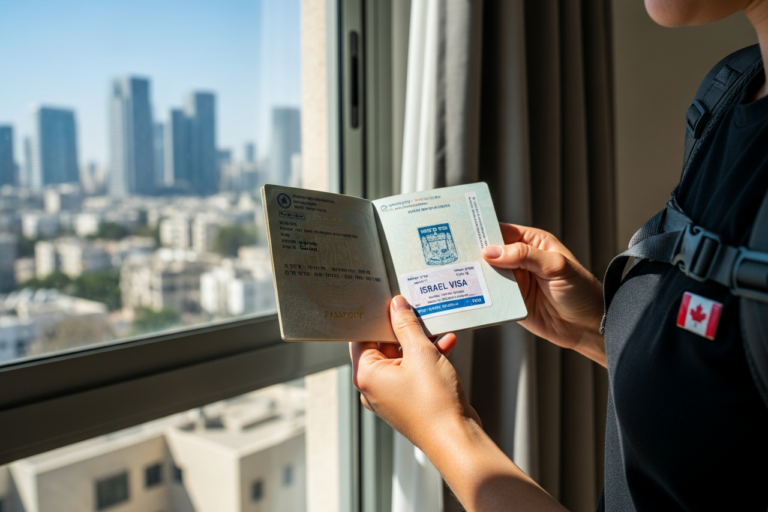
If you have a Canadian passport, you do not need a visa for tourism in Israel if you stay up to 90 days.
-
Israel is starting a new Electronic Travel Authorization (ETA-IL) system. Canadian travellers will need to get this travel authorization soon.
-
If you want to stay in Israel for more than 90 days or if you plan to work or study, you must apply for an Israel visa.
-
The Embassy of Israel in Canada will look at your visa application if you want to stay longer or if you have special reasons for your trip.
-
You should know about the entry requirements at each border crossing, especially if you will come from Arab countries near Israel.
-
Always look up the most recent travel advisories before you plan your trip.
Introduction
Are you thinking about a trip to Israel? This guide will help you as a Canadian traveller with the visa process. No matter if you want to visit Jerusalem for a special trip, enjoy the city life in Tel Aviv, or see the nice views in Haifa, it’s important to know the entry rules. The guide shares clear information on things like if you need a visa as a tourist or what papers you have to have if you plan to work or study. You will find general information here to help you feel ready for your trip. We have put together everything you need to know from the embassy of israel. This way, your journey can start out right with all the facts you will need.
Understanding Israel Visa Requirements for Canadians
For most people from Canada, the entry requirements for Israel are simple. Because of a visa exemption agreement, you can go to Israel for a holiday without getting a visitor visa ahead of time. This makes it much easier to plan short trips.
But this agreement does not cover every case. If you want to travel for other reasons, or if you plan to stay longer, you will have to get a visa. The Ministry of Foreign Affairs in Israel sets all the entry rules. It is a good idea to check which rules fit your travel plans. We will talk more about these details next.
Who needs a visa to visit Israel from Canada?
Most people with Canadian passports don’t need a visa for short tourist stays in Israel. This visa exemption makes planning your trip easier if you just want a holiday for up to 90 days.
But things change if you want to work, study, volunteer, or live in Israel for longer than a short visit. You will have to get the right visa from Israeli authorities before you go.
If you have an israeli passport or dual citizenship, there are different rules. Also, if you have Canadian citizenship but do not use standard travel documents, you may need a visa. It is always best to check your travel status with the nearest Israeli consulate.
Visa exemption rules for Canadian travellers
The visa exemption for Canadian passport holders is a good thing for people who want to visit Israel. The Government of Israel lets you stay in the country for up to three months without a visa. This rule helps people who want to travel there. It makes it simple to plan and go for a short trip. When you arrive, you just need to show your valid Canadian passport.
This is only for tourism reasons. You are not allowed to do any work, paid or unpaid, or start any formal study with this exemption. The workers at the border have the final say if you can get in or not. They may want to know the reason for your visit.
There are travel restrictions now and then. Things can change because of world events or new government of Israel rules. So, be sure to check official information before you leave for your trip. This way, you will know of any changes in policy, and your entry should be smooth.
ETA-IL system for Canadian passport holders
Israel is bringing in a new system for people who want to visit, called the Electronic Travel Authorization, or ETA-IL. This is not the same as a normal visa, but you do have to fill this out online before your trip if you are coming from a country that does not need a visa, like Canada. The ETA-IL works kind of like a permission slip for you to get on a plane and go to Israel.
Soon, everyone with a Canadian passport will have to get this travel authorization before they go. You will need to fill in an application form online. You have to share some of your personal and travel details when you do this. The reason for this system is to let Israel make sure it is safe by checking people ahead of time.
This ETA-IL is a lot like the ESTA that people need for the United States, or the eTA used by Canada. When your application is approved, your travel authorization will link right to your passport. It is a key step when you plan to go, so you should not wait until the last minute. Make sure you finish and send off your ETA-IL application form well before your flight.
Special cases for non-ordinary passports
People with a regular Canadian passport can travel to Israel for tourism without a visa. But if you have a non-standard passport, you may face different rules. Israeli authorities often want to check these travel documents in more detail. It is important to find out the entry requirements for your type of travel documents before you make any plans.
Some people travel on special passports like a diplomatic or official passport. There can be other rules for these passport holders. The departments of foreign affairs usually set these up by talking to other countries.
If you have one of these documents, you need to reach out to the Embassy of Israel to get the right advice:
-
Diplomatic passport
-
Official passport
-
Other non-standard travel documents
If you do not check the entry requirements for your travel documents, you could be stopped by Israeli authorities and not allowed to enter. Always make sure you know your visa status before you book your trip. This way, the embassy of Israel can help answer questions about foreign affairs and entry requirements.
Types of Israel Visas Available for Canadians
When you plan to stay in Israel for longer than a short trip, you need to look at the different visa types that the country offers. If you are a Canadian citizen, you must apply for the right visa type for your reason to visit. This could be for business visits, study, or work.
Each visa type has its own rules. They allow different things, from a short business trip to a longer temporary residence. It is key to know about these before you start your application. Next, we talk about some visa types you can get.
Tourist visas for Canadians
Most Canadians do not need to get a tourist visa ahead of time. When you arrive, you get a visitor permit that lets you stay for up to 90 days. This makes it easy to plan your trip to see old sites and new cities.
If you want to stay for more than three months as a tourist, you must ask for an extension or apply for a tourist visa. You can do this at the embassy of israel or at a Ministry of Interior office in israel.
To get an israel visa for a longer tourist visit, you have to give a good reason for your stay. You also have to show you have enough money to live without working. A normal entry permit will not allow you to earn money in israel.
Student visas for Canadian applicants
If you are a Canadian and you got into an Israeli school, college, or yeshiva, you need to get a student visa (A/2). This visa is for foreign nationals who want to study in Israel at a place that is approved. You cannot use just a regular tourist entry pass for your studies.
To start your application, you need to give some things. You need an acceptance letter from the school. You also need to show proof that you have enough money. You will fill out the visa application form as well. This visa lets you stay in Israel while you study. It is usually good for up to one year, but you can ask to have it for longer if you need.
You should start applying early before your program starts. If your spouse wants to come with you, they can apply for an A/4 visa for family. The latest rules say that if you travel together with your spouse, you and your spouse might not need earlier approval from the Ministry of Interior.
Work visas for Canadians
To get a job in Israel as a Canadian citizen, you need to have a B/1 work visa. The Israeli authorities say this visa is a must for any foreign workers who want to do paid work in the country. You cannot use a tourist visa or an entry permit to work in Israel.
Your future boss in Israel will usually start the work visa process for you. They have to apply for a work permit for you with the Israeli authorities. After it gets approved by the Ministry of Interior, the consulate puts the B/1 visa in your passport.
Getting the work visa takes a lot of time and you will need to work closely with your employer and government offices. The work visa is good for the length of your work contract. If you want to change jobs, you have to apply for a new visa.
Family visit visas
If you are a Canadian and you want to visit your family for a short time, you can use the 90-day tourist visa exemption. But, if you plan to stay longer with family members, you might need to get a specific visa. This is important for those who want to stay with relatives who are not Israeli citizens, but live in Israel for work or school on a temporary residence basis.
If you have immediate family members who hold some types of temporary residence permits, you might be able to get an A/4 visa for dependents. This visa is made for spouses and children who are still minors. It lets them live in Israel along with the main visa holder.
To apply, you need to show proof of your family relationship. This could be things like a marriage certificate or a birth certificate. You also need papers that show the main person living in Israel can provide for the family members who want to come. This step helps make sure that families can be together in Israel for a longer time when needed.
family members, tourist visa, temporary residence, visa exemption
Religious purpose visas
Canadians going to Israel for religion reasons, like if you are a member of the clergy on duty or someone joining a monastic group, must get a special religious visa (A/3). This israel visa is not the same as a regular tourist permit, even if you plan to visit religious places.
The religious group in Israel that wants you there will start the application for your A/3 visa. They need to send an invitation to the Ministry of Interior for approval. After the approval, you can finish your visa forms at the embassy of israel in Canada.
This visa shows that you have an official, long-term religious job to do in Israel. The A/3 visa is not for people who are just pilgrims or tourists visiting holy places. They can usually come in without a visa for up to 90 days under the visa exemption.
Visa Application Processes for Canadians
When you plan to get a visa for Israel that is not just for tourism, you need to know the steps for applying. The first thing to do is to find out which application form fits your visa type. Make sure you gather the needed papers.
The Embassy of Israel in Canada and their consular services will help you. You can apply online or go in person. Each way has its own things you have to do. Here is how you can go through these steps and get your visa.
Applying for an Israeli visa online
For some visa categories, you can do an online application, which can be easy and good. With this electronic visa process, you are able to send in your details and other files over the internet. The new ETA-IL system is also a fully online application.
First, go to the official website from the Israeli Ministry of Foreign Affairs or the right visa application centre. There, you will see the digital application form you have to fill out. You will have to upload clear, scanned copies of your documents with your form.
The general online application process usually looks like this:
-
Filling out the right online application form and making sure all answers are correct.
-
Uploading digital copies of every required supporting document.
-
Paying your visa fee with the online portal.
Once you send your application, people will check it, and they will let you know their choice by email or online.
In-person visa application at consulates
For many long-stay visas, like those you need for work or study, you will have to go in person to submit your visa application. You can do this at the embassy of israel in Ottawa or the consulate general of israel in Toronto or Montreal. The place you go to depends on where you live.
You will often need to book your appointment ahead of time. When you get there, a consular officer will check your papers, and they may ask you some questions about why you are going to Israel. This face-to-face meeting is normal for long-time stays.
Going in person makes sure all your paperwork is done right. It also lets the embassy of israel or the consulate general of israel check your original documents. Even though this may not be as easy as doing it online, it is an important part of making sure your visa process for work or study is fair and correct.
Required documents for Israel visa
No matter if you apply online or go in person, getting the right travel documents is the most important part of your application form. Even though you may need different things for each visa type, there are some papers you will almost always have to show. The key parts of your application are a filled-in and signed application form and your passport.
Your Canadian passport should be good for at least six months after you plan to leave Israel. Along with your passport, you will also need to show some other things that explain why you want to go. For students, this could be an acceptance letter. For workers, it might be an employment contract.
Most of the time, you have to show these travel documents:
-
A completed and signed visa application form.
-
A Canadian passport that has at least two blank pages and is still valid.
-
Two new passport-size photos.
-
Proof that you have enough money for your visit.
-
Details about your flights and where you will stay.
You should always check in with the embassy’s website to see exactly what you need for your visa type.
Fees and payment process
Every visa application has a fee that you cannot get back. The amount will be different for each type of visa. Before you start, check the right fee on the official embassy or consulate website.
How you pay may change if you apply online or in person. Most online systems let you use your credit card. If you apply in person, you might need to use a certified cheque or money order. Cash is usually not taken to keep it safe. You must also give proof of funds, like a recent bank statement, to show you can take care of yourself while you visit.
Key points about fees and payment:
-
Visa fees cannot be refunded, even if you do not get the visa.
-
The fee will change based on the visa type you want.
-
Look at what payment methods the consulate or centre takes.
Many people get delays because they pay the wrong way. Be sure to follow all instructions to avoid problems.
Electronic Travel Authorization (ETA-IL)
Israel is starting a new pre-travel check called the Electronic Travel Authorization, or ETA-IL. This is needed for people from visa-free countries, like Canada. It is not an israel visa, but it is a must-have travel authorization before you get on a plane to Israel.
The ETA-IL is made to help improve security by checking travellers before they come in. This electronic tool helps make getting into the country easier at the border. In this, we will look at who is eligible for the ETA-IL and how you can get and use this travel authorization.
ETA-IL eligibility for Canadians
If you are from a country that does not need a visa, you will find that Canada is on the ETA-IL program list. This means, if you have a Canadian passport and want to go to Israel for a vacation or for business visits that last up to 90 days, you must get an ETA-IL before you leave. You need this even if you do not need a regular visa for these short visits.
You are able to get the ETA-IL because you are a Canadian citizen and you want to take a trip for vacation or work reasons. This is set up for trips that do not last long. If you hope to work or study in Israel for a longer time, you need the right visa and not the ETA-IL.
This new electronic visa is now a must-have part of travel. If you do not have an ETA-IL with you, airlines will not let you on the plane to Israel. So, be sure you read about what you need, and apply before your travel time gets close. This will help you have a good trip and no stress.
Applying for ETA-IL as a Canadian citizen
Applying for the ETA-IL will be an easy online process. If you are a Canadian citizen, you just need to go to the official ETA-IL application portal. The application form will ask for your personal information, passport details, and some details about your travel date.
It is a good idea to apply for your ETA-IL as soon as you know when you plan to go. This way, you have enough time before you travel. Even if processing time is quick, it is still better to apply early to avoid any problems right before your trip. You do not have to go to the embassy of israel for this.
To apply, you will need to:
-
Have a valid Canadian passport.
-
Fill out the online application form.
-
Give your travel date and contact information.
-
Pay the fee for processing with a credit or debit card.
After you get approved, the ETA-IL will be linked to your passport in the system.
Validity and limitations of ETA-IL
The ETA-IL travel authorization can be used for up to two years from the day you get it, or until your passport is no longer valid, whichever happens first. You can enter Israel many times within this time, so it works well for people who plan to visit more than once.
But there are some rules. Each visit with the ETA-IL can last only 90 days at most. The ETA-IL is for travel or business trips. It does not let you work or study in Israel.
You should know that even with an approved ETA-IL, you may not get in for sure. The border officers make the final call when you arrive. They will check if you meet all the entry requirements. You may have to answer questions about your trip, so always be ready.
Processing Timeframes and Status Tracking
Waiting for an Israel visa decision can make people feel stressed. Knowing the usual processing times will help you plan your trip better. The time it takes to get an Israel visa is not the same for everyone. It really depends on the type of visa you apply for and the place you apply from. Some visas are done fast, but some might need more time for deeper checks.
Many places now let you check your Israel visa application online. This can help you stay calm, as you will know what is happening with your paperwork. If you need your visa faster, urgent processing might be an option in some cases. Keep reading to find out about usual wait times and ways to follow your application.
Typical processing times for each visa category
The processing times for an Israeli visa can vary significantly based on the visa type and the complexity of the application. Simple applications submitted through the Embassy of Israel might be processed within a few weeks, while others requiring approval from the Ministry of Foreign Affairs can take longer.
For example, a student visa application that is straightforward may be processed relatively quickly. In contrast, a work visa, which requires coordination with an Israeli employer and government ministries, often has a much longer timeline. It’s crucial to apply well in advance of your intended travel date.
Here are some estimated processing times, though these are subject to change and can be affected by application volume.
|
Visa Type |
Estimated Processing Time |
|---|---|
|
ETA-IL |
A few hours to 72 hours |
|
Student Visa (A/2) |
2 to 4 weeks |
|
Work Visa (B/1) |
4 to 8 weeks or longer |
|
Family Visit Visa (A/4) |
2 to 4 weeks |
Always check the official consulate website for the most current processing time estimates.
Fast-track options and urgent visa requests
In real emergencies, you can try to ask for an urgent visa or faster processing. But the embassy of israel does not offer this to everyone. Only some people may get it if their case is serious and the embassy of israel says yes.
When you ask for your visa to be looked at quickly, you need to show strong proof that you have an emergency. You can give a medical paper or a letter that explains why you must travel right away. Just wanting to go on a trip or holiday sooner is not seen as a good enough reason for a fast visa.
To ask for an urgent visa, do this:
-
Contact the embassy or consulate and tell them your situation.
-
Give papers that show the problem and why it is an emergency.
-
Be ready to pay more money if they offer faster service.
The embassy of israel may still say no to your urgent request. So, you should only try this for real emergencies.
How to check Israel visa application status online
Yes, for many kinds of applications, you can look up your Israel visa application status online. If you used a visa application centre or an official online portal to apply, they usually give you a reference number or tracking ID.
You can use this number on the same website you used earlier. This lets you check where your visa file is at the moment. You can follow along, from the time you send in your form until you get a final answer. Doing this helps cut down some of the worry you get while waiting for your visa.
To check your status online, you will usually need to:
-
Visit the website where you sent in your application.
-
Go to the “Track Application” or “Check Status” section.
-
Type in your application reference number and your personal details, like your date of birth.
If you gave your application straight to the embassy of israel and there is not an online tracking service, you might need to reach out by email or phone for updates.
Entry Points and Border Crossings into Israel
Arriving in Israel is a big moment, and it’s best to know about the entry requirements ahead of time. If you come by plane to Ben Gurion Airport or cross a land border from another country, you will need to go through immigration and customs. These steps are mostly the same, but the way they feel can change based on where you enter.
Each way to get into the country has its own rules and security checks. Knowing what happens at the airport and what happens at a land border can help you and be useful for a smoother arrival. Here’s what you need to know about entry requirements and how you can enter Israel.
Airport entry procedures for Canadians
For most people in Canada, your trip to Israel will start at Ben Gurion Airport (TLV). This airport is close to Tel Aviv. When you get there, you will go to passport control first. There, the officials might ask you some questions. They may want to know why you are in Israel, where you plan to sleep, and how many days you will stay.
Israel usually gives you a small blue entry card called a B2 Stay Permit. They do not stamp your passport. You need to keep this card in your passport every time. You will need to show it when you leave Israel. You may also have to show it at hotels or different checkpoints.
When you get through passport control, you will pick up your bags and walk through customs. Every country has rules about what you can bring in. You have to read the customs instructions and pick the green or red line, based on what you have with you. The whole process is done in a good and professional way. It can take some time, so just be ready.
Make sure you remember that Ben Gurion Airport is near Tel Aviv.
Land border crossings and requirements
Going into Israel from Jordan or Egypt by road is something many people in the area do. The entry requirements you have to meet are the same as when you go in through the airport. But the way things work and the hours when the borders are open can change. The main border crossings are the Allenby/King Hussein Bridge with Jordan and the Taba border crossing with Egypt.
At these border crossings, it is good to know you may wait in long lines. The security checks are often strict, especially at the Allenby Bridge, as it is also used by Palestinians. There are usually entry and exit fees on both sides, so make sure you have some local money with you.
You should always look up the hours for your chosen border crossing ahead of time. This is because these border crossings may close on holidays or for safety reasons. You also need to see if the visa you have lets you go in at that crossing, since a few have rules about who can use them.
Accessing the West Bank and Gaza Strip
Travel to the West Bank is often okay for Canadian tourists. You do have to go through Israeli military checkpoints. Israeli authorities are in charge of entry and exit. You do not need a special permit most times to visit cities like Bethlehem or Ramallah. Make sure to carry your passport and Israeli entry card with you all the time.
The Gaza Strip is very different from the West Bank. The Government of Canada says you should not travel to Gaza because there is conflict and many risks. Entry and exit in Gaza is controlled by both Israeli and Egyptian authorities. It is very hard for foreign nationals to get in or out.
When looking at trips to these areas, keep these in mind:
-
You must go through Israeli checkpoints when you enter or leave the West Bank.
-
Travel to the Gaza Strip is very limited and you should not go there.
-
Always check the latest Canadian government travel advisories for updated travel restrictions.
Keywords: west bank, gaza strip, israeli authorities, travel restrictions, foreign nationals
Customs and immigration guidelines
When you get to Israel, you will go through checks run by immigration and customs. These steps are necessary for safety and to follow Israeli law. The people at immigration can decide if you are allowed to come in or not. This is true even if you already have a visa or ETA-IL. It is important to stay calm. Be nice in the way you speak, and always tell the truth.
The officers will ask about why you are visiting. You should get your paperwork ready. You may need to show tickets for your flight home, where you will stay, or how you will pay for your trip. It is a good idea to have enough travel and health insurance coverage since seeing a doctor in Israel can cost a lot.
A few main tips for entry :
-
Always answer questions from immigration in a truthful way.
-
Keep your passport and your permit with you all the time.
-
Say if you have things with you that you have to show for customs.
-
Make sure you have full insurance coverage for travel and health.
If you follow these, your entry into Israel should go well.
Accepted Travel Documents for Canadians
When you go to Israel, you have to take the right travel documents. For people from Canada, the main thing you need is your passport. The passport shows who you are and that you come from Canada. You must show this when you enter or leave.
Still, you should not bring just your passport. You may need other forms of ID or special travel papers, depending on your own needs. Let’s look at what your Canadian passport should have and the other travel documents you may need for your trip.
Valid Canadian passport requirements
The most important thing Canadians need for going to Israel is a current Canadian passport. The government of israel says your passport must stay valid for at least six months from the day you enter the country. If your passport runs out sooner, you might not be allowed to get on the plane or enter the country.
Before your trip, check your passport date. If it’s close to six months left, it’s best to renew it. Your passport should also have a blank page or two for stamps. Israel usually gives a separate entry card, but it’s still good to have space just in case.
This rule about having six months on your passport is strongly followed by the government of israel. The airline could stop you from boarding your flight if your passport does not meet what is needed. So, make sure your main travel document is all right to avoid problems with your trip.
Other acceptable documents for entry
Your Canadian passport is the main travel document you need for entry. Still, it is a good idea to bring other travel documents like another photo ID card, for example, your driver’s licence. This can help as a backup or in case you do not want to use your passport all the time.
If you are someone with a permanent-resident card from Canada but you have a passport from another country, then what you need to enter will be decided by the country you are a citizen of. Your Canadian residency does not matter for entry requirements. Be sure to check with the Embassy of Israel to see what you need based on your nationality.
These are some travel documents you might need:
-
Your Israeli entry permit card, which you will get when you arrive.
-
Any visa documentation if you are not a tourist for this trip.
-
Contact information for Canadian consular services in Israel.
It is smart to have both paper and digital copies of all your important travel documents. This will help if your id card or other travel papers are lost or stolen.
Non-standard travel documents
If you are a Canadian citizen and you have a non-standard travel document, like a refugee travel document or a certificate of identity, you should not think that you can enter without a visa. These documents are not the same as a regular Canadian passport.
Foreign nationals who live in Canada and have these documents need to check what their visa rules are. Most of the time, you must apply for a visa, and you do this at an Israeli consulate. Visa exemption is usually for people with national passports only.
Before you make any plans to travel, be sure to contact the Embassy or a Consulate of Israel. They can tell you what rules apply to your document. They will help you know if you need a visa and explain how to get your travel authorization.
Travel Advisories and Safety for Canadians
It is important to know what is happening in Israel if you want to travel there. The Government of Canada puts out travel advisories. You can find fresh details on safety and security in those advisories. This helps you make choices for your trip, both before you go and when you are there.
You need to know about security in the area and about health care services. It is good to understand the risks. You should also know who to reach in an emergency. Let’s look at the advisories and talk about some general safety steps for your travel to Israel.
Current advisories for Israel
Before you travel to Israel, make sure you look at the official travel advisories from the Government of Canada. These updates will help you stay smart about the travel and safety issues. They show what is going on with security right now, let you know if there are any problems, and tell you which places you should not visit. There can be changes to the political and security situation very fast.
Most advisories tell you to be extra careful in all parts of Israel. They might even tell you to stay away from certain areas such as the Gaza Strip and spots near the borders with Syria and Lebanon. They use recent information to write these warnings, and these help keep Canadian people safe.
If you need the latest tips, go to the Global Affairs Canada website. It is a good idea to sign up for the “Registration of Canadians Abroad” service too. This lets the Embassy of Israel and the Canadian government reach you fast if there is an emergency.
gaza strip
Global Affairs Canada website
Guidelines for safe travel in Israel
When you are in Israel, using common sense and knowing what is around you will help keep you safe. Watch the things going on near you, especially when you are in busy places, using public transport, or by sites that people go to for faith. Make sure you follow what the local people in charge say.
It is important to respect the culture and follow Israeli law. Try to learn about the customs, especially if you go to religious spots. You should also get insurance coverage for health care before your travel date, as medical treatment can be costly.
Here are some basic safety tips:
-
Stay up to date on news in Israel with local media.
-
Keep your passport and things you own safe and close.
-
Get insurance coverage for travel and health care before your travel date.
-
Do not join big crowds or demonstrations.
Taking these steps will help you have a good time and stay safe during your trip.
Contacting the Canadian Embassy in Israel
If you need help while you are in Israel, you should contact the Embassy of Canada in Tel Aviv. They offer many consular services to Canadian citizens. You can get help if you lose your passport or during an emergency. It is wise to keep their contact information close.
Before you leave for your trip, write down the embassy’s address, phone number, and email. If something serious happens, like you get arrested, have an accident, or a medical problem comes up, the embassy can support you and guide you on what to do. They can also give you a list of lawyers or doctors in the area.
Here is what you can do to be ready to contact them:
-
Save the embassy’s address and phone number in your phone.
-
Learn the emergency contact information in case you need after-hours help.
-
Register your trip online so the embassy knows you are in the country.
Keep in mind, the embassy in Tel Aviv offers consular services to Canadians. If you have questions about a visa, you need to contact the embassy of Israel.
Visa Validity and Extensions
Knowing how long your visa is good for and how many days you can stay is important, so you follow Israel’s immigration rules. The tourist entry permit lets you stay for 90 days. Other visas have their own rules.
If you want to stay longer than your visa lets you, you may be able to ask for more time. But if you stay past your allowed date, there can be serious problems. Here is a look at how long different visas last and how to extend your stay.
Duration of stay allowed under different visas
The duration of stay granted to you in Israel depends entirely on your visa type. A visitor visa (B/2), which Canadians receive upon arrival for tourism, is typically valid for a stay of up to 90 days. This is sufficient for most holidays and short trips.
For other visa categories, the validity is linked to the purpose of your stay. A student visa is usually granted for one year and can be renewed annually for the duration of the study program. A work visa is tied to your employment contract and may be issued for one year initially.
The table below outlines the general duration of stay for common visa types.
|
Visa Type |
Typical Duration of Stay |
|---|---|
|
Visitor Visa (B/2) |
Up to 90 days |
|
Student Visa (A/2) |
Up to 1 year (renewable) |
|
Work Visa (B/1) |
Up to 1 year (tied to contract) |
|
ETA-IL |
Up to 90 days per visit |
Always check the specific dates on your visa or entry permit to know exactly how long you are permitted to stay.
Extending your Israel visa
If you want to stay in Israel for more time than your visa or entry permit lets you, you need to apply for an extension. You should do this before your current permission is no longer good. You can ask for an extension at a population and immigration office at the Ministry of Interior in Israel.
When you apply, you have to fill out an application form. You must share a reason for wanting more time. You also need to show proof that you have enough money to take care of yourself while you stay longer. The israeli authorities decide if you can get the extension.
Try to ask for the extension early, before your visa runs out. It may take time to hear back. If you wait until the last minute, you could have trouble. Sometimes, an extension is not given, so you should be ready to leave if your request does not go through.
Restrictions for overstaying tourists
Overstaying your visa in Israel is not allowed. Israeli authorities take it very seriously, and you can get big fines. You may have to pay your own costs if you get detained or deported.
There is more risk after you leave. You may not be able to return for several years. This ban from Israeli authorities can hurt your travel plans. Other countries may also see your overstay and make it harder for you to get a visa in the future.
To be safe, always know when your visa runs out. Leave the country on time, or ask for an extension early if you need more time. Do not think you can fix any issues at the airport when you leave. It’s better to follow entry requirements from the start.
Costs and Financial Requirements
When you apply for an Israeli visa, you will have to pay some costs. One of these costs is the visa fee. You also need to make sure you meet the money requirements to show you can take care of yourself while in Israel. The rules are there so visitors do not need help from the government.
Visa fees can change based on the visa type. You will need to show you have enough money, like a strong bank account. Here is what you need to know about the costs for an Israeli visa and what money proof you have to show.
Visa fees for Canadian citizens
When applying for any type of Israeli visa, you will be required to pay a non-refundable processing fee. The amount varies depending on the visa category. The ETA-IL for tourists will also have a small processing fee. These fees are subject to change, so you should always confirm the current amount on the official Embassy of Israel website.
Payment must be made according to the consulate’s specific instructions. This might be via a bank draft, money order, or online payment. It is important to note that the visa fee is for processing your application and is not refunded if your visa is denied.
Here is a sample of potential visa fees. These are for illustrative purposes only and should be verified with the embassy.
|
Visa Type |
Estimated Fee (in CAD) |
|---|---|
|
Visitor Visa (B/2) |
~$34 |
|
Student Visa (A/2) |
~$68 |
|
Work Visa (B/1) |
~$68 |
|
ETA-IL Application |
~$10-25 (projected) |
Always check the latest fee schedule before making a payment.
Required bank balance and proof of funds
For almost any type of visa application, and even if you enter the country without a visa, you have to show that you have enough money to pay for the things you need while in Israel. This lets the Israeli authorities know that you will not try to work illegally or ask for help from the government.
There is not a fixed bank balance you need to have. The amount is based on how long you plan to stay and what you want to do there. You have to be ready to give your recent bank statements. These statements should show that your money situation is steady and you can pay for your stay. You need to cover where you will sleep, what you will eat, travel costs, and other things you need when you visit.
If you go to the embassy of Israel to ask for a visa, showing proof that you have enough money is a must. This can be a bank statement, a letter from your bank, or recent pay stubs. If you are coming to Israel as a tourist and get checked at the airport, you will usually be fine if you show a credit card and some cash, but having a bank statement with you is also a smart idea.
Additional financial criteria
Israeli authorities do not just look at your bank balance. They may check other money matters when they review your application. This is more common for long-stay visas, like the ones for students or family members. They want to get a full idea of your financial situation.
You may need to show extra documents. You could give proof of work, a letter from a person who will pay for you, or papers showing scholarships or grants if you are a student. These things help show that your trip will be paid for and is real.
You should make it easy to see that your money situation is strong and clear. The more proof you can give to meet what israeli authorities want to know, the better your application will look. Be open and give all money documents if you want to avoid hold-ups or getting turned down.
Conclusion
Getting a visa to go to Israel from Canada can be tricky, but if you know the basics, it gets easier. There are different types of visas to look at, and you need to know how to apply for them. It helps a lot if you check to see if you are allowed to go without a visa. Keep track of how long things take and remember what papers you need to have ready. When you know all this, you can have a better trip and not worry as much. If you need more help or have questions, just ask us. We are here for you!
Frequently Asked Questions
Do Canadians need a visa to enter Israel?
Canadian citizens with a valid Canadian passport do not need a visa for tourist or business visits to Israel if they stay for up to 90 days. This is because of a visa exemption agreement. But, Israel will soon need everyone to get a travel authorization called ETA-IL before they go.
What documents are needed for an Israel tourist visa?
Canadians do not need to get a visa before a tourist visit. When you arrive, you must show your Canadian passport. It needs to be good for at least six more months. You need to have proof of a return flight. They may also ask you where you will stay, and you must show you have enough money for your time there.
How much does an Israel visa cost for Canadians?
The price of an Israel visa for Canadians depends on the kind and how long you stay. A tourist visa will usually cost about CAD $50. If you want a visa for a longer time, you may need to pay more. It’s best to check with the Israeli embassy so you get the most up-to-date info on cost.